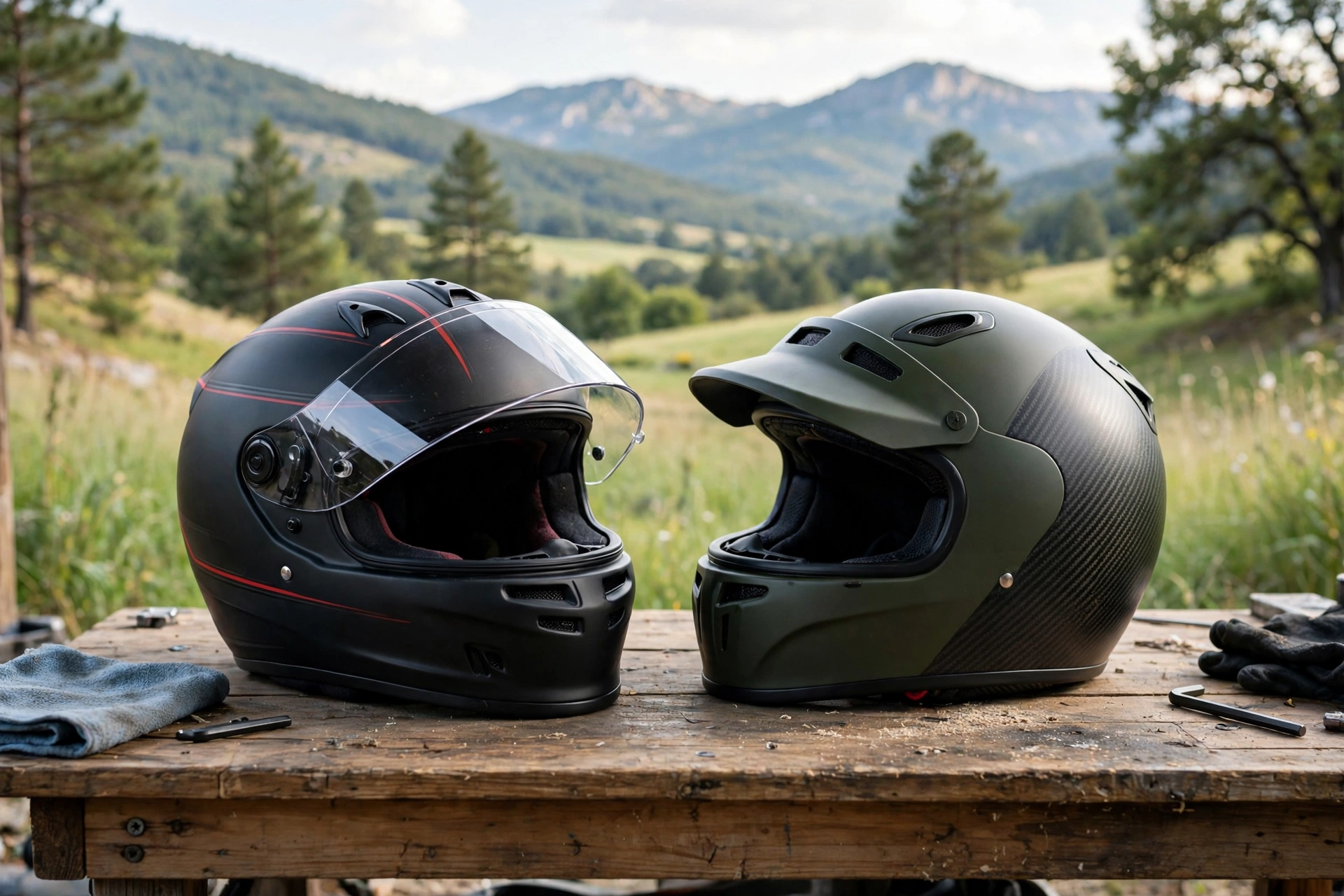
No — you should not use a car racing helmet for motorcycle riding. A car helmet is certified to a completely different standard, built for crashes inside a roll cage rather than falls onto open road, and because it carries no DOT motorcycle label, it does not count as a legal helmet in states that require one. It is the wrong tool for the job, however well made it is.
The confusion is understandable. Both are full-face helmets, both can carry Snell badges, and a good car helmet costs as much as a good motorcycle helmet. But the similarities end at the silhouette. What each helmet is tested to survive — and how — is fundamentally different.
How Do Car and Motorcycle Helmet Certifications Differ?
Car racing helmets are certified to Snell’s SA standard (“Special Application”), while motorcycle helmets sold for US road use must meet DOT FMVSS 218, and many also carry Europe’s ECE 22.06 or Snell’s separate M standard for motorcycles. These are not interchangeable labels. The SA test programme includes things motorcycle standards do not, such as flammability testing of the liner and shell, because a racing driver may be trapped in a burning car.
Motorcycle standards, in contrast, are built around a rider with no cage, no harness, and no roof: single hard impacts against flat surfaces and kerb edges, abrasion, penetration resistance, and a retention system that must keep the helmet on during a slide and tumble. A helmet can be excellent at one test programme and simply never have been assessed at the other.
Why Are Car Helmets Built for a Different Kind of Crash?
A racing driver’s head moves only a few inches, restrained by a harness and head-and-neck device, inside a structure designed to absorb the crash. The impacts a car helmet expects are repeated strikes against roll-cage bars and interior structure — so SA helmets are designed to take multiple hits in the same area, with fire-resistant materials throughout.
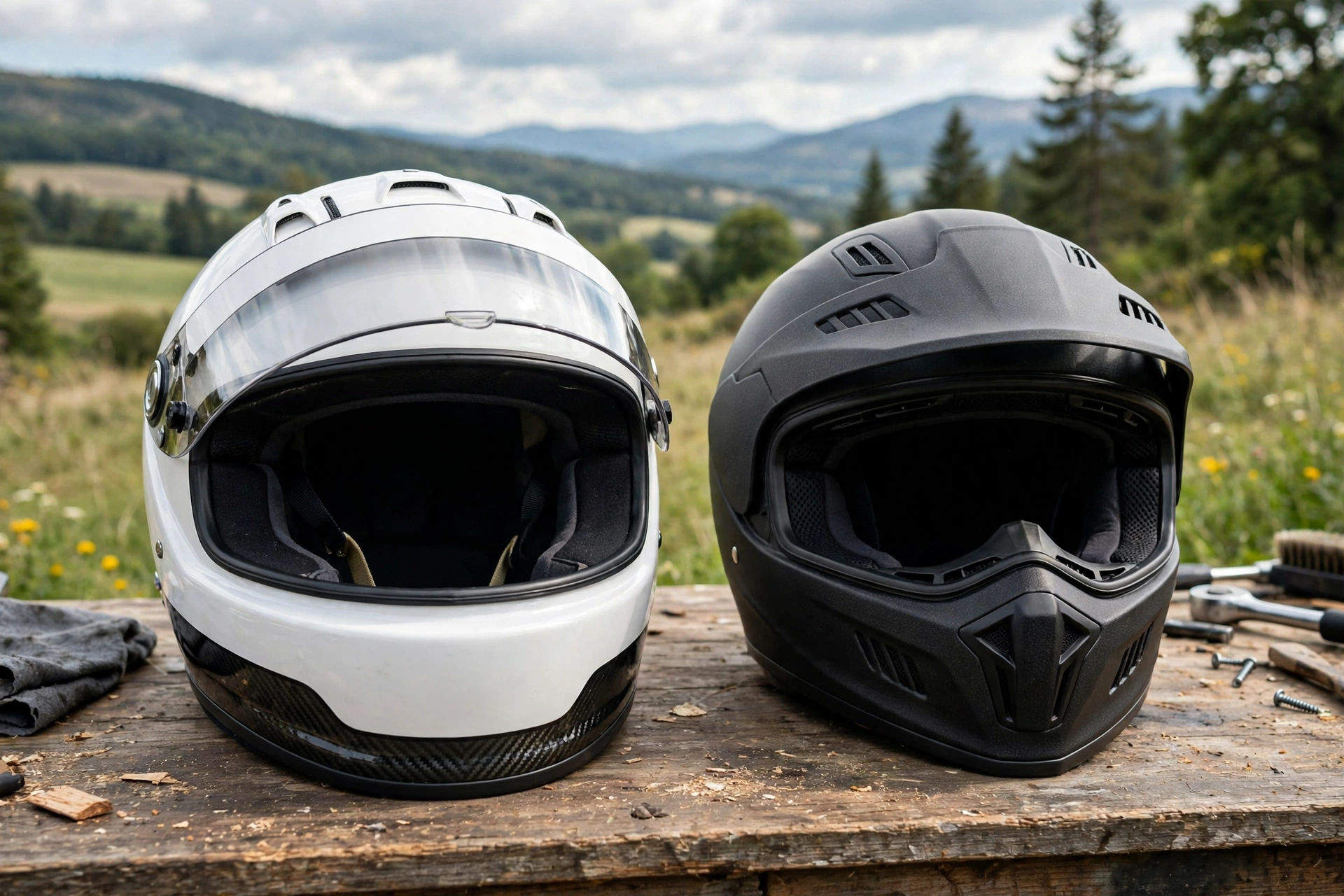
A motorcyclist’s crash is the opposite: one violent ejection, an impact with the road or another vehicle, then a slide across abrasive asphalt with nothing around the rider at all. Motorcycle helmets prioritise a smooth, abrasion-friendly shell, a wide field of vision for traffic awareness, and energy management for that single big impact. Even the eye port differs — many car helmets use a lower, narrower opening suited to looking through a windscreen and resisting fire, while motorcycle helmets maximise peripheral vision for junctions, mirrors, and shoulder checks.
Is It Legal to Wear a Car Helmet on a Motorcycle?
In any state with a helmet law, effectively no. Those laws require a helmet that complies with the federal motorcycle standard, which in practice means the DOT symbol on the back of the helmet. A Snell SA car helmet has no DOT label, so a rider wearing one can be ticketed exactly as if they were wearing no helmet at all — because, legally, that is the position.
In states without helmet laws you would not be breaking a helmet statute, but legality is not the same as protection. You would still be riding in a helmet never tested for the accident you are actually likely to have, which is the real issue regardless of what the law in your state says. It is also worth knowing that some organised rides, training schools, and rental companies require a proper motorcycle helmet — a car helmet may simply be turned away at the gate.
What About Weight, Venting, and Aerodynamics on a Bike?
Car helmets are typically heavier, with thick fireproof liners, and their ventilation is designed for cockpit airflow — often ducted for a forced-air system — not for a rider sitting in a 70 mph windstream. On a motorcycle that means poor cooling in summer and vents that may whistle or behave oddly. Aerodynamics differ too: a car helmet never has to resist wind blast or stay stable when the rider turns their head at speed, while a motorcycle helmet is shaped and tested with exactly that in mind.
Then there are the practical details. Motorcycle visors are built for constant use in rain, dust, and low sun, with quick-change mechanisms and anti-fog systems. Car helmet shields prioritise fire resistance and thickness. Small differences like these add up over a long ride to more fatigue, worse vision, and less comfort — all of which affect safety in themselves.
Noise and stability deserve a mention of their own. A racing driver sits behind a windscreen in a relatively still pocket of air, so a car helmet’s shape is never wind-tunnelled for an exposed rider. On a motorcycle, an unfaired shape catches the wind every time you do a shoulder check, tugging at your neck and adding roar around the shell. Over an hour of highway riding that buffeting is exhausting, and a tired, distracted rider is a less safe rider even before crash performance enters the discussion. Some car helmets also carry fittings for head-and-neck restraint posts and forced-air hoses — hardware that is pure dead weight and snag potential on a bike.
Could the Wrong Helmet Affect Insurance or Liability After a Crash?
It can complicate things. If you are injured while wearing a non-compliant helmet in a state that requires a DOT helmet, the other side’s insurer may argue you contributed to your own injuries, and your own claim can become harder work than it needed to be. Rules vary by state, and this is not a trap in every case — but it is a risk that disappears entirely when you wear the right helmet.
Motorcycle helmets are also where rider-focused protection actually lives: modern road helmets are tested for the sliding, rotational falls motorcyclists really have, and many include low-friction liner systems such as the one explained in our guide to what MIPS is for helmets. A car helmet was never designed around any of that. Wear the car helmet at the track, and a proper motorcycle helmet on the road.
Frequently Asked Questions
What does a Snell SA rating mean?
SA stands for Special Application — Snell’s standard for auto racing helmets. It includes multiple-impact and fire-resistance testing for drivers in caged cars. It is not a motorcycle certification.
Can I use my motorcycle helmet for car track days instead?
Often not. Many track-day and racing organisers require a current Snell SA helmet, so the swap does not automatically work in reverse either. Always check the organiser’s rules.
How can I tell what my helmet is certified for?
Check the labels: a DOT symbol on the rear shell and certification labels inside the liner. Motorcycle helmets show DOT and often ECE or Snell M; car helmets show Snell SA and no DOT mark.

Olivia
Writer at Helmet Today, covering helmet reviews, fit and riding safety.