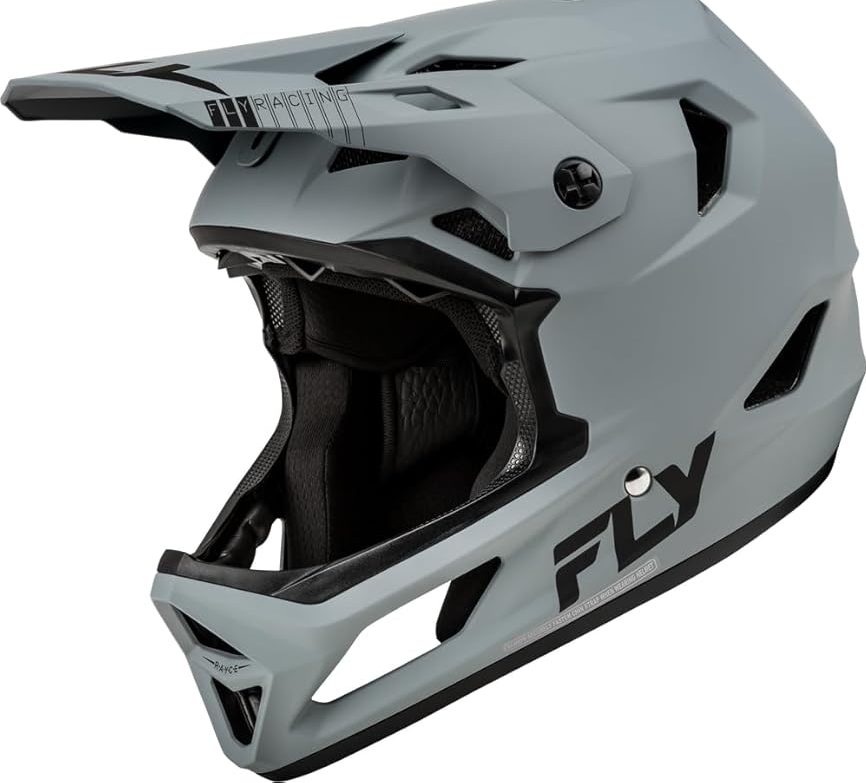


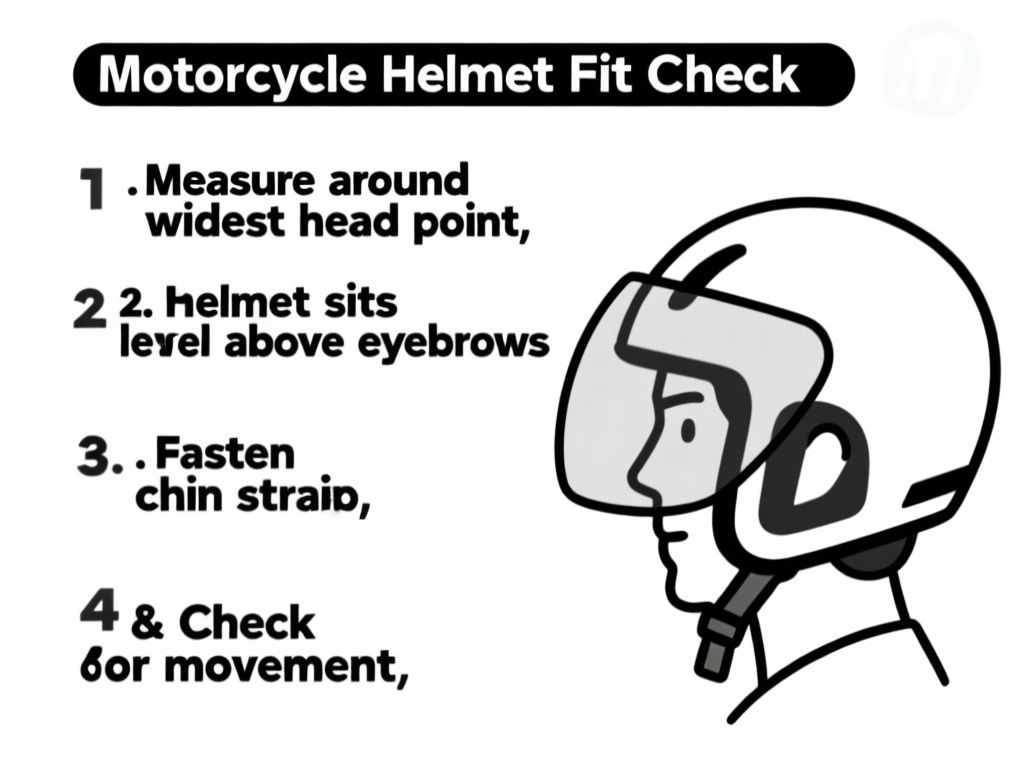
A motorcycle helmet should fit snugly and evenly, with the shell sitting level above the eyebrows and the cheek pads pressing firmly without causing sharp pain. Measure the largest part of the head, compare that measurement with the manufacturer’s size chart, then test the helmet for movement, pressure points, and retention before riding.
Why does motorcycle helmet sizing matter?
A properly sized helmet stays in position during a crash, allowing its energy-absorbing liner to work as designed. A helmet that is too loose can shift, expose part of the head, or come off; one that is too tight may create severe pressure points and become distracting or unsafe to wear.
Helmet size refers mainly to the internal fit around the rider’s head, not simply the outside dimensions of the shell. Two helmets labeled “medium” can fit very differently because manufacturers use different size charts, shell shapes, interior padding, and manufacturing molds.
A correct fit should feel snug across the entire head, especially around the cheeks and forehead. It should not feel like a comfortable baseball cap. New helmet padding usually compresses slightly with use, so a helmet that feels perfectly loose in the shop will often become too loose after several rides.
How do you measure your head for a motorcycle helmet?
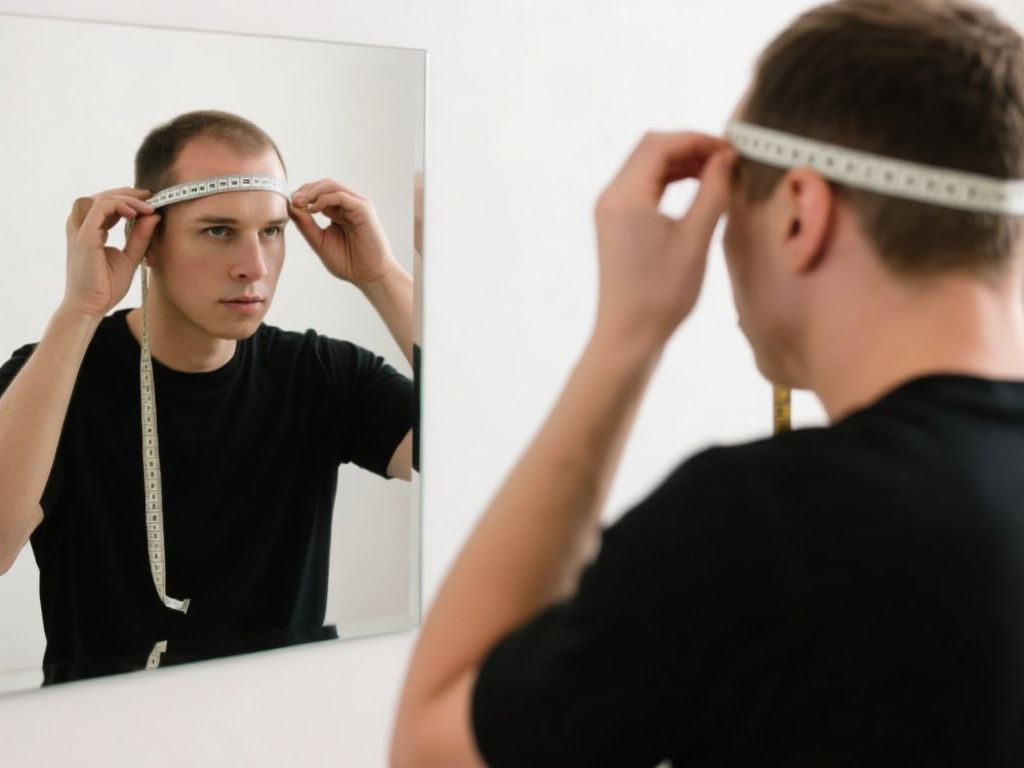
The most useful measurement is head circumference, taken around the widest part of the skull. A flexible cloth tape measure gives the best result, but a piece of string and a ruler works if the string is held level and measured afterward.
- Remove glasses, a thick hat, ponytail, or bulky hairstyle.
- Stand naturally and look straight ahead.
- Place the tape about 2.5 centimeters above the eyebrows.
- Run it around the widest part of the back of the head, usually across the bump at the rear of the skull.
- Keep the tape level from front to back without pulling it tightly into the skin.
- Record the measurement in centimeters and inches.
- Measure two or three times and use the largest consistent result.
Measuring just above the eyebrows matters because the tape must follow the same area that the helmet covers. Measuring around the forehead alone can produce a result that is too small. If the measurement falls between two listed sizes, the manufacturer’s instructions should determine the next step; changing helmet brands may also solve the problem better than simply choosing a larger size.
| Head circumference | Common helmet size range | What to do |
|---|---|---|
| 53–54 cm | Small | Check the exact brand chart |
| 55–56 cm | Medium | Compare both measurement and head shape |
| 57–58 cm | Large | Confirm the helmet does not shift |
| 59–60 cm | X-Large | Look for a shell designed for this range |
| 61–62 cm | XX-Large | Check the manufacturer’s maximum size |
These ranges are general examples, not universal rules. A brand may label a 57-centimeter head as medium, large, or something in between. The manufacturer’s own size chart always takes priority over a generic chart.
How should a new motorcycle helmet feel?
A new helmet should feel uniformly snug, with firm contact around the crown, temples, forehead, and cheeks. The pressure should be noticeable but not sharp. A helmet that feels immediately loose is usually too large, even if it seems comfortable for the first few minutes.
Cheek pads often feel especially tight when a helmet is new. That is normal because they compress over time. The cheeks may be pushed upward slightly, and speaking or smiling can feel awkward. However, the pads should not cause numbness, severe pain, or biting inside the cheeks.
Forehead pressure deserves special attention. A hot spot in one small area can become painful during a long ride, even when the circumference measurement is correct. This commonly indicates a mismatch between the helmet’s internal shape and the rider’s head shape.
A useful fit test is to wear the helmet indoors for at least 15 to 30 minutes. During that time, check for growing pain, numbness, pressure at the temples, or a concentrated sore spot. A helmet that becomes uncomfortable while sitting still is unlikely to improve during a two-hour ride.
How do you check whether a helmet moves too much?
Fasten the chin strap correctly, then hold the helmet shell with both hands and try to move it up, down, and side to side. The skin on the forehead and cheeks should move with the helmet. The helmet should not slide freely over the head.
Another practical test is the roll-off check. With the chin strap fastened, place one hand behind the helmet and try to lift the rear edge upward while using the other hand to hold the front near the brow. A correctly fitted helmet should resist rolling forward and off the head.
Do not use the chin strap as a substitute for a snug fit. A tightly fastened strap cannot compensate for a helmet that is too large. The strap’s job is to help retain a properly fitted helmet, not to hold a loose shell in place.
- The front edge should sit low enough to protect the forehead but should not block vision.
- The helmet should sit level rather than tilted backward.
- The side padding should touch the head without creating sharp pressure.
- The rear of the helmet should not push painfully against the neck.
- The shell should remain stable when the rider shakes the head gently.
What head shape should a motorcycle helmet fit?
Head shape describes the proportions of the skull when viewed from above. Helmet interiors are commonly shaped around neutral, intermediate-oval, long-oval, or round-oval proportions, although brands use different terms and may not publish these categories consistently.
A long-oval head is longer from front to back and narrower from side to side. A round-oval head has more similar front-to-back and side-to-side proportions. An intermediate-oval shape falls between those two patterns and is common among many riders.
A helmet can have the right circumference but the wrong shape. For example, a rider may measure 57 centimeters and buy the correct listed size, yet feel strong pressure at the forehead because the helmet is too narrow front to back. Choosing a different model with the same size can fix the issue.
Do not try to correct a bad shape match by buying a larger helmet. That may reduce the forehead pressure while leaving excessive space elsewhere. Some helmets allow replacement cheek pads or crown liners in different thicknesses, but those parts can fine-tune a good fit rather than transform an unsuitable shell.
How do you choose the right helmet size online?
Online shoppers should measure first, then use the exact size chart for the specific helmet model. Generic charts are useful for a rough starting point, but they cannot account for differences between brands or model families.
- Measure the head circumference in centimeters.
- Read the product page for the model’s sizing chart and head-shape guidance.
- Check the seller’s return policy before ordering.
- Try the helmet indoors with any intended communication headset or thin riding liner.
- Keep all packaging and tags until the fit has been confirmed.
Reviewing the return policy matters because a helmet should not be returned after road use if the retailer cannot resell it safely. Avoid modifying the liner, cutting foam, or adding thick padding to force a fit. Those changes can affect the helmet’s protective structure and may void the manufacturer’s warranty.
Communication systems can also change fit. A speaker pocket may accommodate a slim speaker, but a bulky aftermarket unit can create a pressure point against the ear. Test the actual equipment in the helmet before deciding that the size is correct.
Does helmet type affect the size you need?
Helmet type usually does not change the head measurement needed. A full-face, modular, open-face, or off-road helmet should still be selected using the manufacturer’s circumference chart and then checked for shape and movement.
Different designs can feel different because they use different cheek-pad shapes, openings, ventilation channels, and shell geometry. A modular helmet may feel heavier around the jaw, while an off-road helmet may have a different opening around the eyes and cheeks. These differences affect comfort, not the basic measurement method.
Modular helmets require an additional check around the chin bar and locking mechanism. The front section should close completely and remain secure according to the manufacturer’s instructions. An open-face helmet still needs a snug crown and retention system; the absence of a chin bar does not justify a loose fit.
When is a motorcycle helmet too tight or too loose?
A helmet is too tight when it causes sharp or localized pain, numbness, headaches, or strong pressure that does not ease during a short indoor fitting. Mild, even snugness is expected; concentrated pain is not.
A helmet is too loose when it shifts independently of the head, leaves gaps around the cheeks or crown, or can be pulled forward and backward without moving the skin. Excess space often becomes more noticeable after the interior padding breaks in.
Do not judge fit by comfort alone. A loose helmet may feel pleasant in a store because it creates less pressure, but it can move in wind, produce noise, and reduce protection. The best fit combines firm contact, stable positioning, and tolerable pressure across the whole head.
How should you fasten and maintain the helmet?
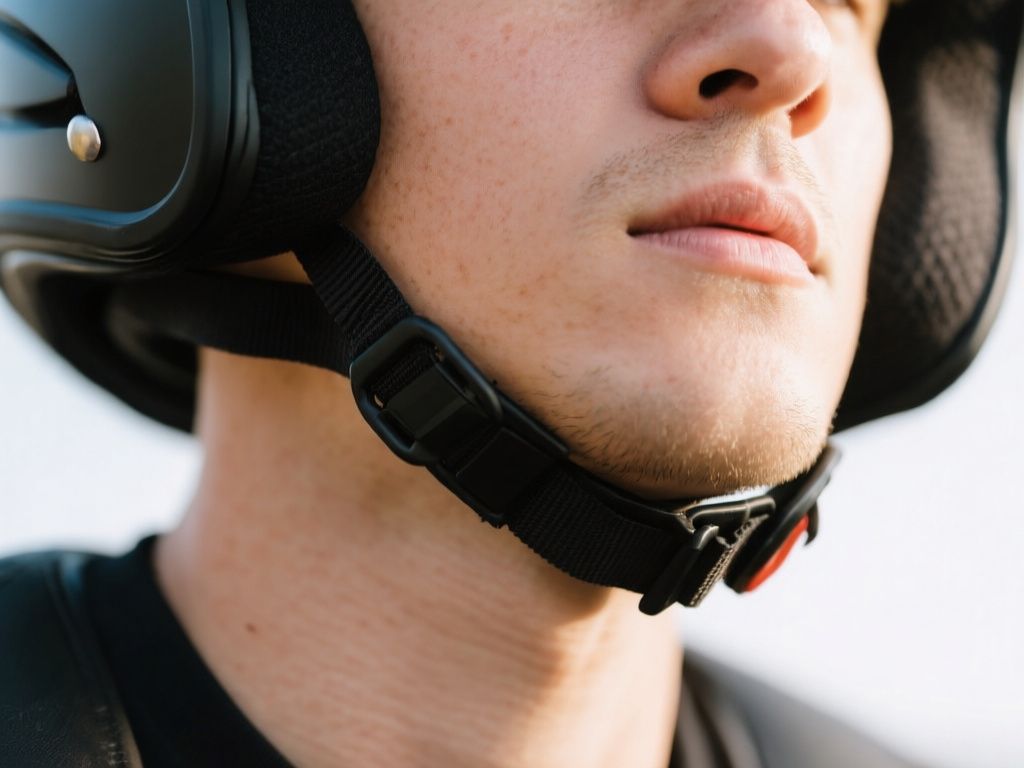
The chin strap should sit under the jaw, close against the skin, rather than hanging loosely near the throat. Fasten it according to the helmet’s design, then leave only the amount of slack recommended by the manufacturer. A strap that can pass over the chin is not secured correctly.
Helmet interiors gradually compress from sweat, heat, and repeated use. Recheck the fit after several rides. If the helmet begins moving more than it did when new, replacement cheek pads or a replacement liner may restore the fit if the shell itself remains suitable.
Replace a helmet after a significant impact, even when there is no visible damage. The energy-absorbing liner can compress internally and may not provide the same protection again. A helmet should also be replaced when the shell, strap, buckle, visor mechanism, or interior has deteriorated noticeably.
Frequently Asked Questions
Should a motorcycle helmet feel tight on the cheeks?
Yes, firm cheek pressure is normal in a new helmet because the pads compress with use. The pressure should be even and uncomfortable only in the ordinary “new gear” sense, not sharp, numb, or painful. If the cheeks hurt intensely or the helmet causes a headache, try another size or model.
Can motorcycle helmet size be based only on hat size?
No. Hat sizes vary by manufacturer and do not reliably describe the full circumference or shape of the head. A tape measurement around the widest part of the skull is more useful, followed by the helmet brand’s own size chart.
What should you do if you are between helmet sizes?
Check the manufacturer’s instructions first. The smaller size may be appropriate if it fits evenly without painful pressure, but moving to another model with a better head shape is often wiser than forcing either size.
How long should you wear a helmet when testing the fit?
Wear it indoors for at least 15 to 30 minutes, with the chin strap fastened. This allows pressure points to appear before the helmet is used on the road. Test any glasses, communication system, or thin liner that will normally be worn.
Can thicker or thinner cheek pads fix the wrong helmet size?
Replacement pads can fine-tune a helmet that already fits the crown and shell correctly. They should not be used to compensate for a helmet that is fundamentally too large, too small, or the wrong shape. Use only parts approved for that helmet model.
How often should motorcycle helmet fit be checked?
Check the fit whenever the helmet is used after a long break, after replacing interior parts, or when the padding feels compressed. A helmet that rocks on the head, shifts in wind, or feels noticeably roomier than before may need new padding or replacement.

Olivia
Writer at Helmet Today, covering helmet reviews, fit and riding safety.