
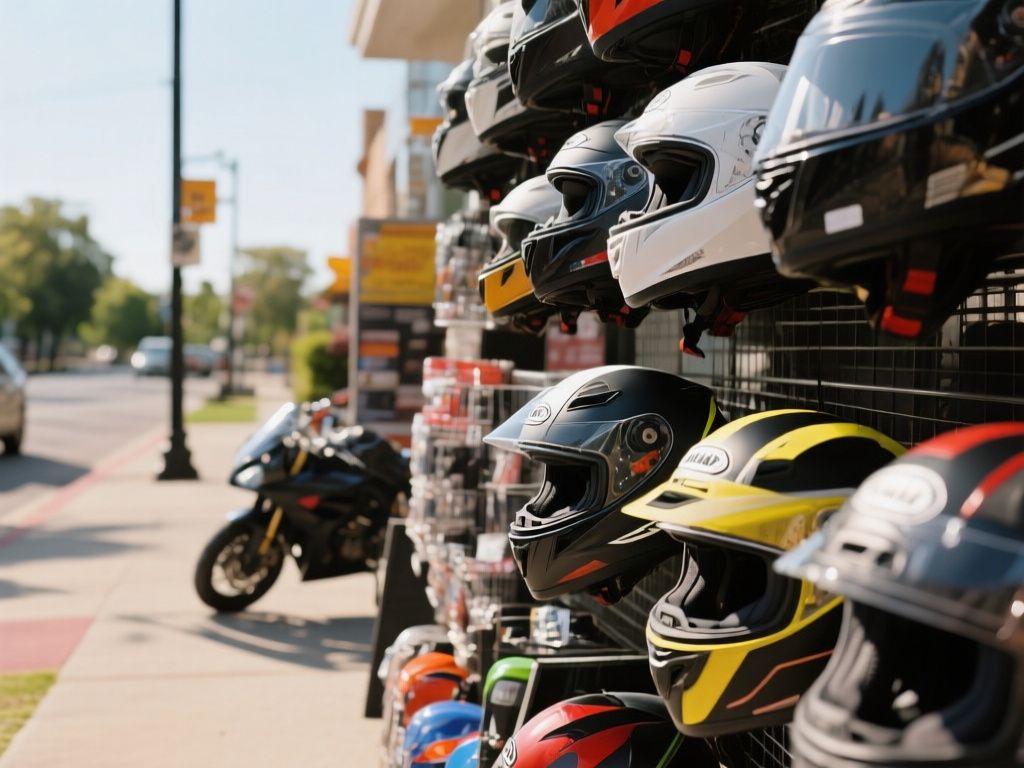
The best place to buy a motorcycle helmet nearby is usually a dedicated motorcycle dealership or powersports retailer, because staff can check fit, safety labels, and riding style in person. Motorcycle-gear shops, some large sporting-goods stores, and reputable online retailers are other options. Avoid used helmets unless their history is completely known.
Where can you buy a motorcycle helmet near you?
Local motorcycle dealerships are the most dependable first stop for a helmet. They typically carry full-face, modular, open-face, and dual-sport models, along with several shell shapes and sizes. Staff members may also help adjust the fit, explain visor options, and check whether a helmet is suitable for highway, touring, dirt, or city riding.
Independent motorcycle-gear stores often provide the widest choice in one location. These shops may stock brands such as Shoei, Arai, AGV, HJC, Bell, Scorpion, LS2, and other manufacturers. Their value is not just the number of products on the wall; an experienced fitter can compare how different helmet shapes sit on your head.
Powersports dealers are another practical option, especially in smaller towns where a specialized gear shop may not exist. A dealership that sells motorcycles, ATVs, or snowmobiles may have a smaller helmet selection, but it can still offer reputable products and useful fitting advice.
Some large sporting-goods retailers sell motorcycle helmets, although their selection and staff knowledge vary by location. A store may have a few popular sizes and styles but no trained helmet fitter. Call before driving over and ask specifically whether motorcycle helmets are in stock, not just bicycle or recreational helmets.
Online retailers can work well when the exact model and size are already known. They usually offer more color choices and may have easier price comparisons. The tradeoff is that a helmet can look correct on paper and still create painful pressure points when worn for 20 minutes.
- Best for first-time buyers: a motorcycle dealership or dedicated gear shop.
- Best for comparing many brands: an independent motorcycle-gear retailer.
- Best for convenience: a reputable online seller with free returns.
- Best for a quick purchase: a local powersports dealer with confirmed stock.
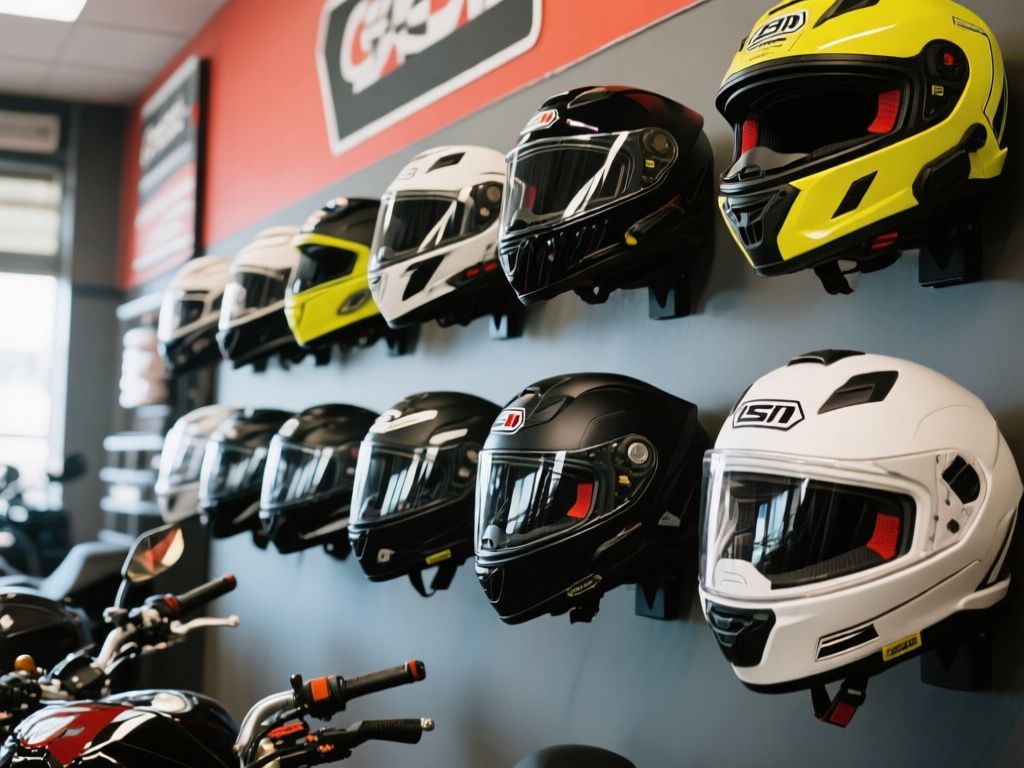
How do you find motorcycle helmet stores nearby?
Search maps using specific terms instead of only typing “helmet store.” Try “motorcycle gear near me,” “motorcycle dealership helmet fitting,” “motorcycle accessories store,” or “powersports dealer helmets.” More specific searches tend to separate motorcycle retailers from bicycle shops and costume stores.
Store listings should be treated as a starting point, not proof of current inventory. Product photos and business hours can be outdated, and a listed store may carry only a few entry-level helmets. Call ahead and ask three direct questions:
- Do you currently stock motorcycle helmets in my size?
- Can someone help me check the fit in person?
- What brands and helmet types are available today?
Customer reviews can reveal useful details about service, but they do not replace an in-store visit. Look for comments about fitting help, returns, inventory, and staff knowledge. A shop praised for motorcycle repairs may not necessarily have a large gear department.
Motorcycle rider groups and local riding clubs can also point to reliable stores. Riders often know which shops carry unusual head shapes, offer installation help for communication systems, or have staff who understand the difference between a street helmet and a track helmet.
What types of motorcycle helmets can you buy?
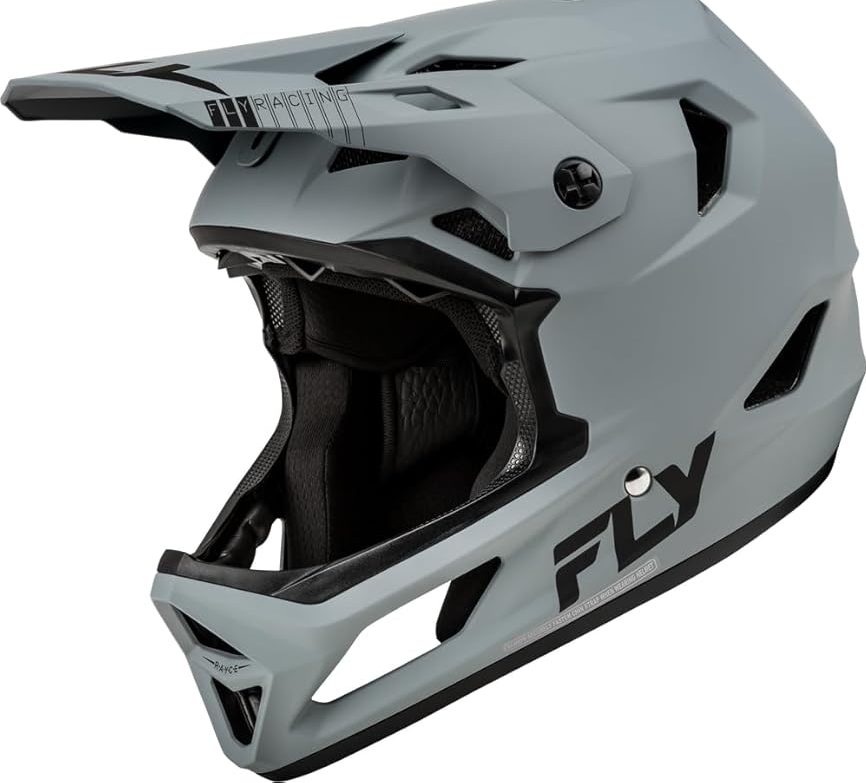
A full-face helmet covers the back, sides, and front of the head, including the chin. It generally provides the most complete coverage and is the usual choice for highway riding, sport riding, commuting, and long-distance travel.
A modular helmet has a chin bar that lifts or moves away from the face. It offers convenience for touring, fuel stops, and conversation, but riders must check whether the helmet is approved for use with the chin bar open. A modular helmet is not automatically equivalent to a full-face helmet in every riding position.
An open-face helmet covers the top, sides, and back of the head but leaves the face exposed. It can suit slower urban riding or riders who prefer more airflow, though eye protection becomes essential and the face has less protection from impact, wind, insects, and road debris.
A half helmet covers less of the head than other common motorcycle helmet types. It may be legal in some locations, but legality is not the same as protection. Buyers should understand exactly which parts of the head a model covers before choosing it for regular road use.
A dual-sport helmet combines features associated with street and off-road riding. Depending on the design, it may include a peak, larger eye opening, or a visor intended for dusty conditions. Riders should check wind noise and ventilation before using one for long highway trips.
| Helmet type | Typical use | What to check |
|---|---|---|
| Full-face | Commuting, highway, sport, touring | Fit around cheeks, visor seal, ventilation |
| Modular | Touring and daily riding | Chin-bar approval, hinge operation, weight |
| Open-face | City riding and short trips | Eye protection, coverage, wind exposure |
| Dual-sport | Mixed pavement and off-road use | Peak stability, noise, visor and goggle compatibility |
How should a motorcycle helmet fit?
A properly fitted helmet should feel snug all around without causing sharp pain or leaving obvious gaps. New helmet padding is firm and often feels tighter than expected. The fit usually settles slightly with use, but a helmet should never be so tight that it causes numbness, headaches, or intense pressure in one spot.
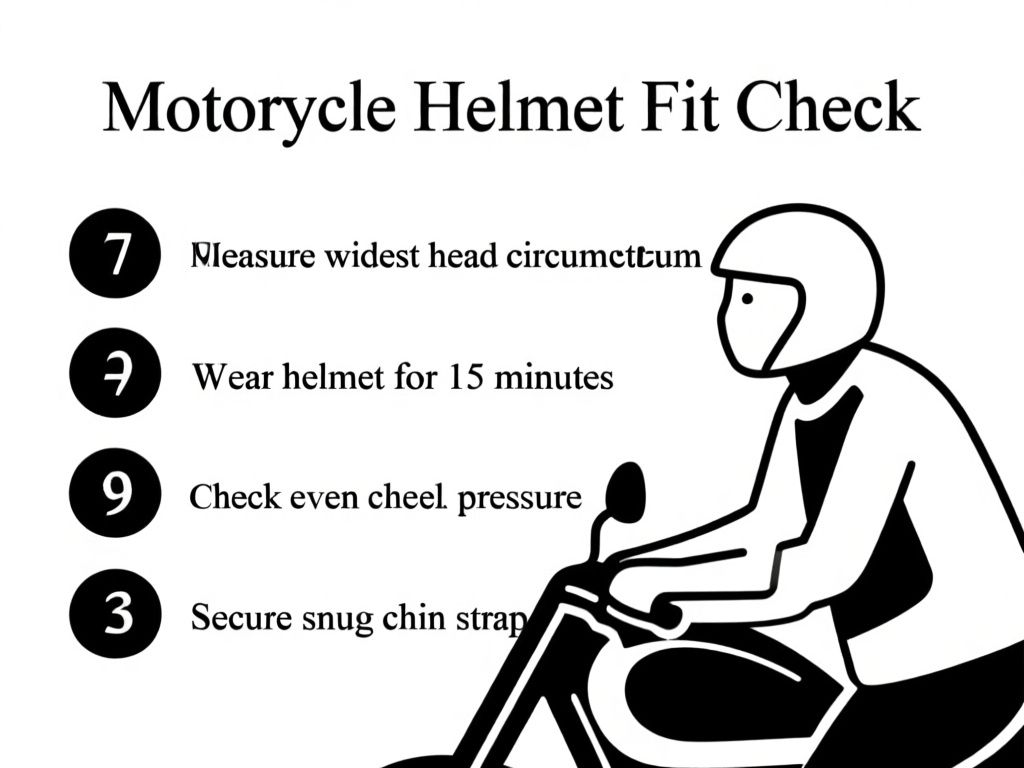
Measure the head with a soft tape placed roughly one inch above the eyebrows and around the widest part of the back of the head. Repeat the measurement two or three times, then compare it with the manufacturer’s size chart. Head shape matters as much as circumference, so a fitting session remains valuable.
During an in-store fitting, wear the helmet for at least 15 minutes. The cheeks should be compressed evenly, and the helmet should not move independently when the head turns. If the helmet rocks forward, slides backward, or shifts when the chin strap is fastened, try another size or shell shape.
The helmet should stay in place during a simple movement check. With the chin strap secured, hold the helmet at the rear and gently move it forward, then hold the front and move it backward. Excessive movement suggests an incorrect fit. The strap should sit under the chin and remain comfortably snug.
Eyeglasses, communication speakers, earplugs, and a balaclava can change the fit. Bring the glasses or riding accessories used most often when shopping. Do not choose a larger helmet just to create room for thick accessories; look for a model designed to accommodate them.
What safety labels should you check?
Every motorcycle helmet should have a clear safety certification label appropriate for the country where it will be used. In the United States, riders commonly look for the DOT symbol on the outside rear of the helmet and the manufacturer’s certification label inside. Buyers should check current local rules because requirements differ by location.
ECE certification is widely used internationally and is identified by a label containing an “E” inside a circle followed by a number for the approving country. ECE requirements and versions can change, so the label should match the standard currently recognized in the rider’s jurisdiction.
Snell certification is a voluntary testing standard used by some helmet manufacturers. A Snell label may matter to riders seeking a helmet tested under more demanding criteria, particularly for certain performance or track applications. It does not replace checking the legal requirement where the motorcycle will be ridden.
A safety label is only one part of the buying decision. A certified helmet that fits badly may move during a crash, create painful pressure, or distract the rider. Certification, correct fit, intact construction, and appropriate use all matter together.
How much does a motorcycle helmet cost nearby?
Motorcycle helmet prices vary widely by construction, certification, materials, ventilation, visor systems, noise control, and brand. A low-cost helmet can meet applicable requirements, while more expensive models may add lighter materials, better liners, improved aerodynamics, or easier replacement parts.
- Budget range: often suitable for basic street use, with fewer comfort and adjustment features.
- Mid-range: commonly offers better ventilation, liners, visors, and finish quality.
- Premium range: may use advanced shell materials and refined aerodynamics, but a higher price does not guarantee a better fit.
Discounts can be worthwhile when they apply to a current, unused helmet from a trustworthy seller. Be cautious with unusually deep discounts, especially when the seller cannot explain the model’s age, certification, return policy, or storage conditions.
A helmet should not be bought solely because it is the cheapest option. Replacing an unsuitable helmet later costs more than spending a little extra on a model that fits correctly, has available replacement parts, and matches the rider’s actual use.
Is buying a used motorcycle helmet a good idea?
Used helmets carry a risk that is difficult to judge from appearance alone. The helmet may have been dropped, involved in a crash, exposed to heat or chemicals, or stored under pressure. Impact-absorbing foam can be damaged even when the outer shell looks normal.
Helmet history matters because the inner liner is designed to manage impact energy once. A seller may honestly say that a helmet was never crashed, but a hard drop from a shelf or motorcycle seat can still raise questions. For safety equipment that sits directly on the head, a new helmet from a reputable source is the safer default.
Never buy a used helmet with missing labels, damaged straps, cracked shell material, crushed foam, loose interior parts, or an unknown history. A secondhand helmet may be acceptable for display or controlled non-riding use, but it is a poor choice for regular road riding.
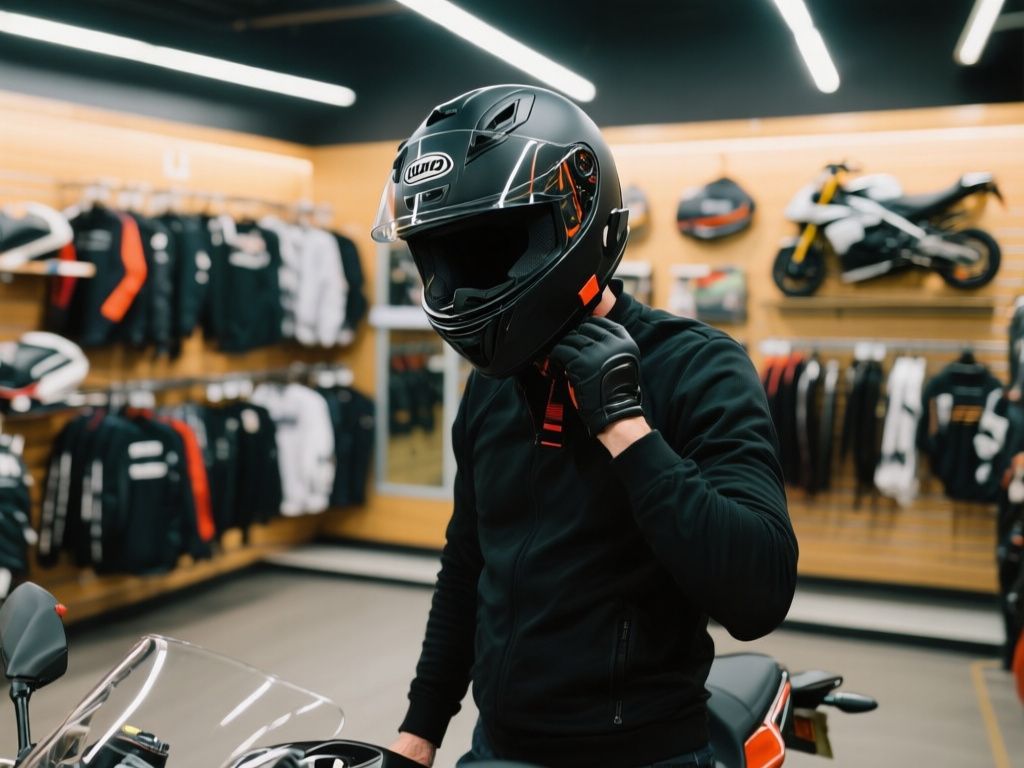
What should you ask before buying locally?
A few practical questions can prevent an expensive mistake. Ask whether the store accepts returns after a brief indoor fitting, whether replacement visors and liners are available, and how long the model has been in stock. Confirm that the helmet is new and that the certification label is present.
- Can I try this helmet on for 15 minutes?
- Do you have another shell shape in the same size?
- Is this model intended for street, touring, track, or off-road use?
- Can I replace the visor, cheek pads, and comfort liner?
- Will my glasses or communication headset fit?
- What is the return or exchange policy?
Ask about fit rather than simply asking for a larger or smaller size. If a helmet feels tight only at the forehead, the issue may be the internal shape rather than the size. Trying a different model can solve that problem more effectively than changing sizes.
Frequently Asked Questions
Where is the best place to buy a motorcycle helmet?
A dedicated motorcycle-gear shop or dealership is usually the best place for a first purchase. It allows the rider to compare models, test the fit, inspect safety labels, and ask questions about use, accessories, and replacement parts.
Can you buy motorcycle helmets at Walmart or a sporting-goods store?
Some large retailers sell motorcycle helmets, but selection and staff expertise vary by location. Call ahead to confirm that the store has certified motorcycle helmets, not only bicycle or recreational helmets, and ask whether fitting help is available.
How do you know if a motorcycle helmet fits correctly?
The helmet should feel snug and evenly tight, with firm cheek pressure and no painful pressure points. It should not shift separately from the head when moved by hand, and the chin strap should sit securely beneath the chin.
Should a motorcycle helmet feel tight when new?
A new helmet should feel snug because the comfort liner compresses slightly with use. It should not cause sharp pain, numbness, severe headaches, or a single intense pressure point. Those signs usually indicate the wrong size or internal shape.
How often should a motorcycle helmet be replaced?
Replace a helmet immediately after a significant impact, even if there is no visible damage. Many manufacturers also recommend replacement after several years of regular use because liners, adhesives, straps, and materials age; follow the specific manufacturer’s guidance.
Can you return a motorcycle helmet after trying it on?
Return policies vary, and some sellers require the helmet to remain unused and free of marks. Before purchasing, ask whether an indoor fitting is allowed, keep the tags and packaging, and avoid riding in a helmet until the fit and return terms are settled.
For the most reliable local purchase, call two nearby motorcycle dealerships or gear shops, confirm that they stock your size, and bring your glasses and riding accessories to the fitting.

Olivia
Writer at Helmet Today, covering helmet reviews, fit and riding safety.