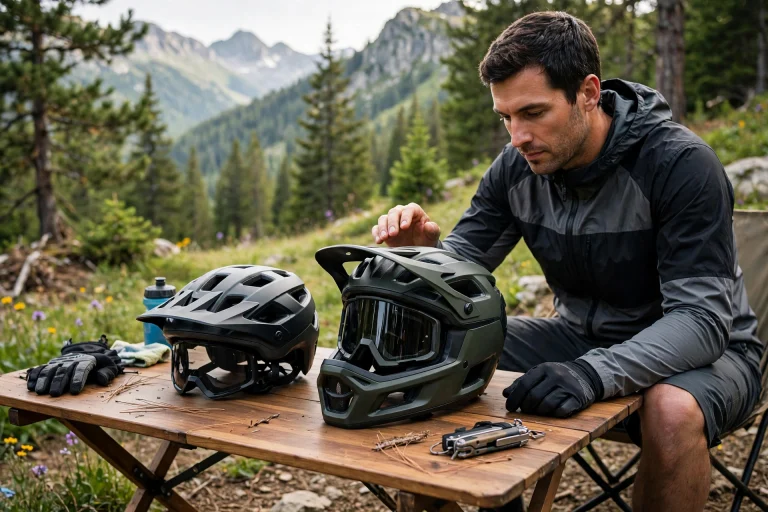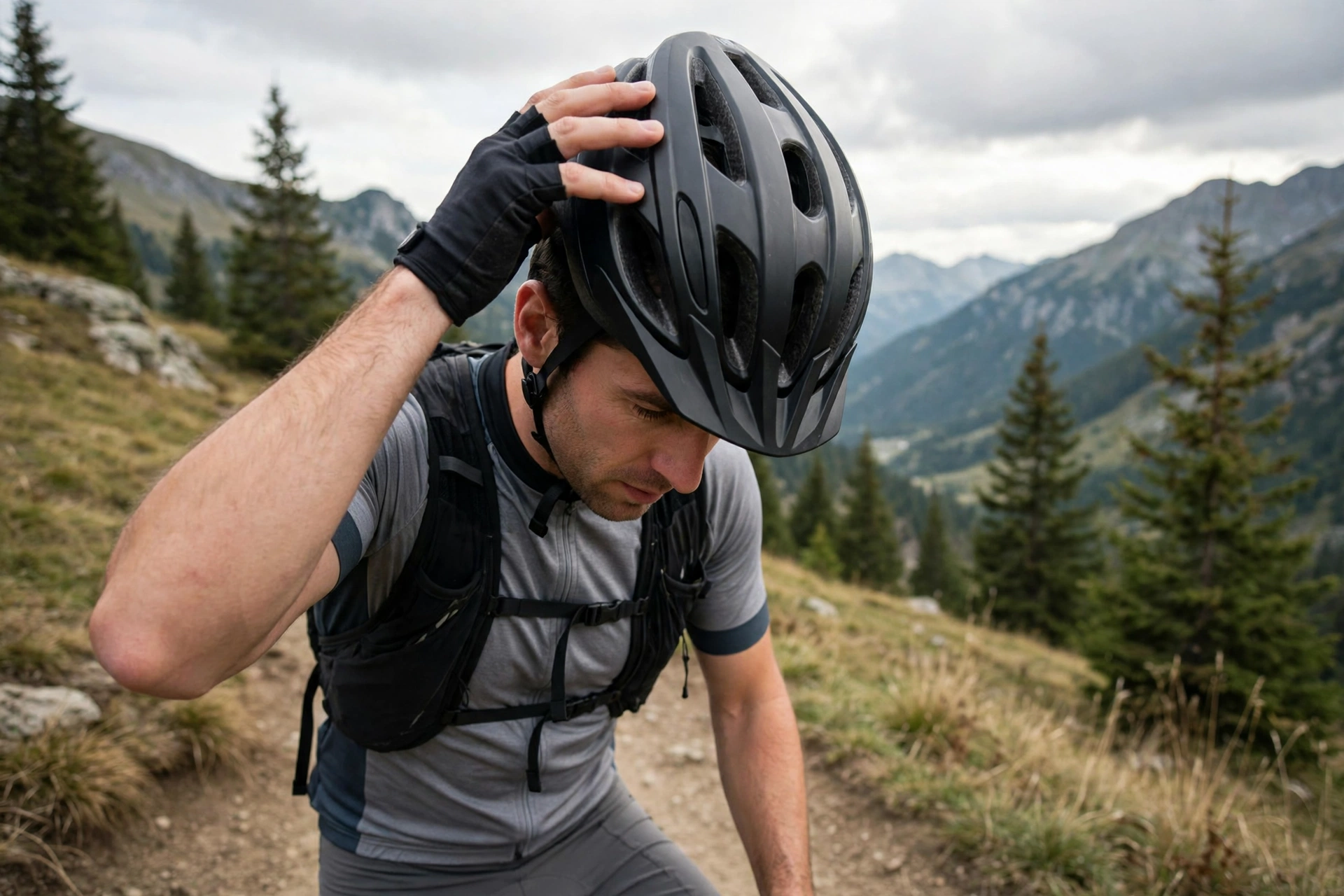
To stop a bike helmet slipping forward, first confirm it is the right size, then snug the rear fit dial, level the helmet on your head, and balance the strap tension so the front and rear straps hold it evenly. A helmet that keeps sliding down over your forehead or eyes is almost always too big, too loose at the back, or sitting in the wrong position — and each of those causes has a specific fix.
A forward-slipping helmet is more than an annoyance. If the front edge drops low enough to block your vision, you will keep pushing it back instead of riding with both hands on the bars. Worse, a helmet that moves easily in normal riding can shift in a crash, exactly when you need it locked in place. Work through the checks below in order — the most common cause, the wrong size, cannot be fixed with strap tricks alone.
Why Does a Bike Helmet Slip Forward in the First Place?
The single most common reason is size. Bike helmets are held in place by the fit system gripping the back of your head and by the shell matching the shape of your skull. If the shell is too large, gravity and road vibration gradually walk it forward until the front rim sits on your forehead. A helmet that feels fine in the shop can still be a size too big once you start moving, sweating, and looking around.
The second common cause is a loose rear fit dial. If the adjustable retention system at the back is left loose, nothing anchors the rear of the helmet, so the front tips down. Uneven strap tension causes the same problem: if the rear straps are slacker than the fronts, the helmet rotates forward.
Position matters too. A helmet worn tilted back, with the front edge high above the eyebrows, has a head start on sliding. Sweat and hair round out the list of causes — a sweaty forehead reduces friction, and thick hair worn in a high ponytail or bun can push the helmet forward or stop the fit system from gripping properly.
How Do You Check Whether the Helmet Is the Wrong Size?
Start with the measurement. Wrap a soft tape measure around your head at the widest point, roughly an inch above your eyebrows and ears, and compare the number with the size range printed inside the helmet. If your head circumference falls at the very bottom of the helmet’s range — or below it — the shell is likely too big.
Next, do the movement test. Put the helmet on level, fasten the strap, and snug the rear dial. Without touching the straps, shake your head side to side and nod firmly. The skin on your forehead should move with the helmet. If the helmet slides, rotates, or drops forward on its own, it is not gripping your head the way it should.
Finally, try the push test. Push up gently on the front rim. A correctly sized helmet resists and springs back to level. If the rim lifts easily and exposes most of your forehead, the shell is too large or the wrong shape for your head. Head shapes vary: a helmet built for a rounder head will rock forward and back on a longer, narrower head even in the “right” size, so shape mismatch is a real possibility if a smaller size still moves.
What Fit Adjustments Stop the Sliding?
If the size is right, work through these fixes in order. First, position the helmet level: the front edge should sit about two finger-widths above your eyebrows, low and flat, not tilted back. Starting level removes the forward lean that gets sliding started.
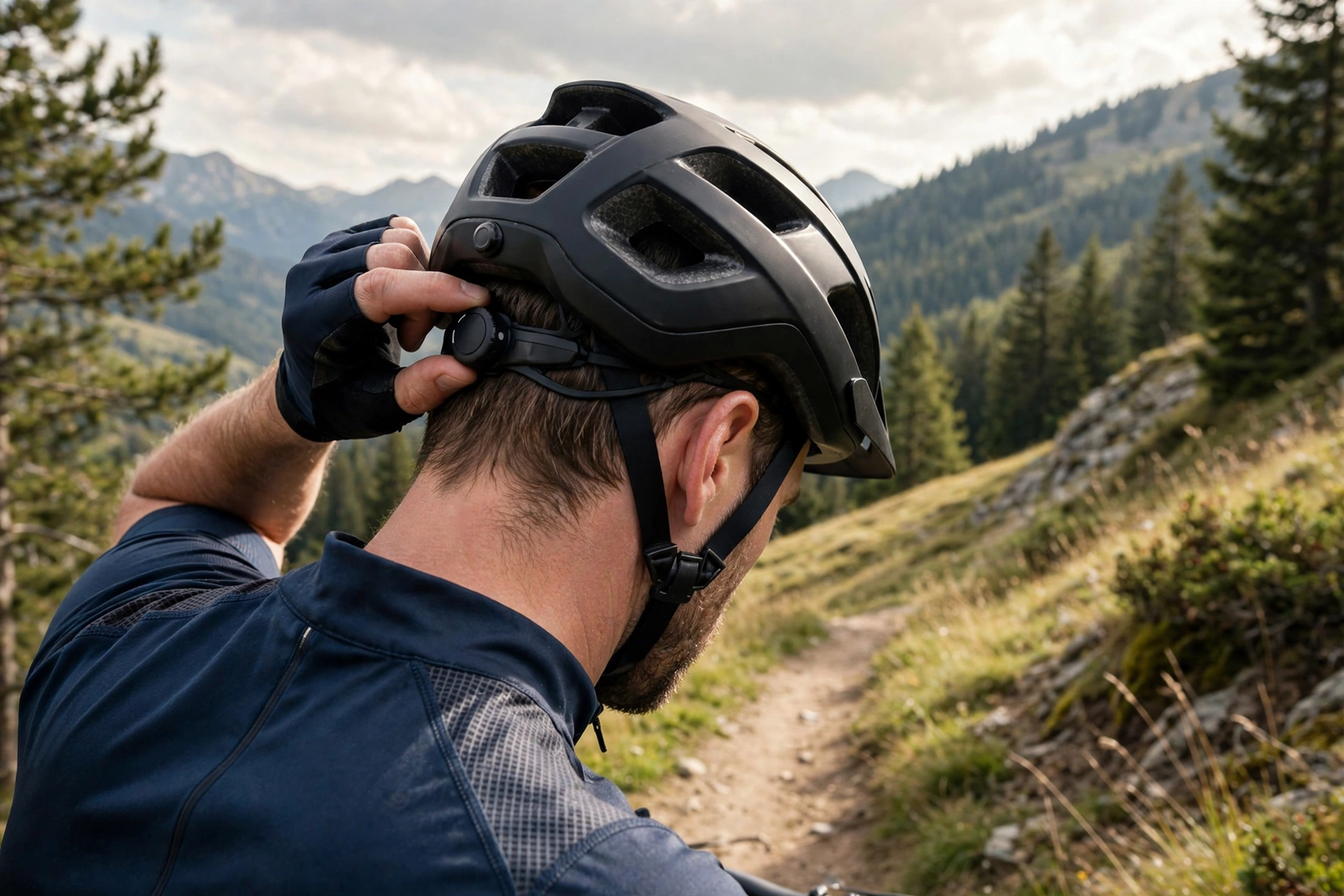
Second, snug the rear fit dial until the retention system grips the back of your head firmly. You should feel even pressure all around, with no wobble when you shake your head. Third, balance the straps. The side straps should form a V that meets just below each ear, and the front and rear straps should share the load evenly. If the rear strap hangs loose, tighten it at the slider so the helmet cannot pivot forward. Finish by buckling the chin strap so you can fit one or two fingers between strap and chin — snug, not strangling.
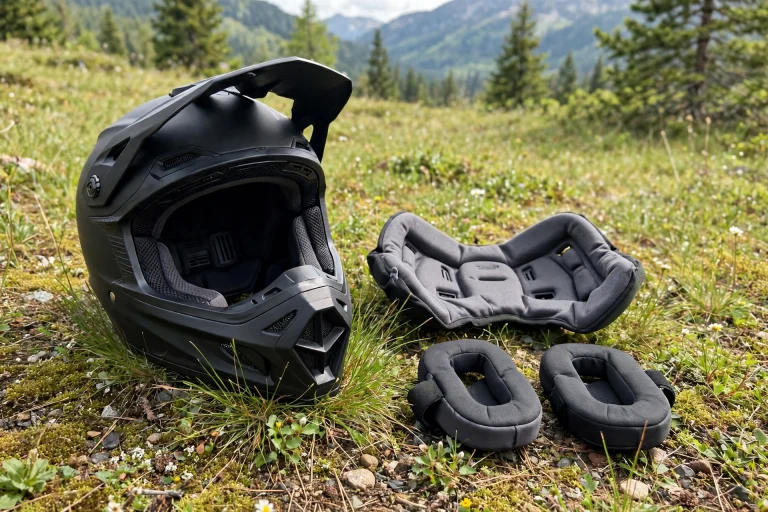
Some helmets include thicker replacement pads. Fitting the thicker pad set is a legitimate way to fine-tune a helmet that is at the small end of its size range. If none of this works, the honest answer is to size down or try a different model with a shape closer to your head. A helmet that will not stay put is the wrong helmet, no matter how good the deal was. When you shop for the replacement, it is also worth considering modern rotational protection such as the system explained in our guide to what MIPS is for helmets, since you are choosing new protection anyway.
How Do Sweat, Hair, and Accessories Affect the Fit?
Sweat is a lubricant, and on a hot ride a slick forehead lets the helmet creep forward even when the fit was perfect at the start. A thin cycling cap or sweatband under the helmet absorbs moisture, restores friction, and also keeps sweat out of your eyes. Skull caps made for helmets are thin enough not to change the fit noticeably.
Hair causes a different problem. A high ponytail or bun pushes against the retention system and levers the front of the helmet down. Wear your hair low, braid it flat, or use a helmet with a ponytail port so the fit system can sit where it belongs at the back of your skull. Avoid stacking thick headbands or bulky clips under the helmet — anything that lifts the shell off your head creates room for movement.
Accessories matter too: a heavy light or camera adds leverage that pulls the front down over bumps. Keep mounts light and near the center of the shell, and re-check the dial with them fitted.
How Can You Test the Fit Before You Ride?
Use the same three checks every time until they become habit. One: look in a mirror and confirm the helmet is level, with the front edge low over the forehead. Two: with the strap buckled and the dial snug, shake and nod your head — the helmet should move your skin, not slide over it. Three: push up on the front rim and pull down on the back; a secure helmet barely shifts.
Then simulate riding: bend forward into your riding position and look up the road, as you do on the bike. Many helmets feel stable upright but tip forward when you lean into the drops and raise your eyes. If it slips in the hallway test, it will slip worse over an hour of vibration and sweat — fix it before you roll out.
Frequently Asked Questions
Can thicker pads fix a helmet that slips forward?
Sometimes. If your head is at the small end of the helmet’s size range, the thicker pad set many brands include can take up the slack. If your measurement falls below the range entirely, pads are a bandage — size down instead.
Why does my helmet only slip when I look down?
Looking down shifts the helmet’s weight forward, and any looseness at the rear dial or rear straps lets gravity win. Snug the retention system, balance the strap tension, and make sure you start with the helmet level.
Is a helmet that slips forward still safe?
Not fully. A helmet that moves in normal riding can shift out of position in a crash and leave your forehead exposed, and constant adjusting takes a hand off the bars. Fix the fit or replace the helmet before your next ride.

Olivia
Writer at Helmet Today, covering helmet reviews, fit and riding safety.