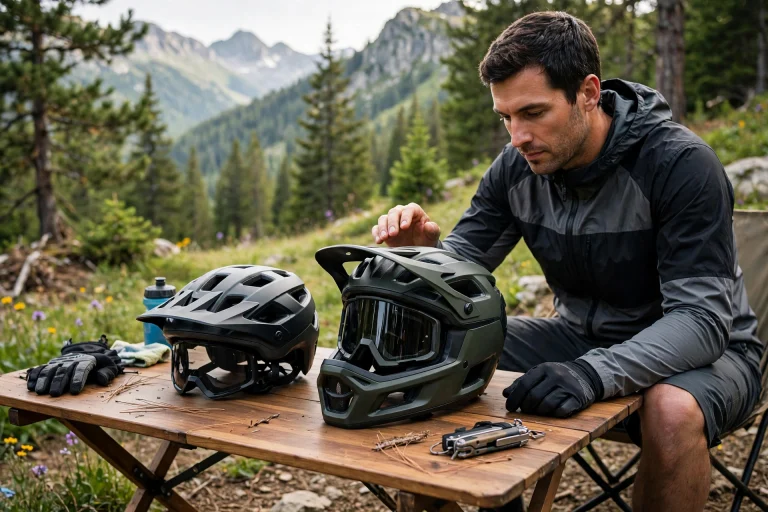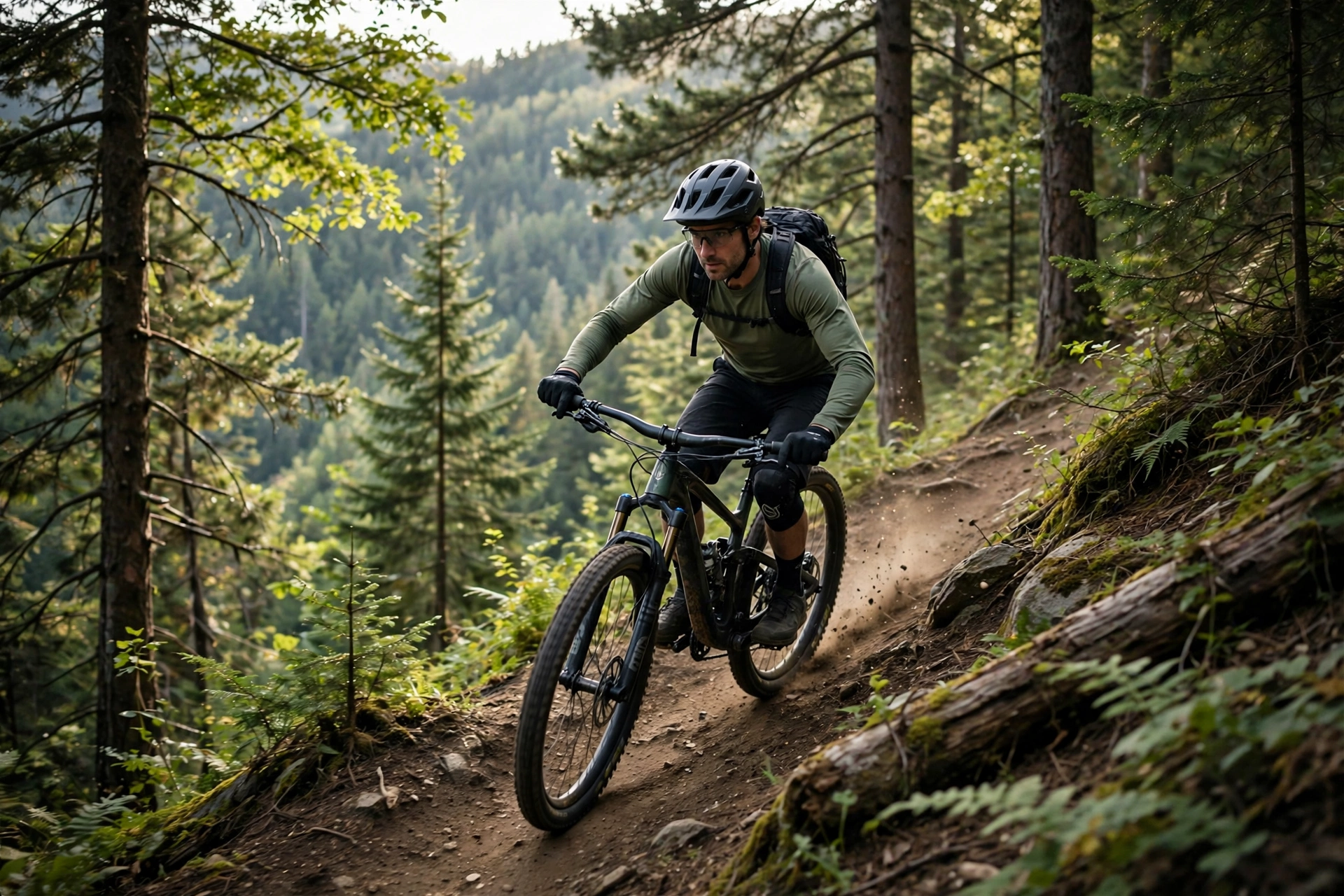
To fit a mountain bike helmet correctly, it should sit level and low on your forehead, feel snug all the way around without painful pressure points, and stay in place when you shake your head hard with the straps done up. The retention dial at the back fine-tunes the fit, and the chin strap should sit snugly under your chin with the side straps forming a V just below each ear.
Mountain bike helmets sit lower at the back and sides than road helmets for extra coverage, and they have to stay put on rough descents and rock gardens. Getting the fit right takes a few minutes, but it is the single most important thing you can do for your safety on the trail.
How Do You Choose the Right Size and Shape?
Start with your head measurement. Wrap a soft tape measure around your head about an inch above your eyebrows and ears, at the largest part of your head, and note the measurement in centimeters. Then match it to the size range on the helmet or its box. If you fall between sizes, try both — sizes are not consistent between brands.
Head shape is the part most riders skip. Some helmets are built for rounder heads, others for longer, more oval heads. If a helmet presses hard on your forehead and back of head but feels loose at the sides, the shape is probably too round for you. The right helmet feels like even pressure all the way around, more like a firm handshake than a clamp.
When you first put a correctly sized helmet on, it should feel snug before you even touch the dial or straps. If it slides around freely on your head with the retention system open, it is too big, and no amount of dial tightening will fix that safely.
Where Should a Mountain Bike Helmet Sit on Your Head?
Position is where most riders go wrong. A mountain bike helmet should sit level, not tipped back like a baseball cap. The front edge should rest about one to two finger-widths above your eyebrows, low enough to protect your forehead.
The extended rear coverage is the whole point of a trail helmet, so make sure the back of the shell sits low over the back of your skull, roughly in line with the base of your head. Many helmets let you adjust the height of the retention cradle at the back — usually two or three positions where the dial system attaches. Setting the cradle lower wraps the helmet around the occipital bone at the back of your skull and makes a real difference to stability on rough ground.
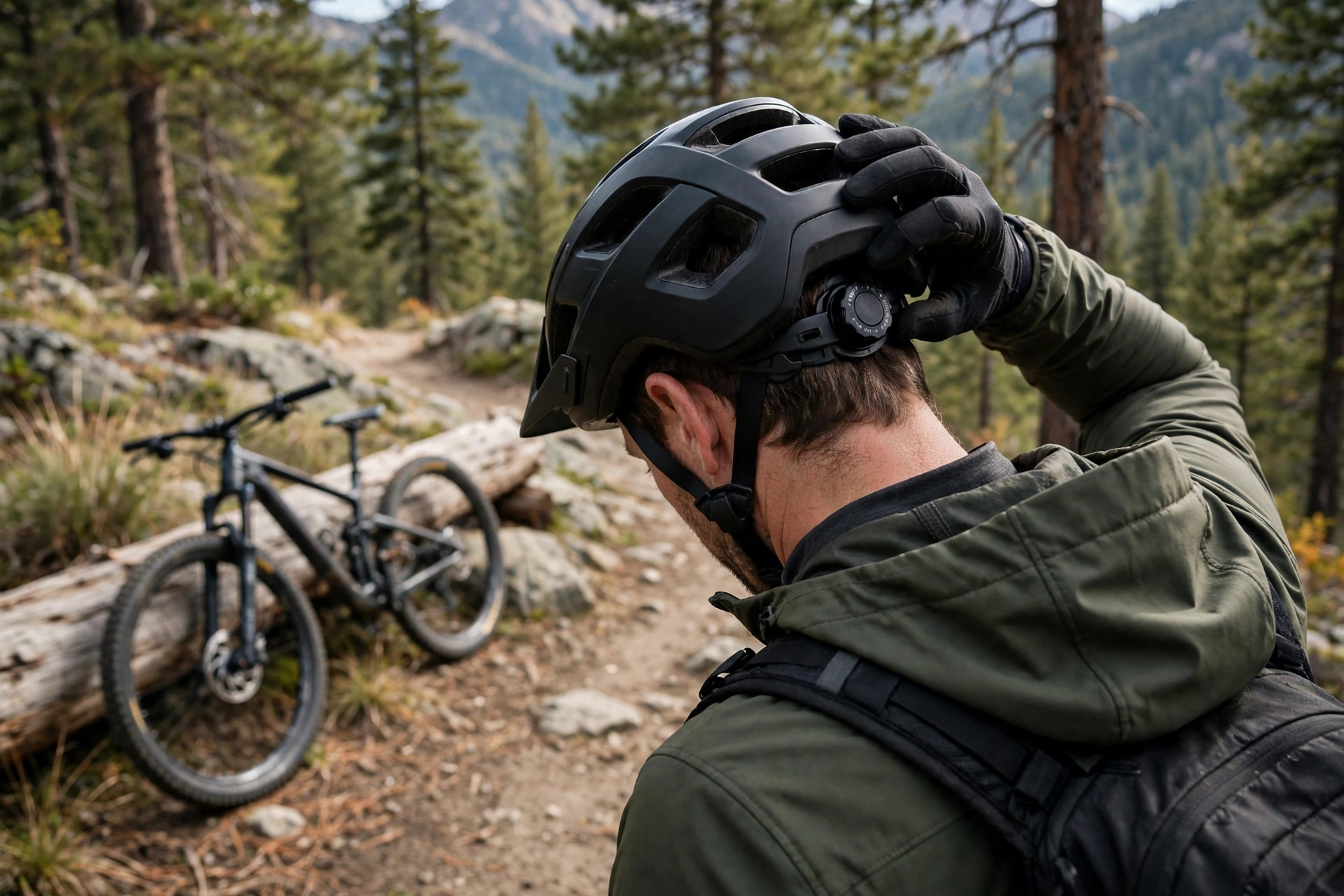
Once the helmet is level and low, turn the rear dial until the fit feels firm and even. A quick test: put your palm on the front of the helmet and push up and back. It should resist and spring back into place rather than sliding up your forehead.
How Tight Should the Straps and Dial Be?
With the fit dial set, buckle the chin strap and adjust the length so you can fit roughly two fingers between the strap and your chin — snug, but you can still open your mouth and talk. The strap should rest against the underside of your chin, not loosely under your jaw or pushed back against your throat.
Next, adjust the side straps. On most helmets, a plastic slider on each side joins the front and rear straps. Move that slider so it sits just below and slightly in front of your earlobe, with the straps forming a neat V around your ear. The straps should lie flat without twisted sections, and both sides should be even — if one side is tighter, the helmet will pull crooked while you ride.
The retention dial handles the fine tuning. Tighten it until the helmet feels locked on, then back it off a quarter turn if you feel a hotspot building. You want it firm enough that the helmet does not shift when you look over your shoulder, but not so tight it gives you a headache on a long climb.
How Do You Check Fit With Goggles, Glasses and a Ponytail?
Always do your final fit check wearing whatever you ride in. If you ride with goggles, put them on: the strap should sit flat over the back of the helmet without pushing the helmet forward, and the goggle frame should meet the helmet’s front edge without a big gap or pressure on your nose. Many trail helmets have a raised rear edge or a goggle strap channel designed exactly for this.
Sunglasses and prescription glasses should slide in straight above your ears without the retention system fighting the arms. If the dial cradle sits very low, it can push glasses arms down — raising the cradle one position usually fixes it. And if you ride with a ponytail, look for a helmet with a ponytail-compatible cradle or a gap at the back; pulling your hair through keeps the helmet sitting lower and more stable.
Technology plays a part in protection too. Many modern trail helmets include a low-friction liner designed to reduce rotational forces in an angled impact — what MIPS is for helmets explains how that works and why it matters for off-road crashes, where angled falls are the norm.
What Is the Best Way to Test Stability Before a Ride?
Do the rough-trail simulation at home. With everything adjusted, shake your head side to side quickly, nod hard, and then jump up and down a few times. The helmet should not shift, rattle, or rotate. If the front dips down over your eyes when you nod, tighten the dial slightly and check the cradle height. If it rotates sideways, the size or shape is likely wrong for your head.
Then mimic a descent: get into an attack position and look up the trail. In this position many helmets creep backward, especially with a goggle strap pulling. The helmet should still cover your forehead. Finally, try the roll-off check — with the strap buckled, push up on the front edge as if something caught it. A well-fitted half-shell should resist rolling off, which is why correct sizing matters more than cranking everything tight.
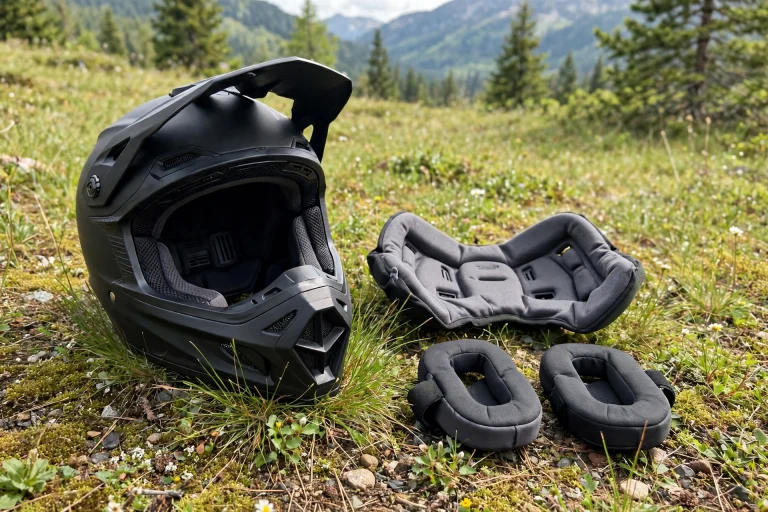
Full-face helmets fit differently: instead of relying mainly on a dial, they use cheek pads to hold the helmet in place, like a motorcycle helmet. A new full-face should feel tight in the cheeks, because the pads break in over the first few rides. Many come with two thicknesses of cheek pads so you can tune the fit — if the helmet moves when you shake your head with the strap fastened, go to the thicker pads or a smaller shell.
Frequently Asked Questions
Should a mountain bike helmet feel tight?
It should feel snug and even all the way around, but never painful. Firm pressure is right; a headache, numb spots, or a red dent in your forehead after ten minutes means the size is too small or the shape does not match your head.
Why does my helmet keep tipping back on descents?
Usually the retention cradle is set too high or the goggle strap is pulling it back. Lower the cradle position at the rear, tighten the dial slightly, and make sure the chin strap is snug so the front stays down over your forehead.
How often should you recheck helmet fit?
Give the straps and dial a quick check before every ride, and do a full fit check whenever you change your hairstyle, swap pads, or after any crash. Replace the helmet after any significant impact, even if it looks fine.

Olivia
Writer at Helmet Today, covering helmet reviews, fit and riding safety.