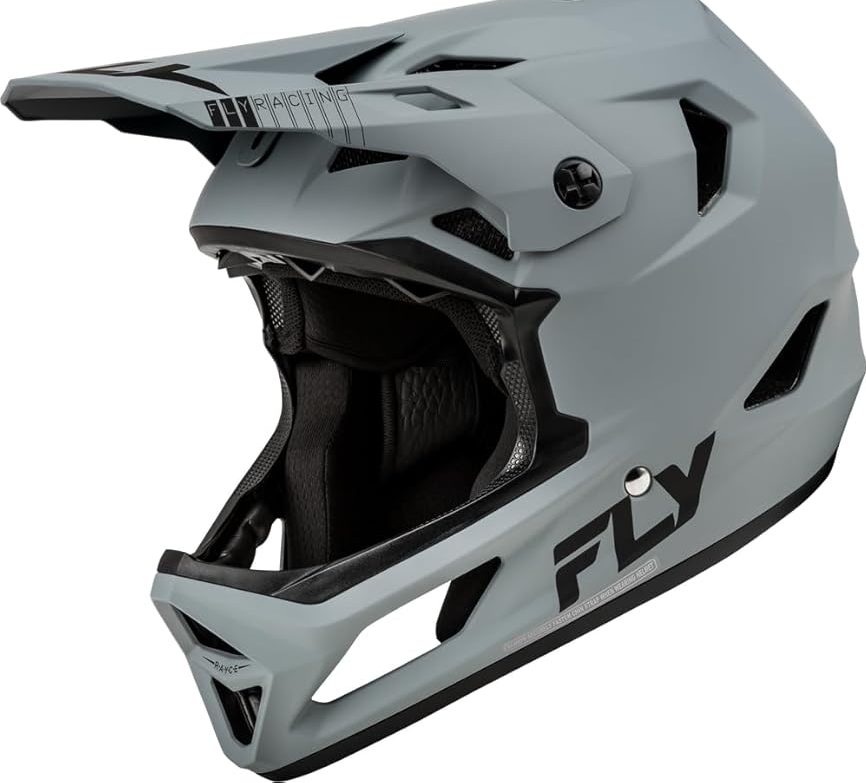

How to use a motorcycle helmet lock sounds simple until you are standing beside your bike with your helmet in one hand and a tiny lock in the other. The first time you see all the different lock styles, it can feel less obvious than it should.
When I looked into the common setups, one thing became clear: the lock works best when you use the helmet’s own strap hardware or a purpose-made attachment point. I’ll walk through the common methods, what to avoid, and how to leave your helmet secured without making the process a daily headache.
How Does a Motorcycle Helmet Lock Work?
A motorcycle helmet lock keeps your helmet attached to the bike while you are away from it. Most locks work by passing through the helmet’s D-rings, a special T-bar, or the helmet itself with a cable.
The lock then connects to a fixed part of the motorcycle. The goal is not to make the helmet impossible to steal. It is to make a quick grab much harder.
| Lock style | Main attachment |
|---|---|
| D-ring lock | Helmet D-rings |
| T-bar lock | Quick-release buckle |
| Cable lock | Helmet opening or strap |
| Built-in lock | Helmet strap and bike mount |
Small helmet locks are mainly useful against casual or opportunistic theft. They should not be treated like a heavy chain lock for the whole motorcycle.
How to Use a Motorcycle Helmet Lock With D-Rings
A D-ring helmet is one of the easiest setups.
Many small helmet locks use a carabiner-style clip. You open the lock, pass it through both D-rings, connect it to a solid part of the motorcycle, and lock it. Some current helmet locks are designed specifically for this method.
Step-by-step D-ring method
Start by taking off the helmet and leaving the chin strap attached.
Then:
- Find the two metal D-rings.
- Open the helmet lock.
- Pass the lock through the D-rings.
- Find a strong fixed part of the motorcycle.
- Attach the lock to that point.
- Close and lock the mechanism.
- Pull the helmet gently to check the connection.
| Step | What to check |
|---|---|
| Through D-rings | Lock passes through both |
| Bike attachment | Solid and fixed |
| Lock closed | Mechanism fully engaged |
| Final check | Helmet cannot slide free |
This method is quick once you get used to it.
One small habit helps a lot: pull on the helmet after locking it. It takes two seconds and can catch a lock that was never fully closed.
How to Use a Helmet Lock With a Quick-Release Buckle
Not every motorcycle helmet has D-rings.
Many helmets use a quick-release or ratchet-style chin strap. A normal D-ring lock may not work with these helmets, so some helmet locks include a small T-bar or similar attachment piece.
How the T-bar method works
The T-bar goes through the opening in the helmet’s buckle or strap system. The lock then connects to the T-bar and the motorcycle.
The exact steps vary by lock design, so check its instructions before forcing anything through the buckle.
| Helmet closure | Typical lock method |
|---|---|
| Double D-ring | Pass lock through D-rings |
| Quick-release buckle | Use compatible T-bar |
| Ratchet buckle | Use maker-approved attachment |
| No suitable attachment | Use a cable-style lock |
Do not try to squeeze a large lock through a small buckle opening. If it needs force, it is probably the wrong attachment method.
How to Use a Cable Lock for a Motorcycle Helmet
A cable lock gives you more flexibility.
The cable can pass through an opening in the helmet and then around a secure part of the bike. Some helmet-lock systems use a braided cable or a separate cable lock for this purpose.
This can be useful if your helmet does not have D-rings.
Where should the cable go?
The cable should pass through a part of the helmet that cannot easily be pulled away from the cable.
Then loop it around a strong, fixed motorcycle part.
Good attachment points can include a suitable frame section or a purpose-made helmet-lock mount.
| Cable route | My view |
|---|---|
| Through a strong helmet opening | Good |
| Around a fixed frame section | Good |
| Through a loose accessory | Poor |
| Around a removable part | Poor |
The main mistake is focusing on the helmet while ignoring the bike attachment.
A strong cable is not very useful if you attach it to something that can simply be removed.
Where Should You Attach a Motorcycle Helmet Lock?
The best attachment point is strong, fixed, and difficult to remove without tools.
A motorcycle frame section is often a better choice than a mirror stalk or loose accessory. Some purpose-made locks are designed to attach around frame tubes, handlebars, racks, or grab rails within their size limits.
The exact location depends on your motorcycle and lock.
Avoid weak attachment points
I would avoid anything that can easily unscrew, slide off, or break away.
| Attachment point | General choice |
|---|---|
| Fixed frame section | Strong option |
| Purpose-made helmet lock | Good option |
| Suitable grab rail | Often useful |
| Mirror stalk | Usually poor choice |
| Loose luggage strap | Poor choice |
Think of the whole chain.
Helmet → lock → motorcycle.
Every link needs to be secure.
How to Lock a Helmet to a Motorcycle Without Scratching It
This is one of those small details that becomes annoying after a few rides.
Metal locks can rub against painted parts. Some helmet locks use rubber coatings or similar protection to reduce contact with the motorcycle.
Even then, I would place the lock carefully.
Keep the lock away from painted surfaces
If the lock hangs against the tank or fairing, vibration can cause rubbing while the bike sits or moves slightly.
Try to position the lock so it rests against a suitable frame area instead.
| Problem | Better approach |
|---|---|
| Lock touches paint | Move it to a frame area |
| Cable rubs on tank | Change the cable route |
| Helmet hangs too low | Use a shorter attachment point |
| Lock swings around | Keep slack under control |
A tiny bit of care here can save you from a very annoying collection of scratches.
Can You Lock a Full-Face Helmet to a Motorcycle?
Yes, but the method depends on the helmet and lock.
A full-face helmet often has a chin bar and visor opening, so a cable-style lock can sometimes pass through the appropriate opening. Some helmet-lock systems are specifically designed to secure helmets using cables or straps.
Do not force the cable around delicate visor parts.
The lock should hold the helmet without putting pressure on the visor, vents, or other parts that were not designed to carry a load.
What about an open-face helmet?
Open-face helmets can be simpler because the strap and D-rings are easy to reach.
A D-ring lock can pass through the rings and attach directly to the motorcycle.
The key is still the same: use a real attachment point, not something flimsy.
How to Use a Built-In Motorcycle Helmet Lock
Some motorcycles come with a factory helmet lock or can use a model-specific helmet-lock accessory.
These systems can be very simple. For example, a motorcycle manufacturer installation guide describes a system where you insert the key, open the latch, loop the helmet strap over the latch, close it, and turn the key to lock it.
That is different from a portable cable lock.
| Lock type | Best feature |
|---|---|
| Built-in lock | Quick daily use |
| D-ring lock | Small and portable |
| Cable lock | Flexible attachment |
| T-bar lock | Works with some quick buckles |
If your motorcycle already has a helmet lock, check its owner’s manual. The attachment point and lock operation can vary between models.
Should You Lock the Helmet Through the D-Ring or Chin Strap?
If your helmet uses double D-rings, using the D-rings is usually the cleanest method with a compatible helmet lock.
The D-rings are part of the helmet’s retention system. A purpose-made helmet lock can pass through them without needing to modify the strap.
Do not cut, drill, or alter the helmet strap to make a lock fit.
| Approach | Recommendation |
|---|---|
| Use existing D-rings | Good |
| Use compatible T-bar | Good |
| Use approved cable route | Good |
| Cut the chin strap | Never |
| Drill the helmet shell | Never |
A helmet is safety gear. Turning it into a DIY lock project is not worth the risk.
Common Motorcycle Helmet Lock Mistakes
Most problems come from small mistakes rather than complicated ones.
The first is locking the helmet to a weak part of the motorcycle. The second is forgetting to check that the lock actually closed.
Here are the mistakes I would watch for.
| Mistake | Better habit |
|---|---|
| Locking to a removable part | Use a fixed point |
| Leaving lots of cable slack | Keep the route neat |
| Locking through the visor | Use a safer opening |
| Forgetting to close the lock | Pull-test it |
| Leaving the helmet in a bad spot | Keep it away from exhaust and heat |
Another easy mistake is leaving the helmet where rain can fill it.
A lock may stop someone from walking away with the helmet, but it cannot stop water from finding its way inside.
Is a Motorcycle Helmet Lock Theft-Proof?
No.
This is an important expectation to set.
A helmet lock is mainly a deterrent. It makes the helmet harder to grab and carry away. It does not turn the helmet into an untouchable object.
Some helmet-lock manufacturers and retailers describe these small locks as protection against opportunistic theft.
If you are leaving an expensive helmet for a long time in a high-risk area, taking it with you is usually the better option.
| Situation | Sensible choice |
|---|---|
| Quick café stop | Helmet lock |
| Short shopping trip | Helmet lock |
| Long unattended period | Take helmet with you |
| High-theft location | Avoid leaving helmet |
The lock is convenience and added security. It is not a guarantee.
How to Check a Locked Helmet Before Walking Away
I like the idea of making this a tiny routine.
Once the lock is closed, give the helmet a gentle pull. Check the lock itself. Then look at the motorcycle attachment point.
You are checking the entire system, not just the key or combination.
My quick helmet-lock check
Before walking away, ask:
- Is the lock fully closed?
- Is the lock attached to the helmet correctly?
- Is it connected to a fixed motorcycle part?
- Can the helmet slip through the opening?
- Is the helmet clear of hot exhaust parts?
- Is the cable or lock rubbing against painted surfaces?
| Final check | Why it matters |
|---|---|
| Lock closed | Prevents simple mistakes |
| Helmet secured | Stops easy removal |
| Bike attachment secure | Protects the whole setup |
| Helmet away from heat | Avoids unnecessary damage |
That little check is much easier than returning to the bike later and wondering whether you actually locked it.
Can You Lock Gloves or a Jacket With the Same Lock?
Some helmet locks can also secure riding gear.
Cable-style locks are especially useful because the cable can pass through several items before being attached to the motorcycle. Some current helmet locks are also designed to secure clothing.
Just remember that adding more gear can make the setup less secure if you leave large gaps.
Keep the cable route short and neat when possible.
If the lock becomes overloaded with jackets, gloves, and other gear, the setup can become awkward. Sometimes simple really is better.
Final Thoughts
Learning how to use a motorcycle helmet lock is mostly about choosing the right attachment method. Use the helmet’s D-rings when the lock supports them, use a proper T-bar for compatible quick-release systems, or use a cable through a suitable helmet opening.
The bigger lesson is to secure both ends properly. A great lock attached to a weak point is still a weak setup. For short stops, a helmet lock is a handy theft deterrent. For longer stops or risky areas, taking the helmet with you is still the safer choice.
FAQs
How do you use a motorcycle helmet lock?
Pass the lock through the helmet’s D-rings or approved attachment point. Then connect it to a strong, fixed part of the motorcycle and lock it.
Can you lock a helmet through the D-rings?
Yes. Many helmet locks are made for this. Pass the lock through both D-rings, attach it to the bike, then check that it is fully locked.
Where should I attach a helmet lock on a motorcycle?
Use a strong, fixed part such as a suitable frame section or approved lock mount. Avoid loose, removable parts that can come off easily.
Can a helmet lock stop helmet theft?
It can deter quick, opportunistic theft, but no small helmet lock is theft-proof. Take an expensive helmet with you when risk is high.
Can you lock a helmet with a quick-release buckle?
Yes, if the lock supports that buckle type. Some locks use a T-bar that fits through the buckle opening. Check the lock instructions first.
Can I leave my motorcycle helmet locked outside overnight?
It is usually better to take it with you. A helmet lock adds security, but it does not protect well against determined theft, weather, or damage.

Olivia
Writer at Helmet Today, covering helmet reviews, fit and riding safety.