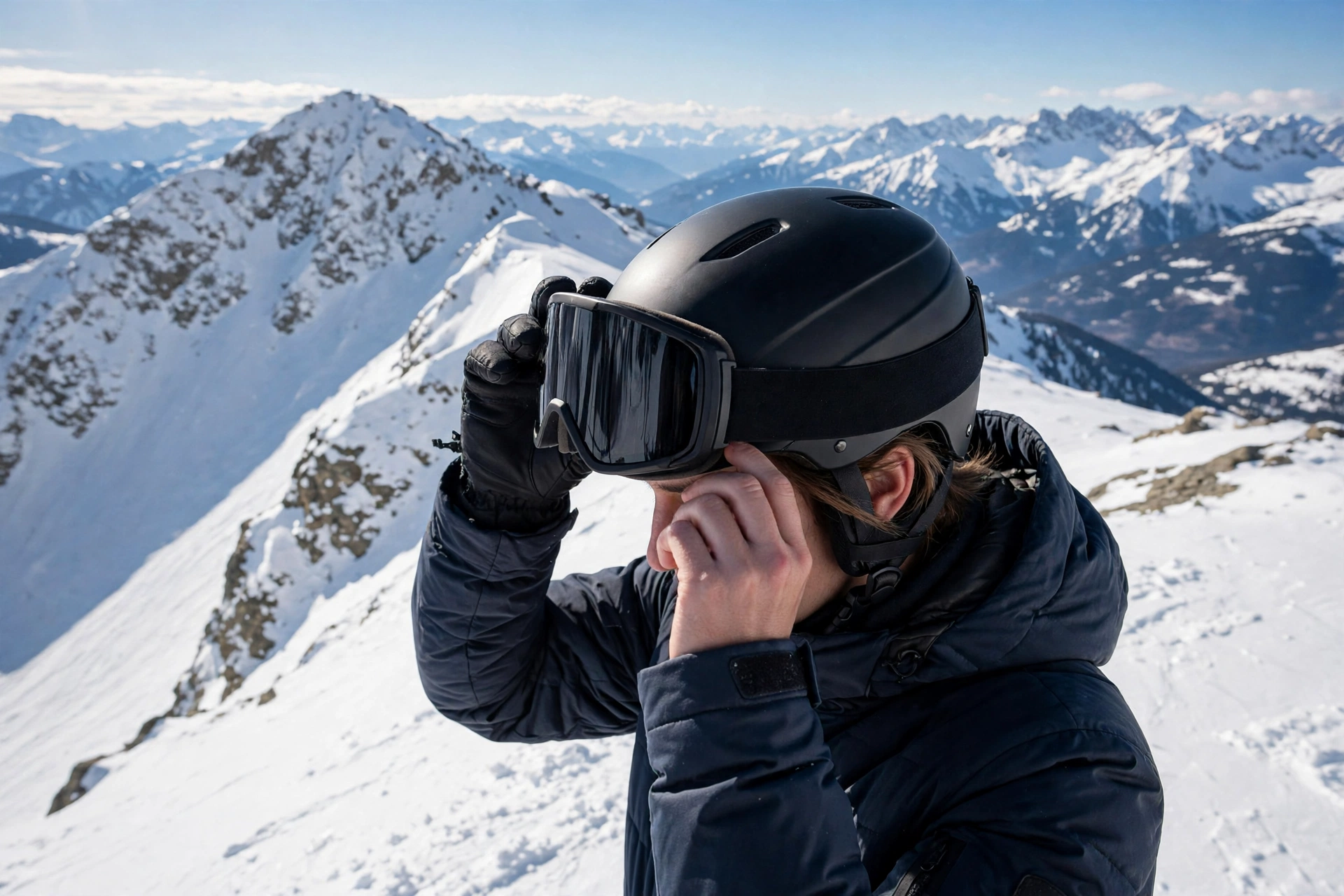
Wear your ski helmet with goggles over the helmet: the goggle strap runs around the outside of the shell, the helmet sits level with its brim just above the goggle frame so no strip of forehead is exposed, and any balaclava or liner goes underneath the helmet. That arrangement keeps the goggles secure, the seal working, and your forehead warm.
It sounds simple, yet rental lines are full of helmets tipped back, goggle straps buried under shells, and the famous strip of bare forehead freezing in the wind. Getting the combination right takes thirty seconds and fixes comfort, warmth, and fog problems people blame on their gear. Here is the correct order, the gap fix, and the mistakes to avoid.
What Is the Correct Order to Put Everything On?
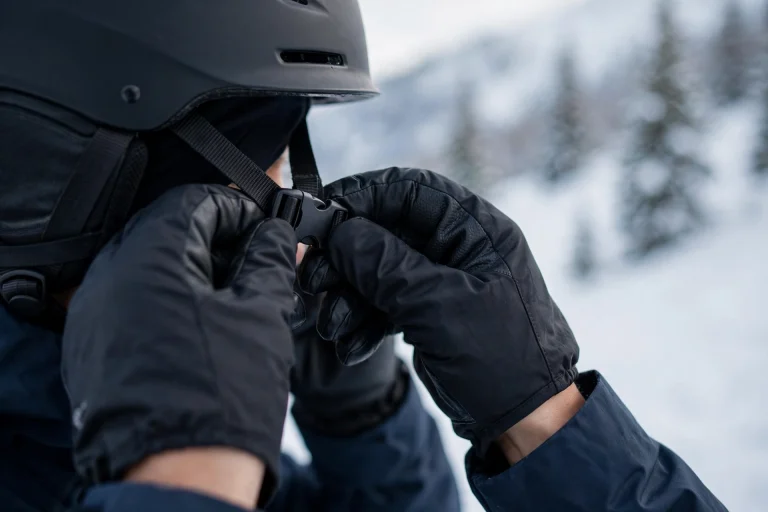
Start with your base layer for the head: if you wear a balaclava or a thin helmet liner, put it on first and pull it smooth, because it belongs under the helmet. Next, the helmet: place it level on your head, front edge roughly an inch or two above your eyebrows, and fasten and adjust the chin strap before the goggles go anywhere near your face.
Goggles come last, over the helmet. Pull the strap wide, set the goggles on your face, and settle the strap around the back of the helmet shell. In general terms this over-the-helmet arrangement is what helmets and goggles are designed for: the shell’s shape, the strap’s silicone grip, and the retainer clip at the back all assume it.
You will occasionally see the strap worn under the helmet, mostly as a style choice among some park riders. For most skiers it is a poor trade: the strap interferes with how the helmet sits, can create pressure points, and lets the goggles fall off your face entirely if you crash. Wear the strap outside, as designed.
How Do You Get Rid of the Forehead Gap?
The gap — a band of exposed forehead between the top of the goggles and the brim of the helmet, sometimes nicknamed the “gaper gap” — is more than a fashion crime. That skin faces the full force of wind and reflected sun at altitude, and a persistent gap usually signals that the helmet is the wrong size, tipped too far back, or a poor shape match for your goggles.
Fix it in order. First, position the helmet correctly: level, low enough that its front edge sits about an inch above your eyebrows, not perched on the back of your head. Second, settle the goggles up so their top edge meets the brim. If a wedge of skin still shows, the helmet and goggle shapes are mismatching — many brands design their helmets and goggles to integrate seamlessly, and same-brand pairings often close the gap best.
If the gap appears because the helmet keeps sliding back, that is a fit problem, not a goggle problem: tighten the rear adjustment, check the size, and remember that a helmet that migrates on your head will also migrate in a fall. No goggle adjustment compensates for a helmet that does not stay put.
Where Should the Goggle Strap Sit on the Helmet?
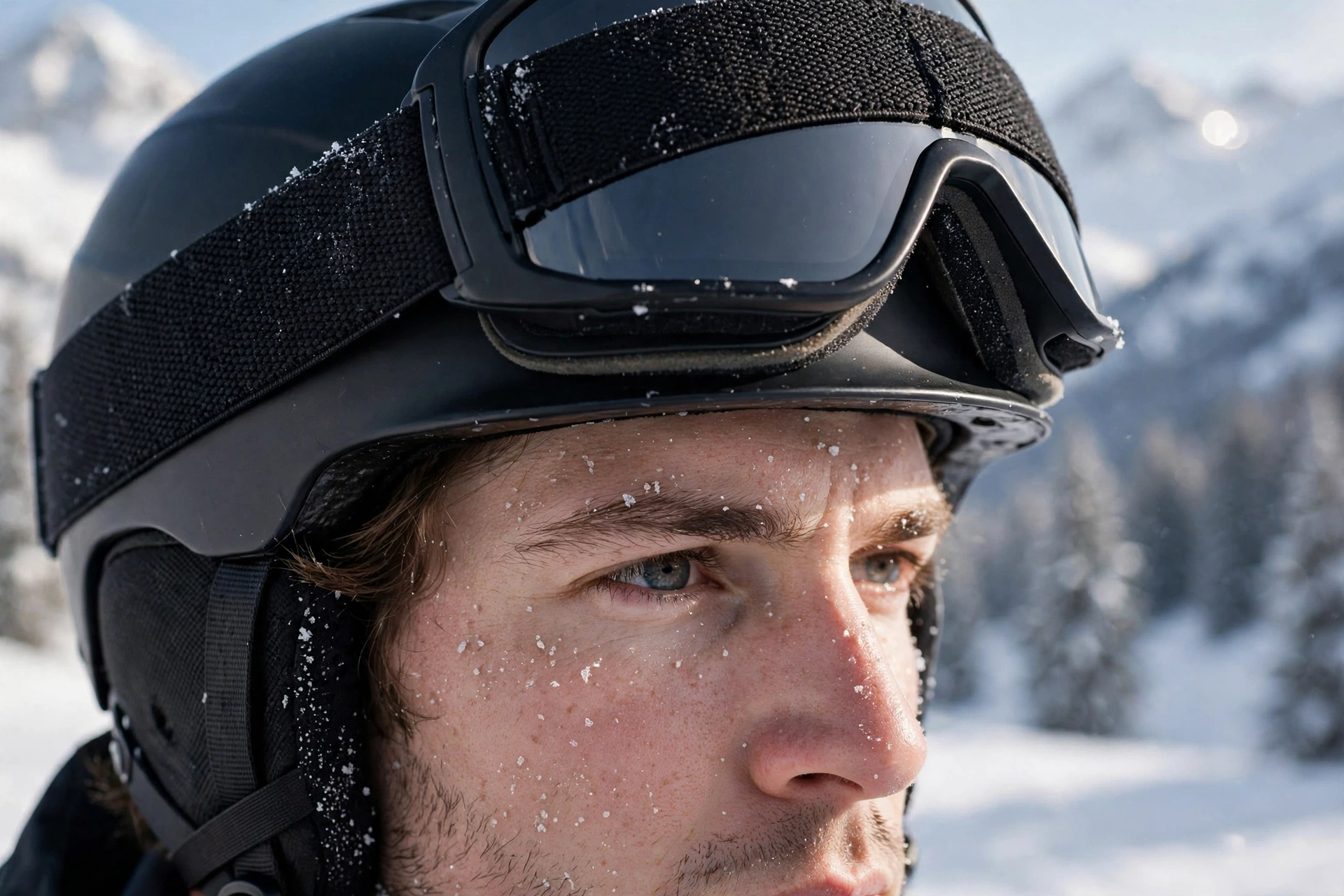
The strap should run in a level band around the shell, roughly across the middle of the back of the helmet, sitting in the slight channel most helmets shape for it. At the rear you will usually find a goggle retainer — a small clip or snap strap. Thread or settle the goggle strap under that retainer; its whole job is to stop your goggles sliding down or flipping off the back when you are not wearing them on your face.
Tension matters. The strap should be snug enough that the goggles seal lightly against your face and do not bounce when you shake your head, but not so tight that it distorts the frame, warps the foam seal open at the sides, or gives you a headache by lunchtime. Most goggle fit problems are strap problems in disguise: too loose leaks air and snow; too tight breaks the seal it is meant to create.
When you rest between runs, push the goggles up onto the front of the helmet rather than onto your forehead or hair. Sitting on the shell keeps them secure under the strap, and it keeps warm, moist air from your skin away from the lens.
How Do You Stop Goggles Fogging When Worn With a Helmet?
Most fogging is breath, not weather. If you pull a neck gaiter or balaclava up over your nose and it sits under the bottom of your goggles, every breath is channeled straight up inside the lens. Keep face coverings below the goggle foam line, or choose a gaiter with a vented mouth area, and the problem usually shrinks dramatically.
Keep moving air moving. Goggle vents work when you are moving and clog when they are packed with snow — brush snow off the top foam after a fall rather than stuffing the goggles inside a warm jacket, which fogs them instantly. Never wipe the inner lens surface; it carries an anti-fog coating that wiping destroys. Dab moisture gently if you must, and otherwise let the lens air-dry.
Dry your goggles properly overnight, out of their bag, away from direct heat. A lens put away damp starts the next day halfway to fogging. Some misting on still, cold lift rides can happen to anyone — a few seconds of airflow once you move usually clears it.
What Are the Most Common Helmet-and-Goggle Mistakes?
Tipped-back helmets top the list — front edge high, back of the neck exposed, forehead gap wide open. Next comes the buried strap under the shell, then the thick beanie worn under the helmet, which lifts the helmet out of position and can undo the fit entirely; use a thin liner instead. Loose chin straps, goggles resting on sweaty foreheads in the lift line, and oversized helmets bought “for comfort” round out the classics.
Underneath nearly all of them sits the same root cause: fit treated as an afterthought. A correctly fitted, certified helmet worn level makes goggle pairing almost automatic, and the same care applies to modern safety features — a helmet equipped with rotational protection, as described in our explainer on how MIPS liners work, can only do its job if it is sitting where it was designed to sit when an angled fall happens.
Spend the thirty seconds at the top of the lift: level helmet, strap fastened, goggles over the shell, no gap. It is the cheapest performance upgrade in skiing.
Frequently Asked Questions
Q: Should goggles go over or under a ski helmet?
A: Over, in general terms. Helmets and goggles are designed for the strap to run around the outside of the shell, secured by the rear retainer. Wearing the strap under the helmet can disturb the helmet’s fit and lets goggles detach completely in a fall.
Q: Why do my goggles keep sliding down my helmet?
A: Usually the strap is too loose, sitting too high or low at the back, or not settled into the helmet’s rear retainer clip. Check all three, and confirm your goggles have an intact silicone grip strip inside the strap. A badly fitting helmet that shifts will also drag goggles with it.
Q: Is the forehead gap really a problem, or just a look?
A: A real one. The exposed strip gets windburn and sunburn fast at altitude, and a gap that will not close usually means the helmet is too big, tilted back, or mismatched to the goggles — all worth fixing for safety as well as comfort.

Olivia
Writer at Helmet Today, covering helmet reviews, fit and riding safety.