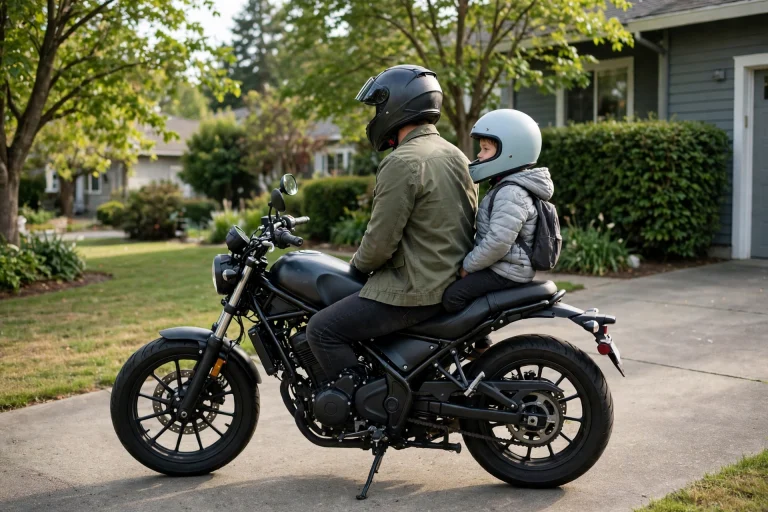
There is no single national age rule for child motorcycle passengers in the US — the rules vary widely by state. Some states set a minimum passenger age, some require that a child’s feet reach the passenger foot pegs, and many states have no specific minimum age at all, though helmet laws for minors apply in most places. The only safe approach is to check your own state’s current rules before riding, and to treat practical readiness — feet on the pegs, able to hold on, wearing a proper helmet — as seriously as the legal minimum.
Few topics confuse parents more, because advice from other states, other countries, and other decades all sounds authoritative and much of it conflicts. This guide explains the patterns states follow, in general terms only, how helmet rules for children usually work, and how to judge whether your child is ready regardless of what the law allows.
Why Is There No Single Rule for Child Passengers?
In the US, motorcycle equipment and passenger rules are set state by state, not by a single federal law. Each state has made its own choices about passenger age, seating, and helmets, and those choices differ a lot. That is why a rule quoted confidently by a rider in one state may simply not exist in the next state over.
Other countries differ again. Some countries set a clear national minimum age for motorcycle passengers, and some restrict child passengers by the type of road or motorcycle. If you ride across a border — or move house — the rules change with you.
Because of this patchwork, no article can give you a number that is right everywhere. What it can do is show you the common patterns so you know what to look up, and remind you that rules also change over time, so a recent check of your state’s official sources beats any memory of what the rule used to be.
What Age and Size Rules Do States Commonly Use?
States that do regulate child passengers tend to use one or more of a few approaches, in general terms:
- A minimum age. A small number of states set a specific minimum age for passengers. Where such a rule exists, it is an absolute floor — a younger child may not ride, however mature they seem.
- A foot-peg requirement. Some states require that the passenger’s feet must reach and rest on the passenger foot pegs or floorboards. This is effectively a size and readiness test built into the law.
- Seating and equipment rules. Rules may cover things like a proper passenger seat and pegs fitted to the motorcycle, rather than anything about age.
- No specific age rule. Many states set no minimum age at all, leaving the decision to parents — subject to helmet laws and general child safety rules.
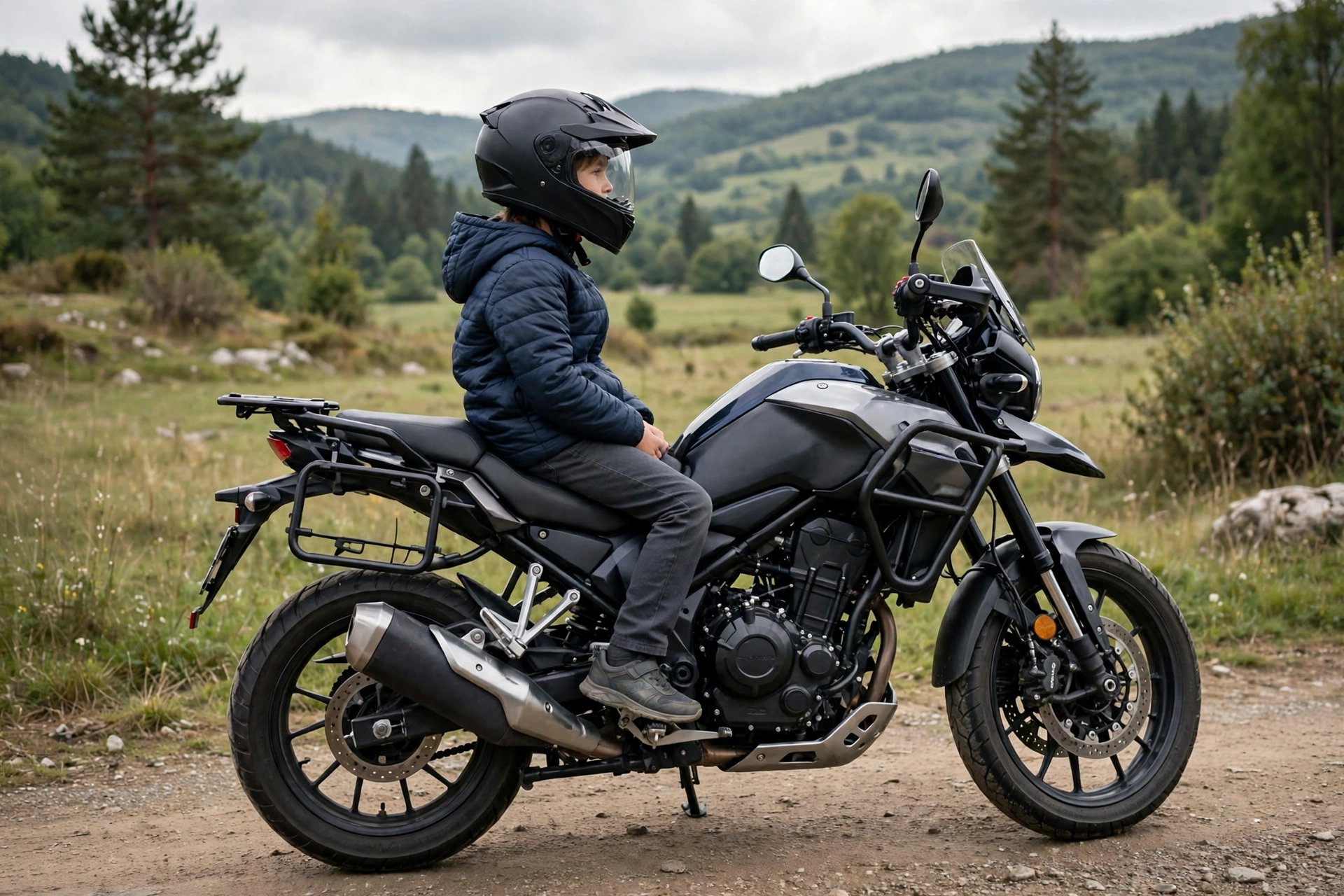
Even where no age minimum exists, the foot-peg test is a sensible personal rule: a child whose feet dangle cannot brace, balance, or stay secure properly. If your child cannot reach the pegs comfortably with the helmet on and seated normally, they are not ready, whatever the law says.
How Do Helmet Rules for Child Passengers Usually Work?
Helmet rules follow their own state-by-state pattern. Many states require helmets for all riders under a certain age, commonly under 18 or under 21, even in states where adult riders may choose. Some states require helmets for all passengers regardless of age, and a smaller number have universal helmet laws covering everyone on the bike.
Where a helmet is required, it must be a proper motorcycle helmet meeting the applicable standard — DOT certification in the US — not a bicycle helmet or novelty helmet. And practically speaking, most safety guidance recommends a certified, well-fitting helmet for a child passenger in every state, whether or not the local law demands it. A child cannot assess the risk or make the choice; the adult decides for them, and the protective choice is the helmet.
Fit matters as much as the legal label. A child’s passenger helmet should be snug, level, and light enough for their neck. If you are also choosing or checking a helmet, our fit guidance for young passengers pairs well with regular checks as your child grows.
How Do You Check Your Own State’s Current Rules?
Go to official sources. Your state’s department of motor vehicles, state police, or legislature website publishes the current motorcycle laws, usually in a rider handbook or the vehicle code. Search for your state’s motorcycle passenger and helmet provisions directly rather than relying on forum posts or roundup articles, which can be years out of date.
Check three things: any minimum passenger age, any foot-peg or seating requirement, and the helmet rule for minors and passengers. If you plan to ride into other states, check their rules too, because your home state’s permission does not travel with you.
If anything is unclear, ask. State rider education programs and highway patrol public information offices answer exactly these questions, and a motorcycle dealer or rider course provider in your state will usually know the current position. Getting it right costs a few minutes; guessing can cost a fine or worse.
Beyond the Law, How Do You Know If Your Child Is Ready?
Legality is the floor, not the finish line. A child passenger should also be able to reach the pegs, hold on securely for the whole ride, understand and follow simple instructions, and stay alert rather than falling asleep — a drowsy passenger is a falling risk. Size, maturity, and attention span matter more than a birthday.
Build up gradually. Start with short, slow rides on quiet streets, agree on simple signals for “slow down” and “stop,” and check in often. Make sure the child wears proper protective clothing as well as the helmet, and never ride with a child in front of you or held in arms, which is unsafe and prohibited in many places.
Think about protection in layers, the same thinking behind modern helmet features such as those explained in our guide to MIPS and rotational protection. The law tells you the minimum; your judgment as the adult rider should aim higher for the child behind you.
Frequently Asked Questions
Q: What is the minimum age for a child to ride on a motorcycle?
A: It depends entirely on your state. A few states set a specific minimum age, some use a foot-peg reach requirement instead, and many set no minimum age at all. Check your state’s official motorcycle laws before riding.
Q: Does my child need a helmet if our state has no helmet law for adults?
A: Possibly yes — many states require helmets for minors or for all passengers even when adult riders are exempt. And regardless of the law, a certified, well-fitting motorcycle helmet is the responsible choice for every child passenger.
Q: Can a child ride in front of the driver or be held by an adult passenger?
A: No — that is unsafe and is prohibited in many places. A child passenger should sit behind the driver on a proper passenger seat, feet on the pegs, holding on securely, wearing a certified helmet.

Olivia
Writer at Helmet Today, covering helmet reviews, fit and riding safety.