A kids bike helmet size chart by age is only a rough starting point — your child’s head circumference in centimeters is what actually decides the size. Two children of the same age can easily be two helmet sizes apart, so use the age column to find the right neighborhood, then buy based on a real measurement.
Age-based charts are everywhere because they are convenient, and they are not useless. But parents who order by age alone are the ones exchanging helmets or, worse, keeping one that fits badly. This guide explains what the typical size bands look like, why the centimeter column matters more than the age column, and how to read any brand’s chart correctly.
Why Is Age Only a Rough Guide to Helmet Size?
Children’s heads grow at very different rates. Genetics, not birthdays, set head size, so a big-headed four-year-old may measure into the size a chart labels “ages 6–8,” while a petite eight-year-old may still fit the size labeled for younger kids. Growth also comes in spurts rather than steady steps, which means a child’s size can jump between one season and the next.
Age labels survive on charts because they help a parent standing in a shop with no tape measure make a rough first pick. Treat them exactly that way — a first filter, never the final decision. The circumference column is the part of the chart that was actually engineered.
What Are the Typical Kids Helmet Size Bands?
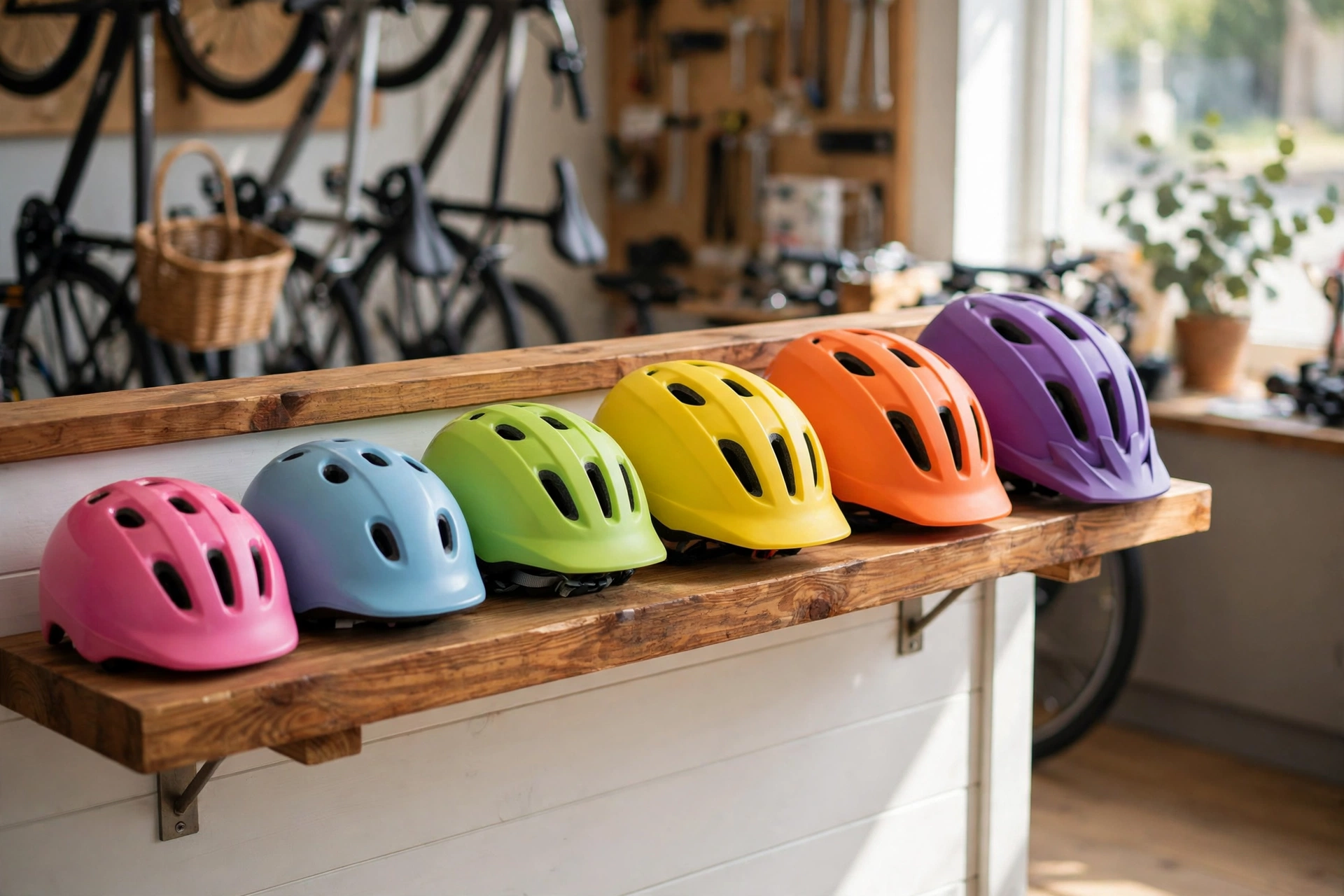
In general terms, commonly published charts tend to group kids’ helmets into bands something like these: toddler sizes around 46–50 cm, small child sizes around 50–54 cm, and youth sizes around 54–58 cm, where the range starts to overlap with adult smalls. Brands draw these boundaries differently — one maker’s “child” size may start where another’s “toddler” size ends — which is exactly why the numbers matter more than the names.
Notice what is missing from those bands: any promise about age. A chart might print “ages 3–5” beside the toddler band as a hint, but a child whose head measures 52 cm belongs in the 50–54 cm band whatever their birthday says. When in doubt, trust the tape measure over the printed age every single time.

Also note that the bands describe shell sizes, not padding tricks. A helmet at the bottom of its band fits with its thicker pads installed; a helmet at the top of its band fits with pads compressed and the fit dial opened up. That is normal and safe — manufacturers design the full band to work — but it means a child who measures at the very bottom of a band usually gets a plusher, more forgiving fit than a child maxing out the same size, one more reason a mid-band measurement is the easiest to fit well.
How Do You Read a Size Chart Correctly?
Start with a measurement: wrap a soft tape around your child’s head about an inch above the eyebrows and ears, keep it level and snug, and read the result in centimeters. Then find that number in the chart of the specific helmet you are buying — not a generic chart from another website, because brands size differently and the same child can land in different labeled sizes across brands.
If the measurement falls inside one band, that is the size. If it falls right on a boundary, read the article’s fit guidance for that brand and try the fit checks in the next section. And if a chart lists both age and circumference and the two disagree for your child, follow the circumference. The age column is the estimate; the centimeter column is the specification.
What Else Matters Besides the Size Number?
Head shape, for one. Children’s heads are not all the same shape, and a helmet in the “right” centimeter band can still rock side to side or pinch at the forehead if its internal shape does not match. A rear fit dial helps fine-tune, and different brands suit different head shapes, so a failed fit in one brand is worth retrying in another.
Safety features are worth a look once size is settled. Every kids’ bike helmet sold in the US must meet the same federal safety standard, and some add extras such as rotational liners — our explainer on what MIPS is in a helmet and whether kids need it walks through how that technology works. Fit first, certification always, features second: that order keeps a child protected.
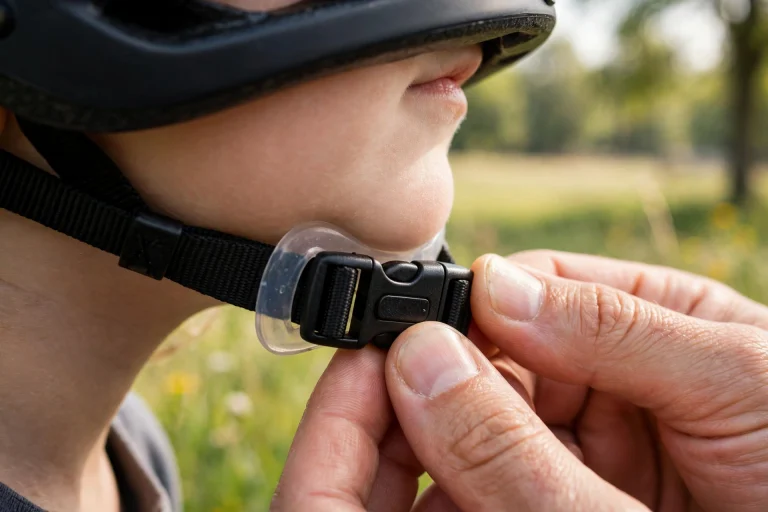
Whichever size the chart points to, confirm it with three quick fit checks once the helmet is on: it sits level with the front edge about two finger-widths above the eyebrows, it barely moves when your child shakes and nods their head, and the chin strap allows two flat fingers between strap and chin. A helmet that passes those checks in the chart-recommended size is a good fit; one that fails them needs a size change or a different brand, whatever the chart said.
When Should You Re-Measure and Move Up a Size?
Re-measure at the start of every riding season, and any time the current helmet starts leaving deep red marks on the forehead, feels like a struggle to pull on, or cannot sit level because it perches too high. Pads that have compressed flat and straps that no longer adjust are also signs the helmet has reached the end of its useful fit.
When your child’s measurement crosses into the next band, move up — even mid-season. A helmet that has become too small sits too high on the head and leaves the forehead exposed, which is the opposite of what it is for. Keep the outgrown helmet only as a hand-me-down if it has never been crashed and still fits the next child’s measurement; otherwise retire it.
Frequently Asked Questions
Q: My child’s age and head measurement point to different sizes. Which wins?
A: The measurement, always. Age on a chart is a population average and a rough guide; the circumference in centimeters is your child’s actual head. Buy the size the measurement indicates.
Q: Are size charts the same for every brand?
A: No. Each brand sets its own bands and boundaries, so a size that fits in one brand may not match another. Always read the chart for the exact helmet you are buying and match your child’s centimeter measurement to it.
Q: What if my child’s measurement is between two sizes on the chart?
A: Try the smaller size first if it sits comfortably with no pinching, since pads compress slightly with use. Size up only if the smaller is genuinely too tight, and use the fit dial and maker-supplied pads to snug it — never add your own padding.

Olivia
Writer at Helmet Today, covering helmet reviews, fit and riding safety.