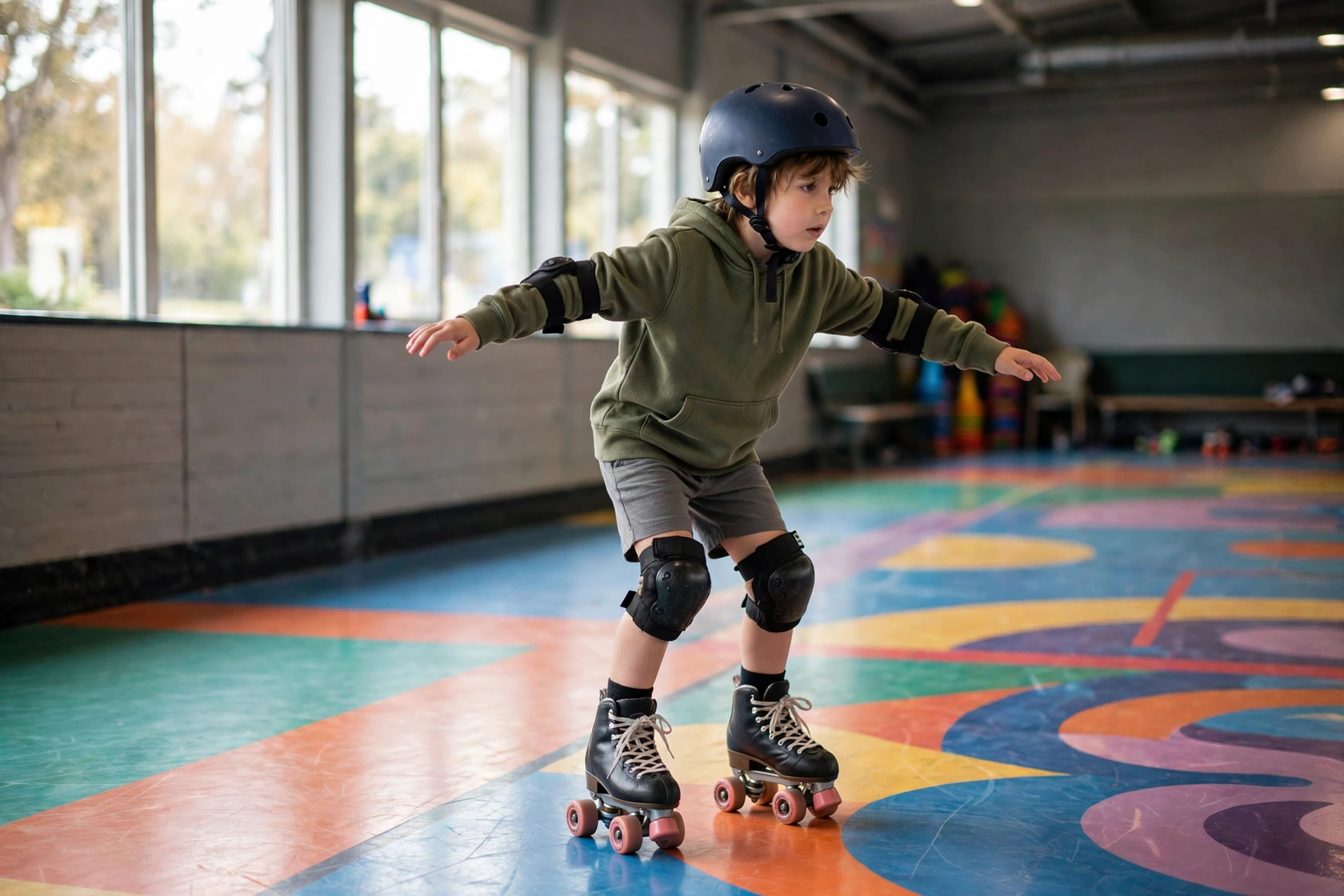
A beginner roller skater should wear a helmet with full back-of-head coverage, ideally one certified for skating or dual-certified for biking and skating. Skaters fall backward far more often than cyclists, so the back of the head is the area that needs the most protection. A classic round skate-style helmet covers it better than most vented bike helmets.
If your child is lacing up skates for the first time, the helmet you already own for the bike may not be the best tool for the job. This guide explains what makes a good roller skating helmet for a beginner, how it differs from a bike helmet, and how to get the fit right.
What Kind of Helmet Does a Beginner Roller Skater Need?
Look for a helmet that is certified for skating or that carries dual certification for both cycling and skating. In general terms, bike helmets are tested under the US CPSC bicycle standard, while skate helmets are often tested under the ASTM standard for skating, which looks at repeated lower-energy impacts rather than only one big crash. A dual-certified helmet meets both, so one helmet can safely cover bike and skates.
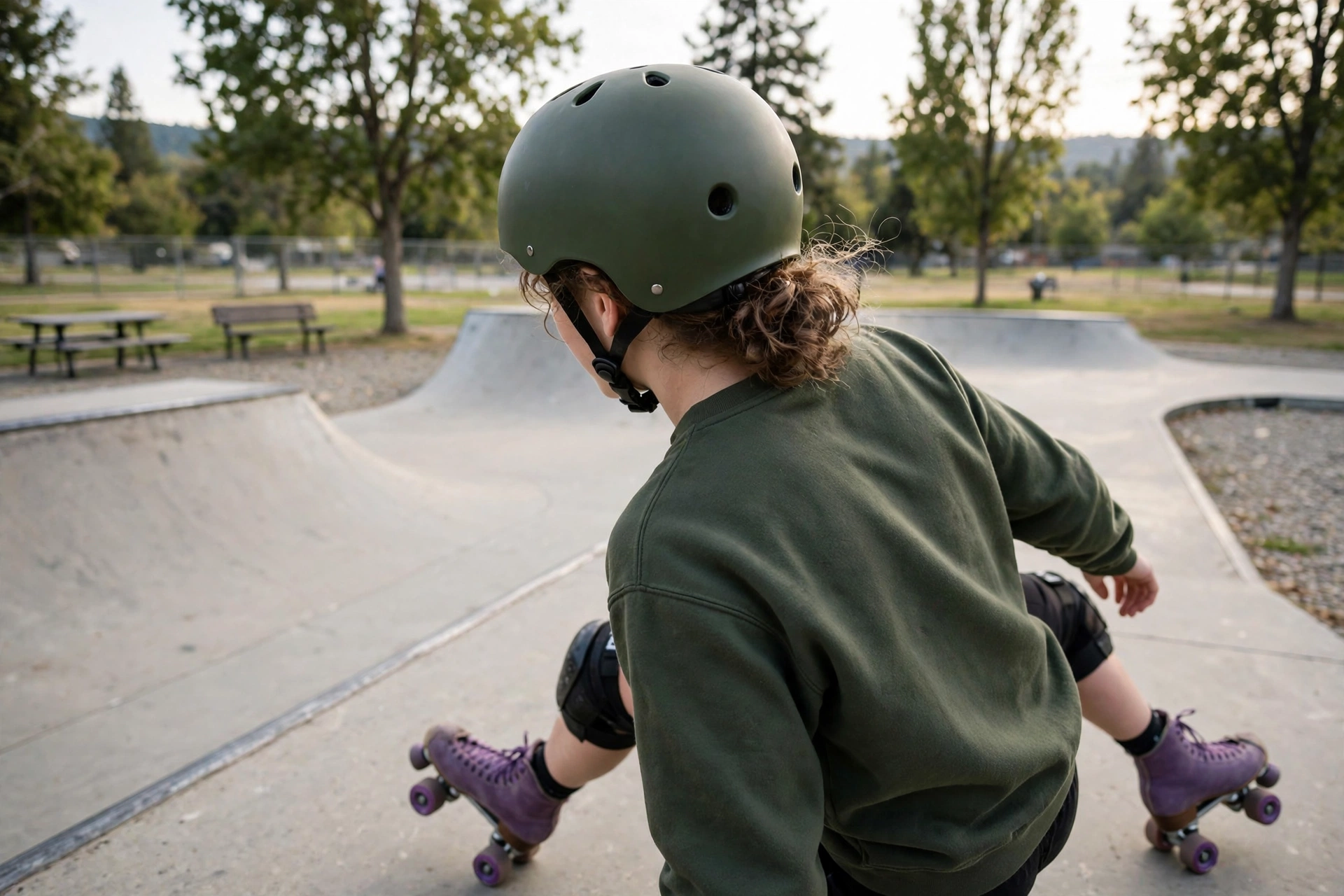
Shape matters as much as the sticker. Skate-style helmets have a rounder shell that extends lower at the back and sides, wrapping more of the skull. That extra coverage is exactly what a beginner needs, because new skaters tend to fall backward when their skates shoot out in front of them.
Avoid soft foam caps and uncertified fashion helmets. They may look like skate helmets, but without a certification label inside, they have not been tested to protect your child’s head in a real fall.
Ventilation is a smaller concern for skating than for cycling, since sessions are usually shorter and slower. Skate helmets have fewer vents, which is fine — but in hot weather, choose a session time in the shade and take water breaks, because a helmet that feels stifling will tempt your child to take it off. Fit and coverage should never be traded away for a cooler-looking design.
Why Is Back-of-Head Coverage So Important for Skaters?
Beginner falls follow a pattern. A child steps, the wheels roll faster than expected, the feet slide forward, and the child lands sitting down — sometimes whipping the head backward onto the ground. The back of the head and the base of the skull take the impact.
A helmet that ends high at the back, like many lightweight road bike helmets, leaves more of that area exposed. A skate helmet’s lower rear edge covers it. When you shop, have your child put the helmet on and check that the shell reaches well down the back of the head, close to the neck, without digging in.
Coverage at the sides counts too. Temple coverage helps in sideways falls, which are common while learning turns and stops.
Should a Skating Helmet Be Replaced After a Fall?
It depends on the helmet type. A standard bike helmet is designed to absorb one serious impact by crushing its foam, and it should be replaced after any hard fall, even if it looks fine. Damage can hide inside the foam.
Some skate helmets use a softer foam designed to take repeated smaller knocks, which suits the frequent low falls of learning to skate. Even so, these helmets have limits. If your child takes a hard hit, if the shell cracks, or if the foam feels dented or loose, replace the helmet. When in doubt, replace it — a new helmet costs far less than a head injury.
Also replace any helmet your child has outgrown. A helmet that sits on top of the head like a cap no longer protects the areas it was designed to cover.
How Should a Kids Skating Helmet Fit?
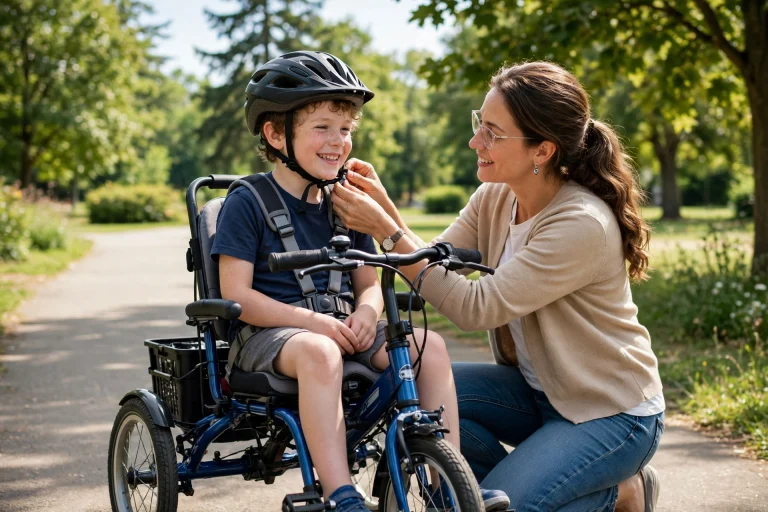
The helmet should sit level on the head, low on the forehead — about two finger widths above the eyebrows — and it should not tip back like a baseball cap. It should feel snug all around without causing a headache.
Use the sizing pads or adjustment dial until the helmet does not rock side to side or front to back when your child shakes their head. The strap should form a V around each ear, and the chin strap should be snug with about one finger of room underneath.
Have your child wear the helmet for ten minutes before the first skating session. Pressure points show up after a few minutes, and a helmet that hurts will end up carried instead of worn.
What Other Gear Do Beginner Skaters Need?
A helmet is the most important piece, but beginners fall on their hands and knees constantly. Wrist guards are the next priority, because children instinctively throw their hands out to catch a fall, and wrist injuries are among the most common in skating. Knee pads and elbow pads round out the set and make kids braver about practicing, which helps them learn faster.
Fit the pads snugly so they stay over the joint during a fall. Loose pads slide out of place at the exact moment they are needed. Bright colors help drivers and other skaters see your child, and they also make the gear more fun to wear.
Beyond basic impact protection, some parents look at rotational protection systems. Our guide to what MIPS is and how it works explains how these low-friction layers are designed to reduce rotational forces in angled falls.
How Can You Help a Beginner Practice Falling Safely?
Falling is part of learning, so teach your child how to fall on purpose. On grass or a mat, practice crouching low, tucking the chin, and rolling or sitting down to the side instead of throwing the hands straight back. Bending the knees when balance wobbles lowers the center of gravity and prevents many falls.
Start on smooth, flat ground away from traffic, slopes, and crowds. Short sessions build skill without exhaustion, and tired legs fall more. With the right helmet, full pads, and a safe practice space, most kids are rolling confidently within a few outings.
Frequently Asked Questions
Q: Can my child use a regular bike helmet for roller skating?
A: A certified bike helmet is far better than nothing, but it covers less of the back of the head, where skaters usually land. A skate or dual-certified helmet is the safer choice for regular skating.
Q: Does a roller skating helmet need to be certified?
A: Yes. Look for a label showing it meets the US CPSC standard and/or the ASTM skating standard. Uncertified helmets have not been tested for real impacts.
Q: How long does a kids skating helmet last?
A: Replace it after a hard fall, when it is outgrown, or when the foam and straps show wear. Kids usually outgrow a helmet before it ages out.

Olivia
Writer at Helmet Today, covering helmet reviews, fit and riding safety.