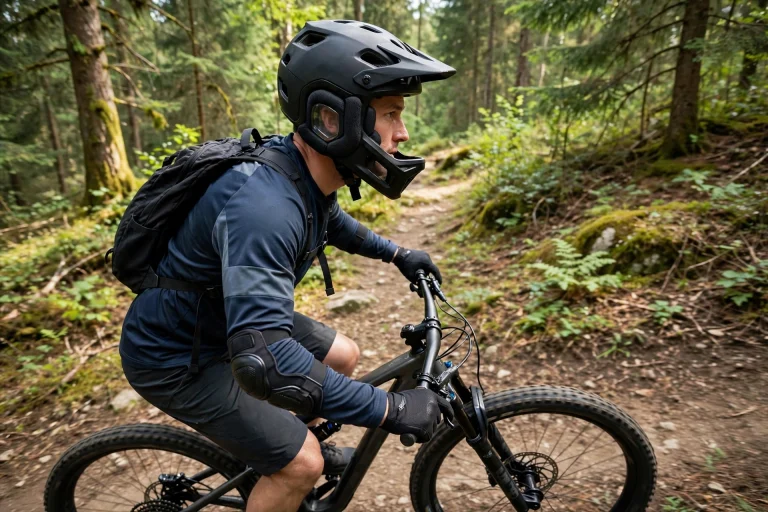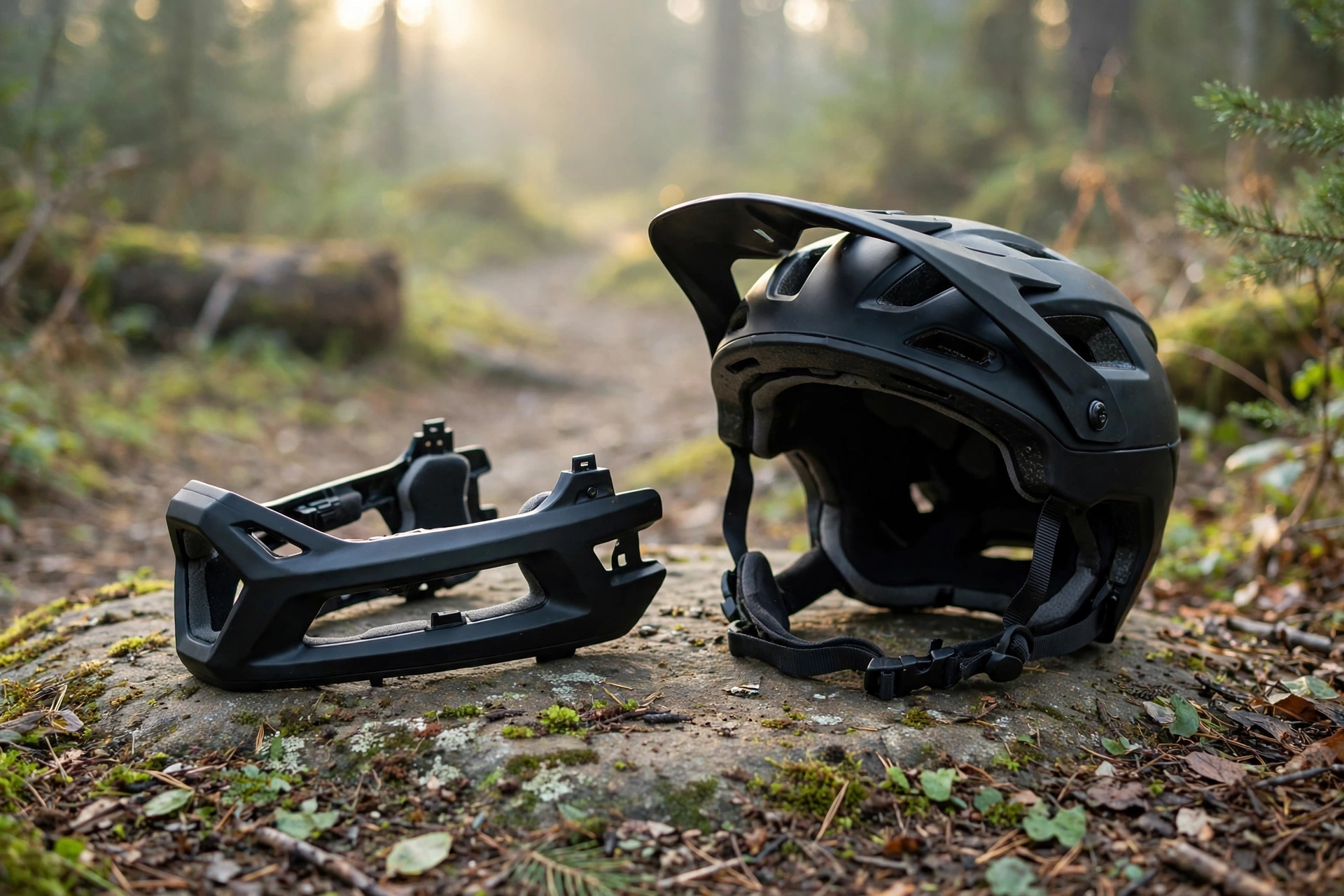
In general terms, a full face MTB helmet with a removable chin bar is a convertible helmet: the chin bar clips onto an open-face shell for descents and comes off for climbs, giving you two helmets in one. With the bar attached you get the face and jaw protection of a full-face helmet; with it removed you get the ventilation and light weight of a trail helmet. It is a popular choice for riders who climb to their descents and do not want to carry two helmets.
A dedicated full-face helmet is stronger and simpler, while an open-face trail helmet is lighter and cooler. A convertible tries to cover both jobs, and understanding how the chin bar works — and where the compromise lies — helps you decide whether that trade-off suits your riding.
How Does a Removable Chin Bar Attach?
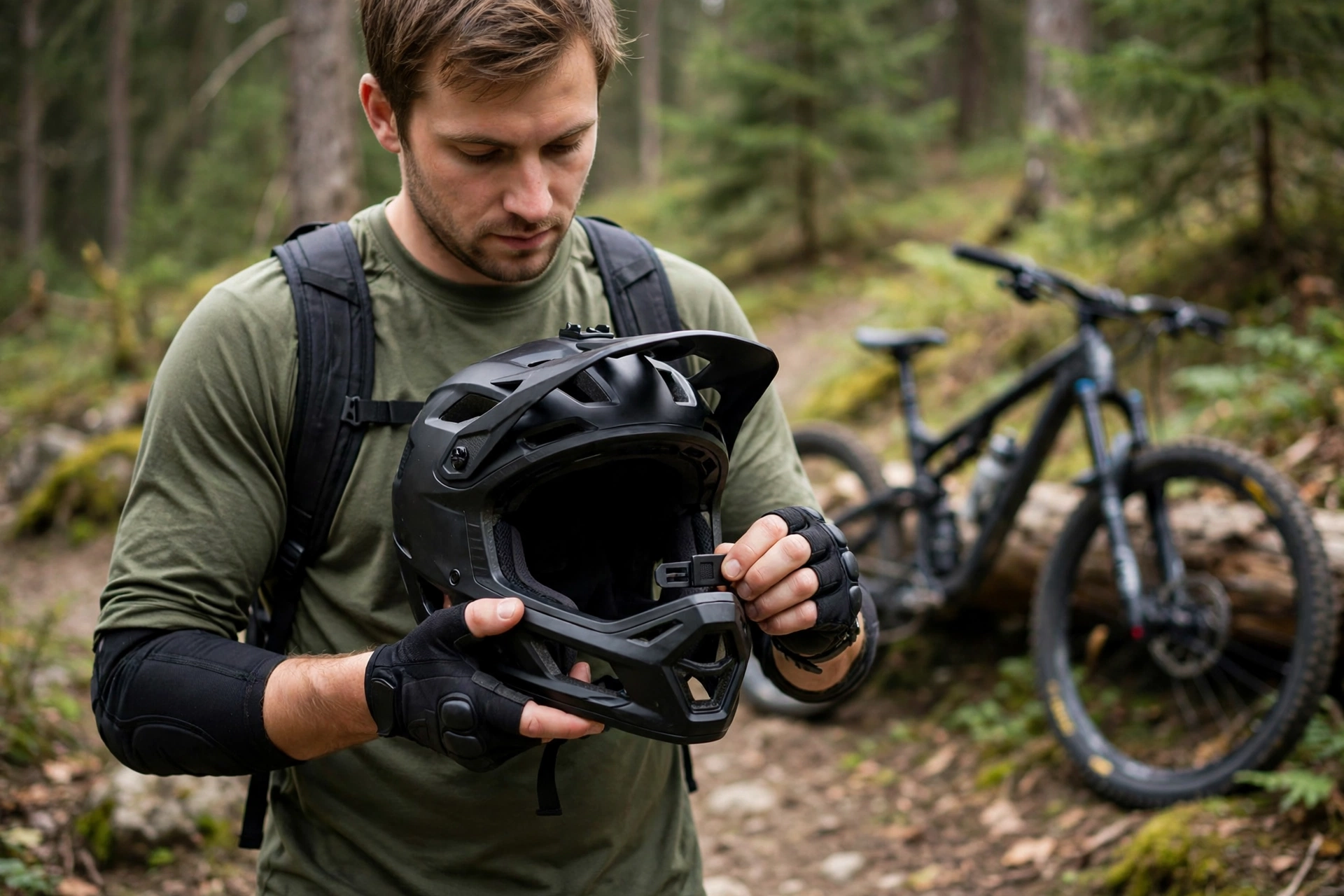
Most removable chin bars attach to the main shell with a set of metal or reinforced plastic latches, usually at two or three points on each side. You line the bar up with the mounts, press it into place, and the latches click shut. Removing it is the reverse: you press release buttons or levers, often with both hands, and lift the bar away. The mechanism is designed to be operated without tools, so you can switch configurations at the trailhead or on the side of the trail.
The latches are the most important part of the design. In a crash, the chin bar has to stay attached and transfer impact forces into the shell rather than breaking free. Manufacturers test the assembled helmet as a complete unit, and the chin bar is part of that tested system. That is why you should only use the chin bar that came with your helmet, or one the manufacturer lists as compatible — a bar from another model may look like it fits while engaging the latches only partly.
Some designs add a secondary lock that stops the bar releasing under impact loads — learn how yours works before your first ride. A chin bar that feels loose, rattles, or needs force to latch is a warning sign: check the mounts for dirt or damage, and do not ride until the connection is solid.
When Should You Ride With the Chin Bar On?
Put the chin bar on whenever the descent is steep, fast, or technical enough that a face-first fall is a realistic risk. That includes lift-served bike park runs, steep natural descents, jump lines, and any trail where you will be riding at speed over rocks, roots, and drops. In those situations the chin bar protects your jaw, chin, and teeth, which an open-face helmet leaves exposed.
Take it off for the climb. Climbing in a full-face helmet is hot, heavy, and restrictive, and the chin bar limits airflow and makes drinking and talking harder. On a long fire-road climb or a gentle pedal to the top of a trail, the open-face configuration is far more comfortable, and the risk profile is lower because speeds are low and the ground is usually smoother.
Many riders switch at the top of the descent: climb with the bar off, clip it on before dropping in. If your route mixes short climbs and descents, leaving the bar on all ride may suit you better. As a rule, if you are unsure whether a section deserves the chin bar, fit it — a few minutes of extra warmth is a small price for face protection.
Is a Convertible Helmet as Protective as a Full Face Helmet?
In general terms, a convertible helmet with its chin bar attached is close to a dedicated full-face helmet, but not quite equal. The chin bar is a separate component joined by latches, and any joint is a potential weak point compared with a one-piece shell. Dedicated downhill helmets are also usually built and certified for higher-speed impacts than convertible helmets, which are typically aimed at trail and enduro riding rather than full downhill racing.
That said, a convertible helmet in full-face mode is considerably more protective than an open-face helmet, and a sensible level of protection for enduro and trail descents. Match the helmet to the riding: a convertible suits riders who descend hard on trails they also climb, while a dedicated downhill helmet remains better for bike park racing and the steepest tracks.
Rotational impact protection is available on many convertible helmets, and it is worth understanding whatever helmet you choose. This guide to what MIPS means for helmets explains how one such system works and why angled impacts matter on the trail.
What Should You Check Before Buying One?
Fit comes first, and it must be right in both configurations. Try the helmet with the chin bar on and off: it should sit level, feel snug without pressure points, and stay put when you shake your head. Check that the chin bar sits close to your chin without touching it, and that your goggles or glasses still fit comfortably with the bar attached.
Next, test the latch mechanism in the shop. Clip the bar on and off several times. It should engage with a clear click, feel solid with no play, and release without a struggle. Ask whether the helmet is certified with the chin bar attached, and whether that certification covers the configuration you plan to ride in — some helmets are certified in both modes, others only in one.
Weight and ventilation matter too, because you will wear this helmet for whole rides. Compare the weight with the bar on and off, and look for large front vents and internal channelling to help on climbs — the bar itself will always restrict airflow a little. Finally, check spare parts availability: latches, pads, and mounts wear, and a helmet you cannot maintain is short-lived.
How Do You Maintain a Removable Chin Bar?
Keep the latch mounts clean. Mud and grit work into the mechanism on wet rides, and a dirty latch may not engage fully. After muddy rides, rinse the mounts gently, let them dry, and check the bar clicks in cleanly. Never force a stiff latch — find the grit or damage causing the resistance.
Inspect the bar and mounts regularly for cracks, bent pins, or worn catches. If the helmet itself is damaged, replace the whole helmet; if only the bar is cracked, replace it with the manufacturer’s exact part. Never ride with a cracked chin bar — it may fail exactly when you need it.
Store the helmet with the bar either attached or safely stowed where it cannot be knocked or bent. Pads and liners can be removed and washed according to the manufacturer’s instructions, which keeps the helmet comfortable and extends its life. And as with any helmet, replace it after a serious crash, even if the damage is not obvious.
Frequently Asked Questions
Q: Can I ride with the chin bar off on a descent?
A: You can, but you lose face and jaw protection, so it is only sensible on gentle, low-speed descents. For steep or technical descents, fit the chin bar before you drop in.
Q: Is a convertible helmet allowed at bike parks?
A: In general terms, many bike parks accept convertible helmets in full-face mode, but rules vary. Check the park’s requirements before you go, especially for racing or uplift days.
Q: How do I know the chin bar is properly locked?
A: It should click firmly into place on both sides, with no movement or rattle when you tug it. If it feels loose or only partly engaged, clean the mounts and refit it before riding.

Olivia
Writer at Helmet Today, covering helmet reviews, fit and riding safety.