The difference comes down to the standard each helmet is built and tested for: a recreational ski helmet is certified to ASTM F2040 or EN 1077 for general resort skiing, while a true race helmet in general terms must meet the tougher FIS RH 2013 specification, which tests the helmet at higher impact speeds — and race models are stiffer, less vented, and often fitted with a removable chin guard for slalom. If you never enter a sanctioned race, the recreational helmet is the right tool; if you race in FIS-sanctioned events, the race helmet is not optional.
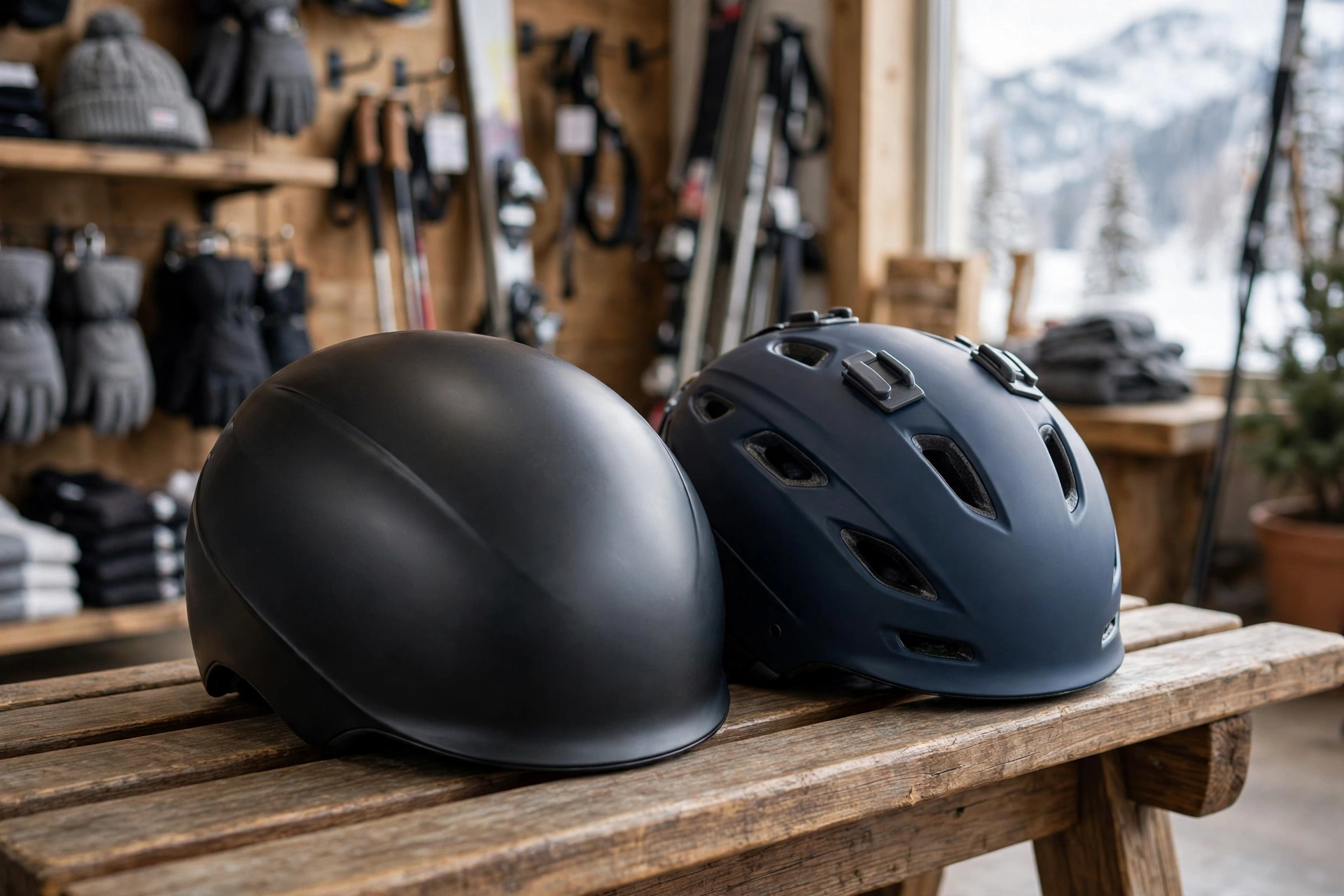
On a shop wall the two can look almost identical, which leads to two mistakes: recreational skiers overpaying for a race helmet they do not need, and junior racers showing up at a start gate with a helmet that does not meet the rules. This guide explains how the standards differ and how to tell which type you actually need.
What Standards Does Each Helmet Have to Meet?
Recreational ski helmets are certified to one of the two common snow-sport standards: ASTM F2040 in North America or EN 1077 in Europe. In general terms, both test impact absorption, coverage, strap strength, and roll-off resistance at speeds representing typical recreational falls. EN 1077 also splits helmets into Class A, with more ear and side coverage, and Class B, with less coverage and more ventilation.
Race helmets for events sanctioned by the FIS — the International Ski and Snowboard Federation — face a higher bar. In general terms, helmets for the speed and technical disciplines at sanctioned levels must conform to the FIS RH 2013 specification, which certifies the helmet through impact testing at higher speeds than the recreational standards require. The point is straightforward: racing crashes happen at racing speeds, and the helmet rule follows the energy involved.
Many race helmets carry both certifications — the FIS specification plus ASTM F2040 or EN 1077 — so they are legal everywhere, on a race course and on a recreational slope alike. The reverse is not true: a helmet certified only to the recreational standard does not become race-legal because it looks racy. If racing is the goal, the label inside the helmet is what matters, not the paint job.
How Does the Construction Differ?
Because the race standard tests at higher energy, race helmets in general terms use denser foam, stiffer shells, and construction tuned for big single impacts at speed. Vents are usually fixed or absent — shell integrity matters more than airflow when a run lasts two minutes — and comfort features like plush liners and audio-ready ear pads take a back seat to a locked-down, precise fit.
Recreational helmets are built for six-hour days rather than two-minute runs. They typically offer adjustable vents, removable ear pads, lighter in-mold construction, fit dials, and in many models extra systems such as rotational-impact liners — our guide to MIPS and rotational protection explained covers how those liners work and why recreational riders benefit from them on everyday falls.
The weight difference follows from all of this. Race helmets tend to feel heavier and tighter, with less give in the shell when you squeeze it, while recreational helmets feel softer and more cushioned. Neither feel is a quality judgment — each is the physical result of the test the helmet was designed to pass.
What Is the Chin Guard For, and Who Needs One?
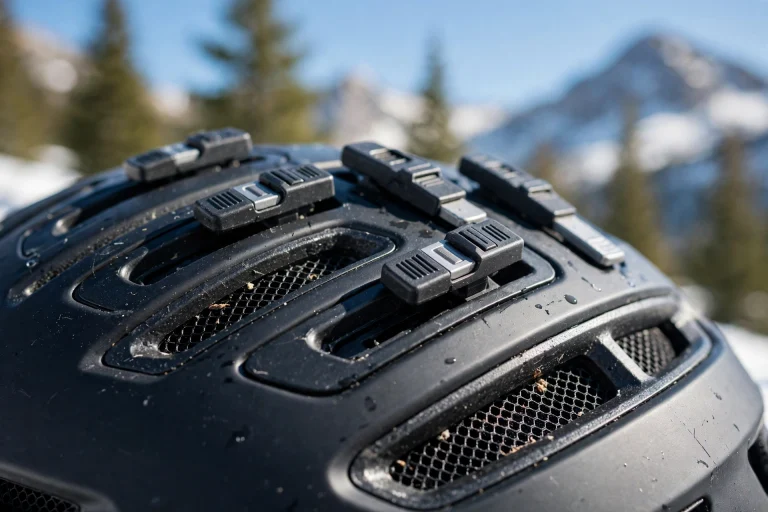
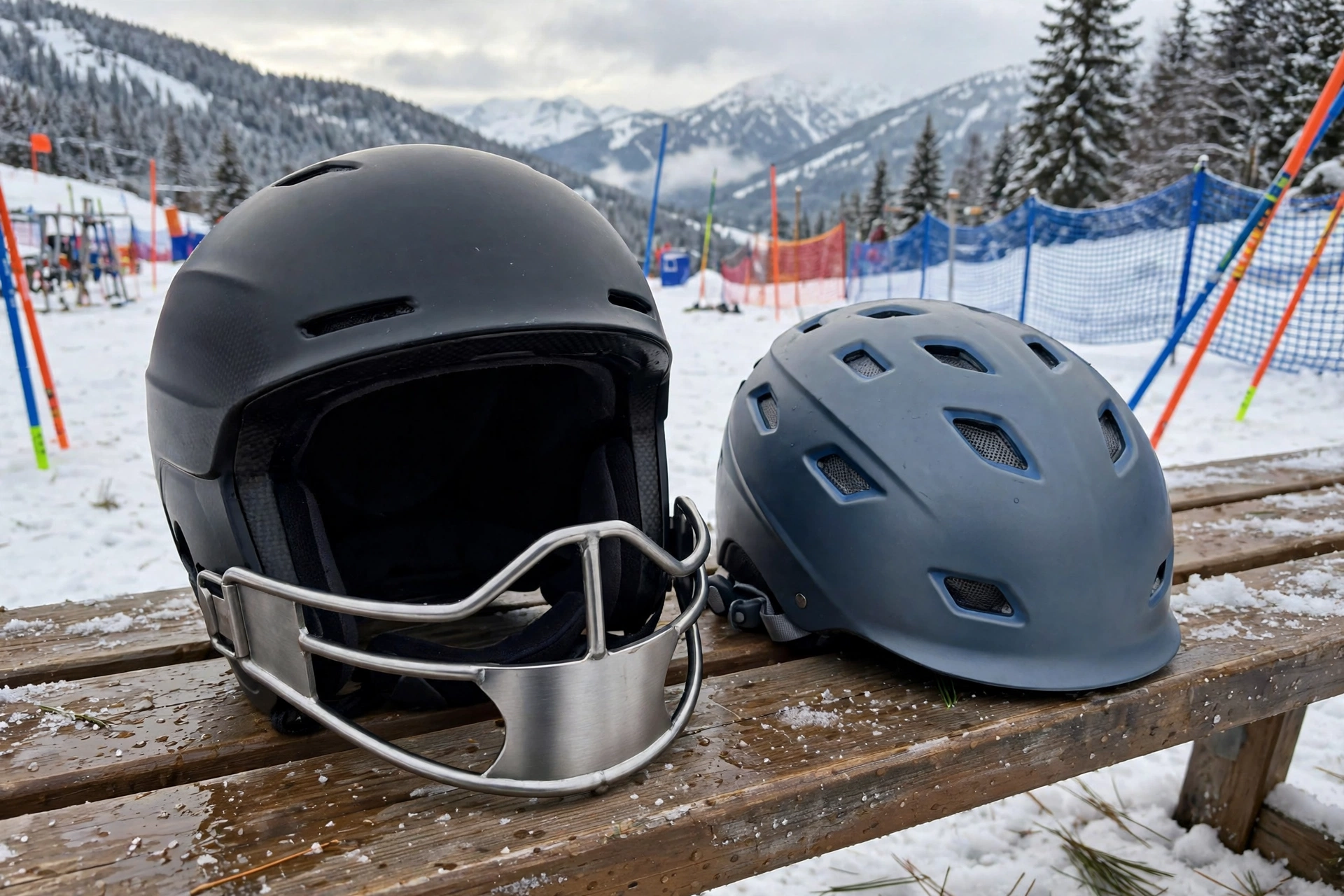
The chin guard is the most visible race-only feature. In slalom, racers cross-block spring-loaded gates that snap back toward the face, and the guard — a bar that attaches across the front of the helmet — deflects those gates away from the skier’s chin and mouth. In general terms, a slalom chin guard must be fitted to a helmet designed to accept one; race helmets have the mounting points built in.
Recreational helmets almost never accept a chin guard, and recreational skiers never need one — there are no gates rebounding at your face on a groomed blue run. The guard is removed for the other disciplines, since it is only used in slalom, so even racers treat it as an add-on rather than part of the helmet.
One caution: never improvise a guard or drill mounts into a recreational helmet. Drilling or gluing hardware onto a shell can compromise the structure the certification depends on, and a modified helmet may no longer perform the way it was tested. If you need a guard, you need the race helmet that was built for it.
Which One Should a Recreational Skier Buy?
For resort skiing, ski school, and recreational leagues that do not enforce FIS equipment rules, a recreational helmet is the better buy in almost every way: more comfortable across a full day, better ventilated, usually lighter, and certified for exactly the falls recreational skiers actually take. A race helmet’s extra stiffness buys protection calibrated for speeds most recreational skiers never reach, at the cost of comfort they feel on every run.
Buy the race helmet when the rules require it. Junior racers entering sanctioned events, masters racers, and anyone in FIS-governed competition should check their program’s equipment rules before the season, because compliance is checked and a non-conforming helmet can mean not starting. In general terms, the requirement applies most strictly at higher levels and speed events, and programs publish exactly which specification they enforce.
Some skiers split the difference with a hard-ear recreational helmet: fixed ear coverage and a firmer fit than a soft-ear model, still certified to the recreational standard. That style suits skiers who like a locked-in feel or race casually in local leagues — just remember it is the certification, not the ear design, that officials check.
How Can You Tell Them Apart When Shopping?
Read the label. Every certified helmet carries a sticker or printed label inside naming its standard. Recreational models will say ASTM F2040 or EN 1077 (with Class A or B). Race models intended for sanctioned competition state conformity with the FIS RH 2013 specification, and retailers often market them with words like “FIS certified” or “race legal.” If you cannot find the specification on the label, ask — a genuine race helmet’s maker will state it plainly.
Physical clues confirm what the label says: a race helmet usually has a noticeably rigid shell, minimal or no vent adjustment, a very snug race fit, and mounting points for a chin guard. A recreational helmet has vent sliders, a fit dial, removable ear pads, and a softer comfort liner.
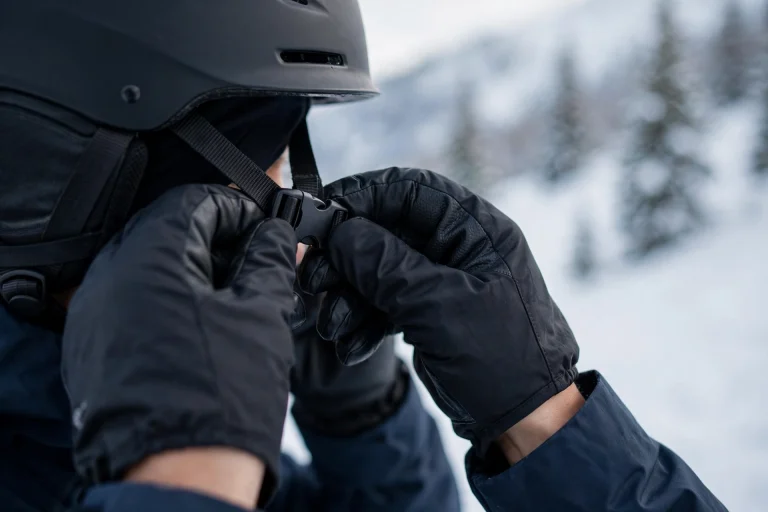
Whichever type you buy, the shared rules still apply. Fit comes first — snug, level, no rocking. Replace any helmet after a significant crash, because the foam absorbs an impact only once. And buy from a reputable source, since the certification label is only meaningful when it is genuine.
Frequently Asked Questions
Q: Can I use a race ski helmet for everyday resort skiing?
A: Yes — a helmet meeting the FIS specification also exceeds the recreational standards, so it is legal and protective on any slope. Most skiers simply find it stiffer, heavier, and less ventilated than they want for a full day of recreational skiing.
Q: Does my child need an FIS helmet for ski racing?
A: It depends on the level and the program. In general terms, sanctioned FIS events require helmets conforming to FIS RH 2013, while younger age groups and local programs sometimes follow the recreational standard. Check your club’s equipment rules before buying, because they decide what is allowed at the start.
Q: Is a race helmet automatically safer than a recreational one?
A: Not in every situation. Race helmets are tested at higher impact speeds, matching racing crashes. Recreational helmets are tested for typical resort falls and often add comfort and rotational-protection features that encourage correct, consistent wear. The safer helmet is the certified one that matches your skiing and fits properly.

Olivia
Writer at Helmet Today, covering helmet reviews, fit and riding safety.