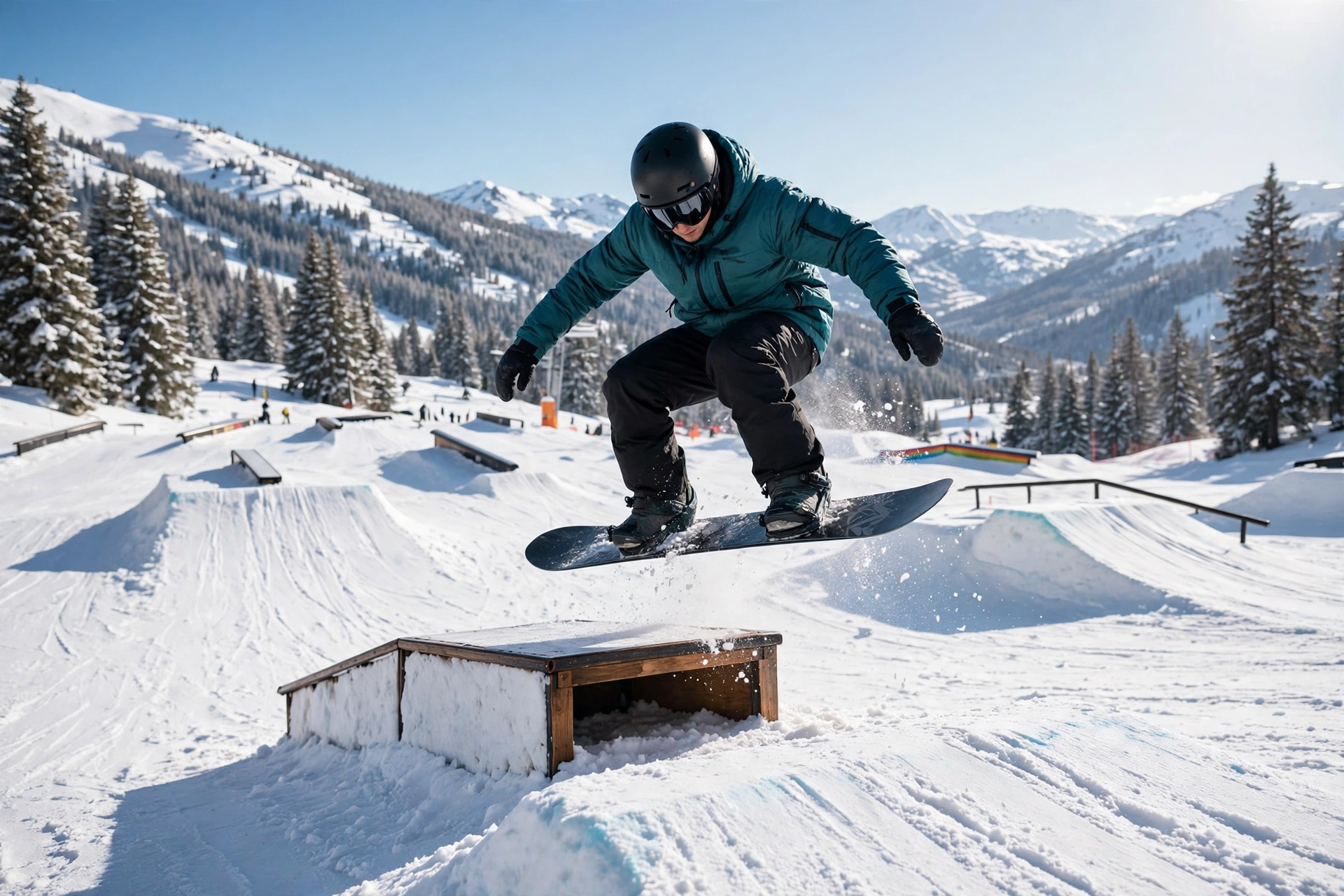
Terrain park riders do not need a completely different kind of helmet, but they do need one matched to the park’s impact pattern: low-profile, snug enough to stay put through spins and falls, certified to a snow-sports standard, and tough enough to shrug off frequent small knocks. Any certified ski or snowboard helmet with a genuinely secure fit works in the park — a loose, oversized one does not.
Park riding looks different from piste skiing: shorter runs, repeated features, falls onto hardpack and the occasional meeting with a rail or box. That pattern changes what you should look for in a helmet, even though the helmet itself comes from the same shelf. This guide breaks down what actually matters for park riders and what is just marketing.
How Are Park Crashes Different From Piste Crashes?
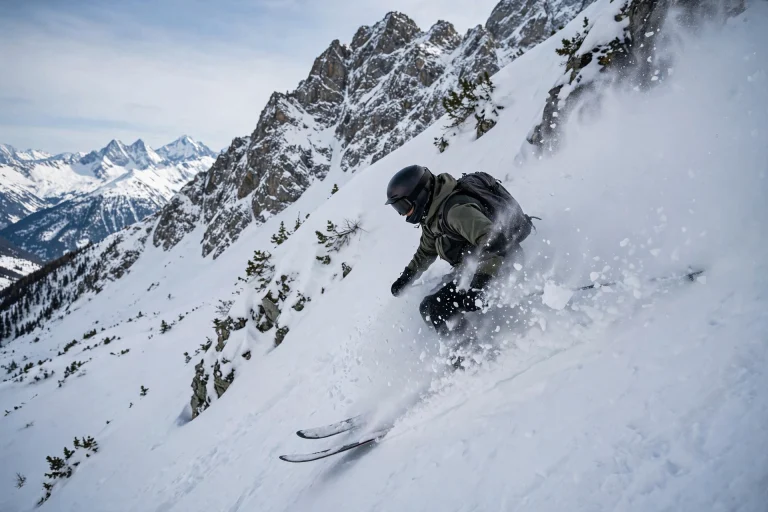
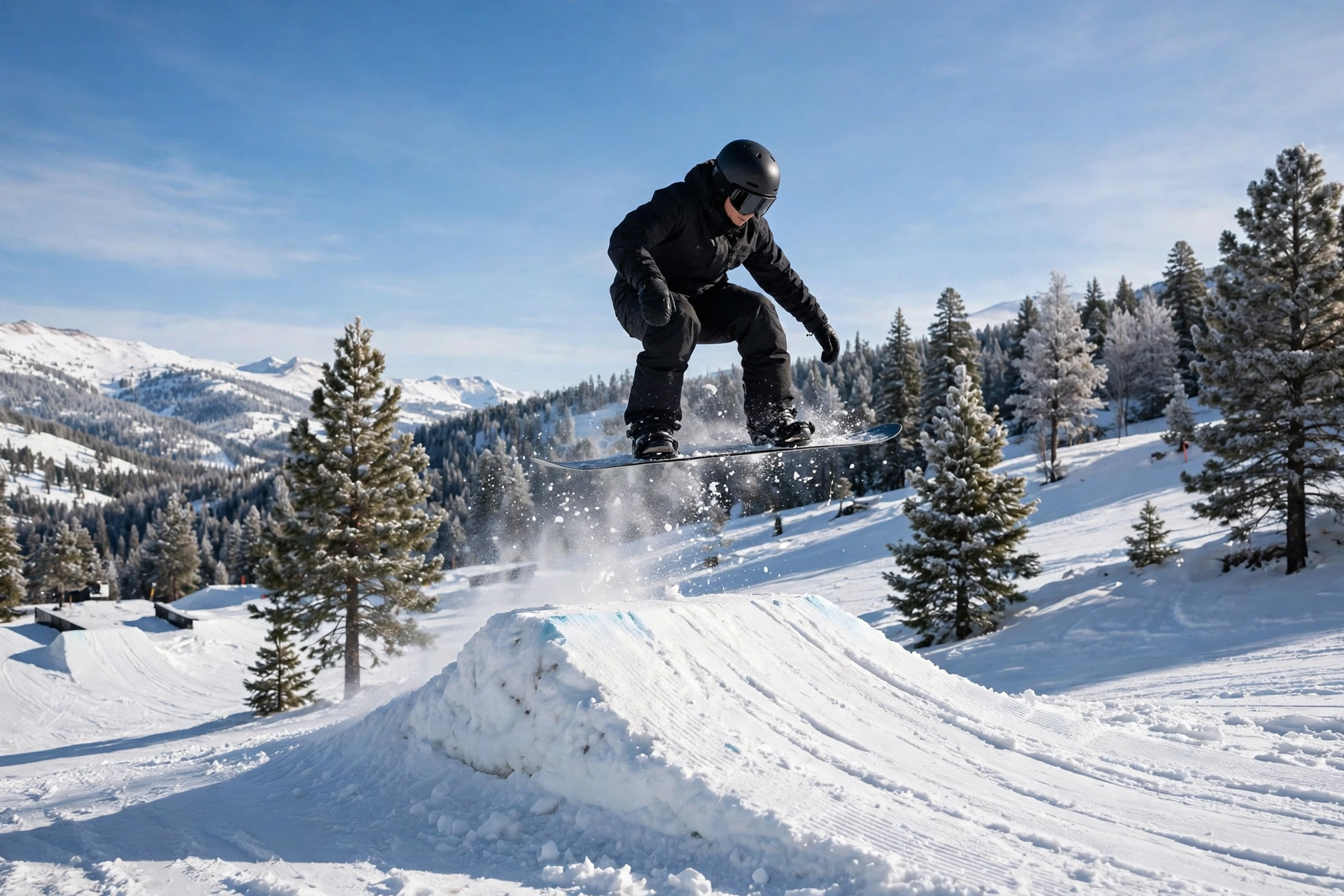
On the piste, a helmet is there mainly for the rare big event: a high-speed fall or a collision. In the park, falls are part of the session. Riders catch edges learning spins, wash out on landings, and slide into features at low speed. Most of those hits are low-energy, but they happen far more often, and backward falls onto firm snow — the classic park crash — put the back of the head in harm’s way again and again.
That frequency changes the priorities. Coverage over the back and sides of the head matters more, because those are the zones that meet the snow in park falls. So does day-to-day toughness: a park helmet gets dropped on concrete in the lift queue, knocked in the car, and tapped by skis and boards constantly, on top of the falls themselves.
It also changes the replacement conversation. A piste helmet might serve for years without a real impact; a park helmet accumulates knocks, so inspecting it honestly — and retiring it after a genuinely hard hit — becomes part of the routine.
What Certification Should a Park Helmet Have?
The same as any snow helmet: look for certification to ASTM F2040 or EN 1077, the common ski and snowboard helmet standards. There is no separate terrain park standard in general terms, and a “park style” helmet with no certification sticker is a fashion item, not protection. The sticker is usually inside the helmet or under the liner.
Be wary of swapping in a skate helmet because it has the park look. Skate helmets are certified to different standards for different impact patterns, and while some are dual-certified for snow, many are not. If the label does not list a snow standard, treat it as a skate helmet and leave it at the skatepark.
Beyond the base standard, some park-oriented helmets use foam designed to tolerate repeated smaller impacts better than traditional single-impact foam. Traditional EPS foam crushes permanently in a hard hit and the helmet is done; multi-impact style foams used in some models are built to handle the park’s diet of minor knocks — though even they must be replaced after a serious impact.
Which Features Matter Most for Park Riding?
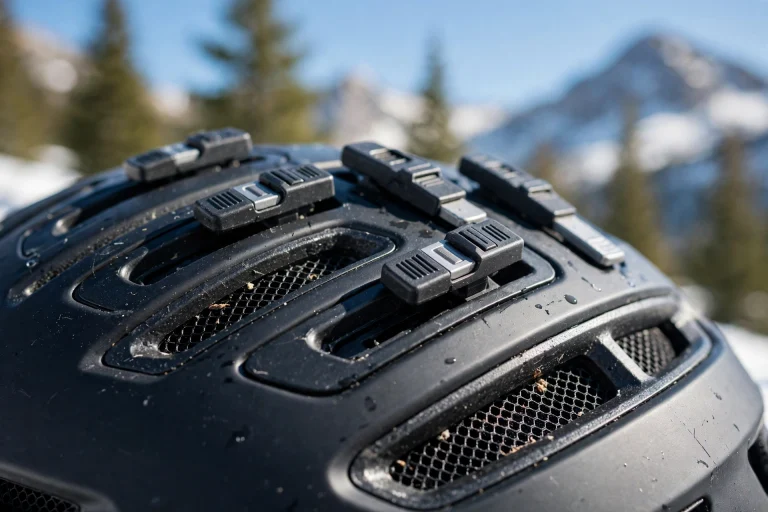
Start with profile. Park riders favor low-profile helmets that sit close to the head — they look right with the park aesthetic, but more importantly they carry less leverage in a fall and pair neatly with goggles worn over or under the helmet. Removable ear pads are the next must-have: sessions move from frosty mornings to sweaty hike-the-feature afternoons, and being able to strip the pads keeps you riding instead of overheating.
A durable hard shell earns its keep here. The constant small abuse of park life — drops, knocks, bag wear — is exactly what thicker shells shrug off, even if they weigh a little more than in-mold designs. A goggle strap keeper at the back is a small detail that matters when a fall would otherwise send your goggles into the snow.
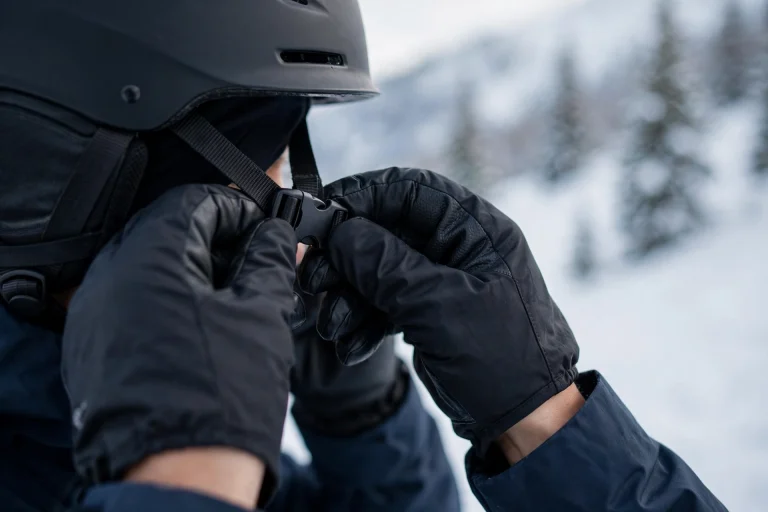
Rotational protection is worth having too. Park falls are rarely straight down; they involve twisting and sliding, which is why many riders choose a helmet with a low-friction liner — our explainer on what MIPS is and how it works covers how that layer lets the helmet shift slightly to reduce rotational forces. And whatever the feature list, the strap must be done up on every hit: park culture sometimes treats the strap casually, but an unstrapped helmet comes off in the first tumble.
How Should a Park Helmet Fit?
Snugger than you’d think, and exactly as measured. Park riders often size up to fit a beanie underneath; if that is your style, buy a helmet designed or sized for it and try it on with the beanie you actually wear, rather than forcing a sloppy compromise. With or without a beanie, the helmet should not rock when you shake your head, ride up at the back, or push your goggles out of place.
Check the system the way you will ride it: goggles under the helmet with the strap inside, or goggles over with the strap around the shell — both are legitimate park styles, but the helmet must sit level and stable in your chosen setup. The front edge should sit just above the eyebrows, and the back should cover the base of the skull, since backward falls are the park specialty.
Finish with the strap: side straps forming a V below the ears, buckle centered, and about two fingers of room under the chin strap. If you cannot get the wobble out with the dial and pads, that helmet is the wrong size or shape, however good it looks.
How Often Should Park Riders Inspect and Replace a Helmet?
Inspect after every memorable hit and at least every few sessions: take the liner out and look at the foam for cracks, dents, or crushed spots, and check the shell for cracks rather than mere scratches. Cosmetic scuffs are the park uniform; structural damage is not. Any fall where you saw stars, felt dazed, or cracked the shell ends that helmet’s career on the spot.
Keep an honest count of the middle-ground knocks too. A helmet that has absorbed repeated moderate impacts is aging faster than the calendar suggests, and foam also degrades with sweat, sun, and time. In general terms, a heavily used park helmet should be replaced sooner than a piste helmet of the same age — and immediately whenever the fit goes sloppy because the foam has packed out.
When in doubt, err toward replacement. It is the cheapest piece of protective gear in the park relative to what it protects.
Frequently Asked Questions
Q: Can I wear my regular piste helmet in the terrain park?
A: Yes, as long as it is certified to a snow standard and fits snugly. Park-specific models add durability and low-profile styling, but certification and fit are what actually protect you.
Q: Do park riders need a full-face helmet?
A: Generally no. Full-face helmets are uncommon in the park and limit hearing, vision, and comfort. Most riders who want extra face protection choose a mouthguard instead, and step up their helmet fit and coverage.
Q: Is it okay to wear a beanie under my park helmet?
A: It can be, if the helmet is sized and adjusted for it and still sits snug and level. A thick beanie under a helmet that was fitted without one usually makes the fit sloppy, which is the real problem — not the beanie itself.

Olivia
Writer at Helmet Today, covering helmet reviews, fit and riding safety.