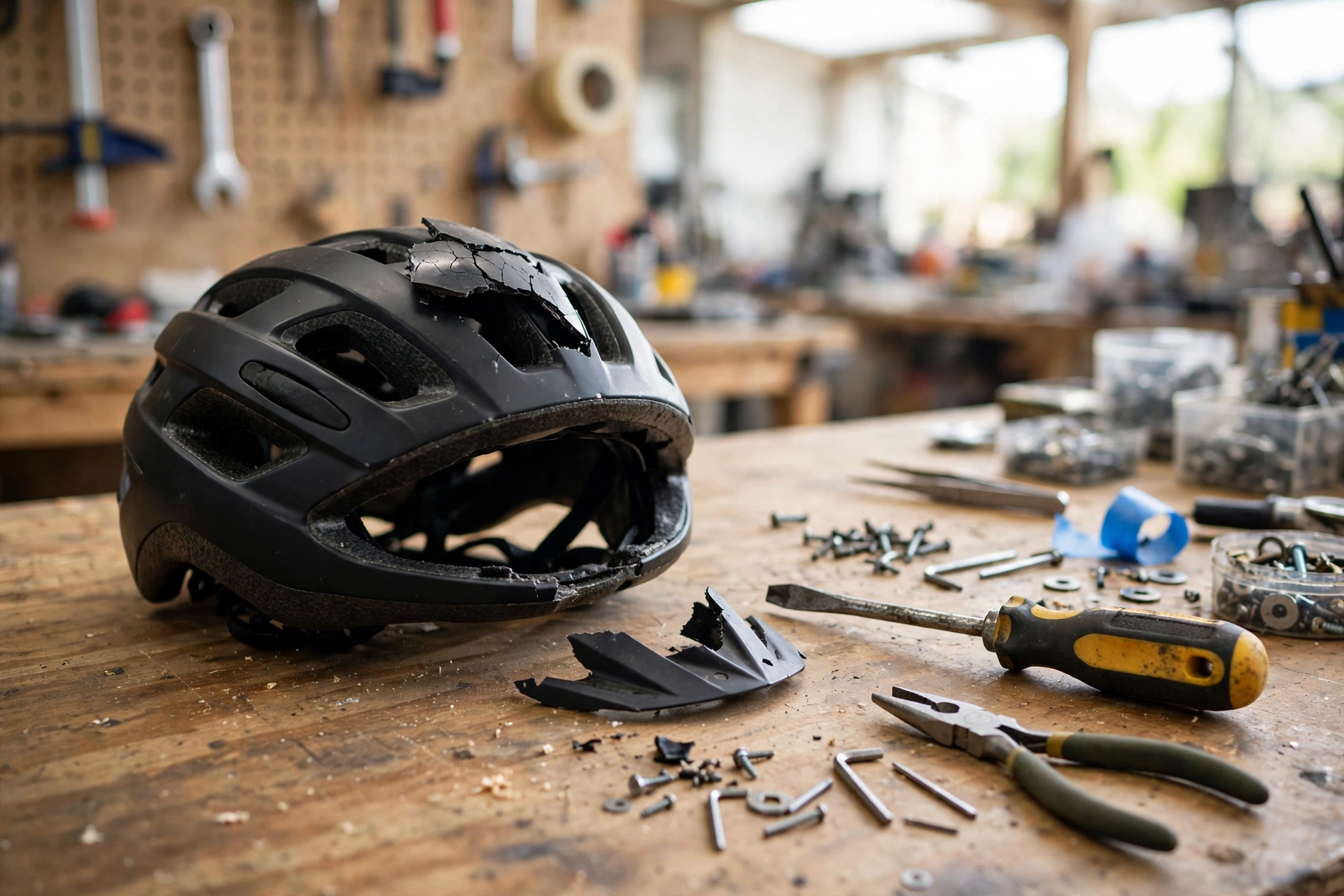
Yes, you can often repair a broken helmet vent, but only when the damage is limited to the vent itself and the helmet’s shell and liner are still sound. A vent is usually a small plastic cover, grille, or slider that sits in the shell, and it can crack, snap off, or jam without affecting the helmet’s ability to protect you. If the shell around the vent is cracked, or the liner underneath is damaged, the helmet should be replaced rather than repaired. In general terms, a vent repair is a cosmetic and comfort fix, never a fix for a helmet whose protection is in doubt.
What Does a Helmet Vent Do?
A helmet vent lets air flow through the helmet to keep your head cool and to stop sweat building up inside. Most helmets have several vents: air comes in through vents at the front, travels over the head through channels in the liner, and leaves through vents at the back. This airflow makes a big difference on a hot day or during hard exercise, because a helmet without working vents can become hot and uncomfortable very quickly. A working vent keeps you cooler and more comfortable on every ride. Good ventilation is one of the reasons people are willing to wear a helmet for hours at a time.
The vent cover itself is usually a light plastic part that clips or screws into the shell. It is not part of the helmet’s protective structure, which is why a broken vent cover can often be dealt with on its own.
How Do You Tell If a Vent Can Be Repaired?
Start by looking closely at the damage and at the helmet around it. If only the vent cover is cracked or missing, and the shell around the opening is smooth and whole, a repair is usually possible. If the vent slider is jammed, try cleaning it first, because dirt and dried sweat are a common cause. If a clip has snapped, check whether the cover can still be held in place, or whether a replacement cover is available from the maker.
Stop and replace the helmet if you find any of the following: a crack in the shell that runs out from the vent opening, a dent or crack in the liner visible through the vent, or a vent area that flexes or feels soft when you press it.
How Do You Fix a Cracked or Loose Vent Cover?
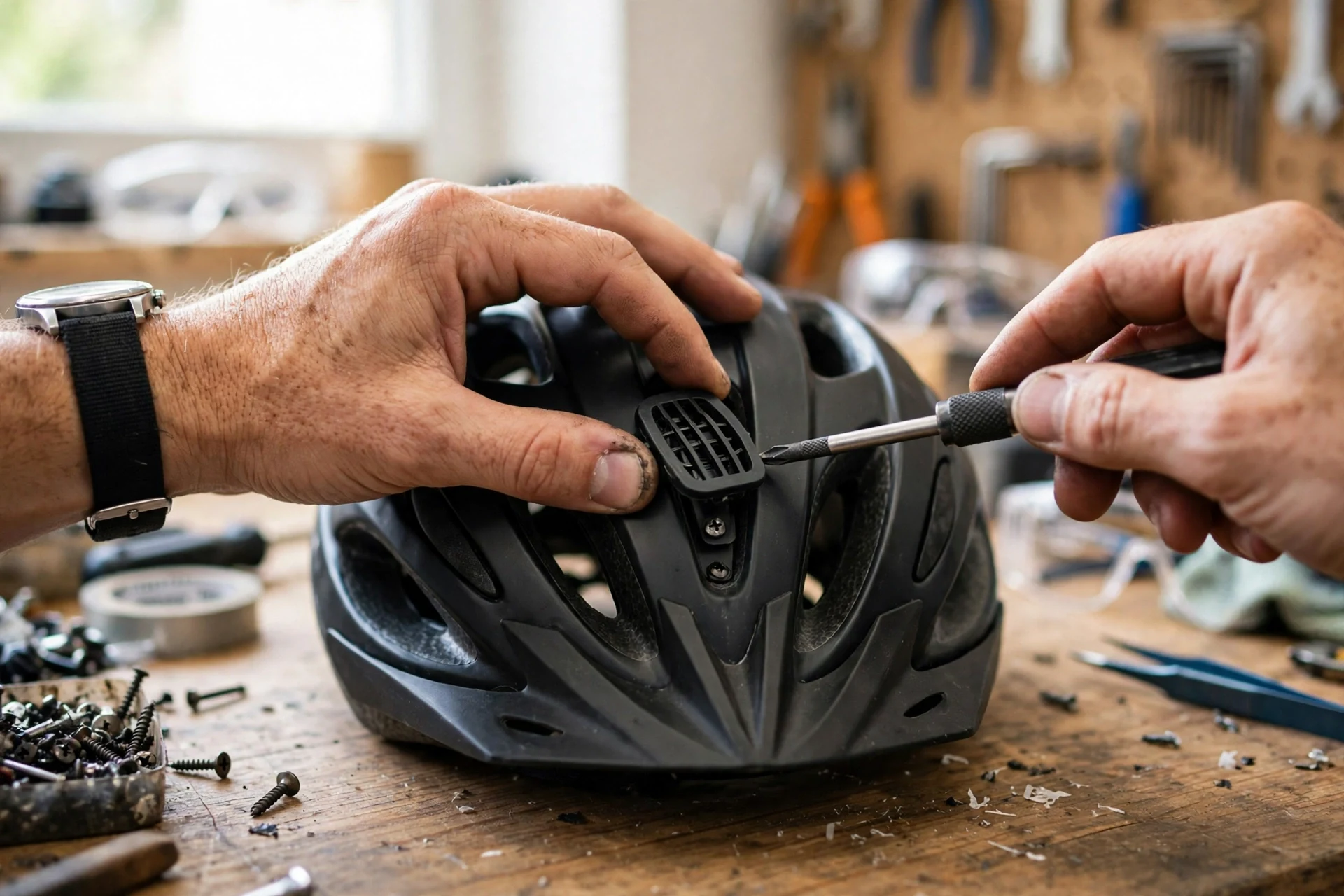
A cracked vent cover can often be glued back together with a strong adhesive made for plastic, such as an epoxy or a plastic repair glue. Clean both sides of the break first, apply a thin layer of glue, press the pieces together, and hold them until the glue sets. Let it cure fully before you use the helmet, following the time given on the glue packet. A glued vent cover will not be as strong as a new one, but it only needs to stay in place and keep the rain out, so a careful glue job is often enough.
A loose cover that has lost a clip can sometimes be held with a small piece of strong tape on the inside of the shell, or with a tiny drop of glue at the edge.
How Do You Fix a Jammed Vent Slider?
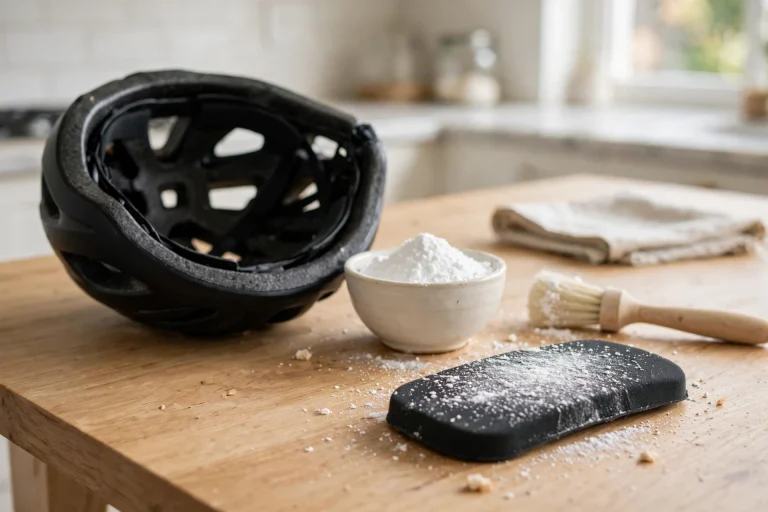
A vent slider that will not move is usually jammed with dirt, grit, or dried sweat rather than broken. Start by brushing around the slider with a soft brush or an old toothbrush to clear away loose dirt. Then wash the area with warm water and a little mild soap, working the slider gently back and forth as you clean. Rinse it and let the helmet dry fully before you test it again, because a wet slider can stick just as badly as a dirty one.
If cleaning does not free the slider, a tiny drop of silicone lubricant on the sliding track can help, but use it sparingly and keep it away from the liner and the straps.
Can You Replace a Missing Vent Cover?
Yes, a missing vent cover can often be replaced, and this is usually the best fix when the original is lost or broken beyond repair. The first step is to find the helmet’s make and model, which is usually printed on a label inside the helmet or on the box it came in. With that information, check the maker’s website or contact their customer service to ask about spare vent covers. Some makers sell them directly, while others supply them through bike shops or sports retailers.
If the maker no longer stocks the part, a universal vent cover or a cover from a similar model may fit, but check the size and the clip positions before you buy.
When Should You Replace the Helmet Instead of Repairing the Vent?
Replace the helmet instead of repairing the vent whenever the damage goes beyond the vent itself. A crack in the shell, a damaged liner, a strap that no longer holds, or a helmet that has been in a crash are all reasons to retire it, even if the vent looks like the only problem. If you want to understand one of the safety technologies used in modern helmets, reading about what MIPS is for helmets is a useful starting point, and it is a good reminder that the vent is only a small part of a helmet’s safety system.
Age is another reason to replace rather than repair. If the helmet is old, the plastic may be brittle, and a new vent cover may not hold in a weakened shell. In general terms, the vent is a small, replaceable part, while the shell and liner are the parts that save your head, and they cannot be repaired at home. If its protection is ever in doubt, replace it.
Can I ride with a broken helmet vent?
Yes, in general terms, if only the vent cover is broken and the shell and liner are sound. A broken vent is a comfort issue, but get it fixed or replaced soon, and check the helmet carefully first.
Can I glue a cracked vent cover back on?
Yes, a plastic repair glue or epoxy usually works for a cracked cover. Clean the break first, use a thin layer of glue, and let it cure fully before wearing the helmet.
When does a broken vent mean I need a new helmet?
When the shell around the vent is cracked, the liner is damaged, or the helmet has been in a crash. In those cases the helmet’s protection is in doubt and it should be replaced.

Olivia
Writer at Helmet Today, covering helmet reviews, fit and riding safety.