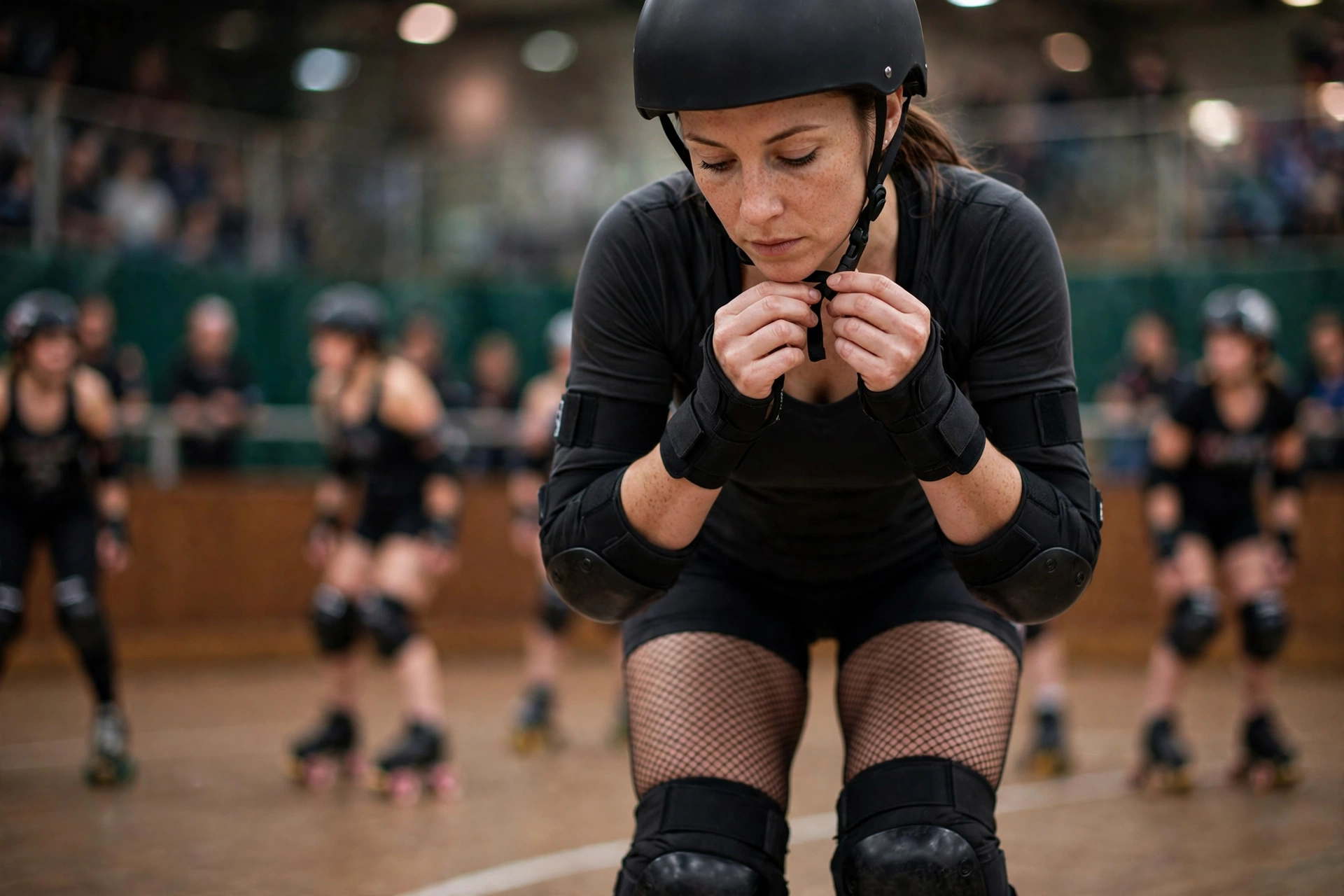
To wear a helmet comfortably with roller derby gear, start with a snug skate-style helmet, then adjust your headband, mouthguard, and hair around it, rather than loosening the helmet to make room. In general terms, comfort in derby comes from fitting everything together as one system, not from treating the helmet as an afterthought.
Derby gear is a lot to wear at once: helmet, mouthguard, wrist guards, elbow pads, knee pads, and skates, all while you are skating hard and sweating. If the helmet pinches, slips, or fogs your focus, it affects your whole game. A few fitting habits make the full kit feel natural instead of distracting.
How Should Your Derby Helmet Fit in the First Place?
Fit the helmet before you add anything else. It should sit level on your head, low on your forehead, and snug enough that it moves with your head when you shake it. The side straps should form a V under each ear, and the chin strap should be snug enough that you can fit no more than two fingers beneath it.
Test the fit the way you actually play. Bend forward as if you are in derby stance, turn your head quickly, and jump lightly on the spot. A helmet that feels fine standing still can slide when you move, and derby is constant movement. If it shifts during this test, adjust the padding or straps before you blame the rest of your gear.
Choose a helmet with removable, washable padding if you can. Derby practices are sweaty, and padding that can be washed stays fresher and keeps its shape longer. Flat, compressed padding is a common cause of a helmet that once fit well and now rocks around.
How Do You Fit a Mouthguard With a Helmet?
A mouthguard and a helmet chin strap share the same area, so they need to be fitted together. Put the mouthguard in first, then the helmet, then adjust the chin strap. The strap should sit snugly under your chin without pressing the mouthguard into your gums or forcing your jaw shut.
If the strap feels too tight with the mouthguard in, check whether the helmet size or padding is the real problem before loosening the strap. A loose chin strap lets the helmet shift in a fall, which defeats its purpose. In most cases, a small padding change or a different strap position solves the clash.
Boil-and-bite mouthguards mould to your teeth, which usually makes them thinner and easier to wear under a strap than a bulky stock guard. Whatever type you use, practise talking and calling plays with it in, so you are not adjusting it mid-jam and taking your attention off the track.
What About Hair, Headbands, and Sweat?
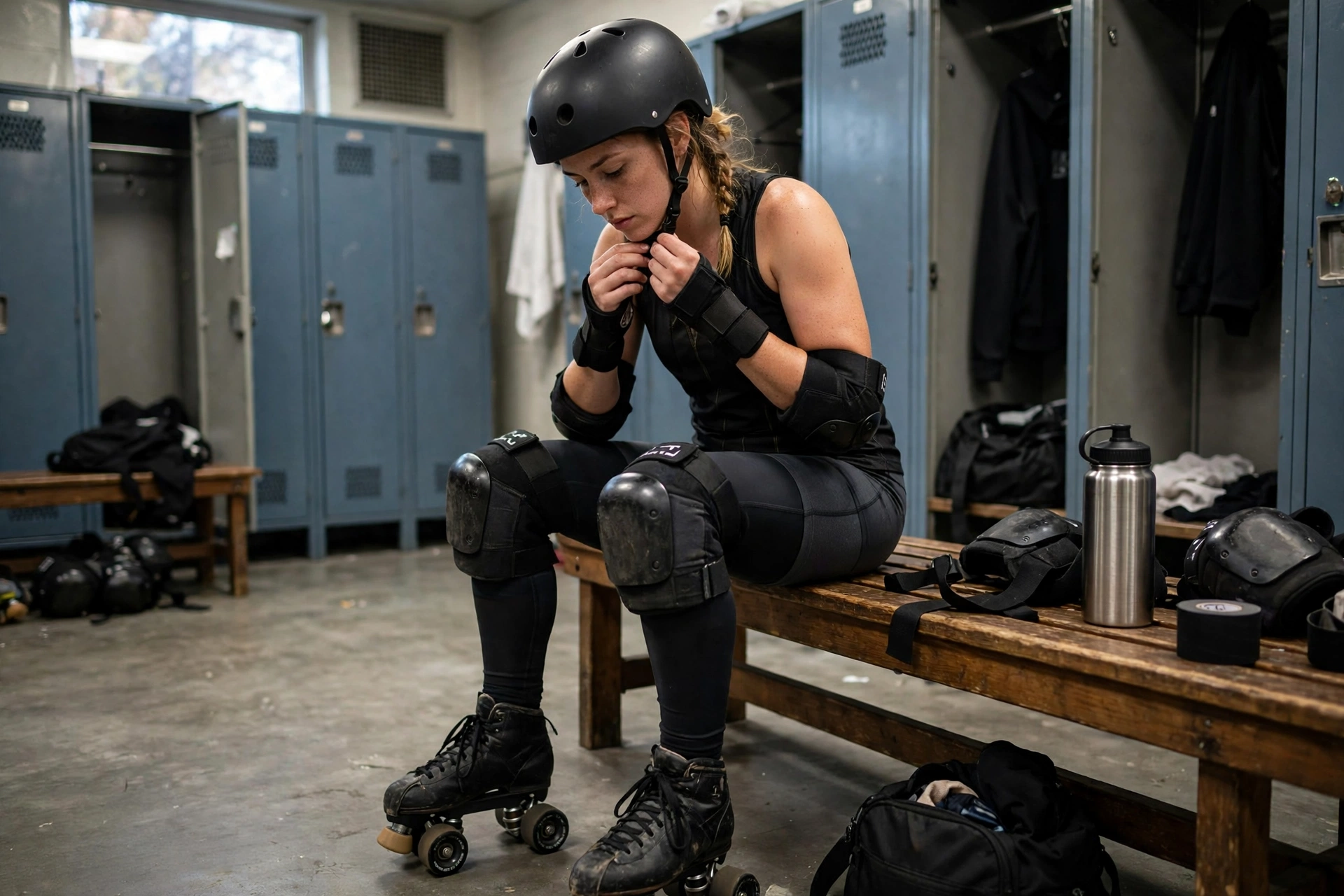
Hair changes helmet fit more than most skaters expect. A tight bun, a braid, or a thick headband all lift the helmet or push it forward, so fit the helmet over the hairstyle you will actually skate in. Low braids or a flat bun at the nape usually sit best under a helmet.
A thin, moisture-wicking headband or skull cap can help with sweat without changing the fit much, as long as it is thin. Thick bandanas or bulky caps lift the helmet and create pressure points, so keep under-helmet layers as flat as possible. If you need more sweat control, look for a helmet with better ventilation rather than adding layers.
Sweat management is also about the helmet itself. Vents that run front to back keep air moving as you skate, and a liner that wicks moisture stays comfortable longer. After practice, let the helmet dry fully before packing it away, since damp padding breaks down faster and starts to smell.
How Do You Stop the Helmet Distracting You During Play?
Most distractions come from movement or pressure. A helmet that slides forward blocks your vision, one that presses on your forehead gives you a headache, and one with a dangling strap flaps and irritates. Each of these has a fitting fix: adjust the rear cradle or padding, reposition the straps, or tuck away loose ends.
Break a new helmet in gradually. Wear it for a full practice, not just a few minutes in the shop, before you rely on it in a bout. Padding settles and straps stretch slightly, so a helmet that feels tight on day one may feel right after a few sessions, or may need a padding swap to get there.
It is also worth knowing what extra features do. If your helmet includes a slip liner, read what MIPS for helmets means so you understand how it moves and why it may feel slightly different from a standard liner. A liner that shifts a fraction in a fall is working as designed, not a sign of a bad fit.
What Gear Conflicts Should You Watch For?
The most common conflict is between the helmet and anything worn around the neck or ears. Some skaters wear ear guards or headsets for communication, and these can push straps out of position. Fit all of it together at home, not five minutes before a bout, and adjust the straps last so everything sits in its final place.
Wrist guards and elbow pads do not clash with the helmet directly, but they affect how you fall, which affects how much you rely on the helmet. Well-fitting pads let you land on your knees and arms rather than your head, so keeping all your gear in good condition is part of helmet comfort too: the less you fall on your head, the less the helmet has to do.
Finally, check your gear as a set at the start of each season. Straps stretch, pads compress, and mouthguards wear thin, often at the same time. A short pre-season check of every item, with the helmet fitted last over everything else, keeps the whole kit comfortable and working together.
Frequently Asked Questions
Q: Should I loosen my helmet to fit a headband underneath?
A: No, loosen nothing. Keep the helmet snug and use only a thin, flat headband. A loose helmet can shift in a fall, so if a thick headband makes the helmet tight, change the headband rather than the fit.
Q: Can I wear a ponytail under a derby helmet?
A: Yes, if it is low and flat, such as a low ponytail or braids at the nape. A high ponytail or bun lifts the helmet and changes how it sits, so restyle it lower for skating.
Q: Why does my helmet give me a headache during bouts?
A: In general terms, headaches usually come from a helmet that is too tight in one spot, padding that has gone flat, or a strap pressing unevenly. Try adjusting the padding and straps, and if one pressure point persists, the helmet shape may not suit your head.

Olivia
Writer at Helmet Today, covering helmet reviews, fit and riding safety.