Replace your roller derby helmet after any hard hit where your head strikes the ground or another skater, and also when the fit loosens, the padding wears out, or the helmet has served several seasons of regular play. In general terms, derby is a contact sport, so helmets wear out faster here than in casual skating, and waiting too long quietly reduces your protection.
Roller derby involves blocking, falls, and collisions at speed, which means your helmet takes more punishment than a helmet used for gentle cruising. Knowing when to swap it is not about being wasteful; it is about recognising that a helmet is a consumable part of your kit, like wheels and bearings, with a working life that ends.
Why Do Roller Derby Helmets Wear Out Faster?
Derby helmets absorb frequent impacts. Even falls where you do not think your head hit anything can jolt the helmet, and repeated small knocks add up over a season. The foam liner is designed to crush and absorb energy, and once it has been compressed in places, it cannot spring back to full protection.
Contact adds another load. Blocks, checks, and pile-ups can drive your head into the floor or into another skater with more force than a simple slip. A helmet that looks fine after a bout may still have taken a meaningful hit, especially if you felt the impact through it or noticed a headache afterwards.
Sweat, heat, and constant use wear the rest of the helmet down. Padding compresses and stops holding the helmet snug, straps stretch and fray, and the shell picks up scuffs and small cracks. A loose helmet moves in a fall, which means it may not be in the right place when you need it most.
Which Hits Mean an Immediate Replacement?
Any hit where your head strikes the track, the floor, or another skater hard enough to leave you dazed, dizzy, or with a headache means the helmet should be retired straight away. This applies even if the shell looks undamaged, because foam damage is often invisible from the outside.
Also retire a helmet after a visible crack, dent, or crushed section, however small it looks. A cracked shell has lost structural strength, and a dented area has already absorbed energy it cannot absorb again. Continuing to use it is gambling that the next fall will hit a different spot.
When in doubt, retire it. A replacement helmet costs far less than the consequences of skating in a compromised one, and most leagues and experienced skaters will tell you the same. If you are unsure whether a hit was hard enough, treat that uncertainty itself as a reason to swap.
How Do You Spot a Helmet That Is Worn Out Without a Crash?
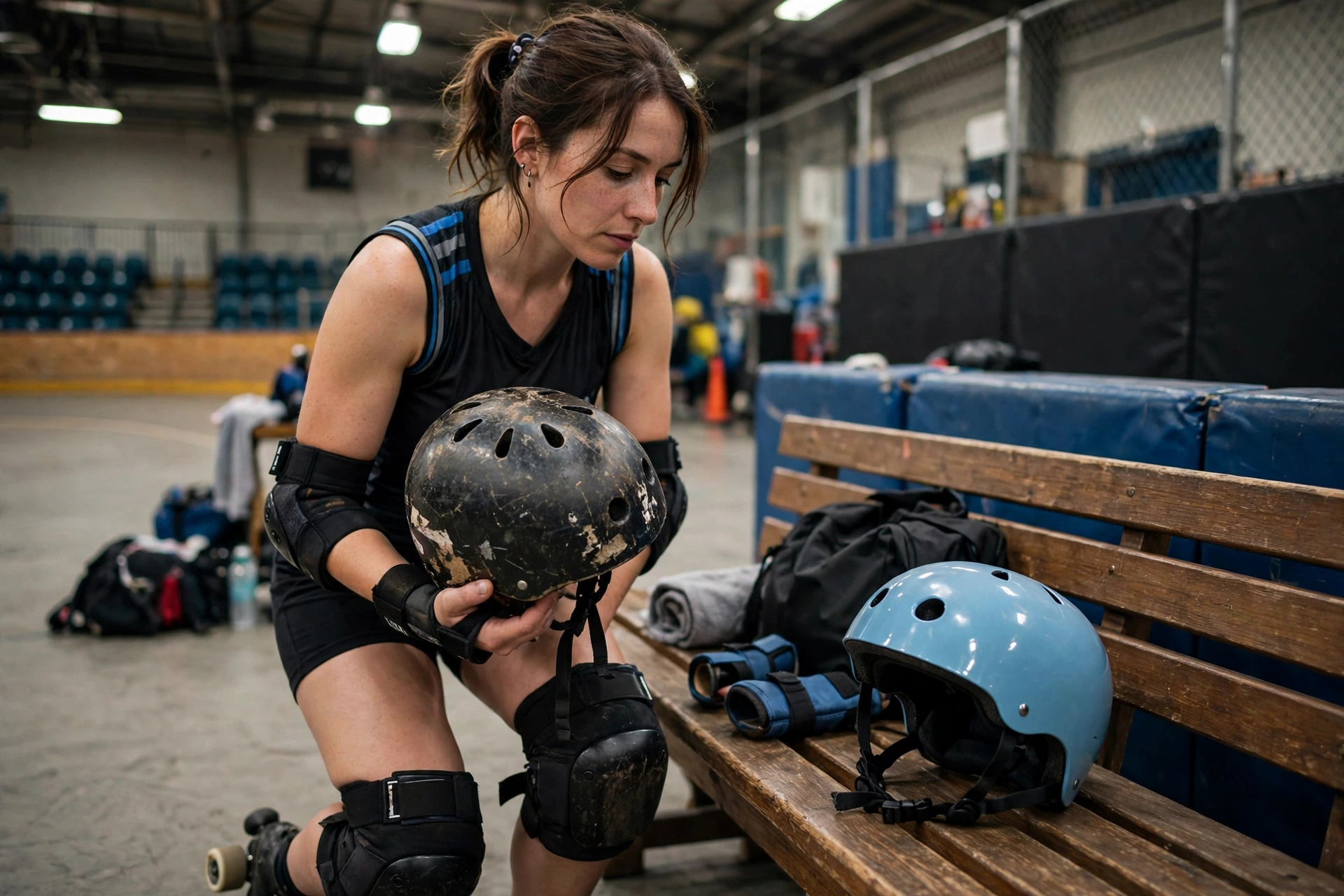
Check the fit first. Put the helmet on and shake your head: if it rocks, slides, or needs the straps pulled much tighter than before, the padding has compressed and the helmet no longer holds your head properly. Extra padding can help briefly, but it is a sign the helmet is near the end of its life.
Inspect the shell and liner regularly. Look for cracks, deep scratches, soft spots in the foam, and padding that has gone flat, torn, or smelly despite cleaning. Check the straps for fraying and the buckle for cracks or a loose catch. Any of these on their own is a reason to plan a replacement soon.
Think about age and use. A helmet worn for several practices and bouts a week over a few seasons has done a lot of work, even without a single dramatic crash. In general terms, derby players should review their helmet at least once a season and expect to replace it more often than a casual skater would.
What Should You Look For in a Replacement Derby Helmet?
Choose a skate-style helmet with a low cut and good rear coverage, since derby falls often go backwards or sideways. Make sure it carries a recognised skate certification, and try it on with your usual hairstyle and any head covering you wear under it, so the fit you test is the fit you skate in.
Comfort matters for a helmet you will wear for long practices. Look for ventilation that keeps you cool, padding you can remove and wash, and a fit system that stays snug as you skate. A helmet that is comfortable is one you will wear properly, with the straps done up, every single session.
If you are comparing models, it helps to understand what MIPS for helmets means, since some derby helmets include this slip layer for angled impacts. It is a useful feature in a contact sport, but it does not extend the life of a helmet that has already taken a hard hit.
How Can You Make a Derby Helmet Last Longer?
Good habits slow wear without ever making a damaged helmet safe again. Store your helmet indoors, away from sun and heat, and never leave it loose in a kit bag where it gets knocked around by skates and tools. A helmet bag or a dedicated pocket protects the shell between sessions.
Clean the pads as the maker directs and let the helmet dry fully before storing it. Damp padding breaks down faster and smells worse, and a helmet stored wet in a closed bag will age quicker than one stored dry. Check the straps and buckle monthly, since these are the parts that fail quietly.
Keep a rough log of hits and purchase date, even just a note on your phone. When you can see that a helmet has served two hard seasons or taken a big hit last month, the replacement decision becomes obvious instead of something you keep putting off.
Frequently Asked Questions
Q: Do I have to replace my derby helmet after every fall?
A: No, only after falls where your head actually hits something hard, or where you feel dazed or sore afterwards. Falls where you land on your pads and your head never touches the ground do not automatically retire a helmet.
Q: Can I keep using a helmet with a small crack if it still fits?
A: No, a cracked shell has lost strength and should be replaced, however small the crack looks. Fit alone does not make a damaged helmet safe, since the shell and foam work together.
Q: How often do derby players usually replace helmets?
A: In general terms, regular players replace helmets every few seasons, and sooner after a hard hit. Leagues and experienced skaters often advise an annual check, with replacement whenever fit, padding, or the shell shows wear.

Olivia
Writer at Helmet Today, covering helmet reviews, fit and riding safety.