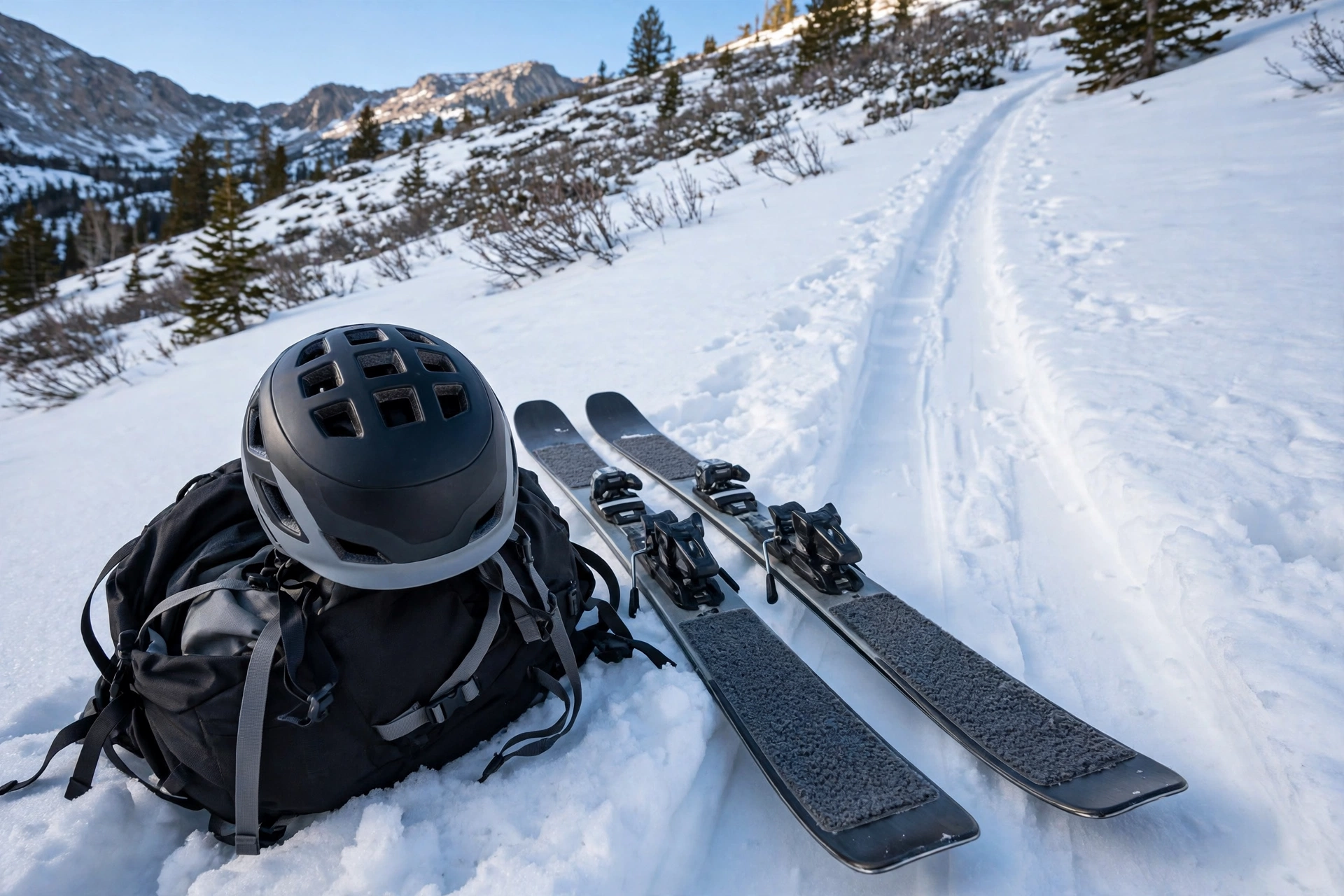
For backcountry touring, choose a lightweight helmet with large, easily adjusted vents, removable ear pads, and goggle and headlamp compatibility — ideally one certified for both skiing and climbing, so it protects you on the descent and during steep, rocky bootpacks. Above all, it must be comfortable enough to wear on your head all day, because a helmet strapped to your pack protects nothing.
Touring inverts the resort problem. You spend most of the day climbing under your own power, generating heat, and only a fraction descending. A heavy, warm resort helmet gets carried, resented, and left behind. This guide covers how touring helmets differ, the certifications worth having, why weight and ventilation dominate, the features that earn their place, and fit.
Why Does a Backcountry Helmet Need to Be Different?
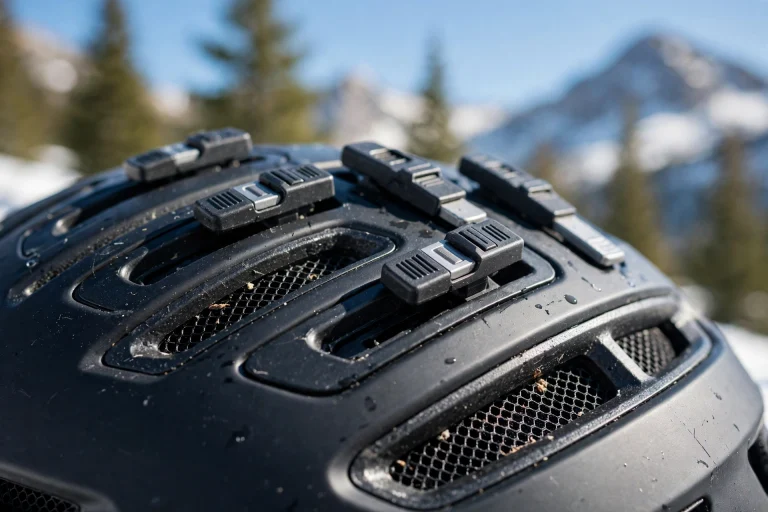
Heat is the big one. Skinning uphill is closer to running than to riding a lift, and a sealed resort helmet traps that effort until you are soaked — then the sweat chills you at the transition. Touring helmets answer with much larger vents, often adjustable, and liners and ear pads that come off as the day warms up.
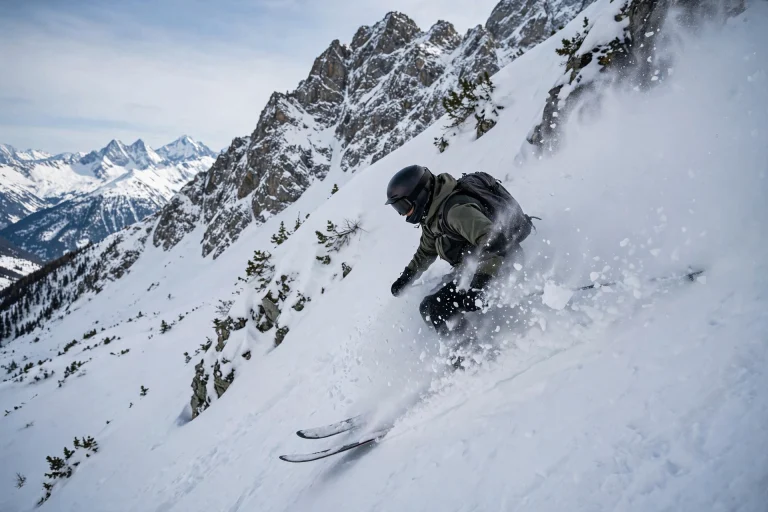
Exposure is the other difference. Backcountry terrain includes steep couloirs, wind-scoured ridges, icy bootpacks, and rockfall-prone gullies, where a slip can mean a slide or a knock from above rather than a soft fall on a groomed run. That mixed alpine hazard is why many tourers wear their helmets for parts of the ascent too, and why dual-purpose certification — covered next — exists.
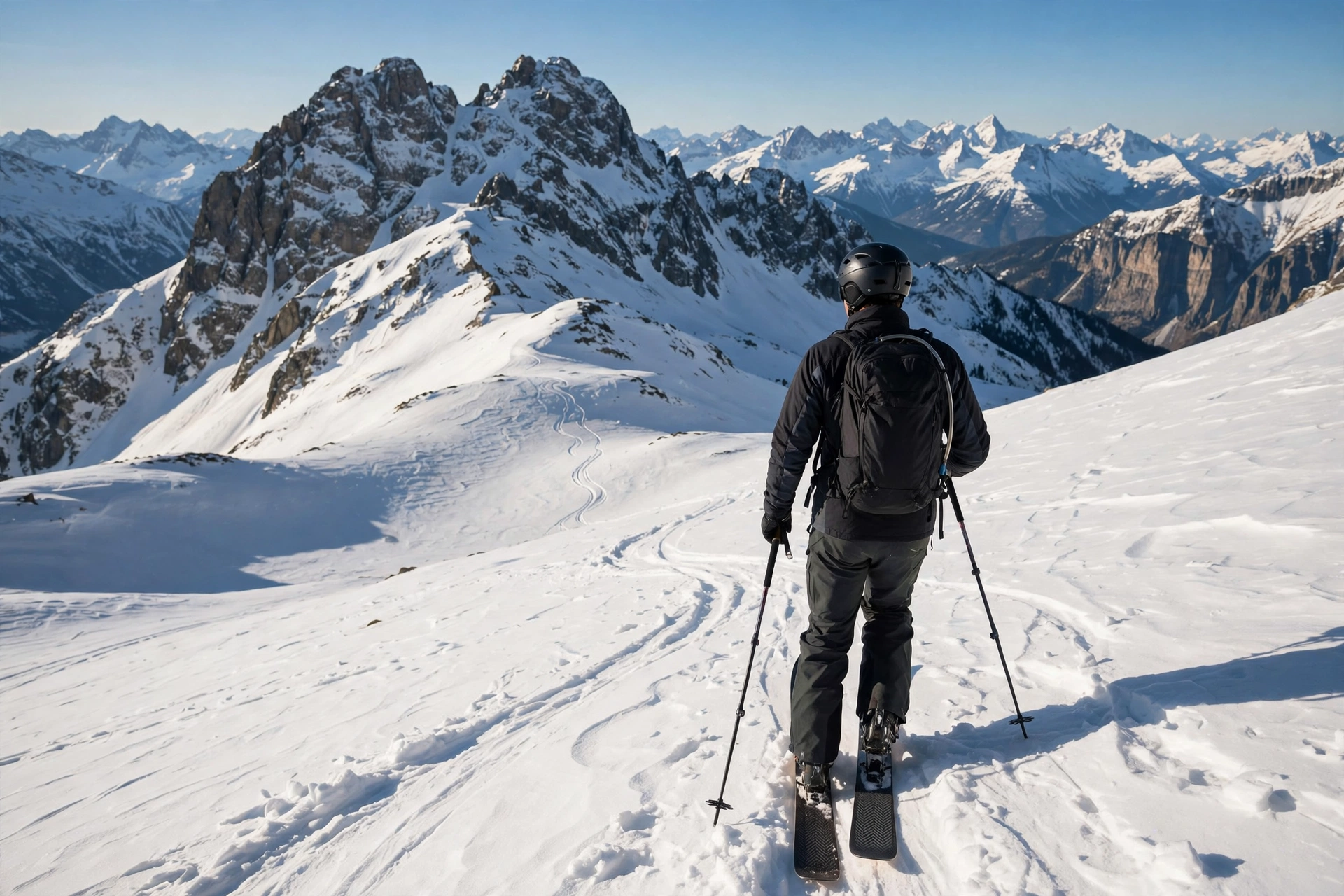
And then there is the simple arithmetic of distance. Over a long day with thousands of feet of climbing, every extra item is either worn comfortably or becomes a burden on the pack. A helmet designed for touring acknowledges that its real competition is being left at home.
What Certifications Should a Backcountry Helmet Carry?
Start with a genuine ski certification: in general terms, ASTM F2040 in North America or CE EN 1077 in Europe is the benchmark a helmet must meet to be considered a ski helmet. A climbing helmet alone does not qualify — climbing standards are written around falling rock and different impact patterns, and a climbing-only helmet is not tested for the falls skiers take.
The interesting development in this category is dual certification. Many touring helmets are certified to both a ski standard and the climbing standard (EN 12492), which in general terms means one helmet is tested for ski impacts and for the rockfall and side-impact scenarios of mountaineering. For ski mountaineering, steep touring, and bootpack-heavy objectives, that combination is a meaningful, practical advantage over carrying — or choosing between — two helmets.
Rotational-impact liners are available in this category too; our explainer on MIPS and rotational protection covers how those systems work if you are comparing models. Certification first, fit second, features third — but on a long objective, features decide whether the certified helmet is on your head at all.
How Much Do Weight and Ventilation Really Matter?
More than almost any other specification. In general terms, dedicated touring helmets are built noticeably lighter than resort helmets, trimming shell, liner, and hardware so the helmet can live on your head through long climbs without neck fatigue or that top-heavy feeling on steep traverses. Whether the grams matter to you depends on your objectives, but nobody finishes a big day wishing their helmet had been heavier.
Ventilation is weight’s partner. Large fixed vents dump heat on the skin track; adjustable vents let you close down for the descent or a windy ridge. Some tourers still carry the helmet on their pack for the mellowest approaches — most packs have a helmet carry for exactly this — but the trend, and the safer habit on committing terrain, is a helmet light and airy enough to wear from the trailhead.
Judge ventilation with your whole system: vents work with a thin headband or bare head on the climb, and pair with a balaclava or liner for cold descents. If a helmet only feels bearable with its vents fully open in a cold shop, it will feel like an oven at minute forty of the skin track.
Which Features Earn Their Place in the Backcountry?
Headlamp compatibility is the standout: dawn patrol starts and longer-than-planned days mean many tours begin or end in the dark, and clips or a mount that hold a headlamp securely turn the helmet into your lighting platform. Goggle compatibility matters for the same reason — a retainer that keeps goggles in place, and a shape that works with goggles pushed up on the helmet while you climb.
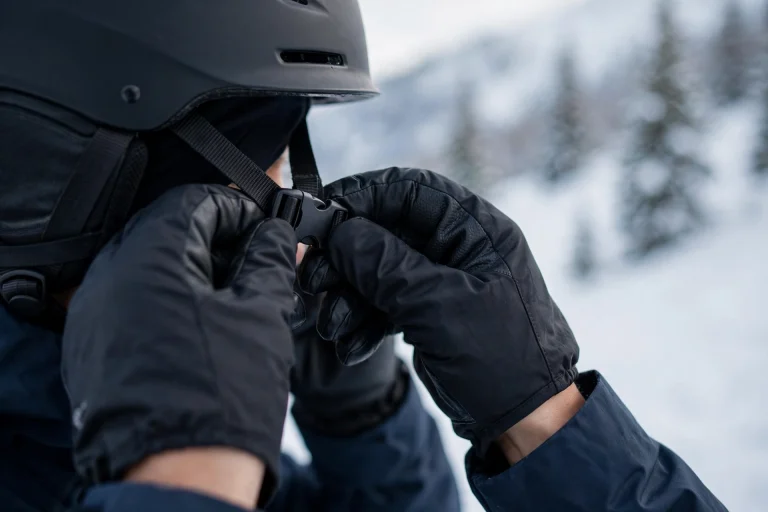
Removable ear pads and liners let one helmet span the whole day: stripped down and airy for the ascent, padded and warm for the descent. A simple, glove-friendly adjustment dial and chin strap are worth more than any electronics out here; you will operate them with gloves on, in wind, with cold fingers.
Two smaller things deserve a mention. A helmet that fits well under a jacket hood gives you a storm option without changing systems. And if you wear sunglasses on the climb, as many tourers do, check the helmet does not fight the arms of your glasses when you swap between glasses and goggles at the transition.
How Should a Backcountry Helmet Fit?
Exactly like any ski helmet — snug, level, and still — but tested with your touring layers. Try it with the thin liner or headband you climb in, again with a balaclava if you descend in one, and with your goggles both on your face and pushed up. The fit should stay secure in every configuration you actually use, because a helmet that only fits its shop configuration will shift on the mountain.
Do the standard checks: shake test with the strap fastened, no rocking or rolling, even pressure with no hot spots, and a chin strap that allows one or two fingers beneath it. Then add a touring check: bend, look up a steep slope, and mimic the head movements of a kick turn. The helmet should track your head, not lag behind it.
Finally, replace it on the same rules as any helmet: after a real impact, when straps or shell are damaged, or when age and hard use have degraded it. Backcountry helmets live rough lives in packs and car trunks; inspect the foam and shell at the start of each season, and retire anything cracked, crushed, or questionable.
Frequently Asked Questions
Q: Can I just use my climbing helmet for ski touring?
A: Only if it is also certified as a ski helmet. A climbing-only helmet is tested for rockfall-type impacts, not for skiing falls. Dual-certified helmets exist precisely for this: look for a ski standard (ASTM F2040 or EN 1077) alongside the climbing certification.
Q: Should I wear my helmet on the uphill or carry it on my pack?
A: It depends on the terrain. On mellow, low-angle approaches many tourers carry the helmet, but on steep, icy, or rockfall-exposed ascents wearing it is the safer choice — which is exactly why light weight and big vents matter. If you carry it, secure it so it cannot bounce loose or drop.
Q: Do I need a helmet for gentle, low-angle powder tours?
A: In general terms, yes. Trees, buried obstacles, creek crossings, and simple falls on the descent do not check the angle of the slope first. Most backcountry injuries happen on ordinary terrain, and a light touring helmet is easy to wear all day.

Olivia
Writer at Helmet Today, covering helmet reviews, fit and riding safety.