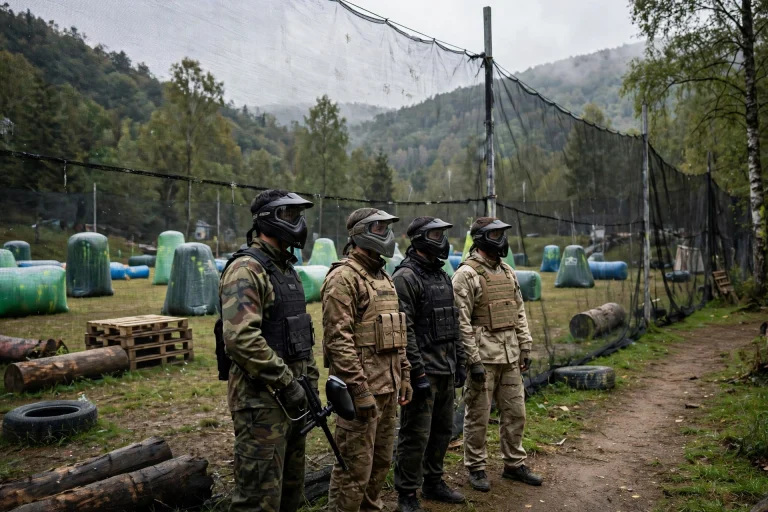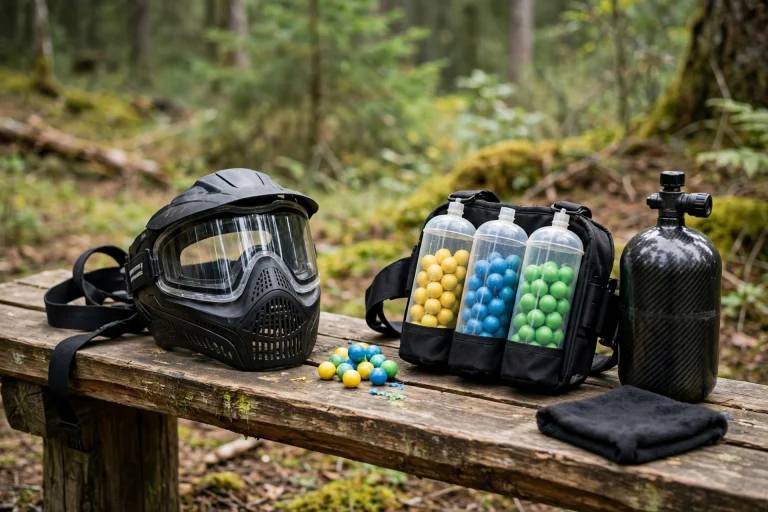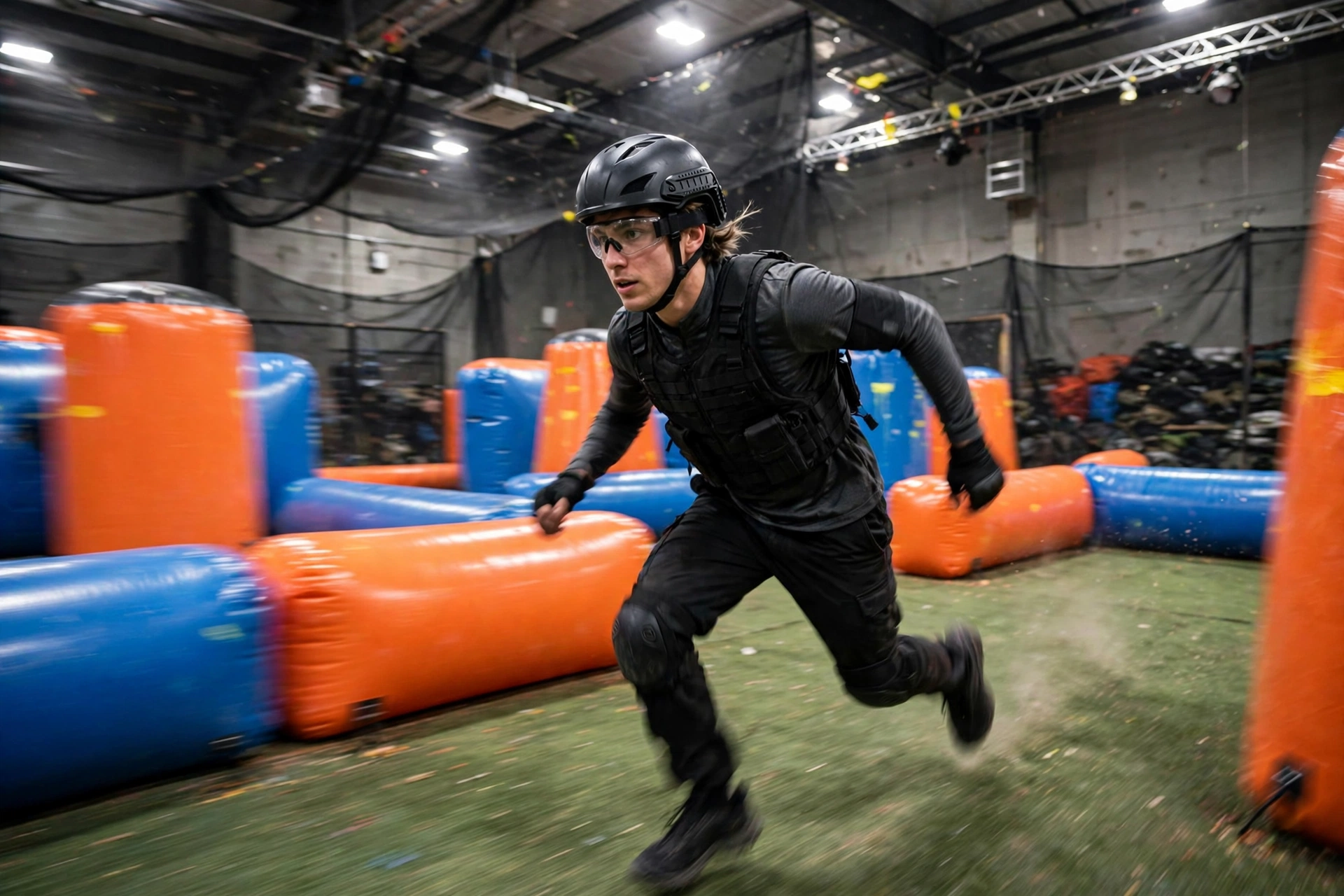
Yes, in general terms you need a helmet for speedsoft, because speedsoft is played at close range with fast movement, and a helmet protects your head, ears, and upper face from close, fast BB hits. Speedsoft is not a slow woodland game where distance softens every shot. It is a fast, close-quarters style, often played indoors, where players run, slide, and trade shots within a few metres. Head protection that felt optional elsewhere becomes basic kit here.
Some sites require a helmet for speedsoft, and some leave it to the player, but the case for wearing one does not depend on the rulebook. This guide explains what speedsoft demands of head protection, what kind of helmet suits it, and how to choose one that keeps up with the pace of the game.
Why Is Speedsoft Harder on Your Head Than Other Airsoft?
Speedsoft compresses everything that makes airsoft risky for the head: short distances, high rates of fire, and constant movement. In a woodland game, most shots come from tens of metres away and lose energy on the way. In speedsoft, shots often come from a few metres, sometimes from around a corner you have just run past, and they arrive before you have time to turn away.
The movement adds a second risk. Speedsoft players sprint, dive, slide, and bump into barriers, door frames, and other players. A helmet protects against those knocks as well as against BBs, and it keeps a glancing barrier impact from becoming a cut or a bruise. Players who have taken a close-range head shot or clipped a doorway mid-sprint rarely need convincing a second time.
There is also a heat and sweat factor. Speedsoft is physically intense, and a helmet that traps heat will be noticed within minutes. That does not argue against wearing one — it argues for choosing a light, well-vented helmet rather than the heaviest replica you can find. Players who overheat play worse and tire faster, so ventilation is a performance issue as well as a comfort one.
What Kind of Helmet Suits Speedsoft?
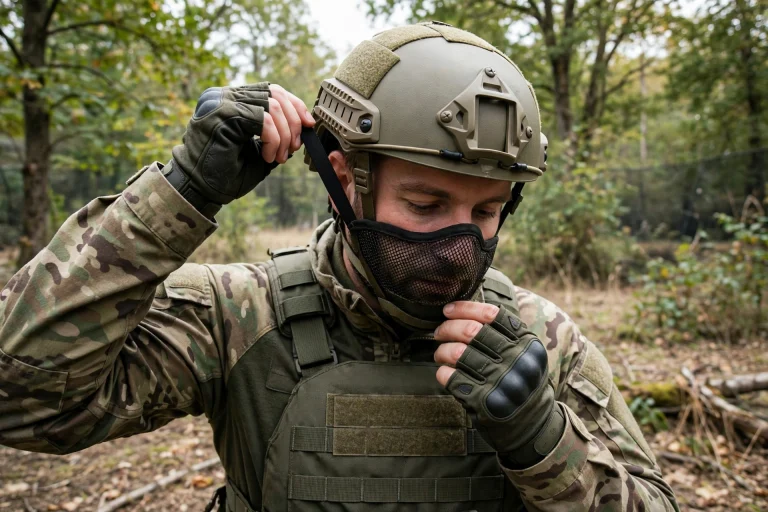
Most speedsoft players wear a lightweight bump-style helmet: a shell that protects against impacts and BBs without the weight of a ballistic-rated helmet. Bump helmets are designed for exactly this job — knocks, falls, and low-energy impacts — and their lighter weight suits a game built on speed. They also tend to have rails and mounts for ear protection, lights, and cameras.
Fit matters more than brand. A speedsoft helmet must stay put during sprints and dives, so look for a good retention system — a dial or padded harness that locks the helmet in place — and pads that can be adjusted to your head shape. A helmet that slides forward over your eyes when you dive is worse than useless, because it blinds you at the moment you most need to see, and it will keep doing so every game until the fit is fixed.
Ventilation is the other priority. Vents and airflow channels keep the helmet bearable during long, intense games, and they reduce fogging in your eye protection by letting warm air escape. A helmet with no airflow may be fine for a short game, but it becomes a sweatbox over a full day of speedsoft, and a player who is overheating makes slower decisions.
Do You Need Full Face Protection as Well?
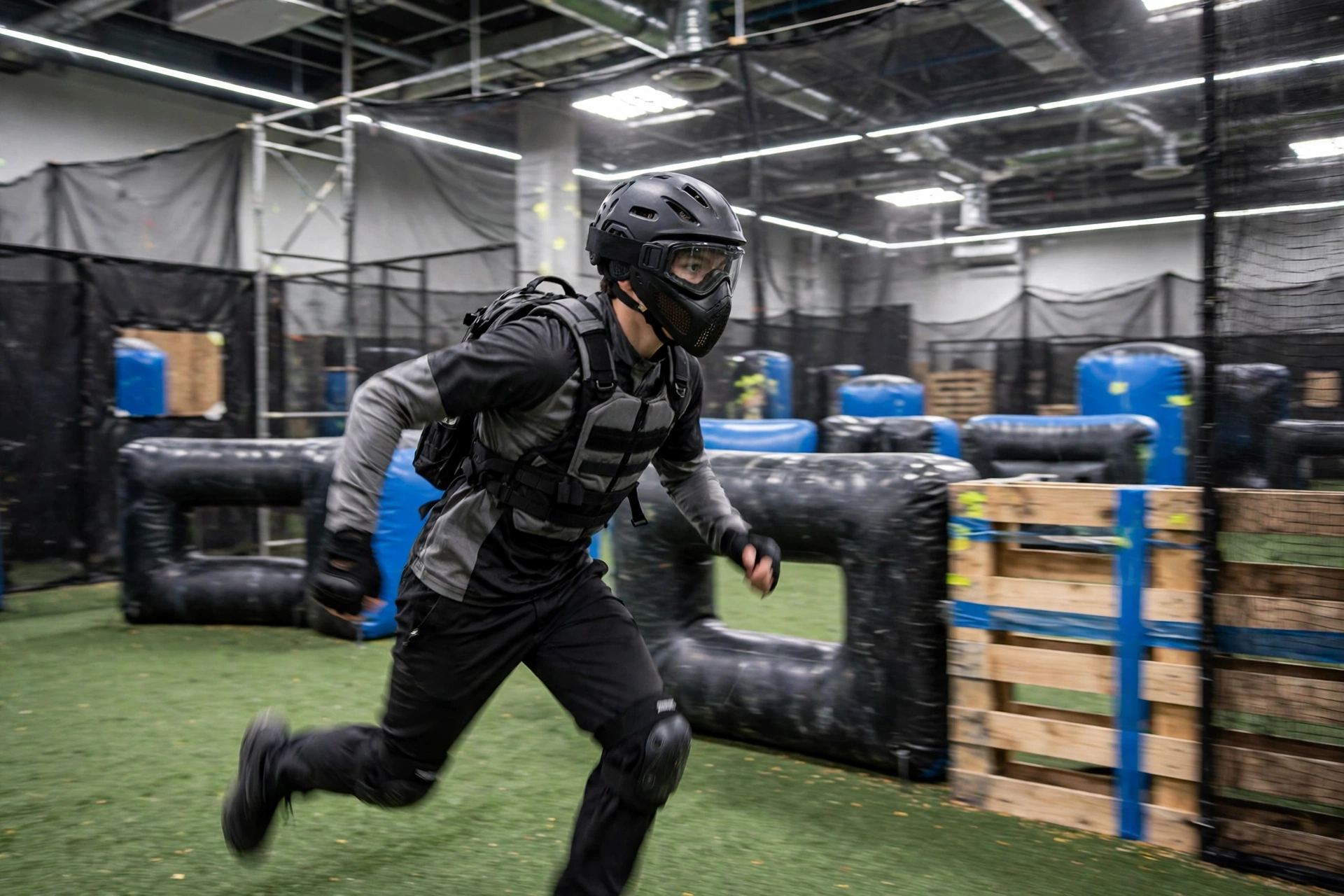
A helmet alone does not protect your face. Speedsoft players almost always combine a helmet with eye protection and lower face protection, such as a mesh mask, because close-range shots to the teeth and mouth are a real risk. The helmet, the eye protection, and the face protection must work together as one system, with no gaps between them.
Check the gaps carefully. The space between the helmet rim and the top of your eye protection, and between your eye protection and your face mask, are the places BBs find. Try the full combination on before a game, look up, down, and sideways, and have a friend check for exposed skin. A setup that looks complete from the front can still have gaps at the sides.
Some players use an integrated helmet-and-mask combination, which removes the gap problem entirely but can feel hotter and heavier. Others prefer separate pieces for flexibility. Either approach works if the fit is checked as a system rather than piece by piece.
What Should You Look for When Buying a Speedsoft Helmet?
Start with weight and fit, then rails and accessories. A light helmet with a secure fit beats a heavy helmet with more features, because speedsoft punishes every extra gram over a long day. Rails let you add ear protection and a light if you want them, but do not buy rails you will never use — they add weight and snag points.
Check that the helmet works with your eye protection and ear protection before you commit. Ear cups that push your goggles out of place, or a helmet rim that sits on your goggles, will annoy you every game. If you also ride or play other helmet sports, reading about what MIPS is for helmets can help you understand a protective technology used on many sports helmets, which is different from airsoft bump protection but part of the wider head-safety picture.
Finally, respect your site’s rules. If a site requires a helmet, wear one that meets its requirements, and if it does not, wear one anyway. The players who skip head protection in speedsoft are usually the ones who have not yet taken a close-range head shot.
Frequently Asked Questions
Q: Can I play speedsoft in just a cap and goggles?
A: In general terms, you can at some sites, but it is not wise. Speedsoft’s close ranges and fast movement make head, ear, and face hits likely, and a lightweight helmet protects against all three without slowing you down much.
Q: Is a ballistic helmet better for speedsoft?
A: Not necessarily. A ballistic helmet is heavier and built for real ballistic threats, which airsoft does not present. A lightweight bump helmet usually suits speedsoft better because it is lighter, cooler, and easier to move in.
Q: Does a speedsoft helmet stop BBs hurting?
A: It greatly reduces the sting of a head shot and protects ears and scalp, but a close-range hit can still be felt through padding. Think of it as turning a painful hit into a minor one, not as making you invulnerable.

Olivia
Writer at Helmet Today, covering helmet reviews, fit and riding safety.