A splitboarding helmet is a snow sports helmet worn for splitboarding, a form of backcountry snowboarding in which the rider climbs uphill on a board that splits into two skis, then joins it back together to ride down. It protects the head from falls, trees, rocks, and hard snow, both on the climb and on the descent. Splitboarding takes the rider far from lifts and groomed runs, into wild, ungroomed terrain where help can be a long way off. A helmet is a sensible part of the kit for the whole trip, not just for the ride down.
What Is Splitboarding?
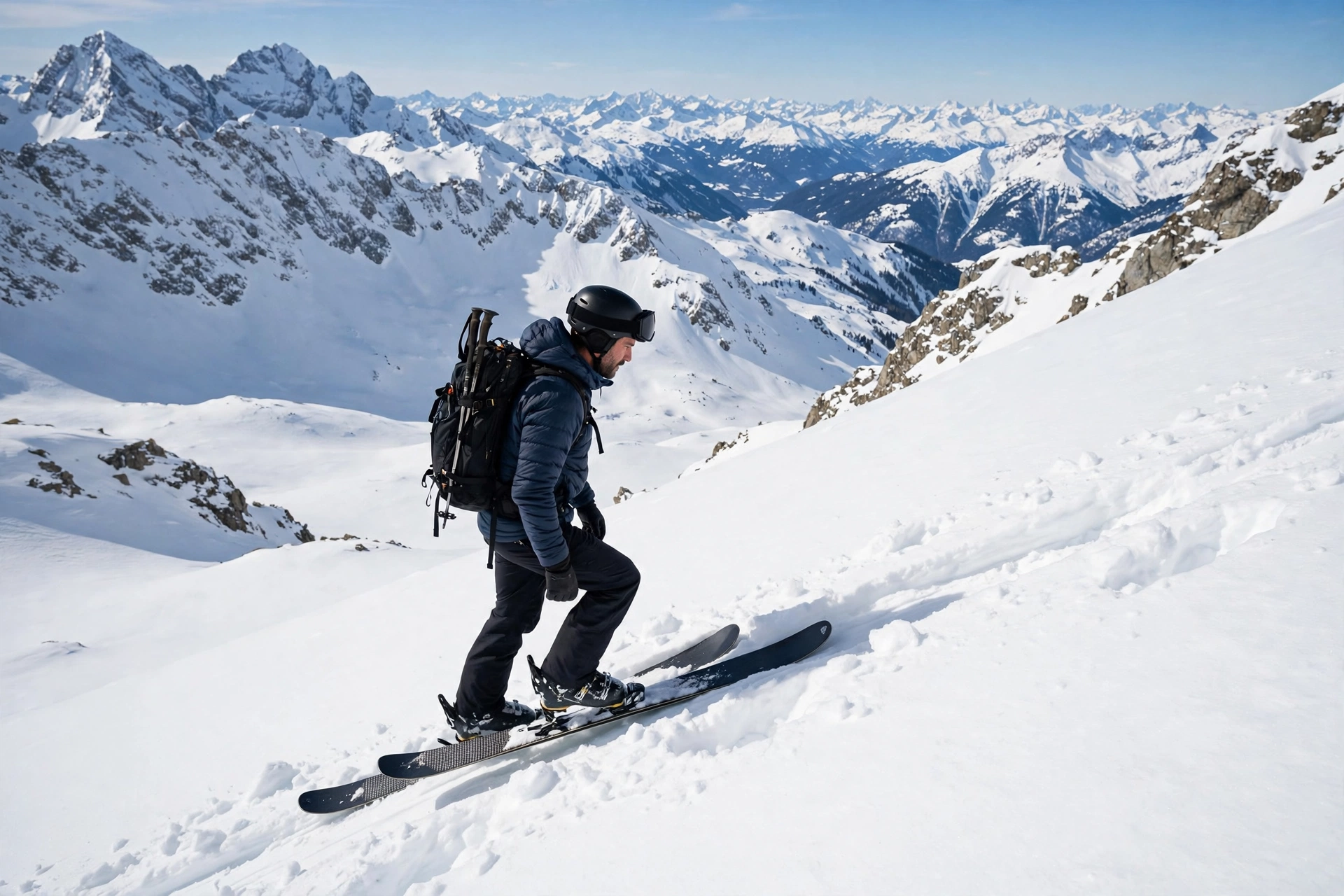
Splitboarding is a way of snowboarding in the backcountry without a lift. The splitboard is a snowboard that splits lengthways into two separate skis, and the rider attaches climbing skins to the bases, fixes the bindings in touring mode, and climbs uphill on skis. At the top, the rider removes the skins, joins the two halves back into a single board, moves the bindings into riding mode, and snowboards down.
The appeal of splitboarding is freedom: the rider can reach fresh snow, quiet slopes, and terrain that lifts never serve. The trade-off is that the rider must earn every descent with a climb, and must carry the skills and kit to travel safely in the mountains. The terrain is ungroomed, the snow can vary from powder to ice within a single run, and the rider may cross forests, rocky ridges, and steep slopes. In general terms, a helmet is part of the kit that helps manage the risks of that wild terrain.
Why Do Splitboarders Wear a Helmet?
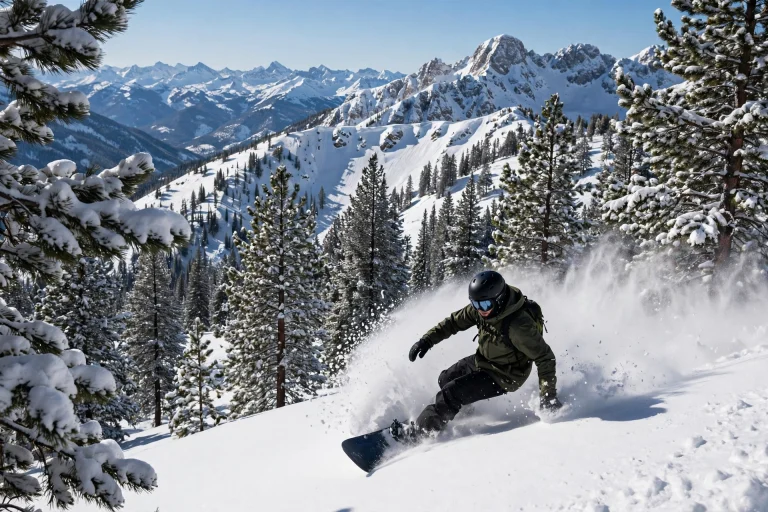
Splitboarders wear a helmet because the backcountry is full of hard objects and hard snow. On the descent, the rider can fall onto icy patches, hit a buried rock, or slide into a tree, and the helmet spreads the force of those impacts and absorbs some of it. The trees are a particular hazard in the backcountry, because a fall at speed towards a trunk can bring the head into contact with solid wood.
The helmet is also useful on the climb, where the rider may slip on an icy traverse or be caught by a small slide of snow, and it helps in a fall while crossing rocky ground on foot. In general terms, a helmet does not make splitboarding safe in every situation, and it cannot protect against every hazard in the mountains, but it does reduce the force that reaches the head in the kinds of knocks that happen most often off piste. Far from help, that margin of protection matters more, not less.
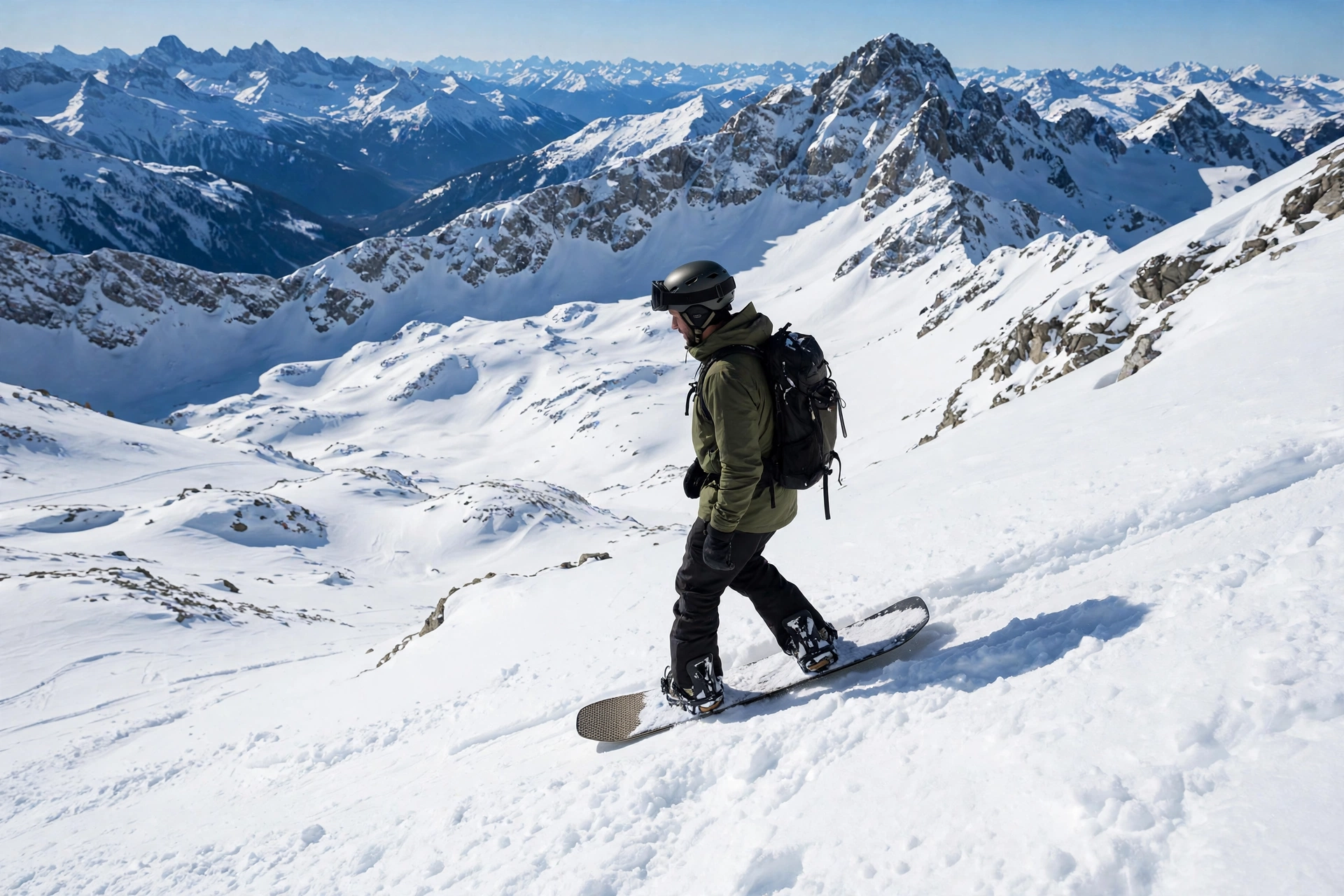
How Is a Splitboarding Helmet Different From a Resort Helmet?
A splitboarding helmet is, in general terms, a snow sports helmet of the same family as a resort helmet, and many riders use the same helmet for both. It usually has a hard outer shell with an impact-absorbing liner, adjustable vents, and a fit system. The main differences come from how the helmet is used: a splitboarder climbs uphill for a long time, so the helmet needs to breathe well and stay comfortable through hours of effort.
Some splitboarders choose a lighter helmet with good ventilation, because the climb can be hot work even in cold weather. Others use a helmet that works with a headlamp for early starts, or with a balaclava for wind and cold on the ridge. If you want to understand one of the safety technologies used in modern helmets, reading about what MIPS is for helmets is a good place to start, since that system is found in many snow helmets.
What Should a Splitboarding Helmet Fit Like?
A splitboarding helmet should fit snugly all round the head, sitting level and covering the forehead without slipping down over the eyes. It should not wobble when the rider shakes the head, and it should not press painfully on any one spot. The back should sit low enough to protect the back of the head, and the goggles should sit neatly against the front without a gap that lets in wind and snow.
The fit system should be adjusted before setting out, and the chin strap should be fastened snugly on the descent, so the helmet stays in place in a fall. Some riders loosen the strap or carry the helmet on the pack during a hot climb, then put it on properly for the ride down, which is a reasonable choice as long as the helmet is on and fastened before the descent begins. It is worth trying the helmet on with the goggles, balaclava, and headlamp that will be used, because layers and straps change how it sits.
What Other Kit Goes With a Splitboarding Helmet?
A splitboarding helmet is worn with the splitboard, climbing skins, and touring bindings, plus the usual backcountry safety kit. That kit normally includes a transceiver, a probe, and a shovel, which are used if someone is caught in an avalanche, and a backpack to carry them along with food, water, and spare layers. A map, a plan for the day, and a check of the snow and weather conditions are part of the kit too, in a wider sense.
The helmet works alongside that kit: it protects the head, while the avalanche kit helps with rescue, and the skins and bindings make the climb possible. No single item does the whole job, and in general terms it is the combination, plus training, good judgement, and respect for the mountains, that keeps a splitboarding trip as safe as it can be. A helmet is a small part of that picture, but it is one that is easy to get right.
When Should You Replace a Splitboarding Helmet?
A splitboarding helmet should be replaced after a hard impact, even if it looks fine from the outside. The liner inside the helmet can compress or crack in a heavy fall, and that damage may be hidden under the shell. A helmet that has already absorbed a serious knock may not protect as well the next time, so it is generally sensible to retire it and use a new one.
Age and wear matter as well. Years of use, sun, cold, and knocks can wear down the liner, the straps, and the fit system, and a helmet that no longer fits snugly may not stay in place in a fall. Checking the helmet at the start of the season is a good habit: look for cracks, loose straps, worn padding, or a shell that feels brittle. If anything seems wrong, or if the helmet has taken a heavy fall in the backcountry, replacing it is the safer choice.
Do I need a helmet for splitboarding?
Yes, in general terms a helmet is a sensible part of splitboarding kit. The backcountry has trees, rocks, and hard snow, and help can be far away, so head protection matters on the descent and on the climb.
Can I use my resort snowboard helmet for splitboarding?
Yes, in general terms a resort snowboard helmet works for splitboarding, as long as it fits well, breathes well enough for the climb, and meets a recognised safety standard.
Should I wear my helmet on the climb as well as the descent?
Many splitboarders wear it for the whole trip, while others carry it on the pack during a hot climb and put it on for the descent. Either way, it should be on and fastened before you ride down.

Olivia
Writer at Helmet Today, covering helmet reviews, fit and riding safety.