You stop ski goggles fogging under a helmet by keeping the whole system dry and ventilated: start with dry goggles, never pull them up onto a sweaty forehead or the helmet’s vents, keep the helmet vents open so air flows across the lens, and avoid overdressing so you stop steaming at the source. Fog is moisture from your face and breath condensing on a cold lens — every fix that works either removes the moisture, moves the air, or warms the lens.
Fogged goggles are the most common day-ruiner in skiing, and they usually strike at the worst moment: the top of the lift, in falling snow, when the light goes flat. The good news is that fogging is physics, not bad luck, and the helmet is part of the system. This guide explains why goggles fog under a helmet specifically, and the habits and fit checks that keep them clear.
Why Do Goggles Fog Under a Helmet?
Fog is condensation. Warm, moist air from your skin and breath meets the cold inner surface of the lens, and the water vapor in that air turns back into tiny droplets. The bigger the temperature and humidity gap between the inside of the goggles and the lens, the faster it fogs.
The helmet changes the airflow around that system. Your helmet vents exhaust warm air from the top of your head, and if your goggles sit in a dead zone — pushed up on your forehead, sealed under a hood, or mismatched to the helmet’s shape — moist air gets trapped right against the lens instead of being carried away.
Most modern goggles use a double lens with an anti-fog coating on the inside surface, which buys time but has limits. Flood the inside with enough sweat vapor, or wreck the coating by wiping it, and even premium goggles will fog. That is why technique matters more than price.
What Mistakes Make Fogging Worse?
The classic error is pushing your goggles up onto your forehead or helmet while you wait, eat, or ride the lift. Your forehead is warm and damp, and the helmet’s top vents are literally exhausting steam — the goggle foam soaks up that moisture, and the moment you pull the goggles back down, they fog from the inside.
Overdressing is the second big one. A skier who hikes, digs out of powder, or rides in a jacket zipped to the chin with a neck gaiter over the mouth is pumping humid air upward. Breath deflected by a gaiter or balaclava flows straight into the bottom of the goggles — which is why fog often starts at the lower center of the lens.
Small fit problems compound it: a helmet brim that blocks the goggles’ top vents, a goggle strap worn under the helmet squeezing the frame out of shape, or foam compressed from years of use that no longer seals evenly. And once fog appears, wiping the inner lens with a glove smears the anti-fog coating — after that, the goggles fog faster every time.
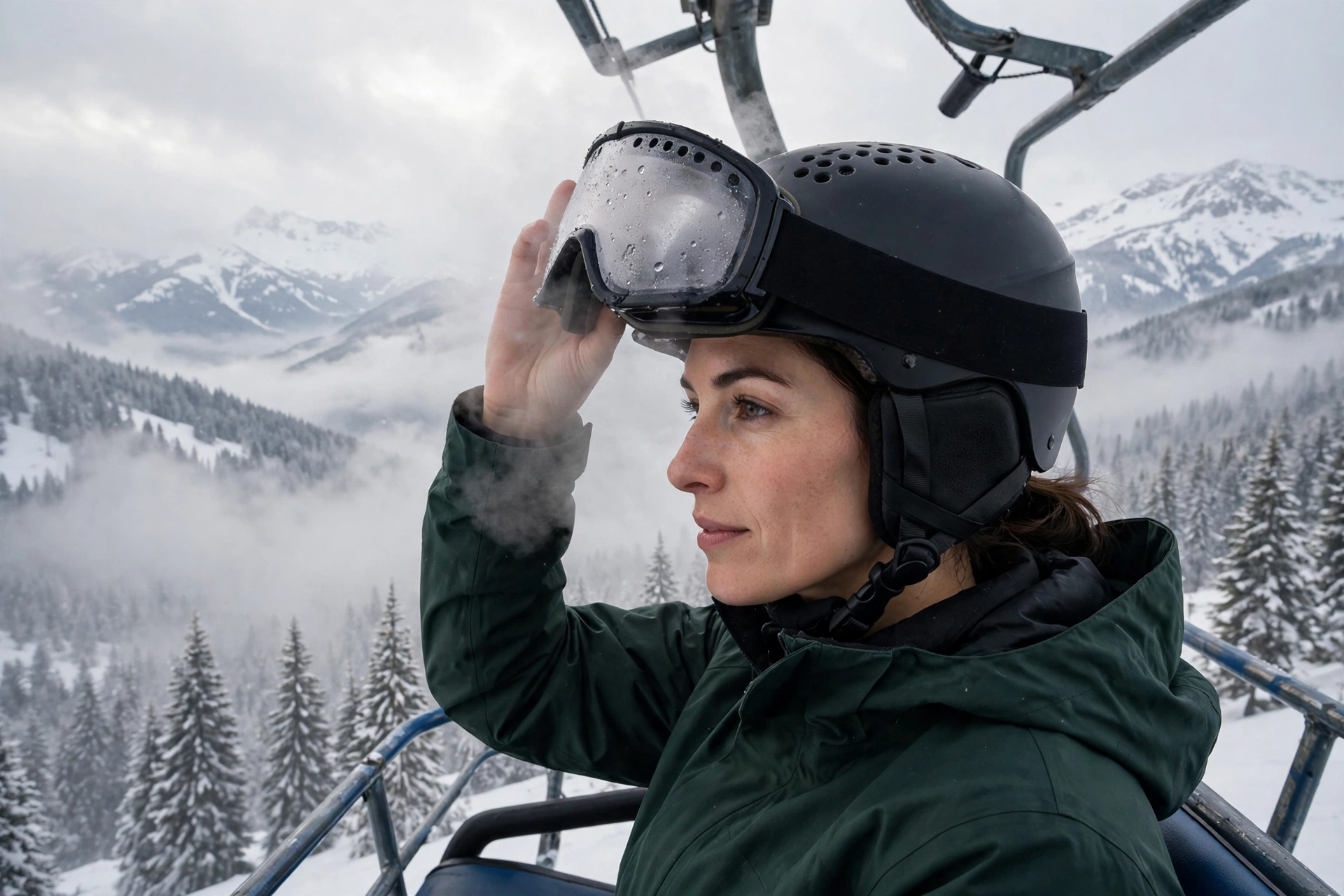
How Do Helmet Vents and Goggle Vents Work Together?
Goggles vent passively: air enters through foam-covered ports at the bottom and sides of the frame, flows across the inner lens, and exits at the top. That gentle current carries moisture out before it can condense. Helmet vents feed the same current — air moving over the helmet pulls air through the goggle’s top vents, which is why the pair works best when they are shaped to fit together.
This is why brands sell helmet-and-goggle combinations, and why fit checks matter when mixing brands. The helmet’s brim should sit just above the goggle frame without sealing off its top vents, and there should be no gap at the forehead — a gap blasts your skin with cold air but also disrupts the smooth airflow the vents rely on.
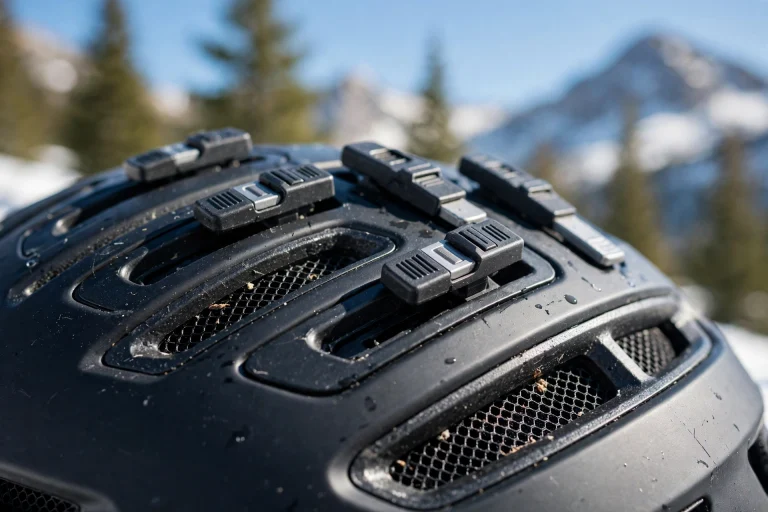
Adjustable helmet vents give you control: open them to boost airflow on a hard descent or a warm day, close them in a storm when snow itself is the problem. If your goggles fog on the lift but clear while moving, you are looking at an airflow problem, and vent position plus not covering the vents with a hood is usually the fix. Features inside the helmet, like the liner systems discussed in our explainer on what MIPS is and how it works, do not affect fogging — this one is purely about air and moisture.
What Should You Do the Moment Fog Appears?
First, increase airflow: face into the wind, open your helmet vents, unzip your jacket a little, and let moving air clear the lens. Mild fog often evaporates on its own within a run if you stop adding moisture — pull a neck gaiter down off your mouth and nose so your breath goes out, not up.
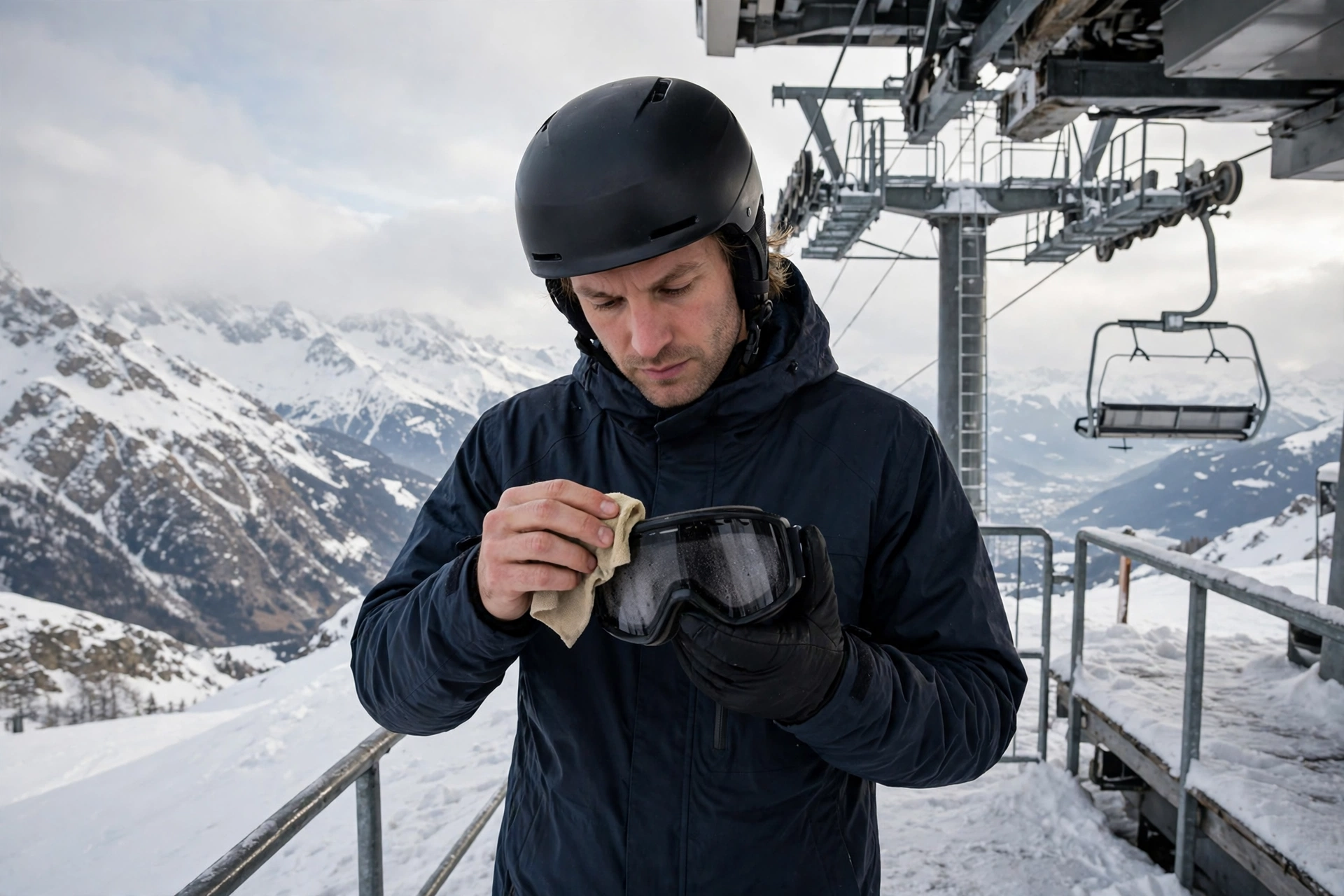
If you must dry the goggles, shake off loose snow and dab — never rub — the outer lens with a microfiber goggle cloth. Leave the inner lens alone; its anti-fog coating is soft and water-absorbent by design, and disturbing it while wet makes things permanently worse. A trick that works in a lodge break: hold the goggles near (not on) a hand dryer or heater for a minute to dry the foam, then let them return to outdoor temperature before going back out.
Never use anti-fog sprays or household cleaners on the inner lens unless the goggle maker approves them, and skip the old spit-and-rinse tricks — they belong to dive masks, not coated ski lenses. If a pair fogs no matter what you do, the inner coating is probably worn out, and replacement lenses or new goggles are the real fix.
How Do You Prevent Fog From the Start of the Day?
Start dry: store goggles overnight in a warm, dry room — not in a damp boot bag or the car — and put them on outside, at outdoor temperature, once. Every trip back into a warm lodge with goggles on your face fogs them and wets the foam, so take them off and keep them dry during breaks.
Manage your own heat. Open jacket vents and helmet vents before the hard work, not after you are sweating; layer down for the hike or the lesson line. Keep your face covering below your nose while you are working hard, and choose goggles with generous foam and venting if you know you run hot.
Finally, carry a spare dry goggle cloth at minimum, and on storm days a second pair or spare lens.
Frequently Asked Questions
Q: Should I close my helmet vents to stop goggles fogging?
A: Usually the opposite — open vents increase airflow across the goggles and carry moisture away. Close them mainly in heavy falling snow, when snow entering the vents becomes the bigger problem. If fogging persists with vents open, the cause is more likely trapped breath or wet foam.
Q: Why do my goggles fog on the lift but clear while skiing?
A: While skiing, moving air flows through the goggle vents and dries the lens. On the lift you are still, often with your face covered, so moist breath and forehead heat build up with no airflow to remove them. Keep your face uncovered and resist pushing the goggles up onto your forehead.
Q: Do anti-fog coatings wear out?
A: Yes. The coating on the inner lens is delicate and degrades with age, heat, and especially wiping while wet. When a well-kept pair starts fogging constantly despite good habits, the coating is usually spent and the lens or goggles need replacing.

Olivia
Writer at Helmet Today, covering helmet reviews, fit and riding safety.