A lightweight ski helmet makes long days easier by using in-mold construction — a thin polycarbonate shell fused directly to the impact foam — which trims weight without trimming certification. Paired with adjustable vents, a dial fit system, and removable ear pads, a light helmet stays comfortable from the first lift to the last run instead of slowly wearing your neck down.
Helmet weight sounds like a minor detail in the shop. It stops being minor at three in the afternoon, after dozens of lift rides, hundreds of head turns to check the slope behind you, and hours of holding your head up against wind and terrain. This guide explains where helmet weight comes from, what lightweight construction trades away, and how to choose a light helmet that still fits and protects properly.
What Makes a Ski Helmet Lightweight?
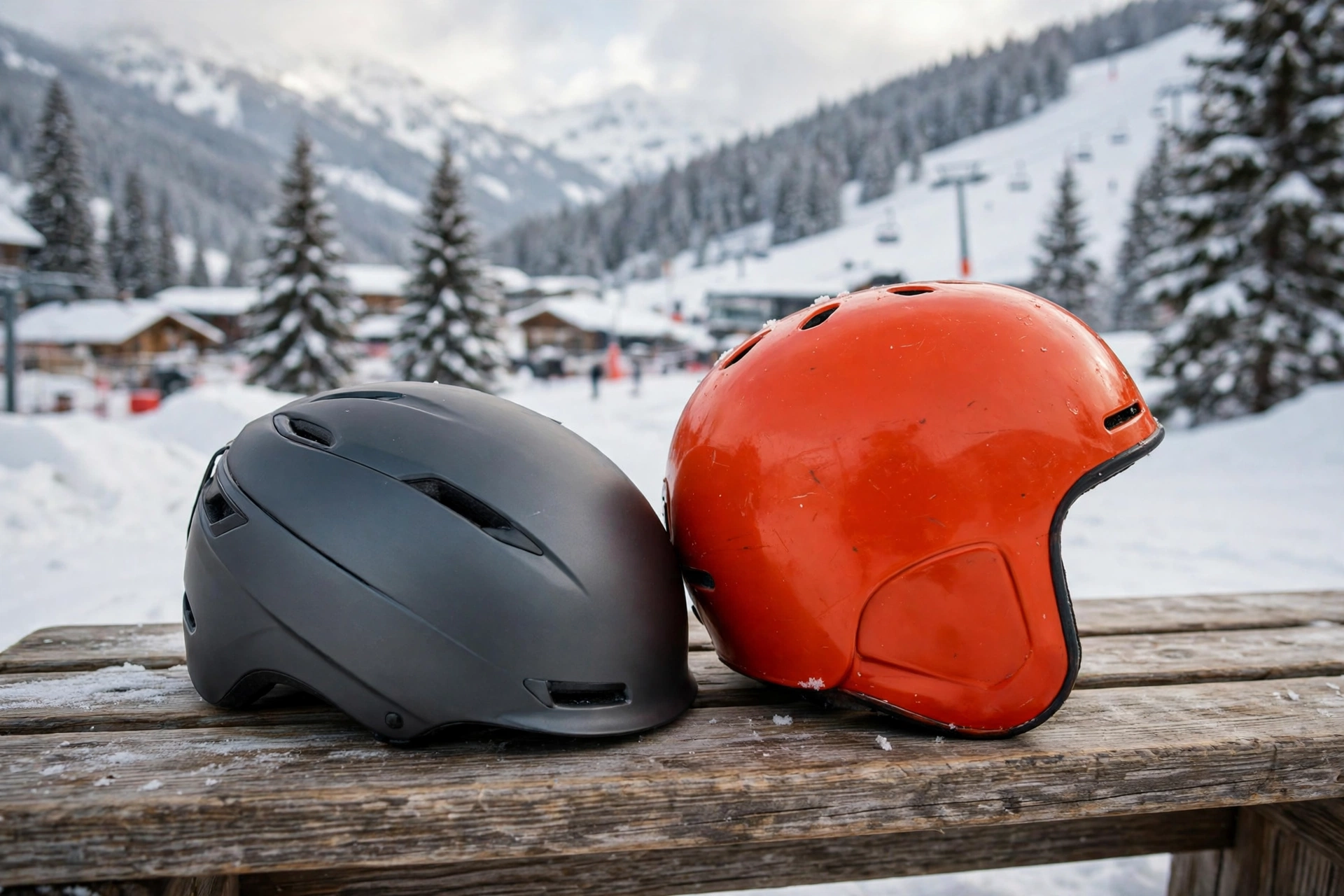
The biggest factor is construction. A lightweight helmet is usually in-mold: a thin polycarbonate shell is fused to the EPS foam liner during manufacturing, so the shell and foam become one piece. Because the foam itself provides the structure, the shell can be much thinner and lighter than the thick ABS plastic used in traditional hard-shell helmets, where a separate shell is glued or taped over the foam.
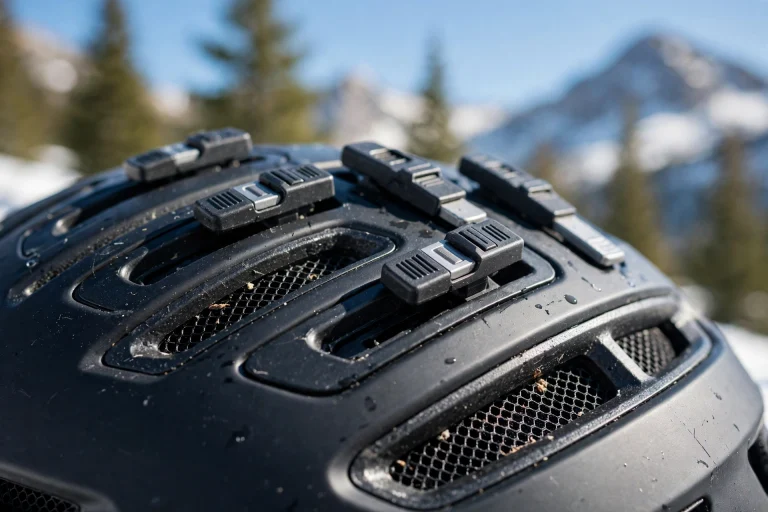
Beyond construction, weight hides in the details. Slim fit systems, minimal padding, and simple vent sliders all shave small amounts that add up. So does size: a larger shell needs more material, which is one more reason to buy the size that actually matches your head rather than sizing up. In general terms, lightweight in-mold models sit at the low end of adult helmet weights, while chunky hard-shell designs sit at the high end.
Hybrid helmets sit between the two camps, combining a hard shell over the top with in-mold construction around the sides. They give up a little of the in-mold weight saving in exchange for a tougher top surface — a reasonable middle path if you like the light feel but are hard on your gear.
Why Does Weight Matter More on Long Days?
Your neck supports your head plus everything bolted to it, all day, while skiing asks for constant small movements: scanning for other skiers, looking uphill before merging, checking on your kids, and absorbing bumps through terrain. A heavier helmet makes every one of those movements slightly more work, and the effort accumulates into the familiar end-of-day ache across the neck and shoulders.
Comfort also decides whether the helmet stays on. A helmet that feels heavy gets unbuckled on the lift, left in the lodge at lunch, or quietly “forgotten” on spring afternoons — and a helmet only protects while it is on your head and fastened. A lighter helmet that disappears on your head is worn for every run, which is the whole point of owning one.
Light weight matters even more if your long days include hiking to sidecountry gates or any uphill travel, where every extra bit of kit is felt on the climb and the helmet may spend part of the day strapped to a pack, swinging with each step.
Is In-Mold Construction Strong Enough for Skiing?
Yes — provided the helmet is certified. Ski and snowboard helmets are tested against standards such as ASTM F2040 in North America and EN 1077 in Europe, and an in-mold helmet that carries those certifications has passed the same impact tests as a heavier hard-shell model. The foam does the energy absorbing in both designs; the thin in-mold shell mainly holds the foam together and spreads the load.
The real trade-off is durability, not certified impact performance. A thin polycarbonate shell dents and scuffs more easily in the gear bag, in the car trunk, and in small day-to-day knocks. A hard-shell helmet generally shrugs off that casual abuse for longer. Neither design survives a major impact — any helmet that has taken a serious hit should be replaced, whatever it is made of.
Treat a lightweight helmet accordingly: carry it in its bag or clipped to your pack rather than loose among ski boots, keep it out of hot cars, and inspect the shell for cracks or dents when you inspect the foam. Looked after that way, an in-mold helmet gives seasons of service.
Which Features Add the Weight Back On?
It is easy to buy a lightweight helmet and then load it with heavy extras. Integrated visors, drop-in audio chips in the ear pads, camera mounts, and thick plush liners all add up. Even safety technology has a small weight cost: low-friction rotational liners add a thin extra layer inside the shell. As our explainer on what MIPS is and how it works describes, that layer is designed to let the helmet shift slightly in an angled impact — a feature many riders happily accept a few extra grams for.
The answer is not to strip features out, but to choose the ones you will actually use. If you never listen to music on the lift, skip the audio-ready ear pads. If you ski mostly cold resorts, fixed vents are fine; if your days run from frosty mornings to sunny afternoons, adjustable vents earn their small weight many times over.
One feature that is always worth its weight is a proper fit system. A rear dial and adjustable straps add very little, yet they keep the helmet stable — and stability is what makes any helmet, light or heavy, feel comfortable for eight hours.
How Should a Lightweight Helmet Fit?
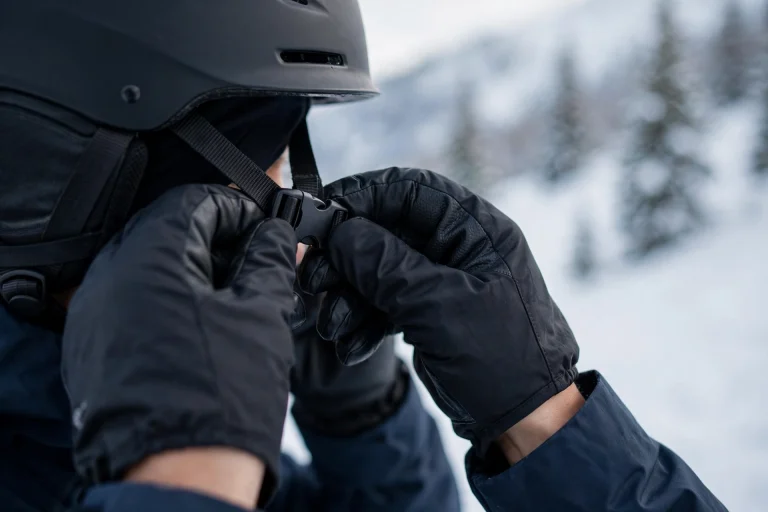
Measure your head with a soft tape just above the eyebrows and ears, then match the measurement to the maker’s size chart. The helmet should feel snug and even all the way around, with no hard pressure point and no gap you can slide a finger into at the forehead. Put it on, fasten the strap, and shake your head: the helmet should move with your head, not wobble independently.
Try it with your goggles. The goggle frame should sit flush against the helmet’s front edge with no exposed strip of forehead — the classic “gaper gap” — and the helmet should not push the goggles down onto your nose. Wear the combination for several minutes in the shop; a lightweight helmet with a bad fit is worse than a heavier one that sits perfectly.
Finally, check the whole system the way you will ski it: balaclava or thin liner if you use one, strap adjusted to the usual two-finger snugness, ear pads in or out as the season demands. If it feels right through all of that, you have found your long-day helmet.
Frequently Asked Questions
Q: Are lightweight ski helmets less safe than heavy ones?
A: No. Safety is set by certification, not weight. A lightweight helmet certified to ASTM F2040 or EN 1077 has passed the same standard as a heavier model. The honest trade-off is toughness against scuffs and dents, not impact protection.
Q: What is the lightest type of ski helmet construction?
A: In-mold construction, where a thin polycarbonate shell is fused directly to the foam, is in general terms the lightest common design. Hybrid helmets weigh a little more, and full ABS hard-shell helmets are usually the heaviest.
Q: Can I use a lightweight ski helmet for snowboarding?
A: Yes. Ski and snowboard helmets are certified to the same snow-sports standards, and fit matters far more than which sport is printed on the box. Choose the model that fits your head and goggles best.

Olivia
Writer at Helmet Today, covering helmet reviews, fit and riding safety.