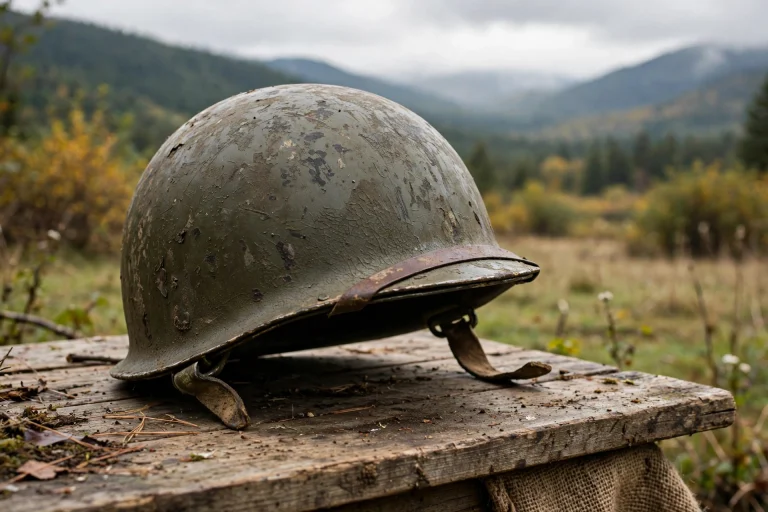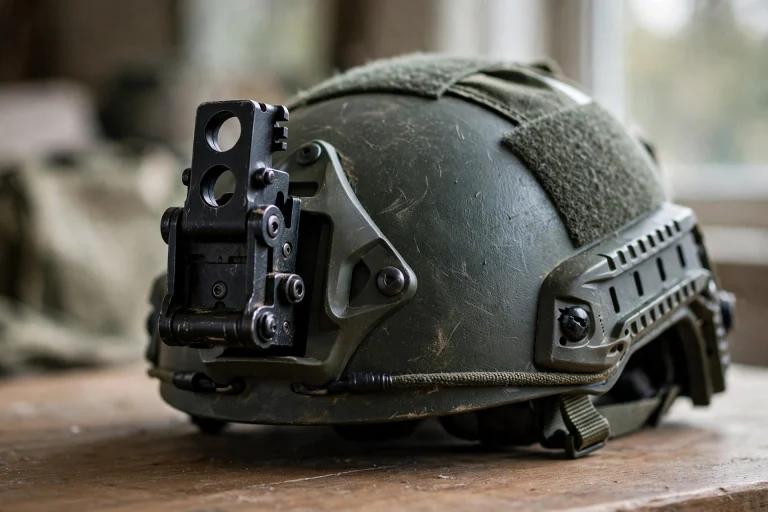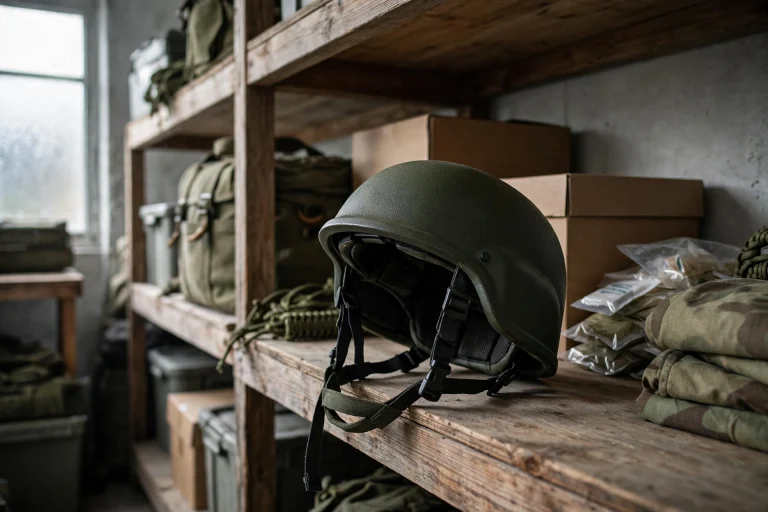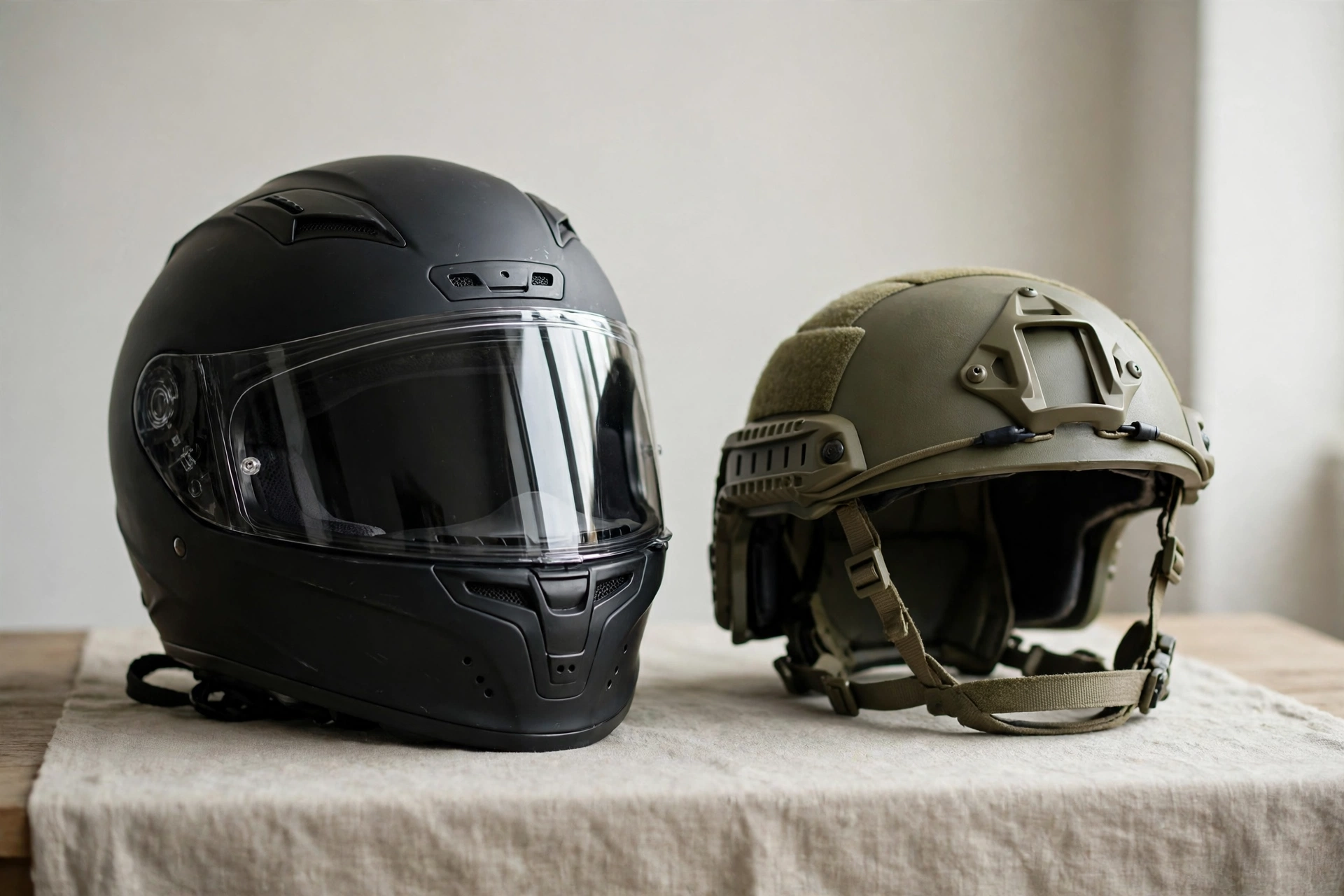
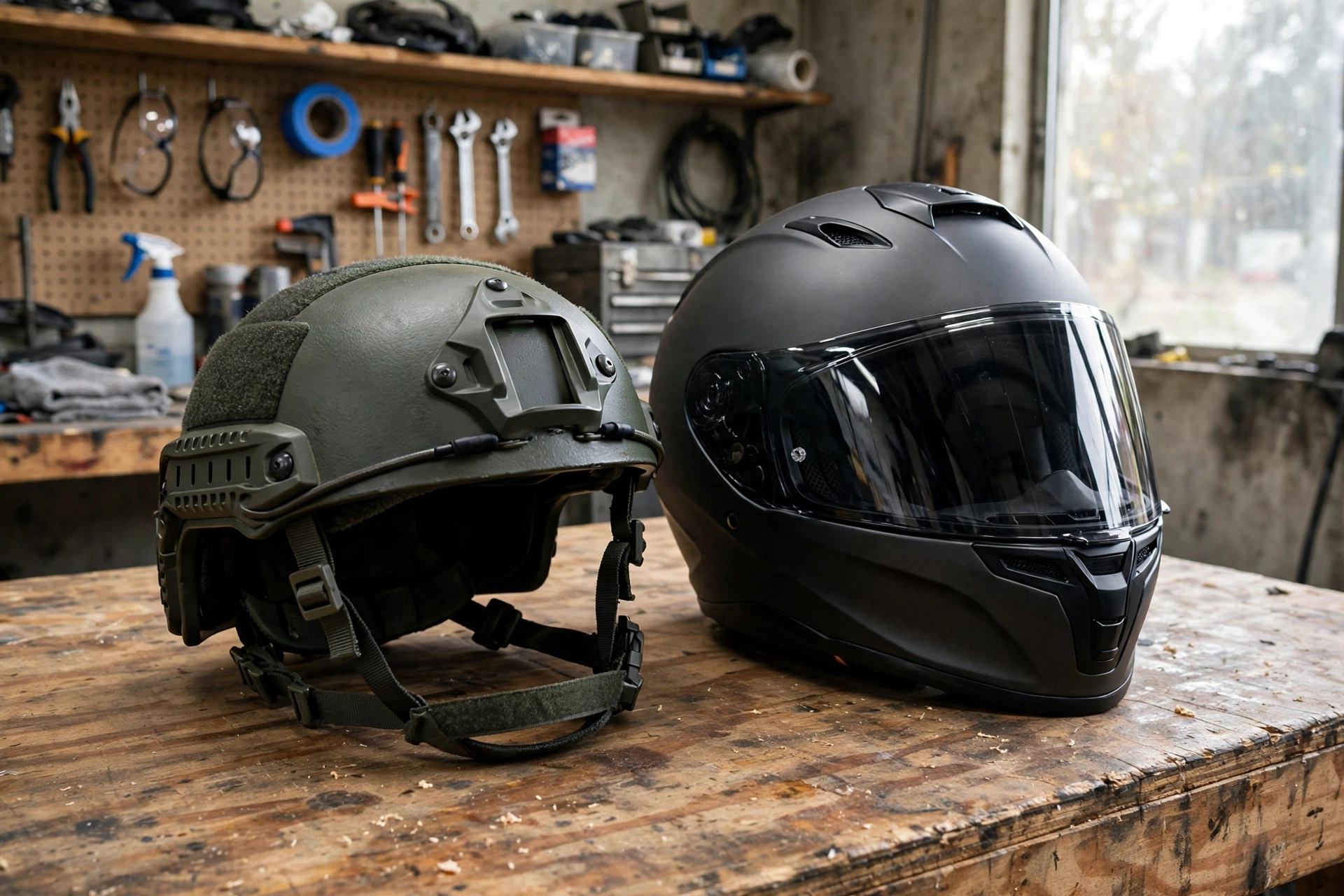
In general terms, tactical helmets and motorcycle helmets differ because they are built for completely different hazards: a tactical helmet is designed for fragments, projectiles, and field use with mounted accessories, while a motorcycle helmet is designed for high-speed road impacts, abrasion, and weather protection for a rider. They may both be called helmets, but almost nothing about their design, testing, or use is interchangeable.
From a distance, the two can look similar — a hard shell, padding, a strap. Up close, the differences are obvious, and they matter. Wearing one in place of the other would leave serious gaps in protection. This guide explains why they differ and what each one is actually designed to do.
What Hazards Is Each Helmet Designed For?
A motorcycle helmet is designed for road crashes: a high-speed impact with the road or another vehicle, sliding along asphalt, and the forces of a sudden stop. Its shell and liner are built to absorb a large impact over a short time, and its shape is designed to slide rather than catch on the road surface. The visor protects the eyes and face from wind, rain, insects, and debris at speed, and the helmet is tested against road-crash scenarios.
A tactical helmet is designed for a different world: fragments and projectiles, blows, and the rough handling of field use. Its shell is built from layered fibres to spread and absorb the energy of a small, fast object striking a small area. It has no full face visor as standard, since the wearer needs hearing, communication, and a wide field of view, and it carries rails and mounts for lights, cameras, and hearing protection. In general terms, the two helmets solve different problems, so their designs diverge from the start.
How Do Their Shells and Liners Differ?
Motorcycle helmet shells are typically made from polycarbonate, fibreglass composites, or carbon fibre, with a thick expanded polystyrene liner that crushes on impact to absorb energy. The liner is the key energy absorber, and it is designed to sacrifice itself in a crash — which is why a motorcycle helmet should be replaced after any significant impact, even if the shell looks undamaged.
Tactical helmet shells are made from layered aramid fibres or ultra-high-molecular-weight polyethylene bonded with resin. The shell itself does most of the work, spreading the energy of a fragment or projectile across its fibres, while the interior padding mainly provides comfort, fit, and spacing between shell and head. Some tactical helmets also include a low-friction layer intended to reduce rotational forces in angled impacts; reading about what MIPS is for helmets can help you understand that kind of layer, which also appears in some motorcycle helmets.
How Do Fit and Retention Differ?
Motorcycle helmets fit snugly all around the head, with cheek pads that hold the helmet firmly and a chin strap — usually a double-D ring or micrometric buckle — that keeps it on at speed and in a crash. The fit is close because a loose motorcycle helmet can rotate or come off in a crash, and because wind at speed will lift a poorly fitting helmet. Trying a motorcycle helmet on, with the strap fastened, and checking for movement is an essential part of choosing one.
Tactical helmets use a different retention approach: a harness of straps, often with a dial or pad-based fit system, designed to keep the helmet stable during running, crawling, and rapid head movement, while still allowing the wearer to hear, communicate, and use headsets. The fit is secure but not as enclosing as a motorcycle helmet, since the wearer needs peripheral vision and hearing. A tactical helmet that fits like a motorcycle helmet would be too restrictive for its job, and a motorcycle helmet that fits like a tactical helmet would be too loose for the road.
Can You Use One in Place of the Other?
In general terms, no. A tactical helmet worn on a motorcycle would not provide the impact absorption, face and eye protection, or road-crash testing that a motorcycle helmet is designed for, and it would not meet road-use requirements. A motorcycle helmet worn in a tactical role would not provide the fragment or projectile protection, accessory mounting, or hearing and communication compatibility that a tactical helmet is designed for.
There are also legal and practical issues: many places require motorcycle riders to wear a helmet meeting a specific road standard, and a tactical helmet does not meet that standard. Similarly, organisations that issue tactical helmets specify them for their own threat assessments. The rule that applies to all helmets applies here too: match the helmet to the hazard it was designed and tested for, and do not substitute one for the other because it happens to be available.
There are also insurance and liability angles worth noting: after a road crash, an insurer or investigator may check whether the helmet worn met the required road standard, and a non-compliant helmet can complicate a claim. In a professional setting, wearing the wrong helmet type can breach workplace safety rules. These consequences are further reasons to treat helmet choice as a safety decision, not a matter of convenience or appearance.
Which One Is More Comfortable for Long Wear?
It depends on the conditions. A motorcycle helmet is designed for riding: it manages wind and weather, and its ventilation is tuned for airflow at speed. Off the bike, though, it can feel hot and restrictive, and its weight is noticeable when walking around. A tactical helmet is designed for all-day wear on foot, with ventilation and a fit system suited to walking, running, and working — but it offers no face protection from wind and weather, and its weight, especially with accessories, can tire the neck over a long day.
Comfort, in the end, is not a reason to choose one over the other — the hazard is. Both are designed to be wearable for their intended use, and both become uncomfortable when used outside it. If a helmet feels wrong for the job, it is worth asking whether it is the right helmet for that job at all.
Frequently Asked Questions
Q: Is a tactical helmet stronger than a motorcycle helmet?
A: They are strong in different ways. A tactical helmet is designed for fragments and projectiles, while a motorcycle helmet is designed for high-speed road impacts and abrasion. Neither is simply “stronger” — each is built for its own hazard.
Q: Can I wear a motorcycle helmet for airsoft or paintball?
A: In general terms, a motorcycle helmet is not designed for those activities and restricts vision and hearing. Purpose-made protective equipment for the activity is the better choice.
Q: Do both types need replacing after an impact?
A: Yes. A motorcycle helmet’s liner crushes on impact and should be replaced after a significant crash, and a tactical helmet that has taken a significant impact should be inspected and usually replaced as well.

Olivia
Writer at Helmet Today, covering helmet reviews, fit and riding safety.