Yes — and it only takes about a minute: inspect the lens and cover plates by eye, run the built-in self-test if your helmet has one, then trigger the sensors with a spark or a bright light to confirm the lens darkens instantly and evenly. If the lens flickers, darkens unevenly, or does not respond at all, do not weld with that helmet until the problem is fixed. A quick test before the first arc is the only way to know your eyes are actually protected.
An auto-darkening helmet is an electronic device, not a piece of glass. It relies on a power source, light sensors, and a liquid-crystal filter, and any of those can fail quietly in a toolbox between jobs. The test below catches those failures while the stakes are still low.
Why Does an Auto-Darkening Helmet Need Testing at All?
A fixed shade helmet has almost nothing that can fail: the glass is dark all the time. An auto-darkening filter is different. It stays light so you can see your workpiece, then depends on sensors detecting the arc and electronics switching the lens in a fraction of a blink. If the battery is dead, a sensor is blinded by grime, or the filter itself is failing, the lens can stay clear at the exact moment the arc fires — and the arc is brightest in those first instants.
Storage makes testing even more important. Solar-powered helmets that sit in a dark cabinet for weeks can lose charge, and any helmet can suffer a knocked sensor or a cracked cover lens while being moved around. In general terms, the helmets that fail are rarely the ones that get tested daily — they are the ones that were assumed to be fine because they worked last month.
What Should You Check Visually Before Testing?
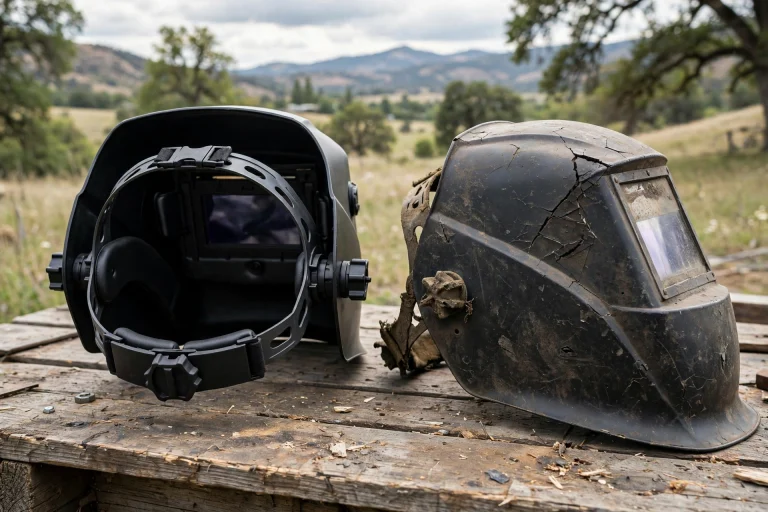
Start with the outer cover lens, the clear plastic plate in front of the filter. Look for pitting, clouding, scratches, and spatter burned into the surface. A damaged cover scatters light and can make a healthy filter look like it darkens unevenly, so replace a worn cover before you judge the filter itself. Check the inner cover lens the same way.
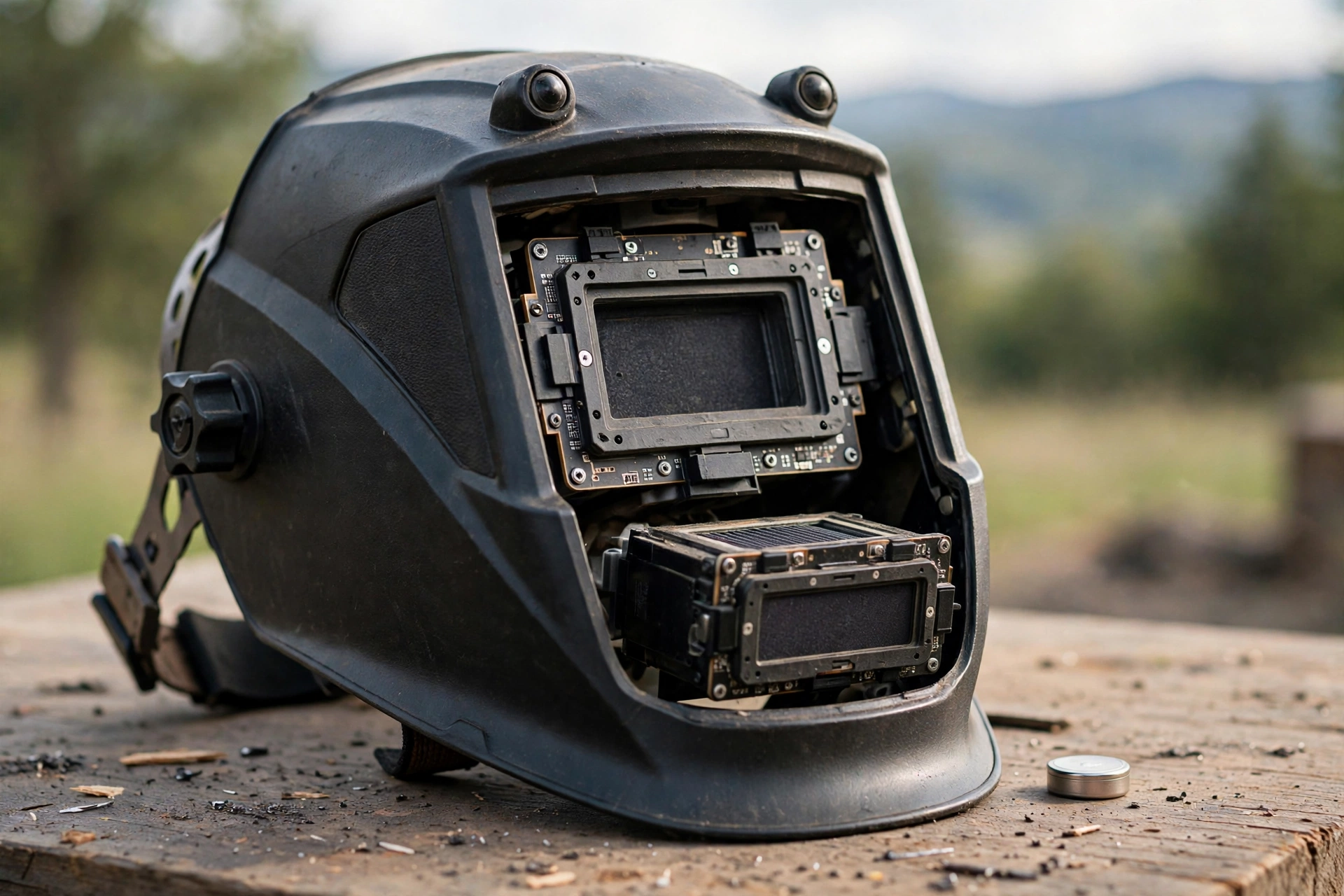
Next, look at the filter cartridge and the sensor windows, which sit on the front of the filter so they can “see” the arc. Wipe away dust, grinding grit, and spatter with a soft, dry cloth. A sensor buried under grime may not detect the arc quickly, or at all. Check that nothing — a shifted cover lens, a sticker, a damaged frame — is blocking the sensors’ view, and look for cracks in the cartridge housing.
Finally, check the power source. Many helmets show a low-battery indicator; believe it when it lights up. If your helmet uses replaceable batteries, swap in fresh ones if the response seems sluggish. If it is solar with a backup battery, give it some time in bright light before testing, the way the maker suggests.
How Do You Use the Self-Test and Spark Test?
If your helmet has a test button — many do, on the filter or the control panel — press it while watching the lens. The lens should snap to its dark shade and return to the light state smoothly. That confirms the electronics and the filter can switch, but it does not test the sensors, so do not stop there.
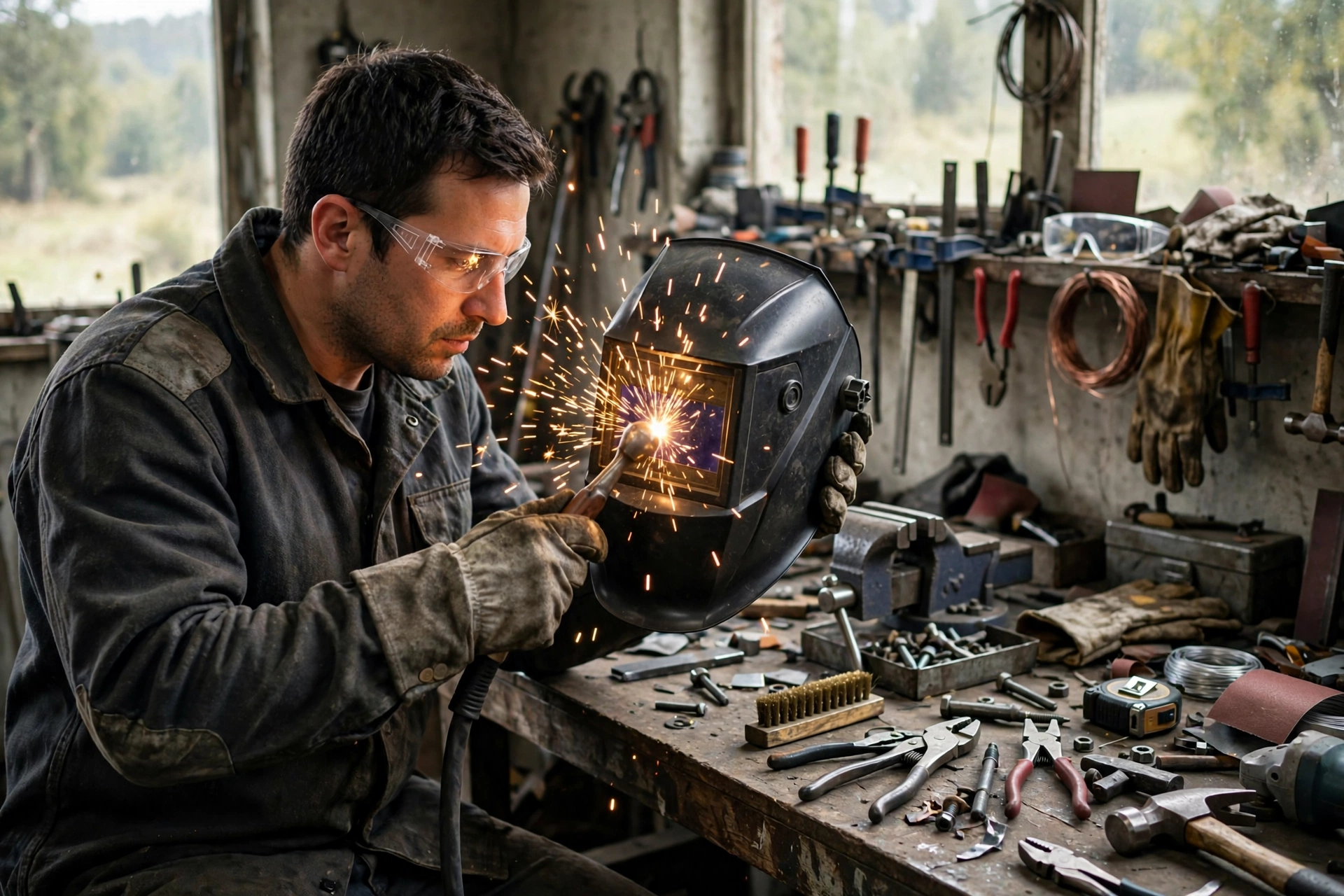
To test the sensors, put the helmet on and trigger them with a small, safe light source. Flicking a flint striker a short distance in front of the lens is a classic shop test: the shower of sparks should make the lens darken immediately, every time. A lighter spark works the same way. Many helmets also respond to a very bright light source flashed in front of the sensors, and some react to the infrared signal from a TV remote control. Try a couple of angles, including off to each side, because the sensors need to respond to arcs that are not dead center.
The most conclusive test is a brief arc on scrap metal. Strike a short arc while watching the puddle area: the lens should already be dark before you register the flash, and it should stay dark steadily for as long as the arc runs.
What Does a Passing Test Look Like?
A healthy helmet darkens across the whole viewing area at once — no corners or patches that stay light, no shimmering or flicker while it is dark, and no noticeable delay between the spark and the shade. When the light stops, the lens should return to its clear state smoothly, at whatever pace your delay setting calls for, without strobing or half-darkening on the way.
Uneven darkening, a blotchy patch, or one corner lagging behind usually points to a weakening filter or a power problem. Flicker during a steady arc usually means dirty or blocked sensors, a low battery, or a cartridge at the end of its life. Treat any of these as a failed test, not a quirk to live with.
What Should You Do If the Lens Fails the Test?
Do not weld with it — not “just for one quick tack.” Work through the simple causes first: charge the helmet in bright light if it is solar, replace the battery, clean the sensors and both cover lenses, and test again. If it still misbehaves, the filter needs repair or replacement, and the helmet stays on the shelf until that happens.
This is why experienced welders keep a backup. A basic fixed shade helmet costs little, never needs batteries, and keeps a job moving when the auto-darkening filter acts up. Borrow or use your backup rather than gambling your eyesight on a lens you have just watched fail.
The habit behind this test is worth carrying to every kind of head protection you own: check fit, condition, and certification before you trust it. Riders do the same with bike and motorcycle helmets, where features like MIPS only help if the helmet is sound and properly fitted in the first place.
Frequently Asked Questions
Q: How often should I test my auto-darkening helmet?
A: Run the quick visual check and a sensor trigger test before every welding session, and always after the helmet has been stored, dropped, or lent to someone else. It takes about a minute once it becomes routine.
Q: Can I test the lens without striking an arc?
A: Yes. The self-test button checks the filter’s switching, and a flint striker, lighter spark, very bright light, or — on many models — a TV remote’s infrared signal will trigger the sensors so you can watch the response without welding.
Q: My lens darkens but flickers while I weld. Can I keep using it?
A: No. Clean the sensors, check or replace the battery, and fit a fresh cover lens, then test again. If the flicker continues, stop using the helmet and have the filter repaired or replaced — flickering leaves your eyes exposed to repeated flashes.

Olivia
Writer at Helmet Today, covering helmet reviews, fit and riding safety.