

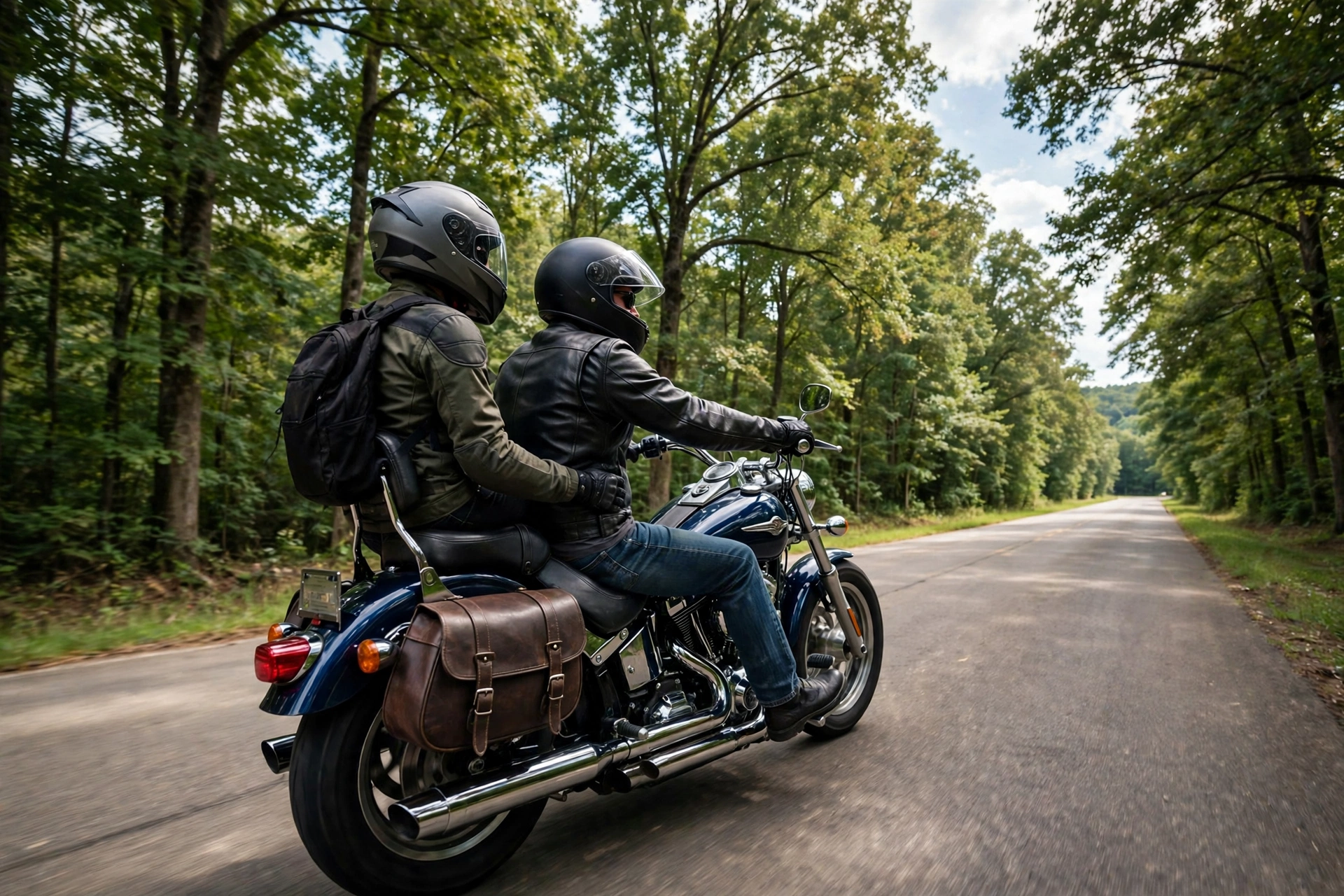
Yes — some motorcycle passengers in Arkansas must wear a helmet, and it all comes down to age. In Arkansas, any motorcycle rider or passenger under 21 years old is required by law to wear protective headgear, meaning an approved helmet. Passengers who are 21 or older are not legally required to wear one, although wearing one is still the safest choice on every ride.
What Does Arkansas Law Say About Passengers?
Arkansas helmet law is set out in Arkansas Code § 27-20-104. The rule is simple: no person under 21 may ride on a motorcycle — as the operator or as a passenger — without wearing protective headgear. The law does not make a special exception for passengers. If the passenger is 20 or younger, a helmet is required, full stop.
The law changed in 1997, when Arkansas moved away from a universal helmet rule for all riders and replaced it with the under-21 rule that still applies today. That is why you will see plenty of adult riders in Arkansas without helmets, while younger riders and passengers on the same roads are required to wear them.
For a full picture of how Arkansas compares with neighboring states, see our guide to helmet laws by state, which is useful if your ride crosses into Missouri, Tennessee, Mississippi, Louisiana, Texas, or Oklahoma — several of those states have different age rules.
Does the Rule Apply to the Driver Too?
Yes. The under-21 helmet requirement covers both the person operating the motorcycle and anyone riding behind them. A 19-year-old driver carrying an 18-year-old passenger needs two helmets, not one. An adult driver aged 21 or older can legally ride without a helmet, but if that same driver picks up a passenger who is under 21, the passenger must be wearing one before the bike moves.
This is where riders most often get it wrong. Many people assume the helmet rule follows the driver, so if the driver is old enough to ride without one, the passenger is covered too. That is not how the Arkansas rule works. Each person on the motorcycle is judged by their own age.
- Driver under 21: helmet required for the driver.
- Passenger under 21: helmet required for the passenger.
- Driver and passenger both 21 or older: helmet not required by state law for either.
- Mixed ages: the under-21 person must wear a helmet, whatever the other person’s age.
What Kind of Helmet Counts in Arkansas?
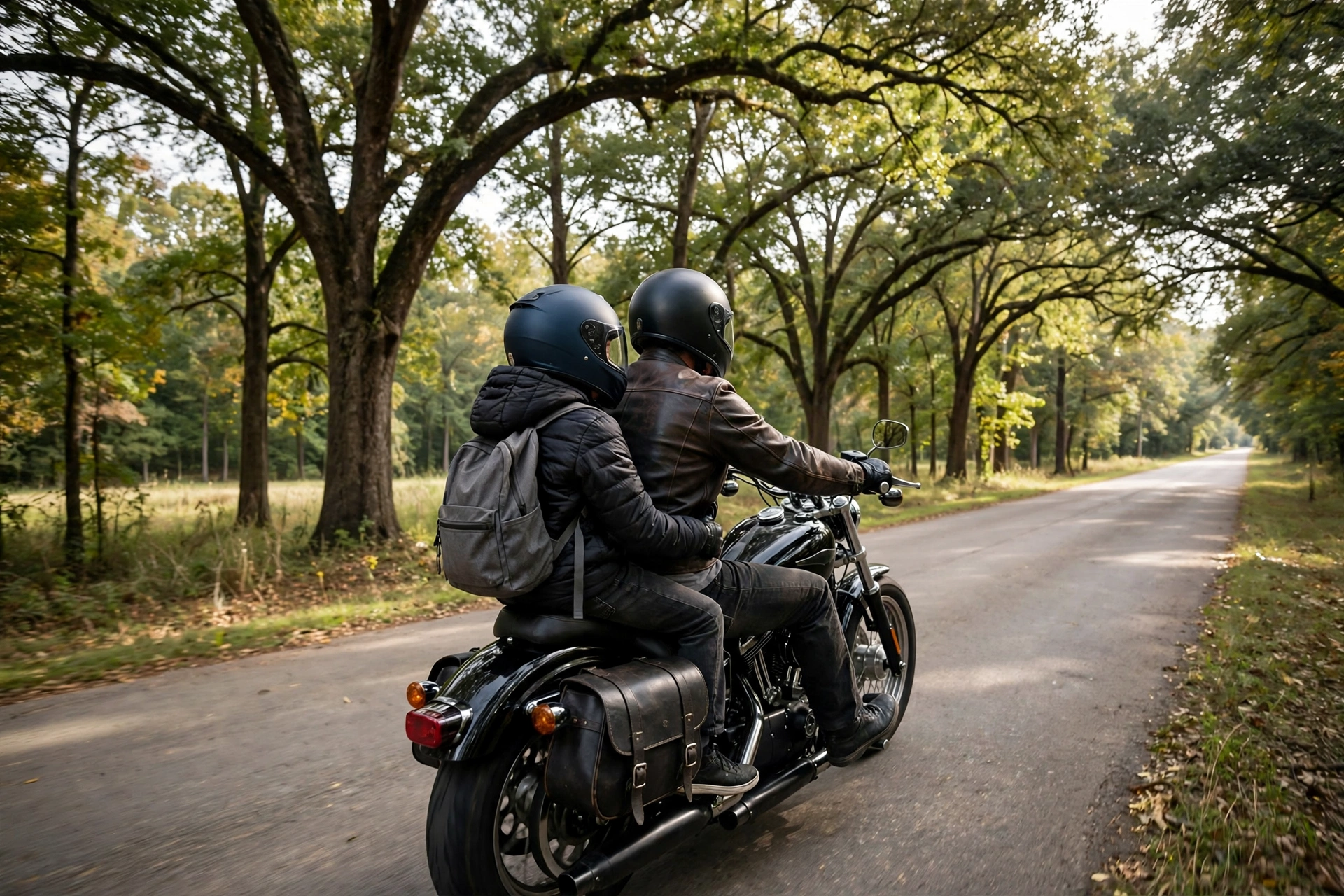
The law requires “protective headgear,” and in practice that means a proper motorcycle helmet, not a bicycle helmet, a novelty helmet, or a hard hat. Arkansas riders should choose a helmet that meets the federal safety standard, FMVSS 218 — the standard behind the DOT symbol you will see on the back of legitimate helmets sold in the United States.
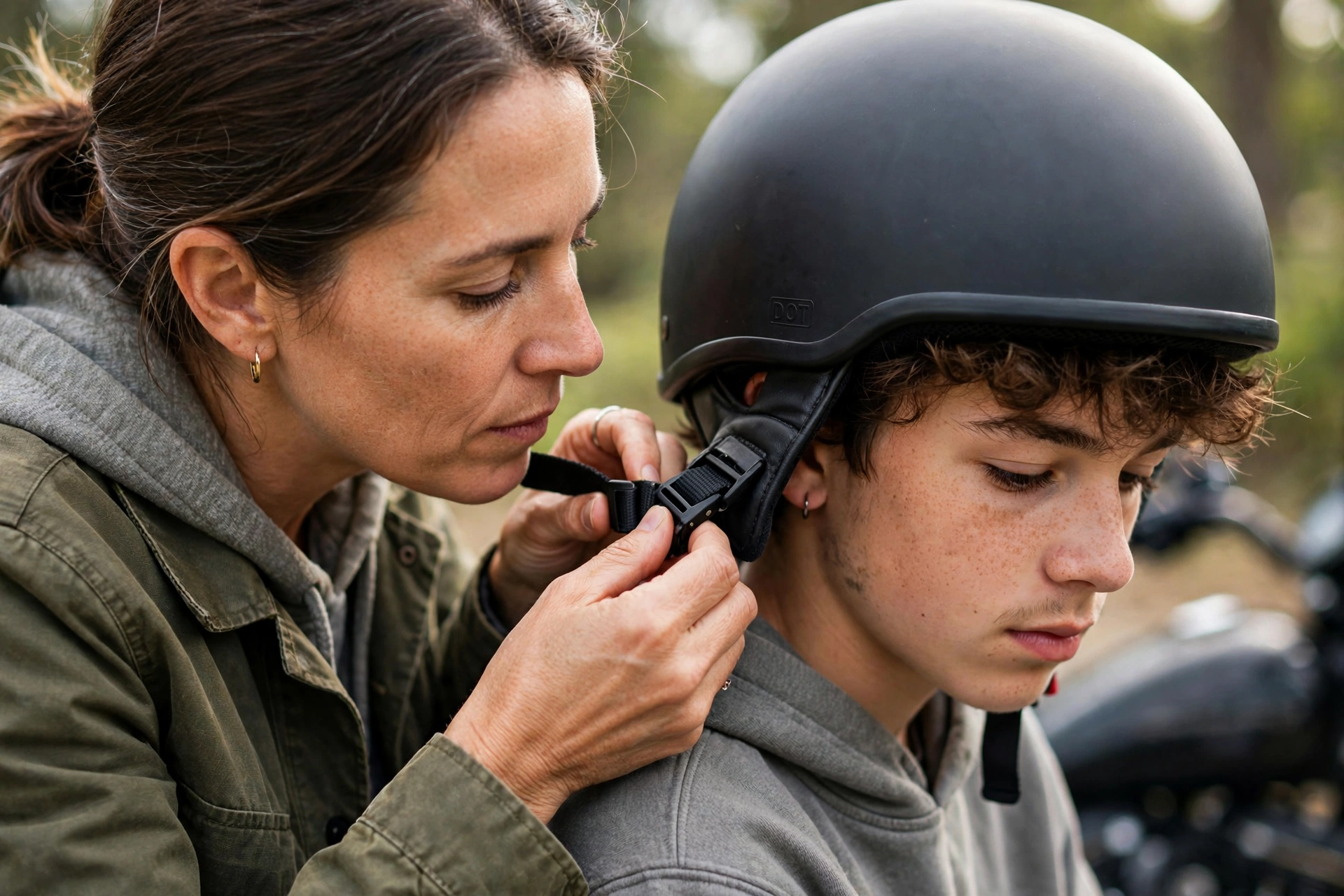
A compliant helmet should also be worn the way it was designed to be worn: sitting level on the head, with the chin strap fastened snugly. A helmet carried on an arm, strapped to the sissy bar, or worn unbuckled does not do the passenger any good and may not satisfy an officer that the law is being followed. If you are buying a helmet for a young passenger, check the fit carefully. A helmet that slides around or sits too high gives far less protection in a fall.
Arkansas also has a separate eye protection rule. Riders and passengers are generally required to wear protective eyewear such as goggles, glasses, or a face shield unless the motorcycle is fitted with a protective windshield. A helmet with a built-in visor or shield can cover both requirements at once, which is one more reason a full-face or shield-equipped helmet is a practical choice for passengers.
Are There Any Exceptions for Passengers?
For passengers under 21, there is no general exception based on the length of the trip, the speed of the road, or the time of day. A five-minute ride across town carries the same requirement as a long highway run. The age rule also applies on private-feeling roads such as resort lanes and campground routes if they are open to public travel, so it is safest to treat the helmet as required whenever the wheels are turning.
Very small children raise a separate practical question. A child who cannot reach the passenger footrests, cannot hold on properly, or cannot keep a helmet in place is not ready to ride as a passenger at all, whatever the law allows. Arkansas riders should also make sure the motorcycle is actually set up for a passenger, with a proper passenger seat and footrests, before carrying anyone.
Laws and local ordinances can change, and some cities or military bases in Arkansas have their own rules. Check the current Arkansas state and local rules before you ride if anything about your trip is unusual.
Practical Tips for Riding With a Passenger in Arkansas
If you regularly carry a passenger, keep a second, properly fitting helmet with the bike so age is never a problem at the start of a ride. Helmets are not one-size-fits-all, so a spare that is far too large for a smaller passenger is only slightly better than nothing. Try helmets on in person where possible, and replace any helmet that has been dropped hard or involved in a crash, even if the damage is not obvious.
Before setting off, agree on the basics with your passenger: hold on to you or the grab handles, keep feet on the footrests, lean with the bike rather than against it, and wait for your signal before getting on or off. A short briefing matters more for younger passengers, who are exactly the group Arkansas law requires to wear helmets. You can compare Arkansas with the rules along your whole route in our complete helmet laws by state guide before a multi-state trip.
Finally, remember that “not required” is not the same as “not needed.” Head injuries are the most serious risk in motorcycle crashes, and a passenger has no control over braking, steering, or other traffic. Many experienced Arkansas riders wear helmets at every age and ask their passengers to do the same, law or no law.
Frequently Asked Questions
Can a passenger ride without a helmet in Arkansas?
Yes, if the passenger is 21 or older. Arkansas only requires helmets for motorcycle riders and passengers under 21, though eye protection rules can still apply.
What is the penalty concern for an under-21 passenger without a helmet?
An under-21 passenger riding without protective headgear is breaking Arkansas Code § 27-20-104 and can be stopped and cited. Carrying the right helmet is far simpler than dealing with a traffic stop.
Does Arkansas require helmets for moped or scooter passengers?
The under-21 headgear rule is written around motorcycles, and low-powered cycles can be treated differently depending on the vehicle. Check the current Arkansas rules for your exact vehicle before riding.

Olivia
Writer at Helmet Today, covering helmet reviews, fit and riding safety.


