


Alabama has a universal motorcycle helmet law, so there is no minimum age and no age exemption. Every rider and every passenger on a motorcycle in Alabama must wear an approved protective helmet, whether they are 16, 26, or 66. If you ride in Alabama, a helmet is required at every age.
That makes Alabama different from many states that only require helmets for younger riders. In Alabama, turning 18, 21, or any other age does not remove the requirement, and experience, insurance, or a long riding history does not create an exemption either. The rule is simple: if the motorcycle is moving on a public road, everyone on it needs a helmet.
Who has to wear a helmet in Alabama?
The law covers both the operator and the passenger. It does not matter who owns the motorcycle, whether you are riding across town or across the state, or whether you are on a large touring bike, a cruiser, or a smaller motorcycle. If you are on the bike, the helmet requirement applies to you.
This also applies to visitors. Riders coming into Alabama from states with no helmet law, or with a law that only covers minors, sometimes assume their home-state rules travel with them. They do not. Once you are riding on Alabama roads, Alabama law applies, and an officer can stop and cite a rider or passenger who is not wearing a helmet.
Children are covered as well. There is no lower age at which the law starts and no upper age at which it stops. A young passenger needs a properly fitting, approved helmet just as much as the adult driving the motorcycle, and the adult rider is responsible for making sure that happens before the ride begins.
What counts as an approved helmet in Alabama?
Not every piece of headgear qualifies. Alabama requires a protective helmet of the type approved for motorcycle use, which in practice means a real motorcycle helmet that meets the U.S. Department of Transportation (DOT) standard. A compliant helmet has a DOT symbol on the back, a thick inner foam liner designed to absorb impact, and a sturdy chin strap that fastens securely.
Novelty helmets are a common problem. Thin “beanie” style helmets sold as novelty items often lack the energy-absorbing liner of a certified helmet and are not made to DOT standards. Wearing one can still leave you open to a citation, and more importantly, it offers very little protection in a crash. If the helmet does not carry a genuine DOT label, treat it as not road-legal in Alabama.
Fit matters too. A helmet should sit low on the forehead, feel snug all the way around without painful pressure points, and stay in place when you shake your head. The chin strap should be fastened every ride, adjusted so you can fit about two fingers between the strap and your chin. A loose helmet can shift or come off in a fall, which defeats the purpose of wearing one.
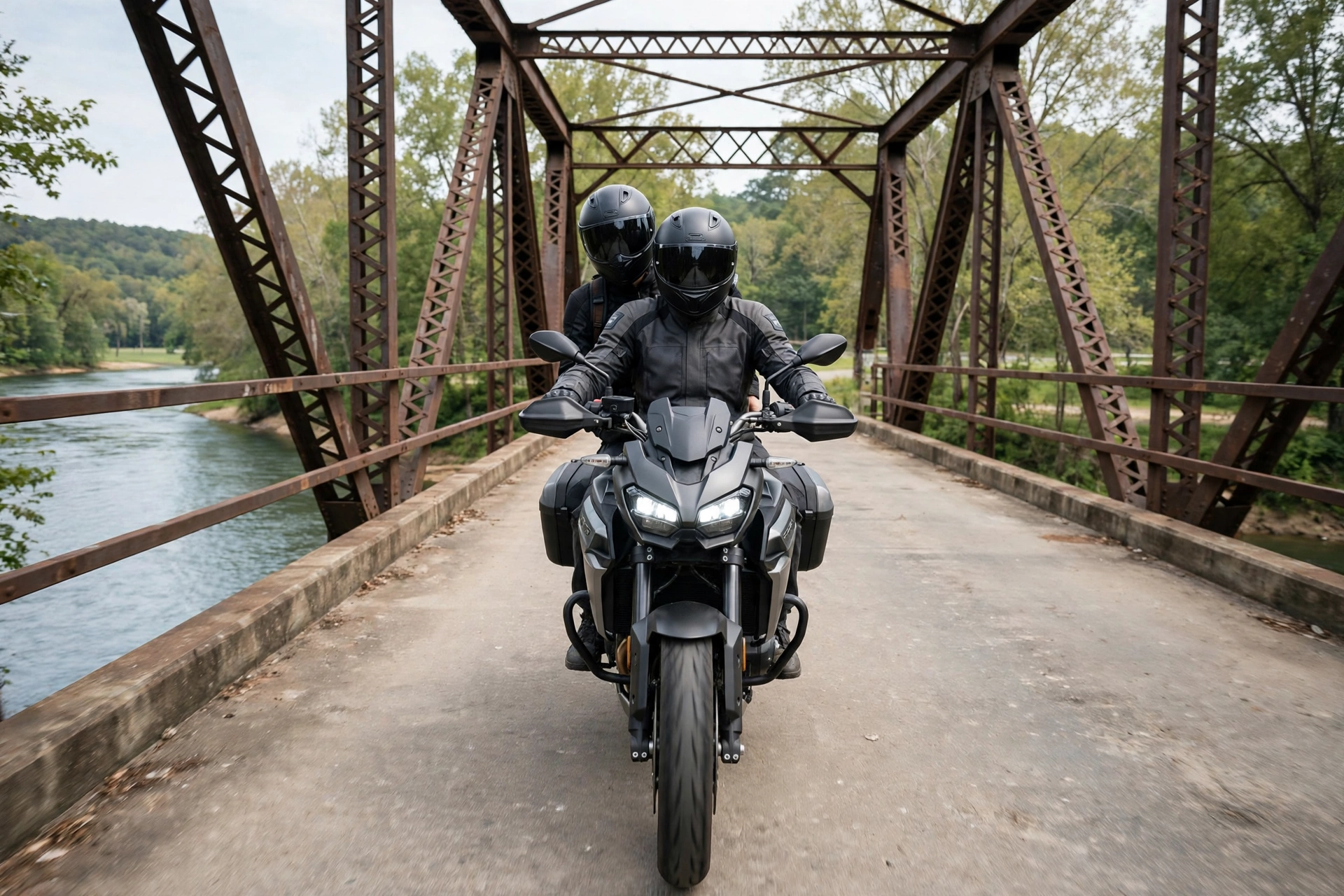
Does Alabama’s helmet law have any age exemptions?
No. Alabama is one of the states that has kept a universal helmet law for decades, and it applies to riders and passengers of all ages. Unlike states where the requirement ends at 18 or 21, Alabama’s rule never switches off as you get older.
There is also no exemption based on motorcycle size, trip length, or riding experience, and no option to skip the helmet by carrying extra insurance. Some states allow adult riders to go without a helmet if they meet medical insurance or training conditions, but Alabama is not one of them. For a wider look at how the states differ, see our guide to helmet laws by state.
The practical takeaway is that Alabama riders should simply build the helmet into every ride. Keep a spare approved helmet if you carry passengers, because your passenger is held to the same standard and “I was only giving them a short ride” is not a defense.
What happens if you ride without a helmet in Alabama?
Riding without a required helmet is a traffic offense in Alabama, and you can be pulled over for it on its own. A citation can mean a fine and court costs, and the exact amount can vary by court and by the circumstances of the stop, so fines vary by court rather than following one single statewide figure you can count on.
The legal cost is only part of the picture. Head injuries are the leading cause of death in motorcycle crashes, and a helmet is the single most effective piece of safety gear a rider can wear. Riders who crash without a helmet also sometimes face harder questions from insurers about how their choices contributed to their injuries, which can complicate a claim even when someone else caused the crash.
Compared with a fine, court date, or a serious head injury, wearing a certified helmet every ride is an easy decision. It also keeps a simple traffic stop from ruining an otherwise good day of riding.
What about eye protection and other gear in Alabama?
A helmet is the one item Alabama law specifically requires for all riders and passengers. If your helmet has a face shield, it also gives you eye protection against wind, dust, insects, and road debris. If you wear an open-face helmet, shatter-resistant glasses or goggles are a smart addition, since a small stone kicked up at highway speed can cause a serious eye injury and make you lose control.
Other gear is strongly recommended even though the state does not mandate it: gloves, an abrasion-resistant jacket, long pants, and over-the-ankle boots all reduce injuries in a slide. Many Alabama riders also add reflective elements for night riding, when motorcycles are harder for other drivers to see.
Alabama’s heat is worth planning for, because discomfort is the reason some riders are tempted to leave the helmet behind. A vented helmet in a light color, a moisture-wicking skull cap underneath, and short stops for water on long summer rides make a real difference. Riders who gear up comfortably for Alabama weather find the universal law easy to live with all season, from Gulf Coast humidity to cooler rides in the northern hills.
Frequently Asked Questions
At what age can you stop wearing a helmet in Alabama?
There is no such age. Alabama’s universal helmet law applies to riders and passengers of every age, with no adult exemption.
Does the Alabama helmet law apply to passengers too?
Yes. Passengers must wear an approved helmet just like the operator, including children riding as passengers.
Is a novelty helmet legal in Alabama?
Generally no. The helmet must be an approved motorcycle helmet, which means it should meet DOT standards. Thin novelty helmets without a proper impact liner do not qualify.

Olivia
Writer at Helmet Today, covering helmet reviews, fit and riding safety.


