

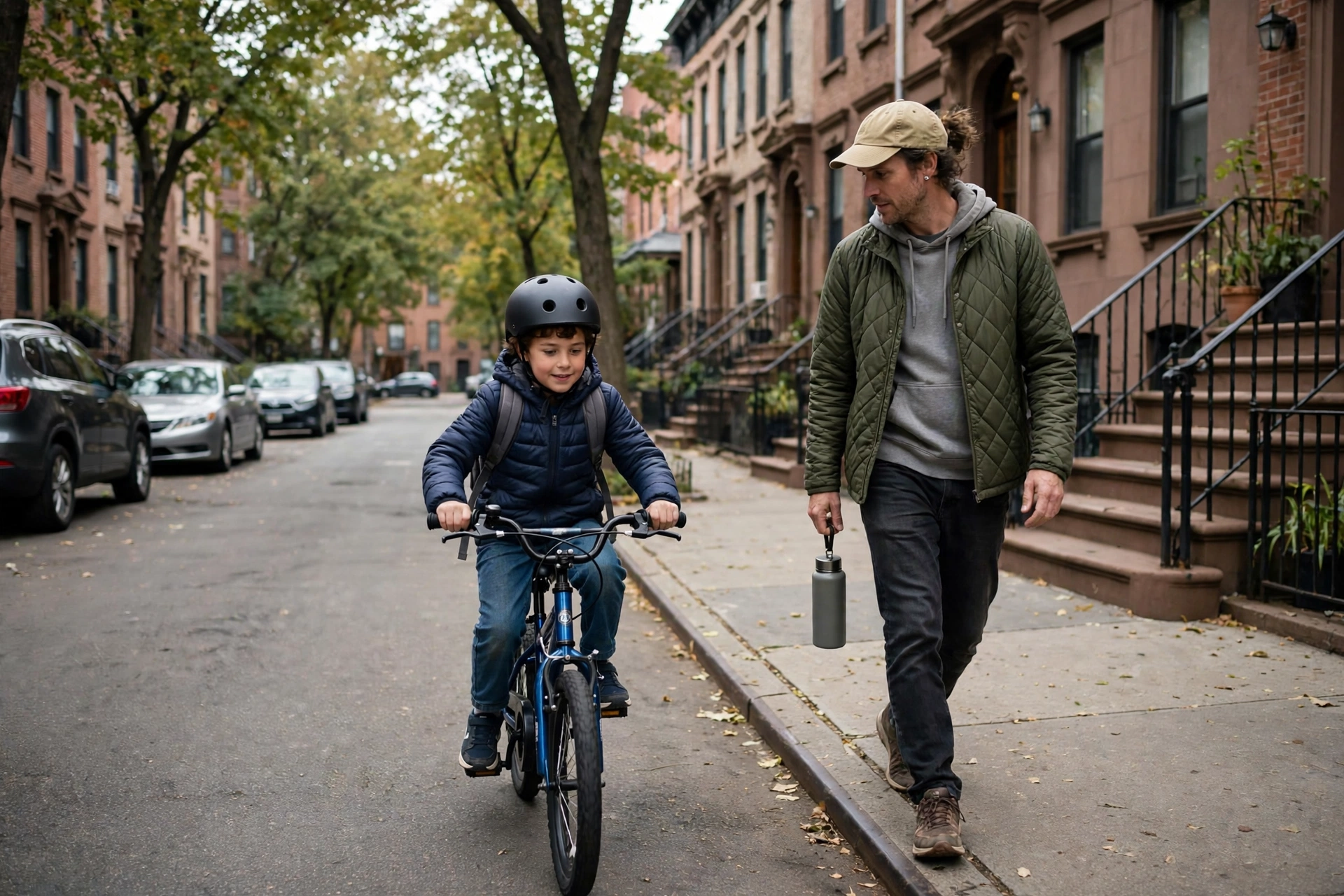
In New York State, every bicycle rider and passenger under the age of 14 must wear a helmet. That means children ages 1 through 13 are covered by the law whenever they ride a bike or sit on one as a passenger. Once a child turns 14, the state no longer requires a helmet, although wearing one is still strongly recommended.
The rule applies across the whole state, from New York City to the smallest upstate town. Below is a clear breakdown of who must wear a helmet, where the law applies, and what parents need to know to keep young riders legal and safe.
What age does New York’s bicycle helmet law cover?
The state law covers children under 14 years old. If your child is 13 or younger and riding a bicycle on a public road, sidewalk area open to the public, bike path, or similar public place, a helmet is legally required. The law is written around the child’s age, not around where the bike came from or who owns it, so it applies equally to a child’s own bike, a borrowed bike, or a rental.
Children who are 14 and older are not required by state law to wear a helmet. Neither are adults. However, the age cutoff is only a legal minimum. Head injuries are one of the most serious risks in bicycle crashes at any age, and safety experts consistently recommend helmets for every rider, not just those the law names. Most New York children’s hospitals and pediatric groups treat the state age as a floor, not a target, and encourage families to keep helmets on through the teenage years and beyond.
Do passengers and toddlers have to wear helmets too?
Yes. The New York rule covers passengers as well as riders. A child under 14 riding in a child seat, on a tag-along bike, or in any other passenger position on a bicycle must also wear a properly fitted helmet.
There is also a minimum age for passengers: a child must be at least 1 year old to ride as a passenger on a bicycle in New York. Babies under 12 months should never be carried on a bike, helmet or not, because their necks are not yet strong enough to support a helmet and handle the motion safely. Once a child is old enough to be a passenger, the helmet must fit snugly, sit level on the head, and be fastened with the chin strap.
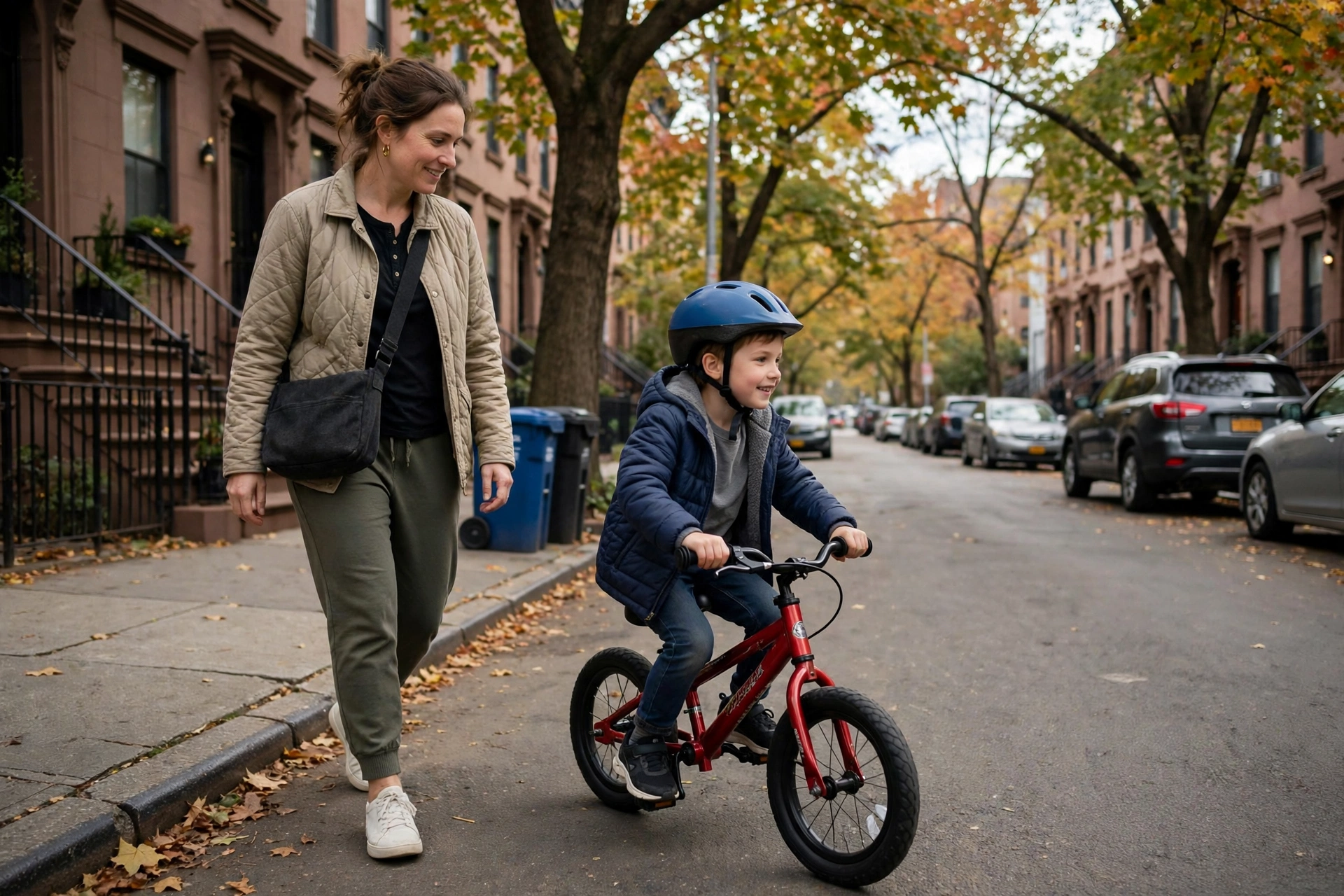
Can local laws in New York be stricter than the state rule?
Yes, and this is the part many parents miss. While the state sets the under-14 floor, some New York counties and municipalities have adopted their own bicycle helmet rules that go further. A number of local laws extend the helmet requirement to older teenagers, and some apply to all riders regardless of age within their borders. Rules can also differ for places like county parks and trails.
Because of this, it is worth checking the local ordinance for your county or city before assuming the state age limit is the only rule that applies to your family. If you are comparing rules across the country, our guide to what states have helmet laws gives a useful overview of how widely these requirements vary.
What makes a bicycle helmet legal and safe in New York?
A helmet only counts if it actually fits and is worn correctly. Look for a helmet that meets the U.S. Consumer Product Safety Commission (CPSC) standard, which is the federal safety standard for bicycle helmets sold in the United States. The helmet should sit level on the child’s head, covering the forehead without tipping back, and the side straps should form a V under each ear. The chin strap should be snug enough that only one or two fingers fit between the strap and the chin.
Replace any helmet after a crash, even if it looks fine, because the foam that absorbs impact can be damaged invisibly. You should also size up as your child grows: a helmet that is too small or too loose will not protect properly and may not satisfy the spirit of the law.
What happens if a child rides without a helmet?
Enforcement in New York generally focuses on education, but a violation can result in a civil fine, and fines vary depending on the circumstances and the local jurisdiction. In many cases a fine can be waived if the parent shows proof that a helmet has been purchased. Parents and guardians should treat the rule as their responsibility: for younger children especially, adults are expected to make sure the helmet is on and fastened before every ride.
The simplest approach is to make the helmet automatic — no helmet, no ride. When helmet use becomes a habit from the very first tricycle and balance bike rides, older children rarely argue about it later.
Fit deserves a final word, because most children in New York are wearing helmets that are slightly wrong. The helmet should not tip back to expose the forehead, and it should not slide forward over the eyes either. With the strap unfastened, a correct helmet stays put when the child bends forward and shakes their head gently. If it moves, try the next size down or use the thicker fit pads that come in the box with most children’s helmets.
Also remember that the law follows the child, not the bicycle. A child visiting relatives in another part of New York, riding at a park while on vacation, or cycling to school is covered in exactly the same way as at home. Keeping a spare helmet in the car is an easy way to make sure the rule never gets broken just because the usual helmet was left behind.
Frequently Asked Questions
Does New York require helmets for adult cyclists?
No. New York State law only requires helmets for riders and passengers under 14. Some local laws are stricter, so check your city or county rules, and wear one anyway for your own safety.
Can my 14-year-old ride without a helmet in New York?
Under state law, yes — the requirement ends at age 14. But some local ordinances extend the age, and helmets remain strongly recommended for teenagers.
How old must a child be to ride as a passenger on a bike in New York?
At least 1 year old. Children under 12 months must not be carried as bicycle passengers, and passengers under 14 must wear a helmet.

Olivia
Writer at Helmet Today, covering helmet reviews, fit and riding safety.


