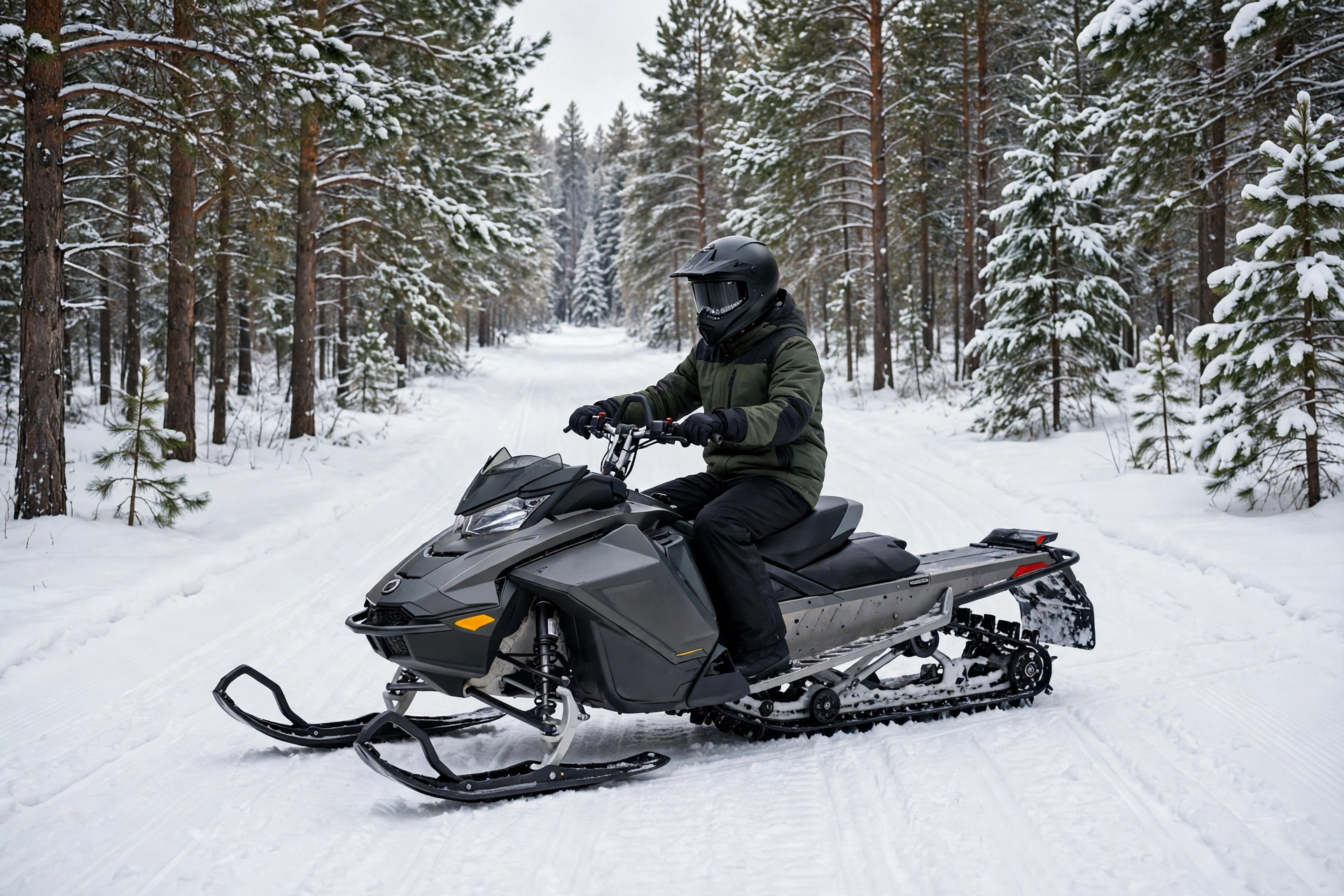
Yes — in Minnesota, snowmobile operators and passengers under 18 must wear a helmet. Adults 18 and older are not required to wear one under state law, although the Minnesota DNR strongly recommends a helmet for every rider on every ride, no matter their age.
That under-18 rule applies whether the young rider is driving the sled or riding as a passenger, and whether you are on a groomed state trail, a frozen lake, or other public land. Below is exactly who the law covers, what kind of helmet counts, and the separate safety training certificate Minnesota requires for many riders.
Who has to wear a helmet on a snowmobile in Minnesota?
Anyone under 18 years old who operates or rides on a snowmobile in Minnesota must wear a helmet. There is no exception for short rides, riding on familiar trails near home, or riding as a passenger behind an experienced adult. If your child is driving their own youth sled, they need a helmet. If your teenager is riding behind you, they need a helmet too.
Once a rider turns 18, the state helmet requirement falls away. That surprises some families, because Minnesota’s rule is stricter for minors than the snowmobile laws in several neighboring states. The safest way to think about it is simple: under 18, a helmet is the law; over 18, it is your choice — and a smart one, as explained below.
Parents should also know that letting a child ride without a helmet is not just a safety risk. The adult responsible for the young rider can face enforcement consequences, so make the helmet part of the routine every single time the sled starts.
What type of helmet does Minnesota require for riders under 18?
The helmet should be a proper snowmobile or motorcycle helmet that meets U.S. Department of Transportation (DOT) safety standards — look for the DOT symbol on the back of the helmet. A bicycle helmet, ski helmet, or hockey helmet is not a substitute, because those are designed for very different impacts and do not offer the same coverage, retention system, or cold-weather protection.
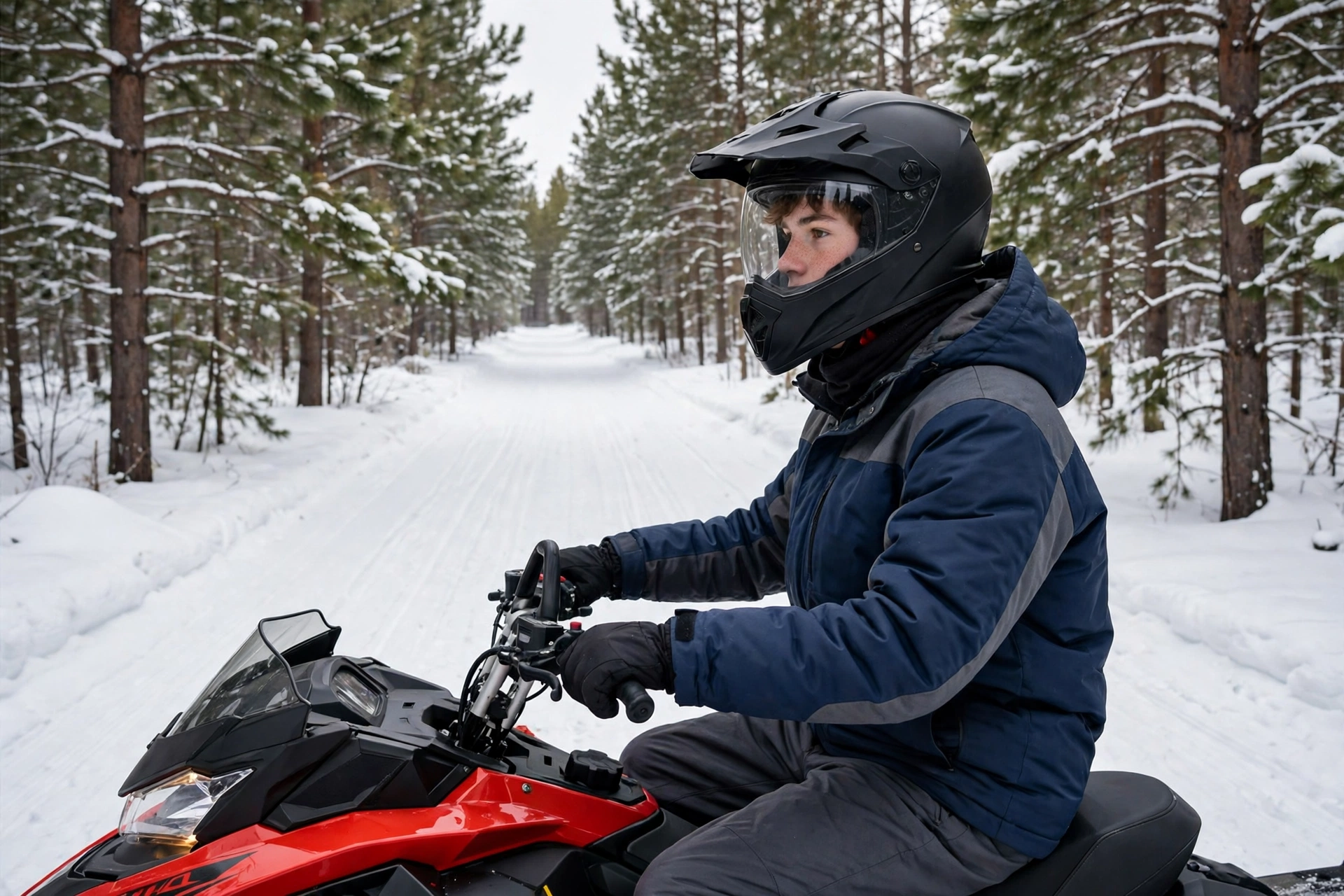
A full-face snowmobile helmet is the best choice for a young rider. It protects the chin and face, seals out wind chill that can reach dangerous levels at trail speeds, and usually includes a breath guard and a double-pane or heated shield to control fogging. The helmet must fit snugly: it should not rock side to side, the cheek pads should press firmly, and the chin strap must be buckled and tight on every ride.
If your child wears glasses, choose a helmet with speaker pockets and a roomy eye port, and test the fit with the glasses on before the first trip. And remember that a helmet that has taken a hard hit in a crash should be replaced, even if it looks fine from the outside.
Does Minnesota require snowmobile safety training as well?
Yes, and this is separate from the helmet rule. Minnesota requires a snowmobile safety training certificate for riders born after December 31, 1976 who operate a snowmobile on public lands, trails, or frozen waters. In practice, that means most adult riders today need the certificate, not just teenagers.
Young riders complete a youth snowmobile safety course, which includes classroom or online study plus a hands-on riding component. Adults born after the 1976 cutoff can complete the state’s approved adult safety training, much of which is available online through the Minnesota DNR. Riders must carry proof of their certificate while riding and show it to a conservation officer on request.
The certificate and the helmet work together: training teaches trail etiquette, hand signals, ice safety, and how to judge speed for conditions, while the helmet protects the rider if something still goes wrong. If your family is new to the sport, complete the training first, then shop for helmets — the course also covers what good protective gear looks like.
Are adults required to wear a helmet on a snowmobile in Minnesota?
No. Minnesota law does not require riders 18 and older to wear a helmet. But the absence of a law is not the same as the absence of risk. Snowmobile crashes often involve ejection, collisions with trees or other sleds, and falls through thin ice — and head injuries are a leading cause of snowmobile fatalities nationwide. Wind chill alone is another argument: at 40 or 50 mph in sub-zero Minnesota weather, exposed skin can develop frostbite in minutes, while a full-face helmet keeps your head and face warm and your vision clear.
Most experienced Minnesota riders wear a helmet on every ride, and many clubs, guided tours, and rental operators require one regardless of age. If you are comparing rules across state lines before a trip, our guide to what states have helmet laws is a helpful starting point for how differently states handle requirements like these.
What happens if a rider under 18 is caught without a helmet?
Riding without a required helmet can result in a citation from a conservation officer or other law enforcement, along with a fine. Beyond the ticket, officers can stop the ride until the young rider has proper equipment, which is a trip-ending inconvenience no family wants on a holiday weekend. Exact penalties can vary with the circumstances, so the practical answer is simple: do not test it.
Enforcement is most visible on busy grant-in-aid trails, at trailheads, and during safety-check weekends in peak season. Officers also routinely check registration and safety certificates at the same stops, so keep your documents and your helmet together as one habit.
Frequently Asked Questions
Does a passenger under 18 need a helmet in Minnesota?
Yes. The requirement covers both operators and passengers under 18, so a child riding behind an adult must wear a properly fitted, DOT-approved snowmobile helmet with the strap fastened.
Can my child wear a ski helmet or hockey helmet instead?
No. Those helmets are built for different sports and speeds. Use a DOT-approved snowmobile or motorcycle helmet that fits snugly and protects against cold, wind, and high-energy impacts.
Do I need a safety certificate if I was born before 1977?
Riders born on or before December 31, 1976 are generally exempt from Minnesota’s snowmobile safety certificate requirement on public land. Everyone younger needs the certificate, and riders under 18 still need a helmet regardless.

Olivia
Writer at Helmet Today, covering helmet reviews, fit and riding safety.