

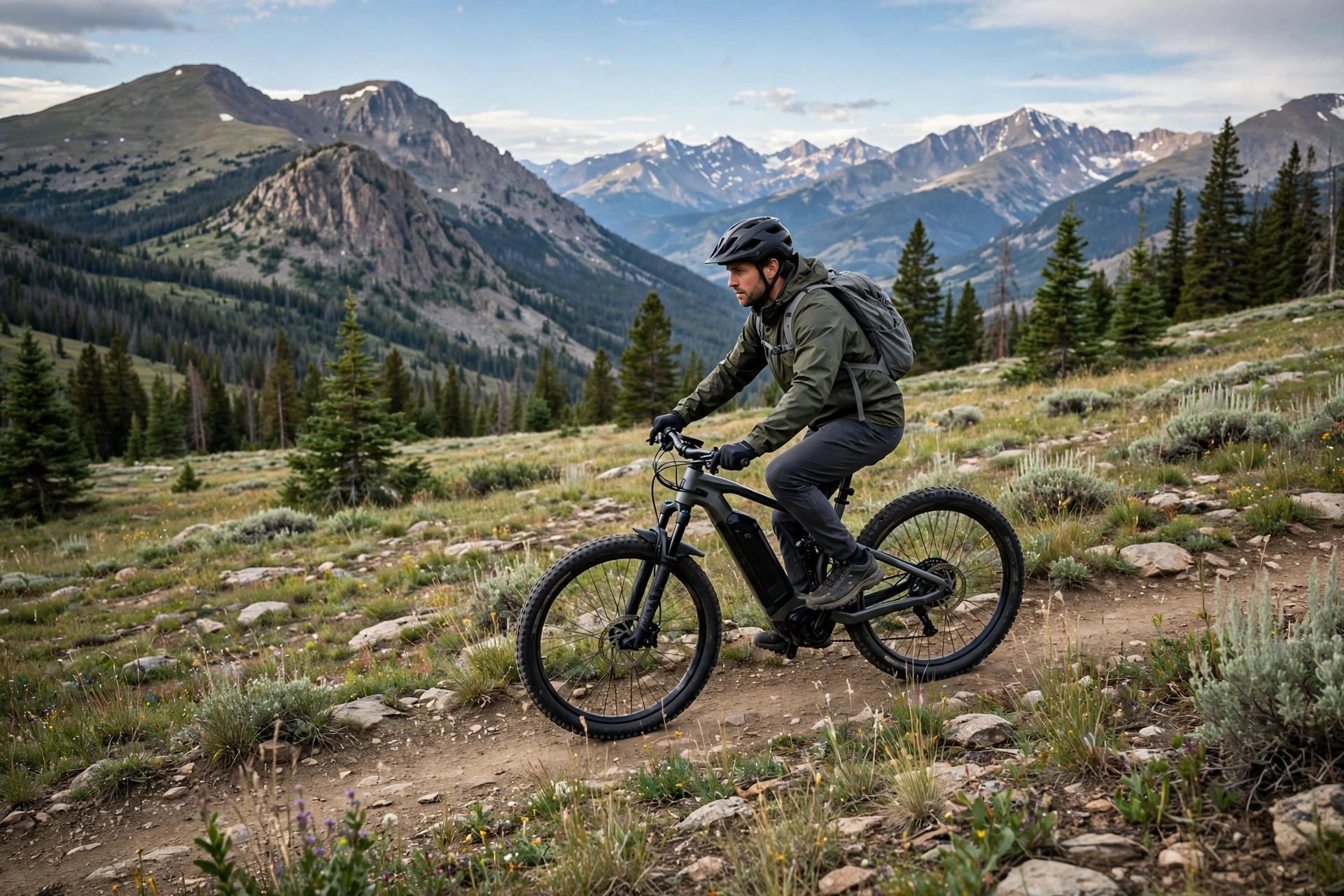
No — Montana has no statewide helmet law for e-bike riders of any age. There is no age requirement because there is no state helmet requirement at all: Montana does not have a general bicycle helmet law either, and e-bikes are generally treated like regular bicycles under Montana law.
That said, “not required by the state” is not the end of the story. Local ordinances, land managers, tour operators, and schools can set their own rules, and at e-bike speeds a helmet matters more, not less. Here is what Montana riders — and parents of young riders — actually need to know.
Is there an age requirement for wearing a helmet on an e-bike in Montana?
No. Unlike states that require helmets for riders under 16 or under 18, Montana law sets no age-based helmet rule for e-bikes or traditional bicycles. A child on a Class 1 e-bike on a Helena bike path and an adult commuting on a Class 3 e-bike in Bozeman are in the same legal position: the state does not require either of them to wear a helmet.
This surprises many newcomers, because Montana is well known for being one of the few states without a universal motorcycle helmet law either. The state’s approach across two-wheeled vehicles is broadly the same — helmets are a personal choice at the state level. You can see how Montana compares nationally in our guide to what states have helmet laws.
But personal choice cuts both ways: nothing stops a city, county, trail system, or private landowner from requiring helmets on their property, and nothing stops a parent from making a helmet a house rule for every ride.
How are e-bikes classified in Montana?
Montana generally treats e-bikes like bicycles, which is why no special e-bike helmet rule exists. As in most states, e-bikes fall into three classes based on how the motor works and how fast it assists you. Class 1 e-bikes provide pedal assistance only, up to 20 mph. Class 2 e-bikes add a throttle but still assist up to 20 mph. Class 3 e-bikes provide pedal assistance up to 28 mph and are typically intended for road and commuter use.
Because Montana treats lower-speed e-bikes as bicycles, riders generally do not need a driver’s license, vehicle registration, or insurance to ride one, and e-bikes are allowed in most of the places regular bicycles are allowed — subject to local rules. Class 3 bikes and higher-speed riding are where local restrictions are most likely to appear, especially on multi-use paths and trails.
Classification matters for access, but for helmets the answer stays the same across all three classes: Montana state law does not require one for anyone.
Can Montana cities or land managers require helmets anyway?
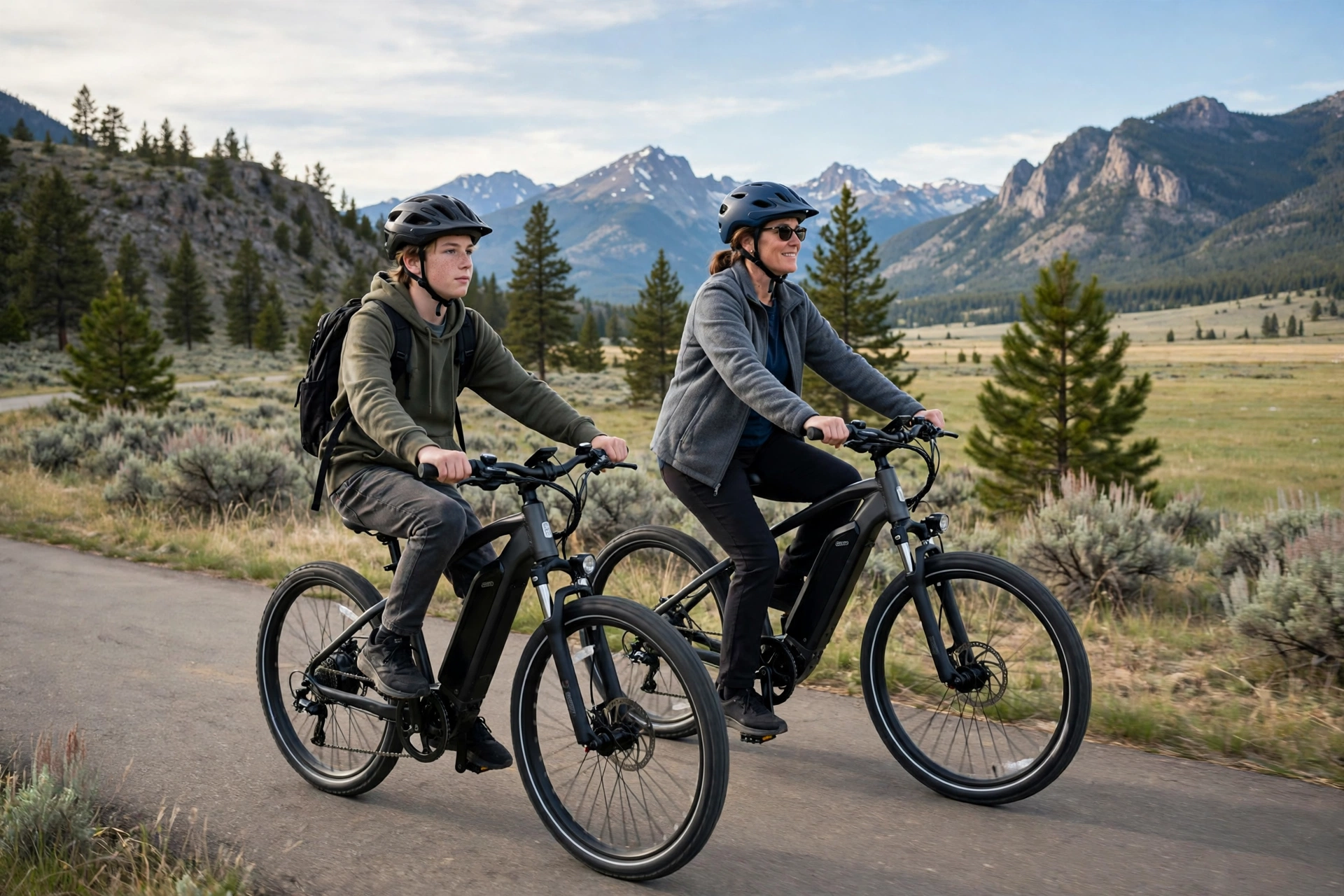
Yes. Local governments can adopt their own ordinances, and individual cities in Montana have considered or adopted rules that differ from the state’s hands-off approach — especially for minors and for shared e-bike and scooter programs, which often require helmets as a condition of rental. Land managers play a role too: federal, state, and tribal land managers, as well as private trail systems, can require helmets for events, races, and organized rides held on their land.
Tour operators are the most common real-world example. Book a guided e-bike tour in Whitefish or a rental in Missoula and a helmet will almost certainly be included with the bike and required by the operator’s insurance. Schools and youth programs routinely require helmets for any riding activity as well.
Because local rules change, check before you ride: a quick look at your city or county regulations, plus the terms of any rental or tour, will tell you what applies where you actually ride.
Why wear a helmet on an e-bike if Montana does not require one?
Speed. A regular cyclist on flat ground might cruise at 10 to 12 mph; an e-bike rider easily holds 20 mph, and a Class 3 rider can be doing 28 mph in traffic. Crash energy rises sharply with speed, and the most common e-bike injuries mirror bicycle injuries generally — with head injuries at the top of the serious list. A motor also makes the bike heavier, which changes how it falls.
E-bike riders also tend to ride more, ride farther, and ride in mixed traffic more often than casual cyclists, simply because the assist makes it practical. More exposure plus higher speeds equals more risk, and a certified bicycle helmet is a light, cheap, proven way to cut that risk. For Class 3 riding in particular, many safety experts suggest a helmet rated for higher speeds, such as one certified to the Dutch NTA 8776 e-bike standard.
For children, the case is even simpler: their judgment and bike-handling skills are still developing, and most parents in Montana treat a helmet as standard equipment, the same way they do ski helmets on the mountain.
What helmet should a Montana e-bike rider choose?
Any helmet you buy should meet the U.S. CPSC bicycle helmet standard — check for the label inside. Fit matters more than price: the helmet should sit level, low on the forehead, with side straps forming a V under each ear, and it should not move when you shake your head with the chin strap buckled. Helmets with MIPS or similar rotational-protection systems are a worthwhile upgrade for regular riders.
Match the helmet to the riding. A ventilated road-style helmet suits summer commuting, while a warmer, more enclosed model works better for Montana shoulder seasons. Replace any helmet after a crash or a hard drop onto concrete, and replace an everyday helmet every few years as materials age.
Frequently Asked Questions
Do kids have to wear a helmet on an e-bike in Montana?
Not under state law — Montana has no age-based helmet requirement for e-bikes or bicycles. But local rules, rentals, tours, and school programs may require one, and parents are strongly advised to make helmets mandatory for children.
Are e-bikes treated as bicycles in Montana?
Yes, generally. Montana treats e-bikes much like regular bicycles, so riders typically need no license or registration, and the same no-state-helmet-law position applies — subject to local access rules for certain classes and trails.
Can a Montana city require e-bike helmets?
Yes. Cities and counties can set local ordinances, and land managers, rental companies, and tour operators can require helmets on their property or equipment even though the state does not.

Olivia
Writer at Helmet Today, covering helmet reviews, fit and riding safety.


