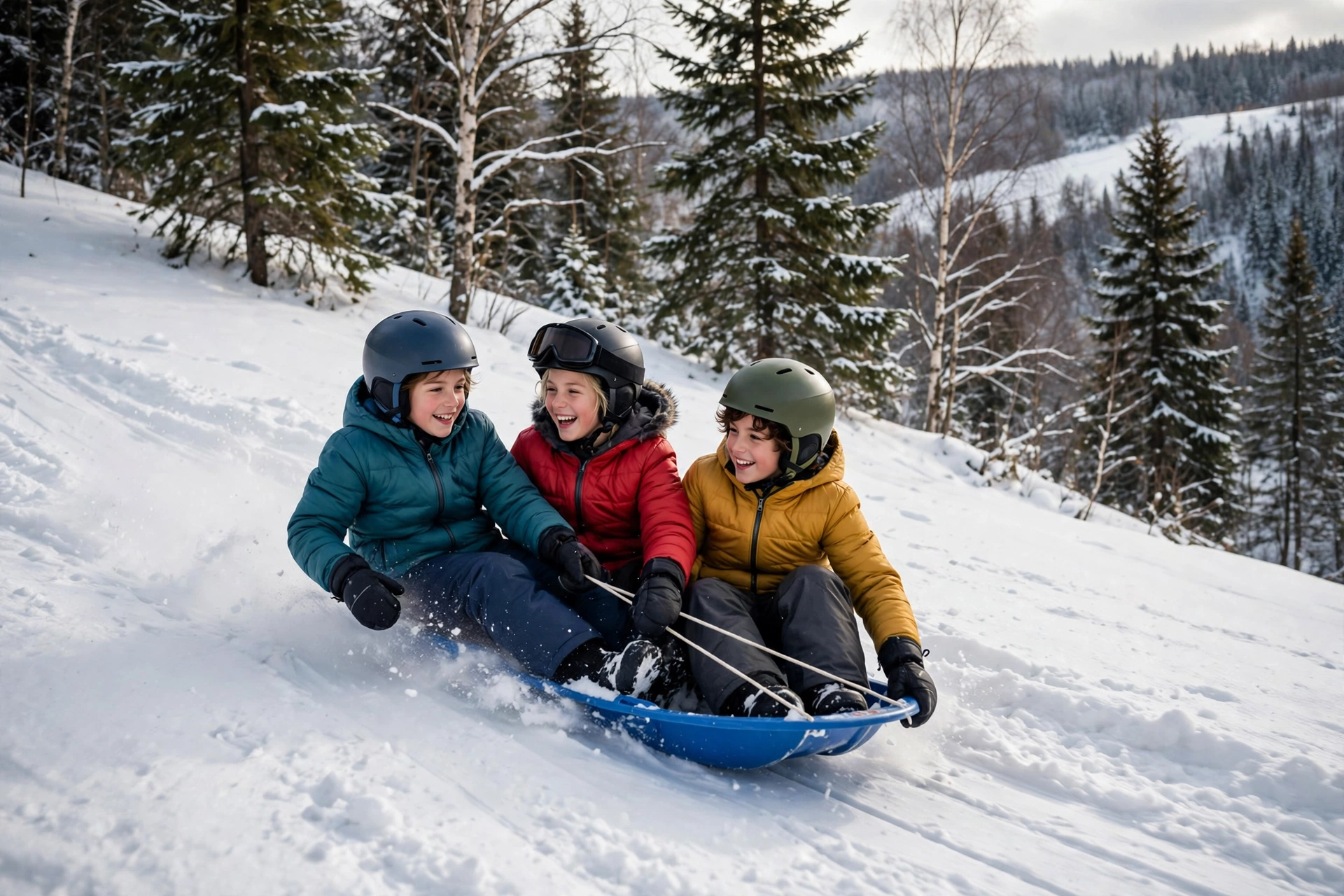
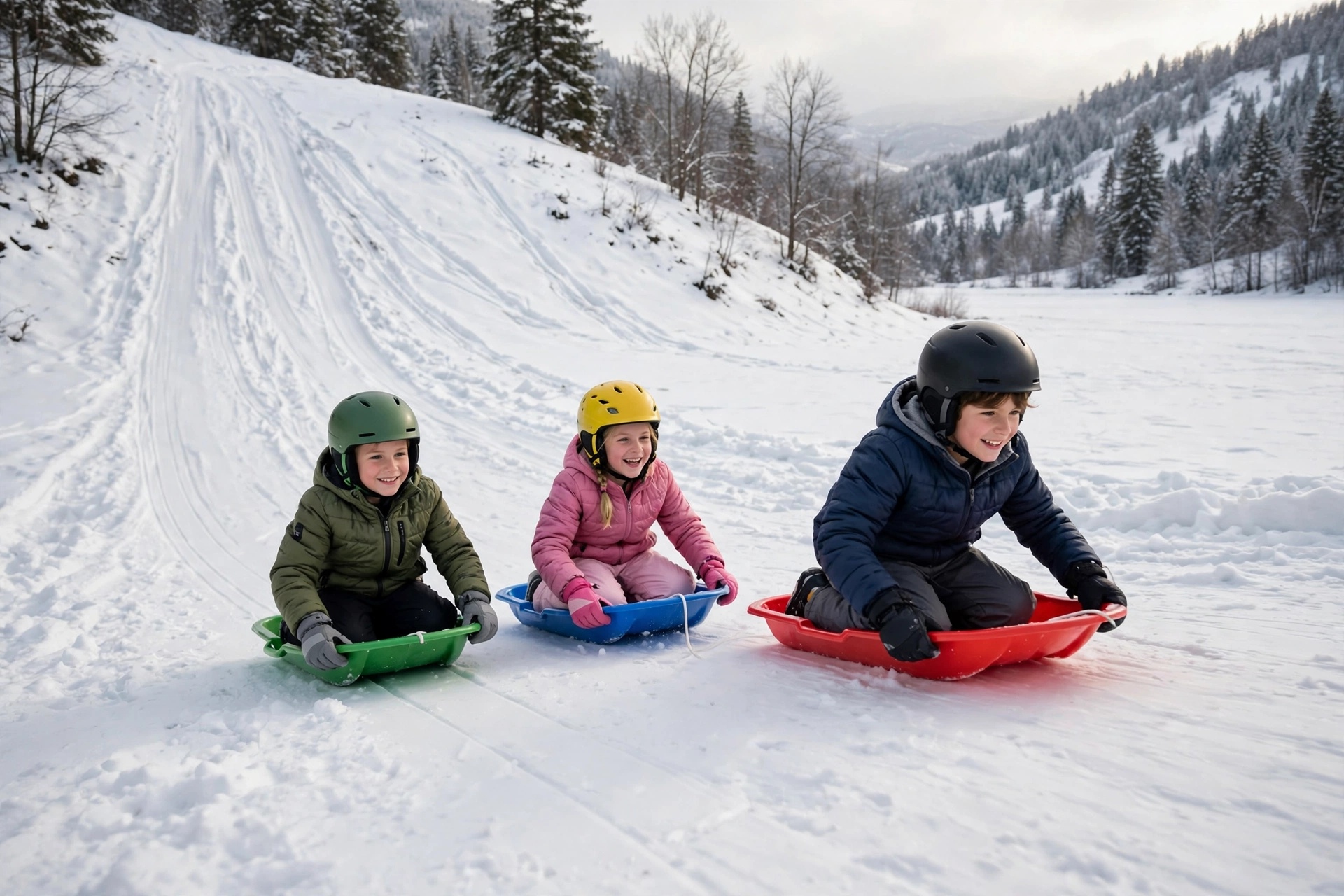
Short answer: There is no law requiring helmets for sledding or snow tubing — but yes, kids should wear one. Sledding sends children downhill at real speed, often toward trees, fences, parked cars, and each other, with little ability to steer or stop. Head injuries are the classic sledding emergency, and a helmet is the simplest way to reduce the risk. A ski or snowboard helmet is the best choice.
Sledding feels like the softest winter sport — it is just snow, right? Pediatricians and emergency room staff see it differently. Every winter, sledding produces a steady stream of fractures, concussions, and worse, and the head is frequently involved. The good news: the fix is cheap, warm, and already sitting in many families’ ski gear.
Is There a Law Requiring Helmets for Sledding or Snow Tubing?
No. Unlike bicycle helmets for children, which many states regulate, sledding and snow tubing have no helmet laws in the United States. Public hills are unregulated, and commercial snow tubing parks set their own rules — a few provide or require helmets, most simply recommend them.
That legal silence misleads a lot of parents. Sledding is not unregulated because it is safe; it is unregulated because it happens informally, on any snowy slope, outside any governing body. There is no sledding league writing equipment rules. The responsibility lands entirely on parents — which makes it worth thinking through rather than defaulting to “nobody else wears one.”
Medical and child-safety organizations consistently recommend helmets for sledding children, particularly for kids under 12. When the official guidance and emergency room experience point the same way, the absence of a law should not carry much weight in your decision.
Why Is Sledding Riskier Than It Looks?
Start with speed. A sled on a packed, icy hill can reach speeds comparable to a bicycle ride — 20 miles per hour or more on a good slope — with far less control. Most sleds cannot be steered in any meaningful way, none have brakes, and the rider sits inches off the ground with their head close to whatever the sled hits.
Then look at the environment. Sledding hills are full of fixed objects: trees, fence posts, picnic tables, light poles, and rocks hidden under thin snow. Hills often end near roads or parking lots. Other sledders are a hazard too — a child walking back up the hill crosses the path of sleds coming down, and collisions between sledders are common. Snow tubes add their own twist: they spin, they bounce, and the rider has essentially zero directional control.
Children make the equation worse. They are more likely to ride headfirst, to overload a sled with friends, to choose the steepest, iciest line, and to misjudge when to bail out. Head injuries are a leading cause of serious sledding harm precisely because the most common crash — sled meets tree, fence, or another sledder — puts the head in the middle of it.
What Is the Best Helmet for Sledding and Snow Tubing?
A ski or snowboard helmet is the best sledding helmet, and it is not a close call. Ski helmets are certified for winter sports (look for the ASTM F2040 or CE EN 1077 label, in general terms), built for exactly these kinds of falls on snow and ice, and — a huge practical bonus — they are insulated. A warm helmet with ear coverage replaces a hat entirely, so kids are happy to keep it on.
Ski helmets also fit the conditions: they are designed to work with goggles, they stay secure with proper chin straps, and their liners are rated to perform in cold temperatures. If your family skis or snowboards at all, the sledding helmet problem is already solved — just use the same helmet.
Some parents consider multi-sport helmets certified for both cycling and winter use. Those can be a good middle ground for a child who sleds a few times a year. Whatever you pick, certification on the label is the non-negotiable part.
Can a Bike Helmet Work as a Sledding Helmet?
As a backup, yes — a certified, well-fitting bike helmet is much better than a bare head under a wool hat. But know its two drawbacks on a sledding hill.
First, warmth and fit: bike helmets are vented for summer, so they are cold, and the thick winter hat parents stuff underneath lifts the helmet and breaks the fit. If you use a bike helmet, pair it with only a thin balaclava or liner, and confirm the helmet still sits level and snug.
Second, impact design: bike helmets are single-impact devices whose foam can be affected by deep cold, and sledding crashes resemble the repeated-falls pattern of winter sports more than a single bike crash. Some modern bike helmets include rotational protection — see our guide to what MIPS is and how it works — but the winter-specific helmet remains the better tool. If sledding is a weekly winter ritual, a ski helmet is worth the modest cost.
What Else Makes a Sledding Hill Safe for Kids?
The helmet is one layer; the hill is the other. Choose and manage the slope carefully:
- Pick a hill with a long, clear runout — plenty of flat space to slow down, away from roads, parking lots, ponds, and fences.
- Walk the hill first and check for hidden rocks, stumps, and ice patches under the snow.
- Keep the up-path separate — children should walk up the sides of the hill, never up the middle of the sledding lane.
- Ride sitting up, feet first — never headfirst, and never more riders than the sled is built for.
- Supervise actively — an adult at the bottom can spot traffic and trouble that kids mid-hill cannot see.
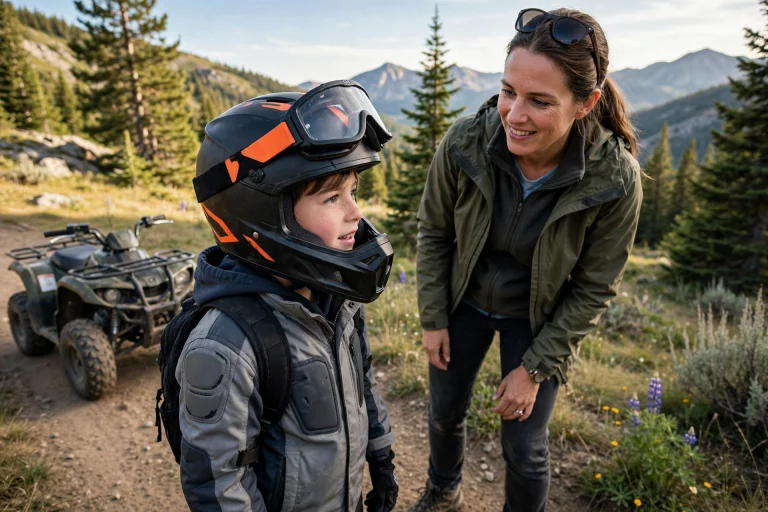
- Never tow a sled behind a vehicle — no cars, ATVs, or snowmobiles, ever. Towed sledding removes what little control a sledder has and is linked to the most severe injuries.
Combine a smart hill with a proper helmet and adult supervision, and sledding goes back to being what it should be: fast, cheap, joyful winter fun with the risks managed down to a reasonable level.
Frequently Asked Questions
Q: At what age should kids start wearing a sledding helmet?
A: From their very first sled rides. Even toddlers riding with a parent can be thrown or tipped, and young children have the least ability to protect their heads in a fall. If the child is old enough to sled, they are old enough for a helmet.
Q: Do snow tubing parks require helmets?
A: Most do not require them, though some provide helmets or recommend them in their safety guidance. Rules vary by park, so check ahead — and bringing your child’s own ski helmet guarantees a good fit regardless of the park’s policy.
Q: Can my child wear a helmet over a winter hat?
A: Not a thick one. A bulky hat lifts the helmet, reduces coverage, and lets it shift in a crash. A ski helmet is warm enough on its own; with a bike helmet, use only a thin liner and re-check that the fit stays level and snug.

Olivia
Writer at Helmet Today, covering helmet reviews, fit and riding safety.