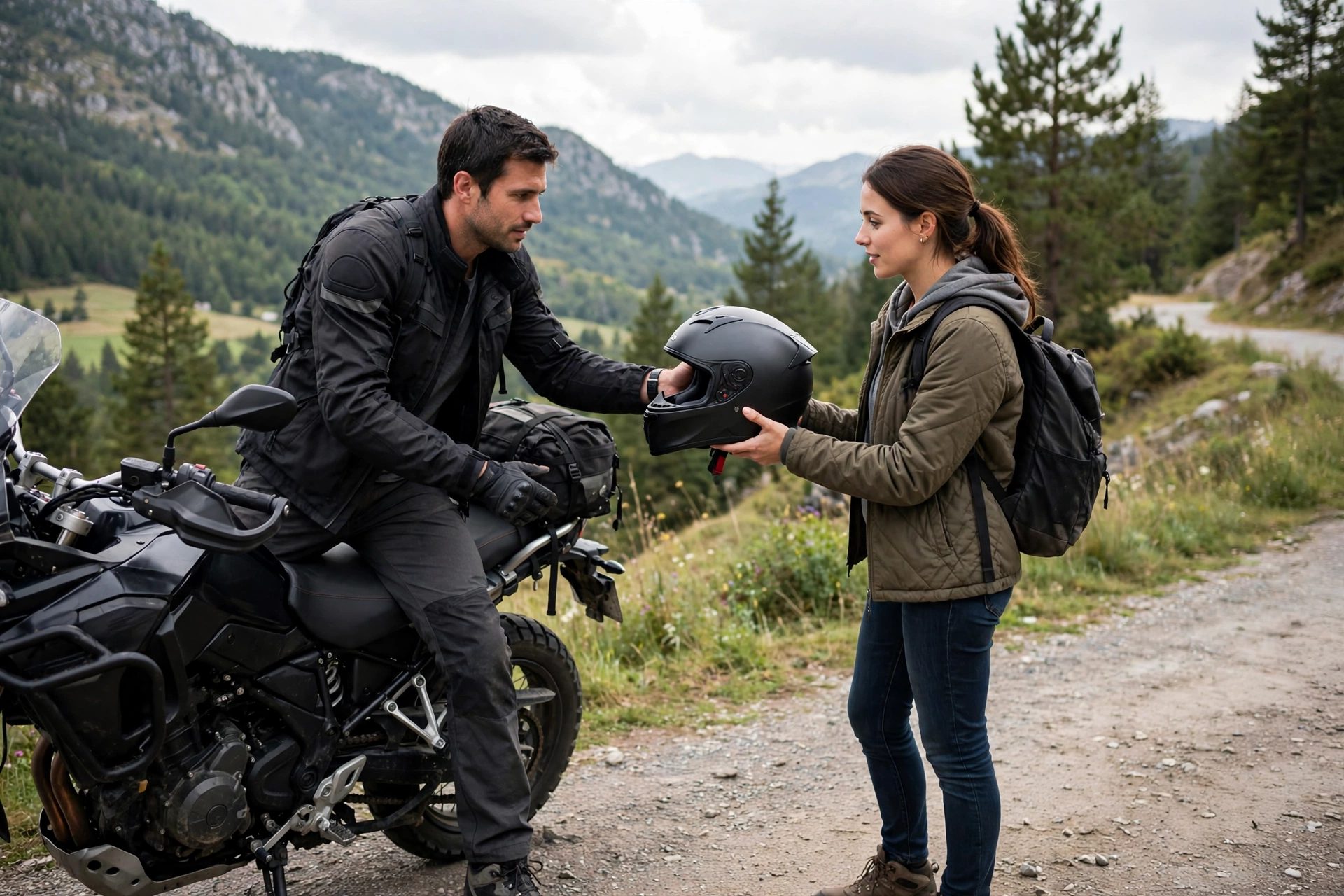
Yes. If there is any real chance you will carry a passenger — even once or twice a year — you need a spare helmet that fits them properly and is ready to go. In states with universal or partial helmet laws, your passenger must wear a helmet by law, and in every other state a helmet is simply the responsible baseline for anyone sitting behind you.
A passenger has no control over the bike and no chance to brace the way a rider does. Sending them out bareheaded, or in a loose helmet that wobbles around, is a risk they did not sign up for. This guide explains what the law expects, how to pick a spare helmet that fits most heads well, and how to store it so it is still safe when you need it.
Does the law require your passenger to wear a helmet?
In states with universal helmet laws, every rider and every passenger must wear a DOT-compliant helmet, no exceptions. In partial-law states, the requirement usually depends on the passenger’s age — passengers under a certain age must be helmeted even where adult riders are not. A handful of states have no helmet law at all, but “not legally required” is not the same as “a good idea to skip.”
Remember that your passenger does not get to make this call in isolation. If you ride into a helmet-law state, the rule applies to both of you, and the ticket is not the worst possible outcome. A helmeted passenger requirement is also built into most guided rides, rental agreements, and organized events. Keeping a legal, serviceable spare at home means a spontaneous decision to give someone a lift never turns into an illegal or unsafe one.
There is also a duty-of-care point: your passenger trusts you with their safety. Riders choose their own risk level; passengers accept yours. A proper helmet is the fair way to honor that trust.
What is the biggest challenge with a spare passenger helmet?
Fit. A helmet only protects when it fits the head inside it, and a spare helmet has to fit a head you may not have met yet. Heads vary in size and shape — some rounder, some longer front to back — so no single helmet fits everyone. The goal is a snug, stable fit for the broad middle range of adult heads.
Look for these signs of a good-enough fit when a passenger tries the spare on:
- The helmet sits level and does not rock side to side or front to back
- Cheek pads press firmly and evenly — the skin on the cheeks moves slightly when the helmet is nudged
- There is no painful pressure point on the forehead or temples after a few minutes
- The chin strap fastens snugly with about two fingers of room underneath
- The passenger can shake and nod their head without the helmet shifting over their eyes
If the helmet slides around, rides up, or can be twisted while the strap is fastened, it is the wrong size for that head, and the honest answer is that the ride waits. A too-big helmet can come off or rotate in a crash; a too-small one distracts and hurts, which is its own hazard.
What type of spare helmet should you buy?
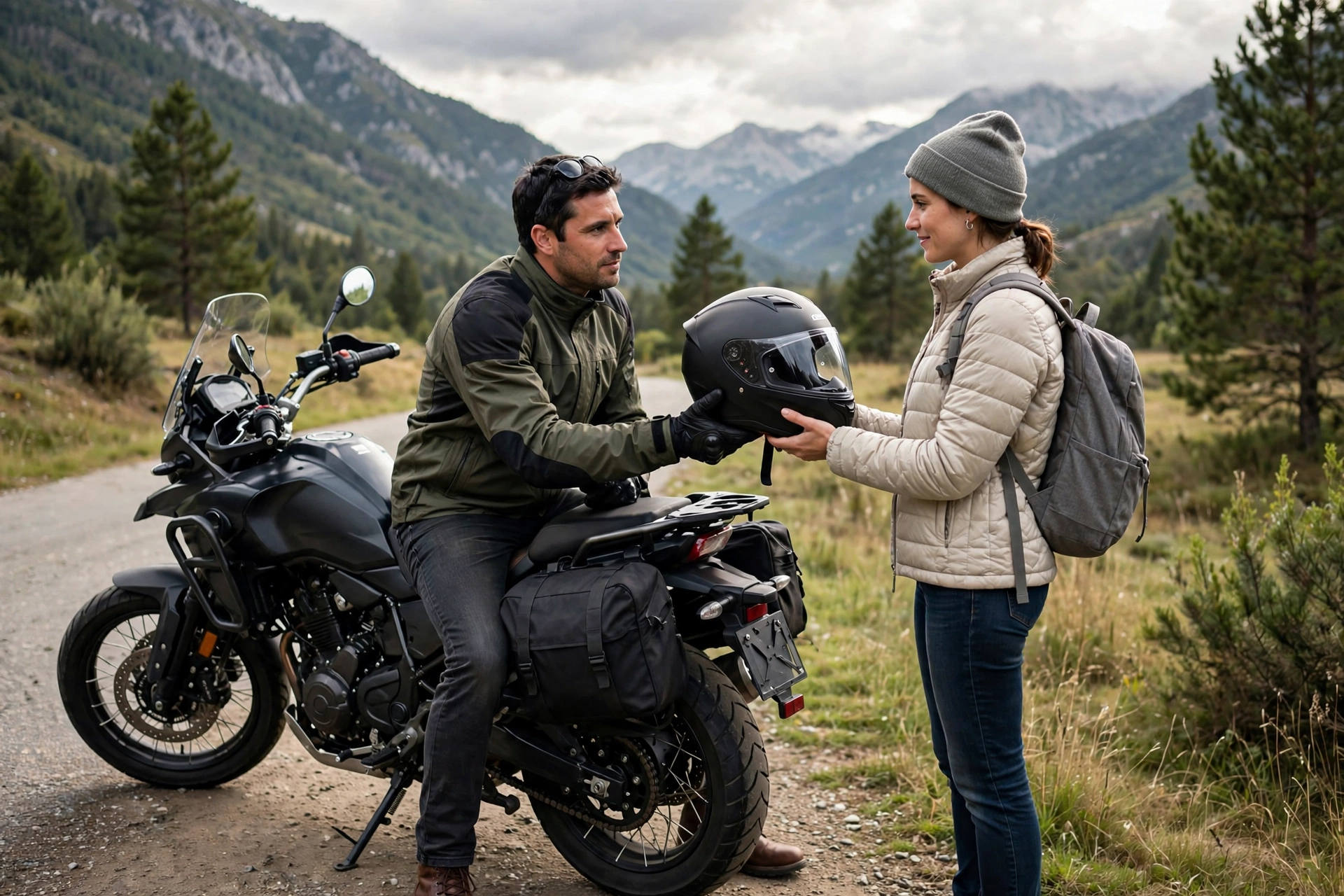
For a helmet that will serve many different people, choose versatility over specialization. A mid-range DOT-certified full-face helmet in a middle size is the most protective and most forgiving option: full-face designs cover the chin and face, where a large share of impacts land, and they stay put well on unfamiliar heads. A 3/4 (open-face) helmet is a reasonable second choice for slow, short, low-speed trips, but it leaves the face and chin exposed.
The smartest feature for a spare is swappable cheek pads. Many helmets let you change pad thickness to fine-tune the fit, so one shell with two or three pad options can comfortably fit a range of faces. A removable, washable liner matters too — a spare helmet gets worn by different people, and a liner you can wash between guests keeps it fresh and hygienic.
Buy the size that matches the most common adult head sizes. If your most likely passengers are smaller-headed, bias smaller. Also consider shape: some brands run rounder, others longer, and a middle-of-the-road shape fits the widest variety of guests. Prioritize certification and condition over fancy features. If you are curious about rotation-protection features while shopping, our explainer on what MIPS is in a helmet covers how those systems work.
How should you store a spare helmet so it stays safe?
A spare helmet spends most of its life waiting, and storage decides whether it is still protective when called on. Keep it indoors, in a cool, dry place, out of direct sunlight. UV light and heat age the shell and dry out the foam, so a garage rafter over a hot car or a sunny windowsill is a poor home. A shelf, closet, or the helmet’s own soft bag is ideal.
Store it clean. Wash the liner and wipe the shell before putting it away, and never store it with gloves or a balaclava stuffed inside while they are still damp — trapped moisture breeds mildew and smell. Keep it away from fuel, solvents, and cleaning chemicals, whose fumes can attack helmet foams, and never hang it by the chin strap, which stretches the strap.
Check the spare before every use, not just when you buy it. Look for cracks, dents, frayed straps, and a buckle that clicks positively. Remember that helmets age even on the shelf: manufacturers generally suggest replacing a helmet after several years regardless of use, and immediately after any drop onto a hard surface that could have compressed the liner.
When should a passenger get their own helmet instead?
A spare is a bridge, not a destination. If the same person starts riding with you regularly — a partner, a sibling, a friend who has caught the bug — the right move is a helmet fitted to their head specifically, chosen from a full size run and worn-in to their shape. Their own helmet will always fit better than any multi-purpose spare, and regular passengers also benefit from their own gloves and jacket.
One rule deserves repeating: never lend, and never accept, a helmet with an unknown history. A helmet that has already done its job in a crash can look perfect while its impact liner is crushed and spent. If you do not know where a helmet has been, it is decoration, not protection. The same goes for a spare that has taken a hard fall or been dropped on concrete — retire it. A new mid-range certified helmet costs far less than the injury it exists to prevent.
Frequently Asked Questions
Q: Is one spare helmet enough for any passenger?
A: For most riders, yes — one mid-size certified helmet with swappable cheek pads covers the broad middle range of adult heads. Try it on your passenger before riding; if it is loose or painful, that passenger needs a different size, and the ride should wait.
Q: Can I use an old helmet of mine as the spare?
A: Only if it is undamaged, within its serviceable age, and you know its full history. If it has ever been in a crash or a hard drop, or the liner feels loose and packed out, replace it — a worn-out spare gives a passenger false confidence.
Q: Does my passenger need a full-face helmet, or is open-face fine?
A: A full-face offers the most protection and is the best default spare. An open-face 3/4 helmet is acceptable for short, low-speed rides, but it leaves the chin and face uncovered, so full-face is the safer choice when you are buying one helmet for everyone.

Olivia
Writer at Helmet Today, covering helmet reviews, fit and riding safety.