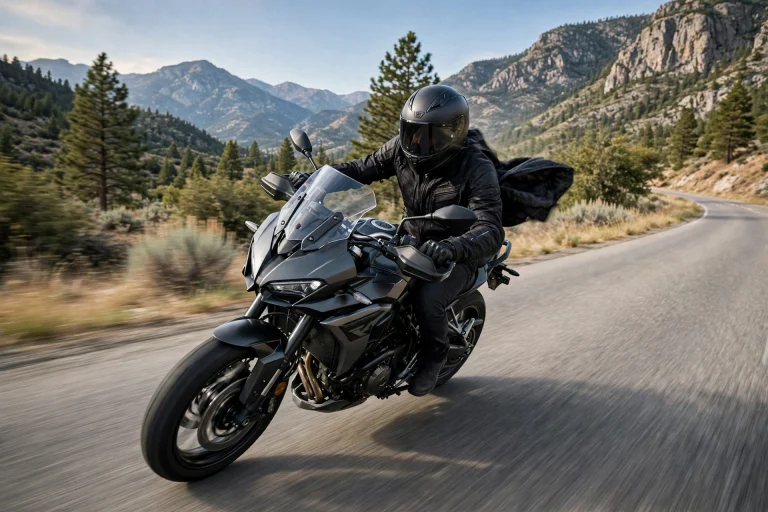
No — motorcycle helmets are water-resistant, not waterproof. The outer shell sheds rain well, and a good helmet will keep your head mostly dry through a short shower. But ride long enough in steady rain and water will find its way in through the vents, around the visor seal, and up through the open neck area at the bottom.
That does not mean your helmet is faulty or that riding in the rain ruins it. It means helmets are designed first for impact protection and ventilation, and weather sealing comes second. This guide explains exactly where rain gets in, what actually gets wet inside, why it matters, and how to dry a soaked helmet properly so it stays comfortable and lasts.
Where Does Rain Actually Get Into a Helmet?
There are three main entry points, and every helmet has all of them to some degree:
- The vents. Chin vents, crown vents, and exhaust ports are holes in the shell by design. Even “closed” vents on many helmets only shutter the opening rather than sealing it, and wind-driven rain at highway speed pushes water past shutters easily.
- The visor seal. The rubber gasket around the eye port is meant to keep wind and water out when the visor is fully closed, but seals age, harden, and shrink over time. A worn or slightly misaligned seal lets a slow trickle run down the inside of the visor.
- The neck opening. The bottom of the helmet is completely open — it has to be, so you can put the helmet on. Rain running down your neck, spray kicked up from the road, and wind swirling under the chin bar all enter here, especially on upright bikes with little weather protection.
Full-face helmets resist rain far better than open-face or half helmets, simply because they cover more and have fewer open paths. Modular helmets sit in between: the seam around the flip-up chin bar is one more place water can creep in.
What Gets Wet Inside the Helmet?
When rain gets in, it does not usually soak the whole interior at once. It follows predictable paths:
The comfort liner and cheek pads absorb the most water. These fabric-covered foam pieces sit against your skin, and once they are damp they feel cold and clammy, especially as air moves through the helmet. The EPS impact liner underneath does not absorb water like a sponge — it is a closed-cell foam — but water runs along the channels molded into it for ventilation and pools at the lowest points. The chin curtain, breath guard, and neck roll also trap moisture around the bottom edge.
Electronics deserve a mention too. If you run a Bluetooth communicator, its speakers and microphone live right in the damp zone near the ears and chin bar. Most units tolerate rain reasonably well, but a helmet left wet for days is not kind to them.
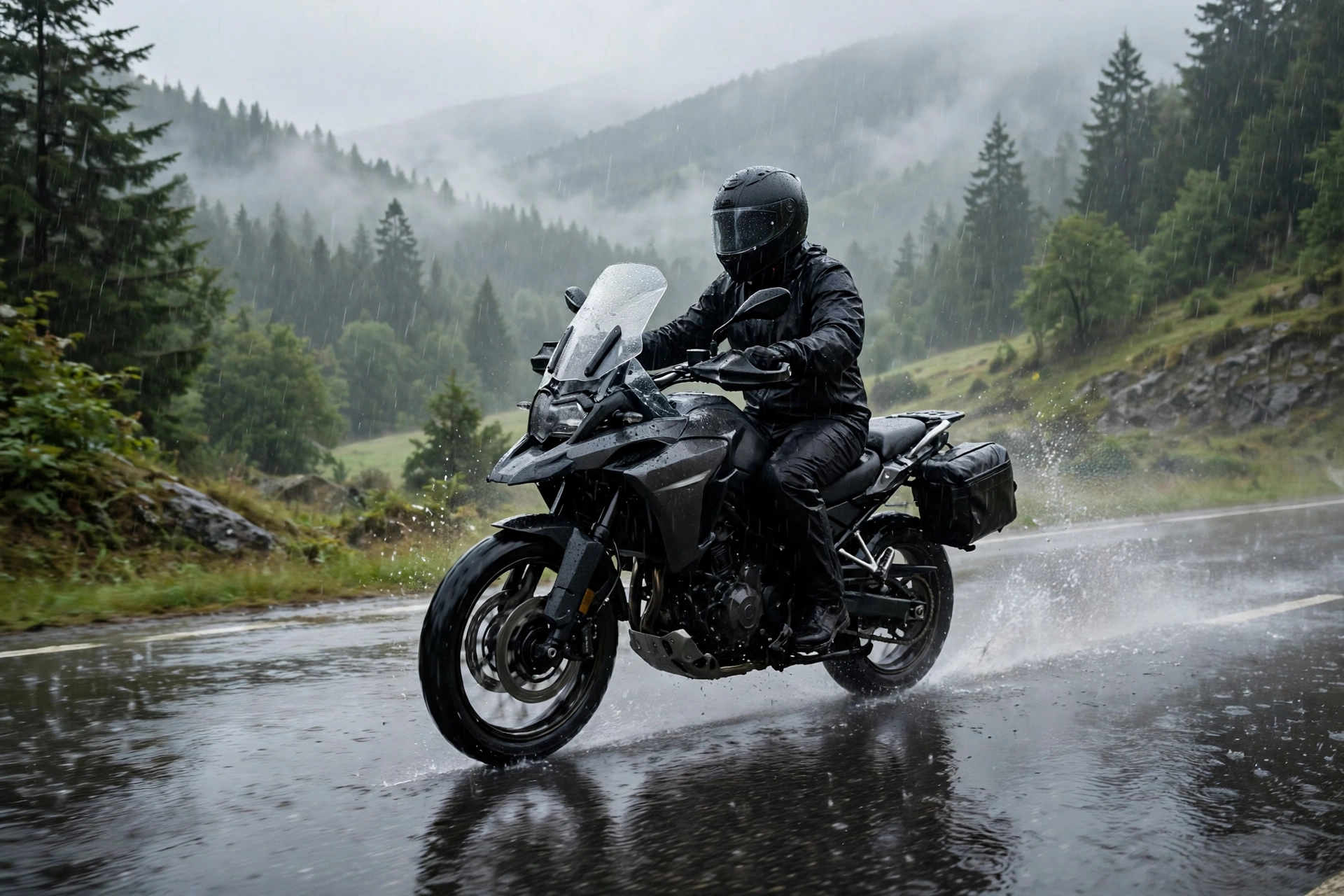
Why Does a Wet Helmet Matter?
A soggy helmet is more than a comfort annoyance:
- Extra weight. Waterlogged pads add noticeable weight, and you carry that weight on your neck for the rest of the ride.
- Fogging. A damp interior raises humidity inside the helmet, which makes the visor fog faster and more stubbornly — a genuine safety issue in rain, when visibility is already poor.
- Smell and hygiene. A helmet put away wet grows mildew and stale odors quickly. Repeated wet-storage cycles break down liner fabrics and glues faster than normal use.
- Cold. Wet padding against your head in moving air chills you fast, even on a mild day.
The good news: an occasional soaking does not harm the protective parts of the helmet. The EPS liner and shell are not damaged by clean rainwater. What suffers is comfort, freshness, and longevity of the soft parts — which is exactly why drying matters. If you want the full picture of what wears a helmet out over time, our guide to how long a motorcycle helmet lasts covers it.
How Should You Dry a Soaked Helmet Properly?
Drying a helmet correctly is simple, but there is one hard rule: air dry only — never add heat. Heat from a hairdryer, radiator, heat gun, or hot car dashboard can warp the EPS liner and weaken the glues that hold the helmet together, quietly compromising the very parts that protect you.
Do this instead:
- Remove the visor and any removable liner and cheek pads (most modern helmets have fully removable interiors — check your manual).
- Blot the pads gently with a towel. Do not wring them hard; squeezed foam and stitched fabrics tear more easily than you’d think.
- Set the shell and pads in a well-ventilated spot at room temperature, ideally with a small fan moving air across them. Airflow speeds drying far more than warmth does.
- Let everything dry completely — 24 hours is normal for pads after a real soaking.
- Wash the liner first if it needs it: hand-wash in lukewarm water with mild soap, rinse well, then air dry. Never tumble dry.
On multi-day tours, a helmet-dryer fan or simply parking the helmet upside down on a ventilated surface overnight keeps things manageable.
Which Features Make a Helmet Better in the Rain?
If you ride in wet weather often, shop for these details:
- A tight visor gasket that the visor visibly compresses when it clicks fully shut.
- Vents that truly close, with positive-feeling shutters rather than decorative sliders.
- A chin curtain and snug neck roll to block the updraft and spray at the bottom edge.
- An anti-fog insert (such as a double-layer pinlock-style visor), because fog is the bigger rain problem for most riders.
- A removable, washable liner, so a soaking is an inconvenience, not a lingering smell.
No combination of features makes a helmet submersible — but a well-sealed full-face with these details will keep you reasonably dry through hours of ordinary rain.
Frequently Asked Questions
Q: Can rain damage a motorcycle helmet permanently?
A: Rain itself does not damage the shell or the EPS impact liner. The risks come from how you handle it afterward: drying with heat can harm EPS and glues, and storing it wet causes mildew and degrades the comfort liner. Air dry it, and it will be fine.
Q: Why does water run down the inside of my visor?
A: Usually the visor gasket has hardened or shrunk with age, or the visor is not fully latched shut. Clean the seal, make sure the visor clicks fully closed, and if the rubber is cracked or loose, replace the seal or visor mechanism parts.
Q: Is a waterproof cover or spray a good idea?
A: There is no cover that works while riding, and water-repellent sprays on the shell do little beyond helping rain bead off. The effective fixes are a good visor seal, closed vents, a chin curtain, and proper drying afterward.

Olivia
Writer at Helmet Today, covering helmet reviews, fit and riding safety.