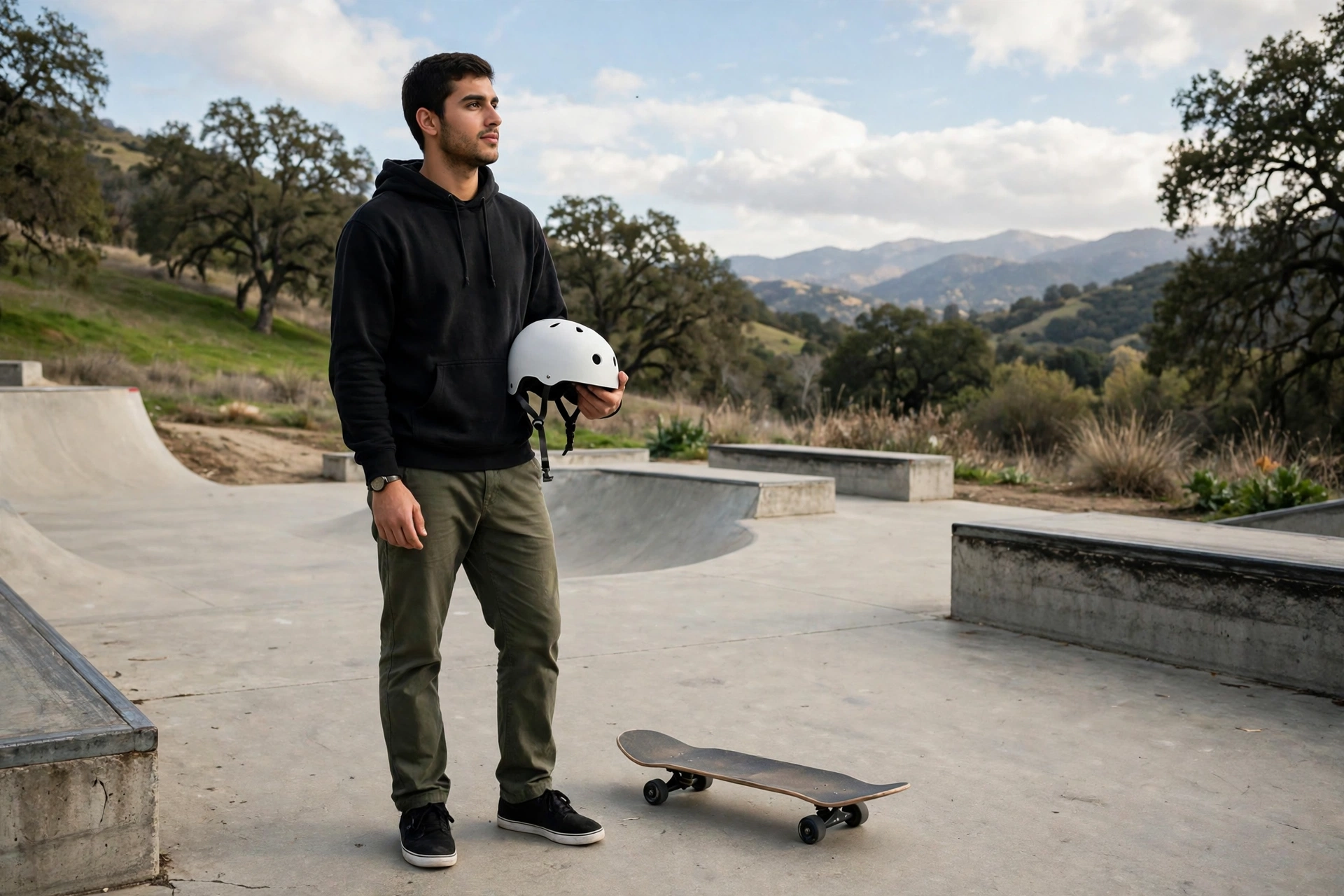
The safest way to clean a skateboard helmet is to hand wash the removable pads and straps with mild soap and cool or lukewarm water, then wipe the shell gently and let everything air dry. Never use solvents, bleach, or strong degreasers, because they can damage the foam that protects your head.
Skate helmets pick up sweat, sunscreen, dust, and street grime quickly, especially if you skate daily. Regular gentle cleaning keeps the helmet comfortable and helps you spot cracks, worn straps, and compressed padding before they become safety problems.
What should you remove before washing a skateboard helmet?
Start by checking whether your helmet has removable pads or a liner. Many skate-style helmets use hook-and-loop pads that pull out easily. Remove them carefully and keep track of where each pad belongs, because thickness and shape can differ between the front, top, and sides.
If the liner does not come out, do not force it. You can still clean the inside by hand with a soft cloth and soapy water. Take a quick photo before removing pads if you are unsure how they fit back in.
Also loosen the straps and open any adjustment dial or fit system at the back. This lets you reach sweat and dirt trapped where the straps pass through the shell. Shake loose grit out over a bin so it does not scratch the shell during washing.
How do you wash the pads, liner, and straps safely?
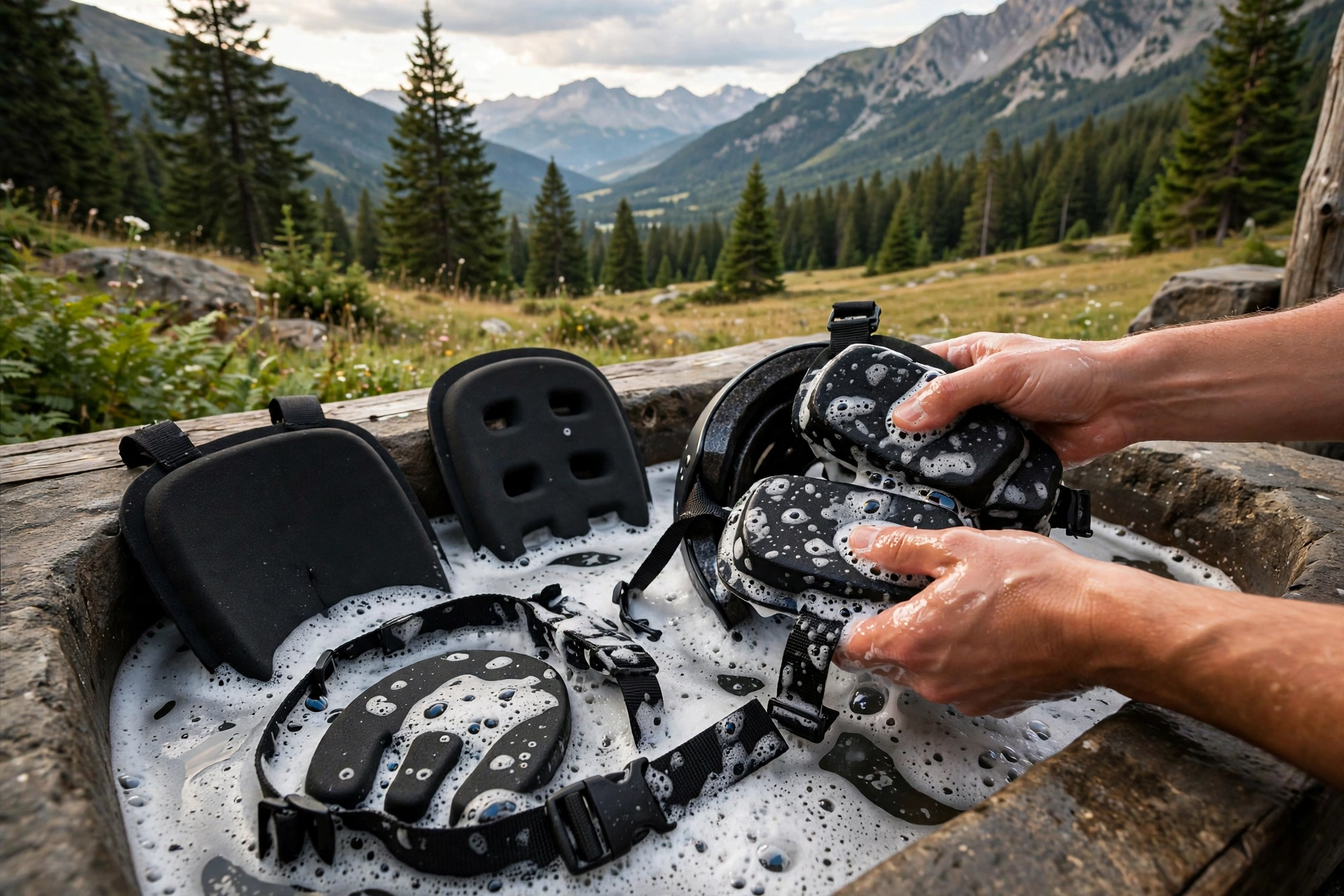
Fill a sink or bowl with cool or lukewarm water and add a small amount of mild soap, gentle laundry detergent, or baby shampoo. Soak removable pads for a few minutes, then squeeze them gently by hand. Work the soapy water through the fabric instead of scrubbing hard, which can tear seams and wear out the fastening patches.
Rinse until the water runs clear and no soap feels slippery on the pads. Soap left behind can irritate skin and attract more dirt. Press the pads between clean towels to remove water, but do not wring them hard.
Straps need attention because they sit against the neck and jaw, where sweat collects. Rub them gently with a soft cloth or an old soft toothbrush dipped in the same mild soapy water. Rinse with a cloth dampened in clean water. If your helmet uses modern impact technology or special liner materials, follow the maker’s care limits first; this overview of helmet safety technology like MIPS is useful background, but mild hand washing is still the safe cleaning rule.
How should you clean the shell without harming the foam?
Wipe the outer shell with a soft cloth, warm water, and a little mild soap. Most skate helmet shells are plastic over EPS foam, and the foam is the part you must protect. Keep harsh chemicals away from any exposed foam at the edges and vents.
Never use solvents, paint thinner, acetone, bleach, strong all-purpose degreasers, adhesive removers, or gasoline on a helmet. These products can weaken EPS foam and may damage the shell finish. Even if the helmet looks fine afterward, hidden foam damage is not worth the risk.
For sticker residue or road grime, patience is safer than chemicals. Soften the spot with a damp cloth, rub gently, and repeat. Avoid abrasive pads and stiff brushes on the shell, since scratches can make the finish look dull and may hide small cracks you need to see during inspection.
Clean inside the shell with a damp cloth rather than soaking the whole helmet. A short rinse is fine for some models if the maker allows it, but do not leave EPS sitting in water. The goal is to remove sweat and dirt, not to saturate the helmet.
What removes helmet odor without damaging it?
Most odor comes from sweat soaked into pads and straps, so a proper wash fixes more than sprays do. After washing, let the helmet dry completely before wearing or storing it. A helmet put away damp will smell again quickly and can grow mildew.
If pads still smell after washing, a short soak in water with a small amount of mild soap usually works better than heavy fragrance products. Some skaters use a little baking soda in the wash water for removable pads, then rinse very well. Test this only on removable fabric pads, not on exposed foam, and stop if the material feels rough or irritated afterward.
Avoid drenching the helmet in alcohol sprays, strong disinfectants, or scented deodorizers. They can dry out materials, irritate skin, and may not be safe for foam. Fresh air after every session is the simplest odor control: unbuckle the straps, remove damp pads if possible, and let the helmet breathe.
How should you dry a skateboard helmet, and how often should you clean it?
Air dry everything at room temperature, away from direct sunlight, heaters, radiators, and hot cars. Do not use a hair dryer, clothes dryer, oven, or microwave. Heat can warp the shell and damage EPS foam, and strong UV can age materials over time.
Set the pads on a towel and stuff the helmet lightly with a dry cloth if you need to help it keep its shape. Refit the pads only when they are fully dry. Check that every pad sits flat, the straps run smoothly, and the buckle clicks shut before the next ride.
Daily skaters should wipe the inside and air the helmet after each session, wash pads and straps every one to two weeks in hot weather, and do a deeper clean whenever the helmet smells, feels sticky, or looks grimy. Commuters and occasional skaters can clean less often, but sweat should never be left to build up for months. Use cleaning time to inspect the shell, foam, straps, and buckle for damage.
Frequently Asked Questions
Can you put a skateboard helmet in the washing machine?
No. Machine washing and drying can crush foam, tear pads, and damage straps. Hand wash removable pads and wipe the helmet by hand instead.
Can you use disinfectant spray inside a skate helmet?
It is better to wash the pads and straps with mild soap. Strong sprays may damage materials or irritate skin, so only use a product the helmet maker specifically allows.
How do you know cleaning will not save a helmet?
If the shell is cracked, the foam is dented or crumbling, straps are frayed, or the buckle is broken, cleaning is not enough. Do not rely on a damaged helmet for protection.

Olivia
Writer at Helmet Today, covering helmet reviews, fit and riding safety.