To clean a motorcycle helmet properly: remove the liner and cheek pads and hand-wash them in lukewarm water with mild soap, wash the shell gently with the same mild solution, clean the visor separately with water and a microfiber cloth, wipe the inside EPS with a damp cloth only, then air-dry everything completely before reassembly. Never use solvents, petroleum-based cleaners, or a pressure washer — they can destroy the foam that protects your head.
A full clean takes about half an hour plus drying time, and it does more than remove smell: sweat and grime break down padding and adhesives over time, so regular cleaning genuinely extends the helmet’s life. Here is the complete routine, inside and out.
How Do You Wash the Liner and Cheek Pads?
Start by removing everything that comes out. On most modern helmets the crown liner and cheek pads unclip or pull free from snaps and tabs — work slowly, note how each piece attaches, and take a photo if it is your first time. Check your owner’s manual if anything resists; do not force trim pieces.
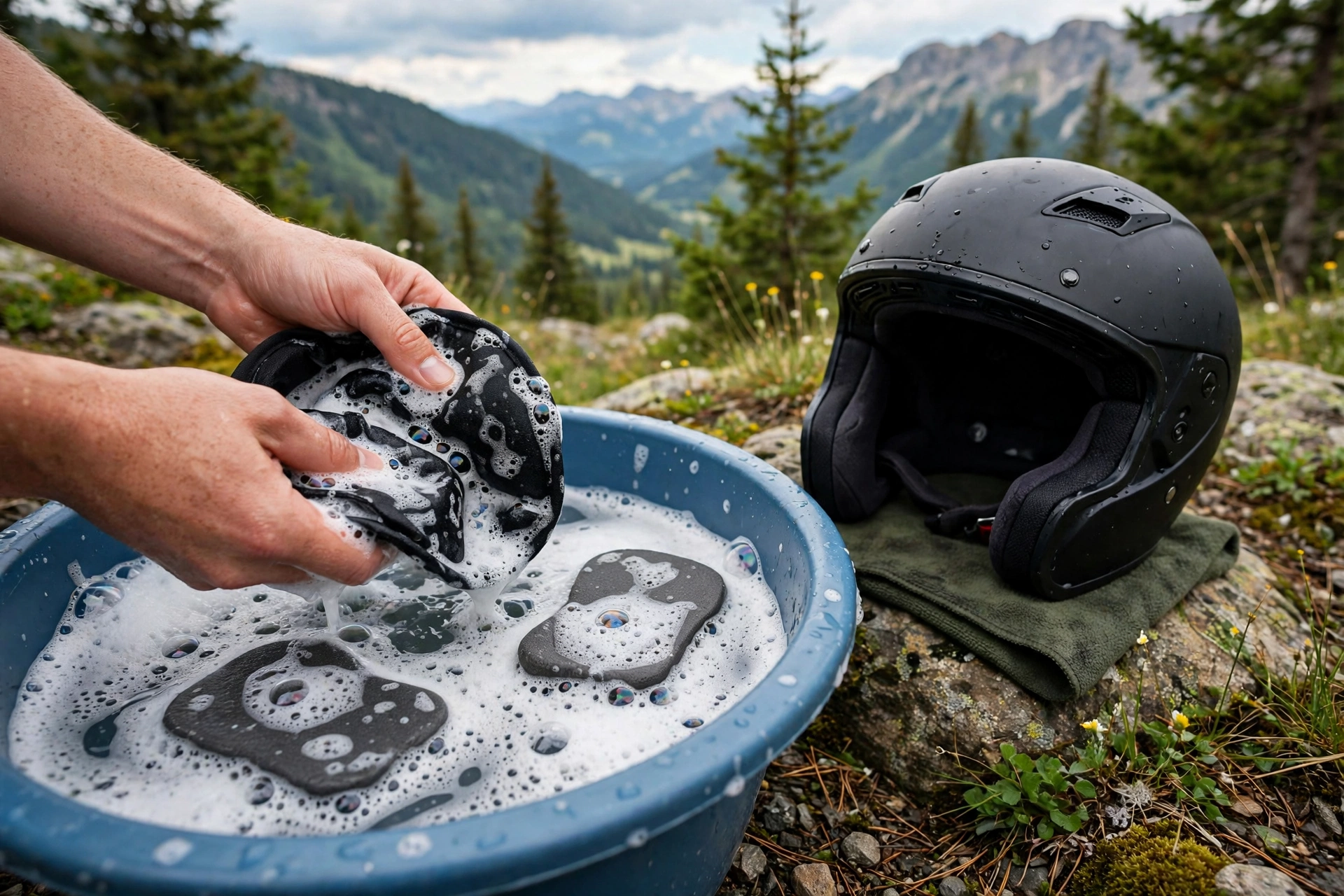
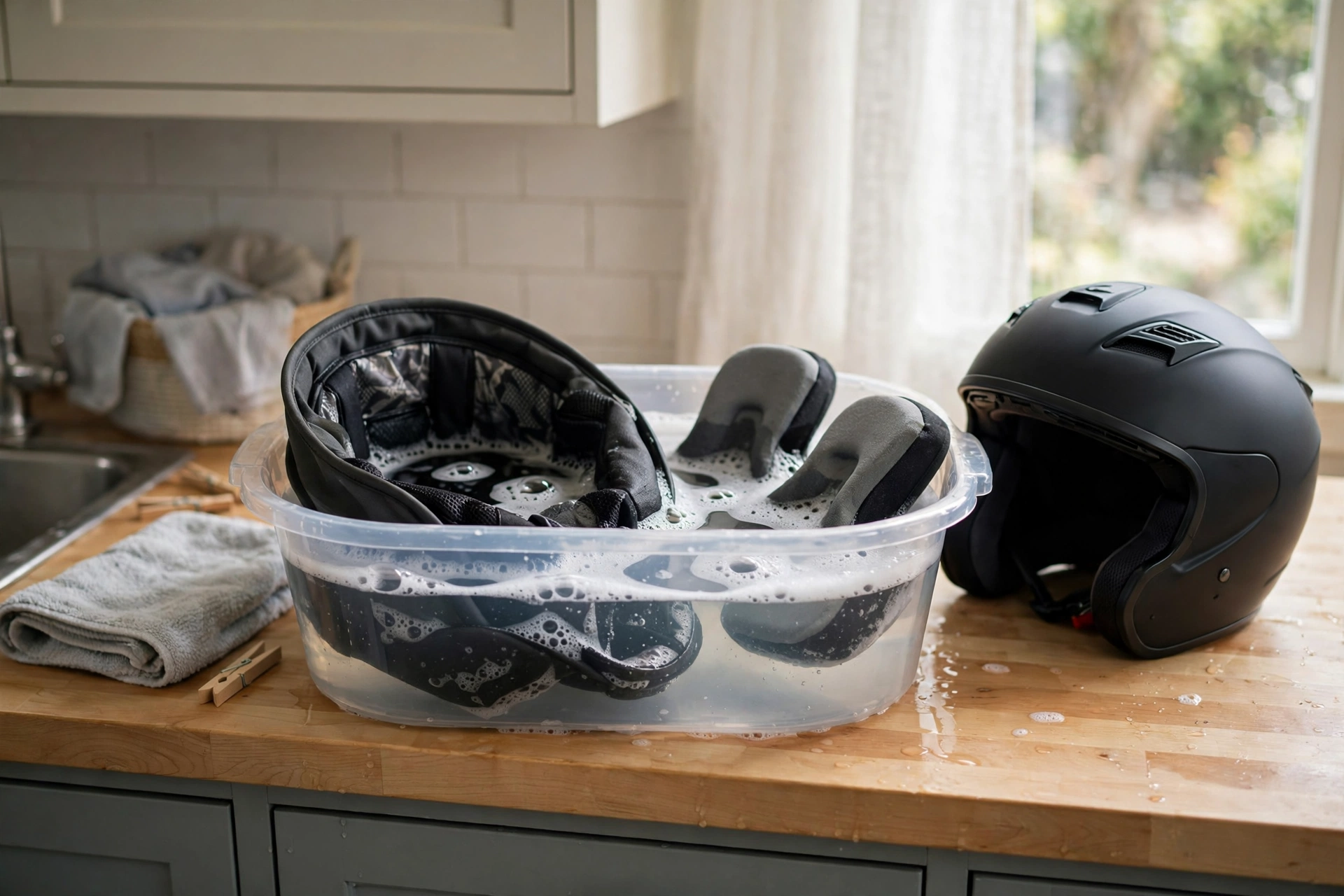
Fill a sink or basin with lukewarm water and a small amount of mild soap — baby shampoo or a dedicated helmet liner cleaner are ideal, and a tiny amount of gentle laundry detergent works too. Submerge the pads, squeeze them gently and repeatedly to work the sweat and oils out, and let them soak for 10–15 minutes. For heavily used pads, repeat with fresh water until it stays mostly clear. Rinse thoroughly, squeeze out water in a towel — never wring, which tears foam and stitching — and set the pieces aside to dry.
How Should You Clean the Shell and the Inside?
Wash the outer shell with the same lukewarm, mild-soap solution and a soft microfiber cloth. Work in small sections, let dried bugs and road film soften before wiping (see below), and rinse the cloth often so grit does not scratch the finish. Dry with a clean microfiber. On gloss shells, a motorcycle-safe wax is optional; on matte shells, skip wax entirely — it creates shiny patches.
Inside the shell, the rules are stricter. The EPS impact liner must never be scrubbed, soaked, or exposed to chemicals. Wipe it gently with a cloth dampened with plain water or the mildest soap solution, and nothing more. Clean vent sliders and channels with a damp cotton swab, and wipe the chin strap webbing with the damp cloth as well — straps absorb more sweat than riders realize.
How Do You Clean the Visor Without Scratching It?
Remove the visor if your helmet’s mechanism allows easy removal, and rinse it under lukewarm water first to float off loose grit — wiping dry grit across the surface is how visors get scratched. Then wash with water, a drop of mild soap, and a clean microfiber cloth, using straight, gentle strokes. Rinse, and pat or air dry; if you wipe, use a second clean, dry microfiber.
Never use paper towels, shop rags, or household glass cleaner on a visor. Paper is abrasive at the microscopic level, and ammonia-based cleaners can attack visor coatings and cloud anti-fog and anti-scratch treatments. For pinlock-style inner lenses, be even gentler: rinse only, pat dry, and never rub the soft inner surface.
While the visor is off, take the opportunity to clean around the visor mechanism and the rubber eye-port seal, where grit collects and eventually makes the visor stiff to open and close. A damp cotton swab works well in these channels. A tiny amount of the silicone lubricant some manufacturers supply for the seal keeps it supple — but only use products your helmet maker approves, and keep any lubricant well away from the EPS liner and the visor’s optical surfaces.
How Often Should You Clean Your Helmet — and What Should You Avoid?
A sensible rhythm: wipe the shell and visor after buggy or wet rides, wash the pads when they start to smell (for daily riders, roughly monthly in summer), and do the full routine a few times per season. Every clean is also an inspection — regular cleaning is how you notice the wear signs that tell you how long a motorcycle helmet lasts in real-world use.
Avoid these completely:
- Solvents and petroleum products (gasoline, degreasers, strong all-purpose cleaners) — they can dissolve EPS foam and weaken the shell.
- Pressure washers and dishwashers — force and heat damage foam, adhesives, and finishes.
- Hot water and heated drying — heat ages foam and warps pads; always air-dry at room temperature, which can take 24 hours.
- Abrasive pads, brushes, and paper towels — they scratch shells and visors.
- Washing machines for the whole helmet — only removable soft pads are washable, and hand-washing is safest for those.
How Do You Dry and Reassemble the Helmet?
Let everything air-dry naturally in a ventilated room, away from radiators and direct sun. A small fan pointed at the parts speeds things up safely. The liner pieces must be completely dry before they go back in — reassembling with damp pads traps moisture and brings the smell back within days.
Refit the pads in the reverse order you removed them, making sure every snap and tab is fully seated and the edge trim sits evenly. Refit the visor, test its mechanism through its full range, and check the chin strap and buckle operate smoothly. Finish with the fit check: the reassembled helmet should feel evenly snug, exactly as it did before — if pads have thinned noticeably with age, that is useful information about the helmet’s remaining life.
Store the freshly cleaned helmet in its bag, in a cool, dry place out of direct sunlight, with the visor cracked slightly open so air can circulate. A helmet put away clean and dry stays fresher between rides, and the pads will not need deep washing as often — which itself slows the wear that repeated washing causes over the years.
Frequently Asked Questions
Can you put a motorcycle helmet in the washing machine?
No — never the whole helmet. Some removable liners tolerate a gentle machine cycle in a laundry bag, but hand-washing in lukewarm water is safer for the foam and stitching, and the shell and EPS must never go in a machine.
What soap is safe for cleaning a helmet?
Mild options only: baby shampoo, dedicated helmet cleaner, or a small amount of gentle detergent in lukewarm water. Avoid anything solvent- or petroleum-based, strong degreasers, bleach, and ammonia cleaners, which can damage foam, shell finishes, and visor coatings.
How long does a helmet take to dry after cleaning?
Plan on up to 24 hours of air-drying at room temperature for the pads and liner. Do not speed it up with a hair dryer, radiator, or direct sun — heat damages the very materials you are trying to preserve.

Olivia
Writer at Helmet Today, covering helmet reviews, fit and riding safety.