Most motorcycle helmets should be replaced about every five years from first use, according to helmet manufacturers and safety organizations. That clock can run out sooner — heavy daily use, a crash, or even a hard drop means immediate replacement — while a lightly used, well-stored helmet should still be retired around that five-year mark because the materials inside age whether you ride or not.
The five-year figure is a guideline, not a guarantee. How long your helmet should last depends on how much you ride, how you store it, and what it has been through. Here is how to judge your own helmet’s realistic lifespan based on your use pattern.
Why Do Helmets Wear Out After About Five Years?
The heart of a helmet is its EPS (expanded polystyrene) liner — the dense foam that crushes to absorb impact energy. EPS does not last forever. Over years of use it slowly degrades from repeated small compressions: pulling the helmet on and off, setting it down, minor bumps, and the pressure of your head against it on every ride.
On top of that, the comfort padding breaks down from sweat and body oils, adhesives age, strap webbing weakens with UV exposure, and the shell itself accumulates sun and weather damage. None of these changes are dramatic from one month to the next, which is exactly why a time-based guideline exists — by around five years of regular use, the combined wear means the helmet can no longer be trusted to perform as it did when it passed its certification tests.
How Long Should a Helmet Last for Different Riders?
Expectations should scale with use:
- Daily commuters and high-mileage riders: plan on the shorter end — roughly three to five years. Daily sweat, sun, rain, and hundreds of on-off cycles compress and age the liners fastest.
- Regular weekend riders: the standard five years from first use is a sensible target, assuming good storage and no drops or crashes.
- Occasional riders: even if the helmet looks perfect and has only been worn a few dozen times, materials still age on the shelf. Most manufacturers also suggest a total lifespan of around seven years from the date of manufacture, used or not.
- Helmets used in extreme heat or left outdoors: shorten these estimates. Heat and UV are the two fastest agers of both shell and foam.
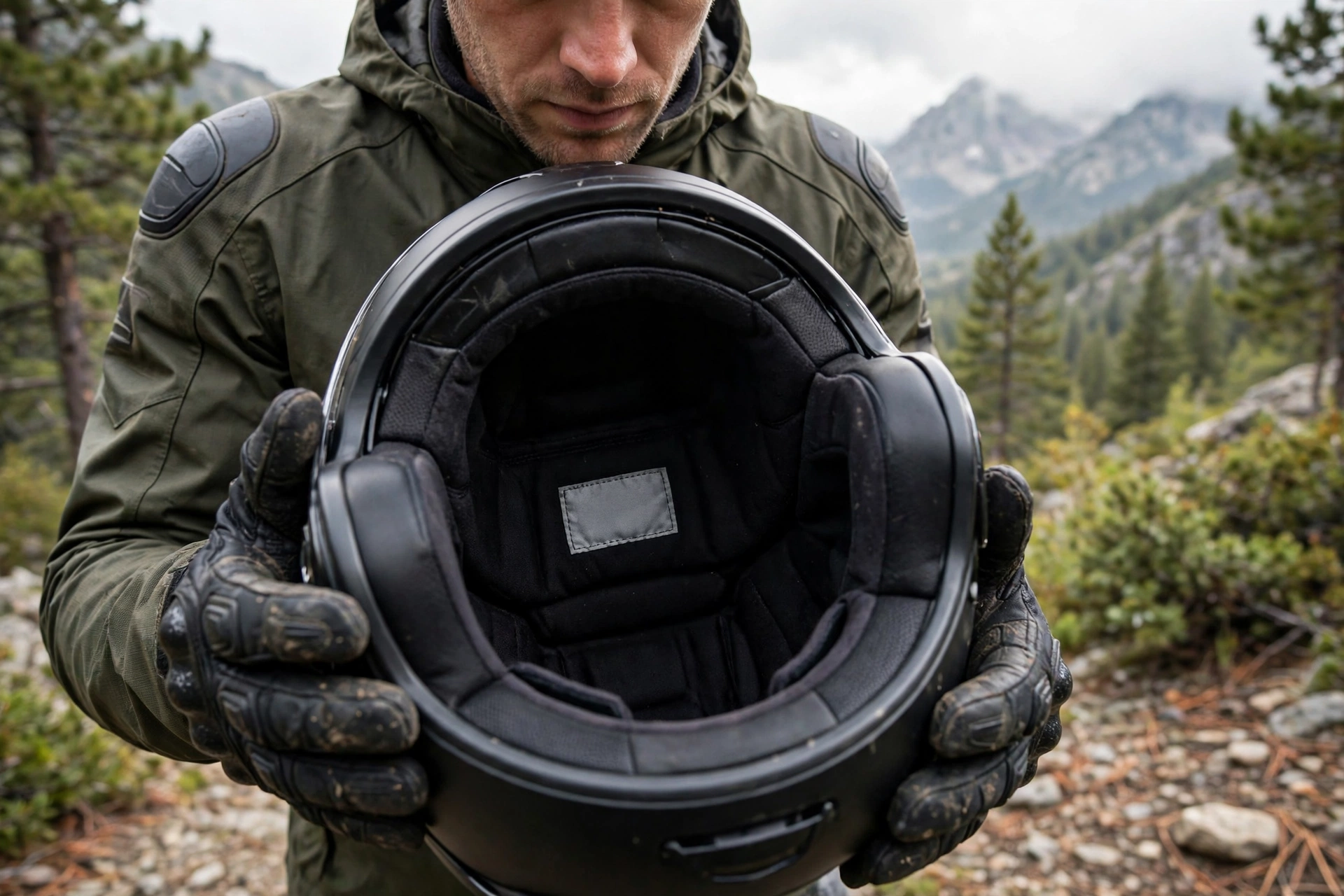
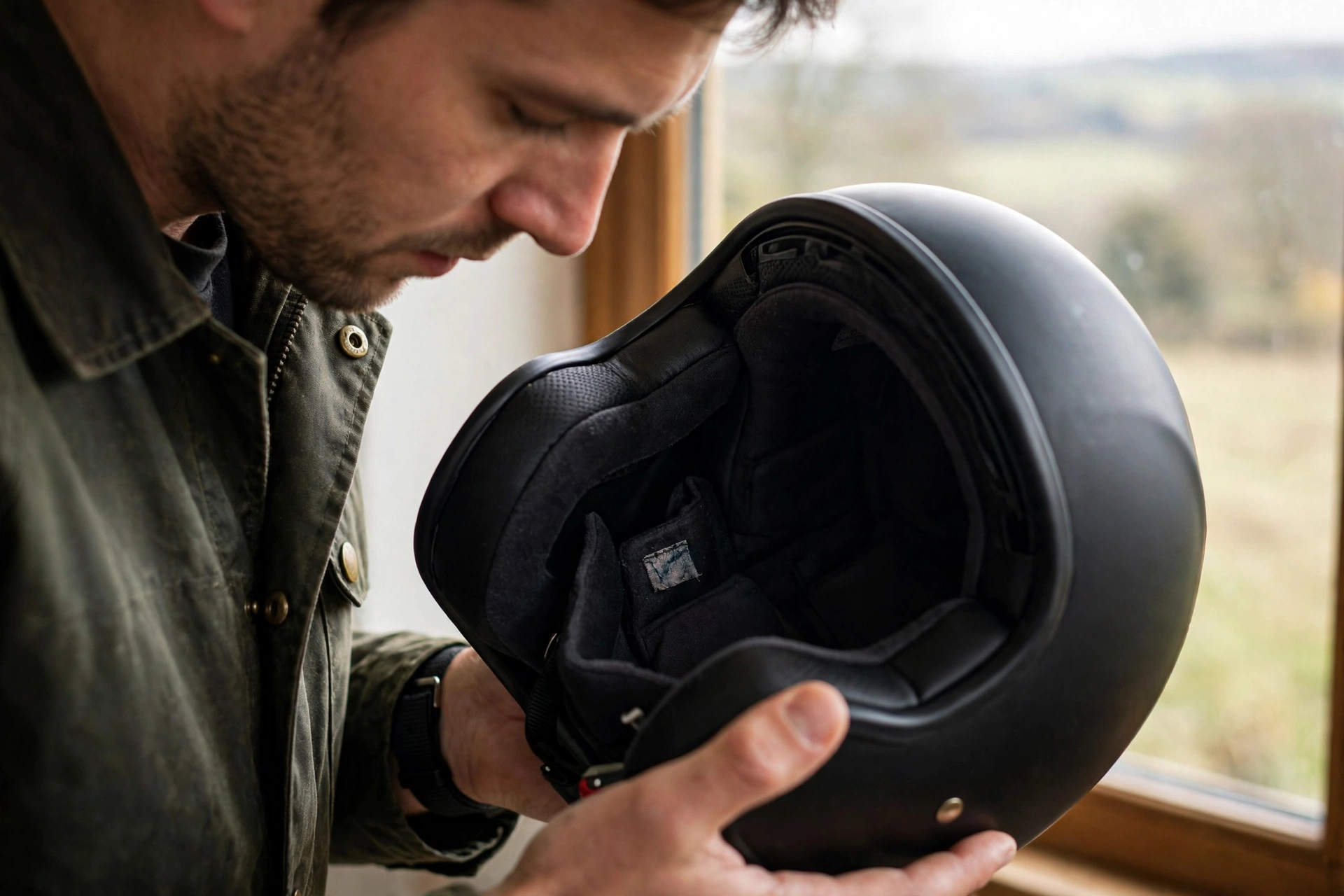
Check the manufacture date if you are unsure where your helmet stands. It is printed on a label inside the helmet, usually under the crown liner or on the EPS itself. If you buy a helmet that has already sat in a warehouse for two years, your five years of use still runs from when you start wearing it — but the seven-year-from-manufacture outer limit is worth keeping in mind.
What Ends a Helmet’s Life Immediately?
One thing overrides all age calculations: an impact. If your helmet takes a hit in a crash with your head inside it, it is done — the EPS has done its one job by crushing, and it cannot do it again in the same spot. Replace it even if the shell looks undamaged, because the crushed foam is hidden underneath.
A significant drop onto a hard surface — off a high shelf or the bike onto concrete — is a grayer area. A short drop of an empty helmet onto a soft surface is unlikely to matter, but a hard fall onto pavement can damage the liner in ways you cannot see. Many manufacturers offer inspection services if you are unsure; when in doubt, the safe answer is replacement. You can read more detail in our dedicated guide on how long a motorcycle helmet lasts.
How Does Storage Affect Helmet Lifespan?
Storage is the factor most riders underestimate. A helmet kept in a cool, dry, dark place — ideally in its bag, away from chemicals — ages slowly. The same helmet left on the bike in the sun, in a hot garage, or near fuel, solvents, and cleaning chemicals ages quickly. Gasoline fumes and solvent vapors can attack EPS foam directly, and sustained heat accelerates the breakdown of both foam and adhesives.
Good habits are simple: store the helmet indoors at room temperature, keep it out of direct sunlight, never hang it on a mirror or hook by the strap in a way that compresses one spot for months, and let it dry fully after wet rides before putting it away. Riders who store helmets well routinely get the full five years; riders who bake theirs in a sunny garage window may not.
If you own more than one helmet and rotate between them, each individual helmet accumulates wear more slowly, and it is reasonable to judge them by total use rather than pure calendar time — a helmet worn twice a month ages very differently from one worn twice a day. Even so, keep the manufacture-date limit in view for every helmet you own, and inspect rotated helmets just as carefully before each season, because straps, adhesives, and padding can deteriorate in storage as well as in use.
What Are the Signs a Helmet Is Worn Out?
Age aside, replace a helmet that shows any of these:
- The fit has become loose because the comfort liner has compressed and no longer recovers.
- The liner or pads are cracking, flaking, crumbling, or leaving black dust on your head.
- The chin strap is frayed, stiff, or the buckle or D-rings show corrosion or damage.
- The shell has cracks, deep scratches through the paint, fading, or a chalky, brittle feel.
- The EPS liner visible at the edges looks dented, cracked, or separated from the shell.
- Glue lines are failing and parts like the neck roll or trim are coming away.
Any one of these means the helmet has reached the end of its service life regardless of what the calendar says.
Frequently Asked Questions
Does the five-year rule start from manufacture or first use?
The five-year guideline generally runs from when you start wearing the helmet. Separately, most makers suggest retiring a helmet about seven years after its manufacture date even if it was barely used, because the materials age on the shelf too.
Can a helmet last longer than five years if it looks fine?
It might look fine while the EPS and adhesives have quietly aged. Looks are not a reliable test of impact performance, which is why manufacturers and safety organizations use time-based guidance. Five years of use is the prudent limit.
Does a dropped helmet always need replacing?
Not always — a short drop onto a soft surface with no weight inside is usually harmless. A hard drop onto concrete or pavement, especially from height, can damage the liner invisibly. If you cannot be sure, have it inspected by the manufacturer or replace it.

Olivia
Writer at Helmet Today, covering helmet reviews, fit and riding safety.