Yes, you can wash a motorcycle helmet — but not by dunking or machine washing the whole thing. The correct method is: wash the removable liner and cheek pads in mild soapy water, wipe the shell and EPS interior gently by hand, and let everything air-dry completely. Submerging the helmet or using strong detergents can damage the foam, glues, and straps that make the helmet work.
Sweat, sunscreen, road grime, and hair products build up in a helmet fast, and a dirty liner smells, itches, and can irritate skin. Regular gentle cleaning keeps a helmet fresh for years. The trick is matching the cleaning method to each part of the helmet, because the padding, the shell, and the EPS foam all tolerate water very differently.
Which Parts of a Motorcycle Helmet Can You Wash?
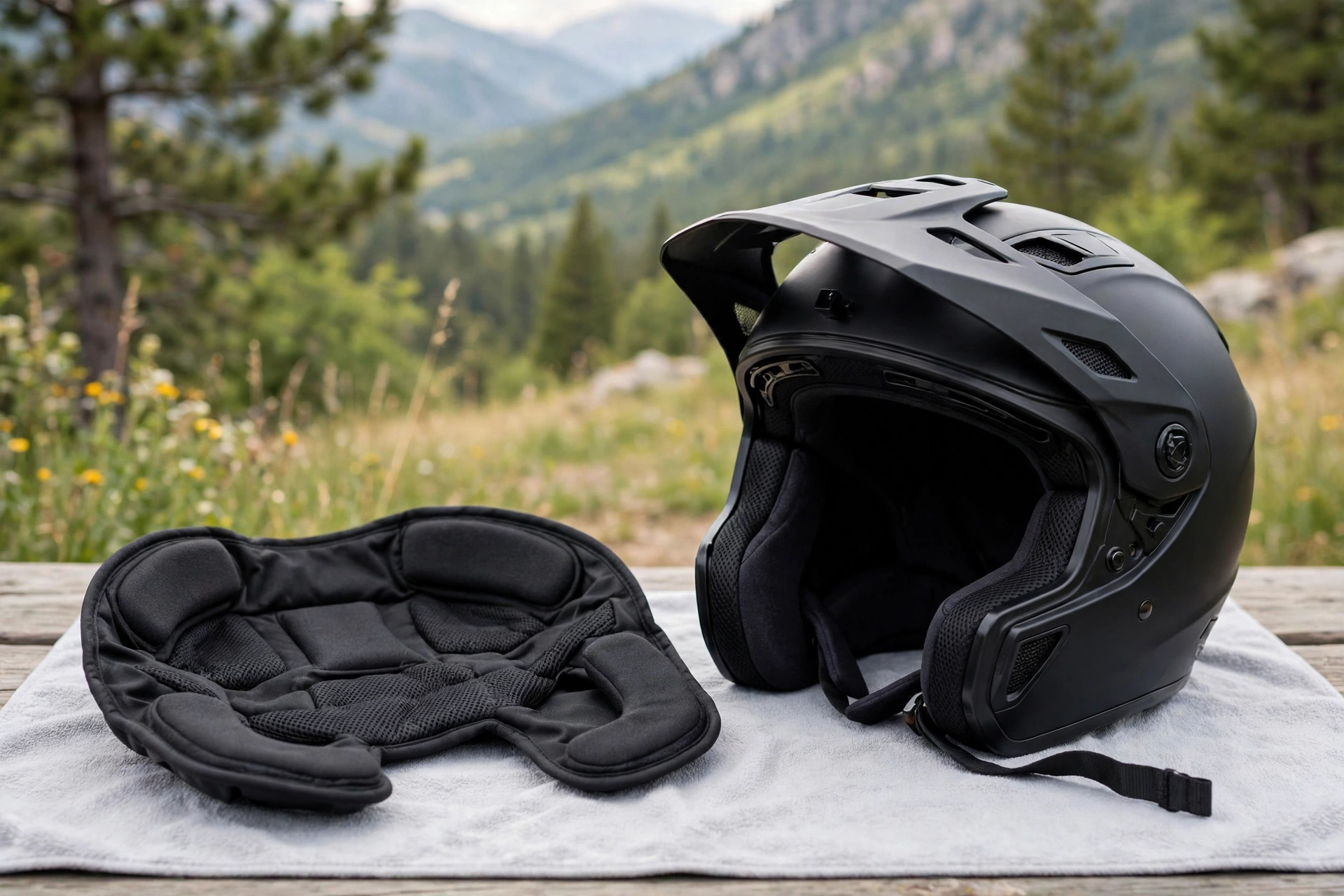
Start with what’s removable. On most modern helmets the cheek pads and crown liner unclip or unsnap and come out completely. Those pieces are made to be washed — they are fabric-covered foam and take hand washing in lukewarm water with a small amount of mild detergent or baby shampoo perfectly well. Some manufacturers even approve a gentle machine cycle inside a laundry bag; check your manual, and when in doubt, hand wash.
The shell exterior can be washed with the same mild soapy water and a microfiber cloth. Bugs need soaking, not scrubbing: lay a wet cloth over the dried bugs for a few minutes and they wipe away without scratching. The EPS foam interior — the hard polystyrene you see when the liner is out — should only be wiped with a damp cloth. It is not meant to be saturated, soaked, or scrubbed, because water can work into its surface and the adhesives that bond it to the shell.
Straps can be wiped down with soapy water while attached. The visor washes separately in soapy water, soaking rather than rubbing to protect anti-fog and anti-scratch coatings. Never put any part of a helmet in a dishwasher, and never machine wash or tumble dry the helmet itself.
What Is the Step-by-Step Routine for Washing a Helmet?
First, photograph the inside of the helmet before you start, so pad and strap routing is documented for reassembly. Remove the visor, then the cheek pads and crown liner, and set any headset speakers aside if you have them installed.
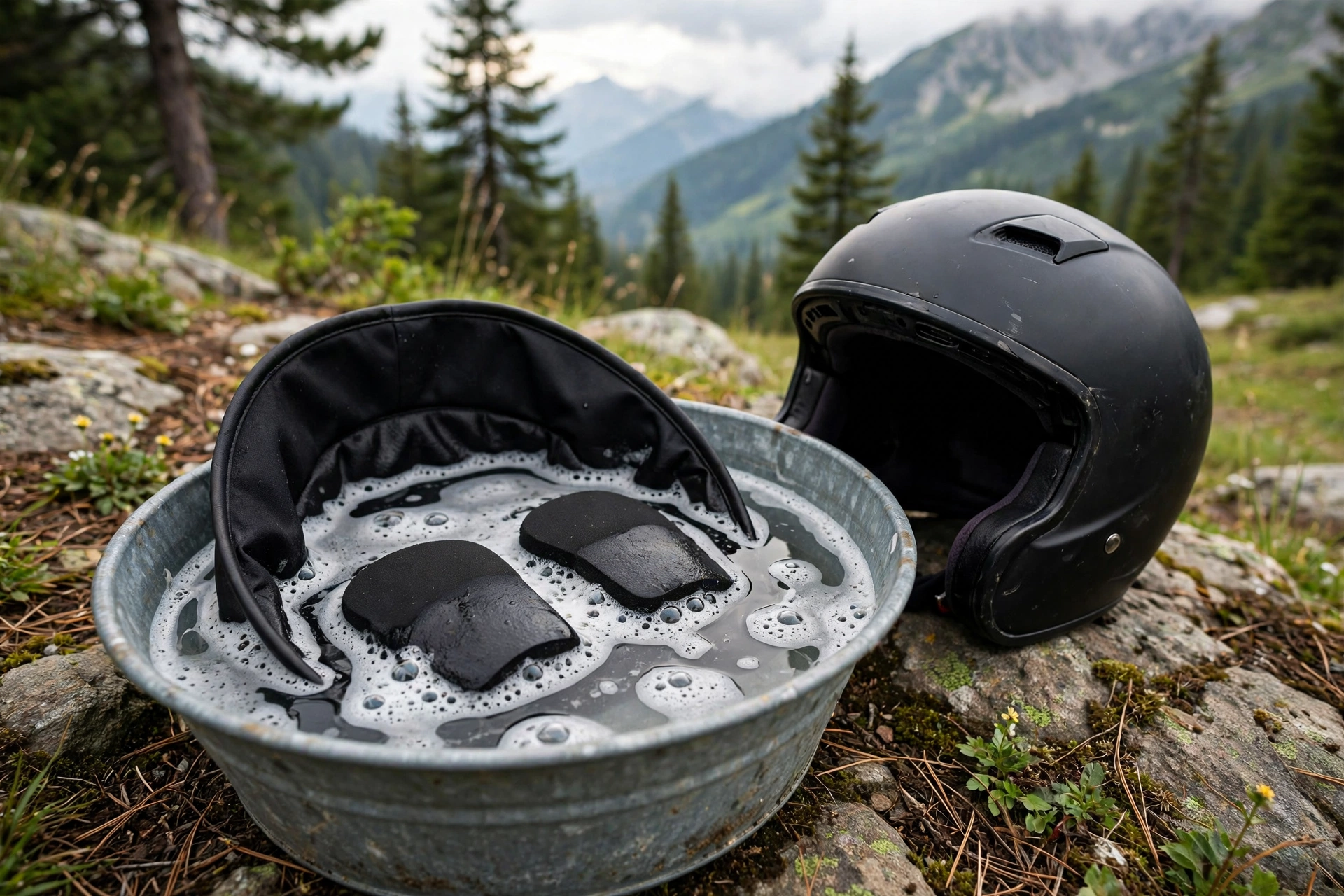
Fill a basin with lukewarm water and a little mild detergent. Submerge the pads and liner, squeeze them gently and repeatedly, and watch the water turn gray — that is normal for a first wash. Rinse in clean water until it runs clear and no slickness remains, since leftover detergent causes itching later. Squeeze water out with a towel; do not wring or twist the foam.
While the pads soak, wipe the shell inside and out with a soapy microfiber cloth, then wipe again with a clean damp cloth. Clean around vents and the visor mechanism with a soft brush or cotton swab. Wash the visor separately and pat it dry with a clean microfiber.
Which Cleaning Products Should You Avoid?
Avoid anything with solvents, ammonia, bleach, or abrasive compounds. Glass cleaners with ammonia can damage visor coatings. All-purpose degreasers and petroleum-based products can attack the shell finish and, worse, the EPS if they reach it. Fabric softener is also a poor idea on liners, because it coats the fibers and reduces how well the padding wicks moisture.
Stick with mild dish soap, baby shampoo, or a dedicated helmet liner cleaner. Dedicated helmet cleaning sprays exist for quick freshening between full washes, and odor-control sprays made for helmets are fine on the liner. If a product is not clearly safe for plastics and foam, keep it off the helmet. Your helmet’s owner’s manual usually lists approved cleaning guidance — it is worth the two minutes to read it.
How Long Does a Helmet Take to Dry After Washing?
Longer than you expect. Pads and liners typically need 24 hours of air drying at room temperature, and in humid conditions closer to 48 hours. The padding holds water deep in the foam, and wearing or storing a helmet while the liner is still damp invites mildew — the exact smell you were trying to remove.
Dry everything in a ventilated spot out of direct sunlight, with a small fan pointed at the pieces if you want to speed things up. Never use a hair dryer on heat, a radiator, or a clothes dryer; heat warps foam and weakens adhesives. Reassemble only when every piece is fully dry to a firm squeeze, then check strap function and pad fit before riding. A helmet washed on Sunday evening is a Monday-morning mistake — wash it when you have a spare day or a spare helmet.
Cleaning also cannot rescue a worn-out helmet. If the liner is permanently compressed or the foam is crumbling, that is end-of-life, not dirt — our guide to how long a motorcycle helmet lasts explains the replacement signs to check while yours is apart.
How Often Should You Wash a Motorcycle Helmet?
For daily riders in warm weather, a liner wash every few weeks keeps odor away; occasional riders can go a few months between washes. Wipe the shell and visor after buggy or rainy rides so grime never gets baked on. Storage habits matter as much as washing: keep the helmet in a breathable bag or on a shelf with the visor cracked open, never sealed in plastic, and never left in a hot car trunk where heat and trapped moisture work on the foam, glues, and liner between rides. Between full washes, removing the liner to air out after sweaty rides, and storing the helmet somewhere ventilated rather than in a sealed bag or top case, prevents most odor problems before they start. A washable skull cap or balaclava under the helmet also absorbs sweat and extends the time between liner washes considerably.
Frequently Asked Questions
Can I put my whole motorcycle helmet in water?
No. Dunking saturates the EPS and adhesives and takes days to dry. Wash removable pads separately and wipe the shell and interior by hand.
Can I machine wash helmet pads?
Some manufacturers allow it on a gentle cycle inside a laundry bag, but hand washing is always safe. Check your manual, and never machine wash or machine dry the helmet itself.
Why does my helmet still smell after washing?
Usually it was reassembled or stored while still damp, or detergent residue remained in the foam. Re-rinse the liner in clean water and dry it fully — a full 24 to 48 hours — before judging the result.

Olivia
Writer at Helmet Today, covering helmet reviews, fit and riding safety.