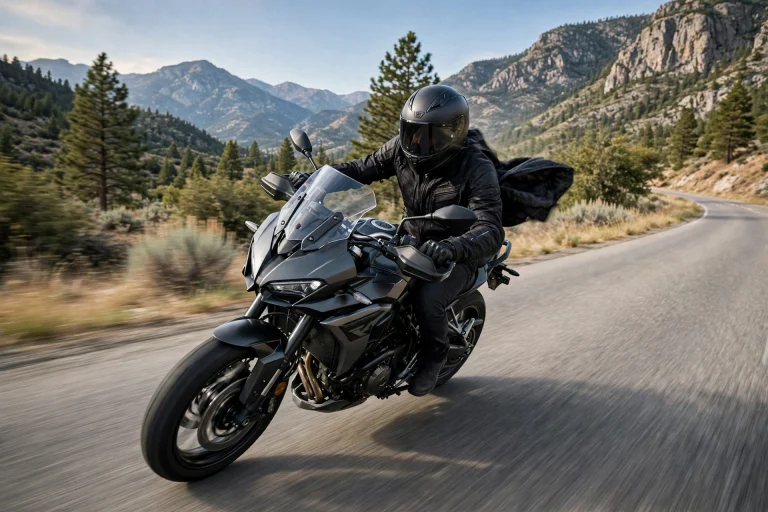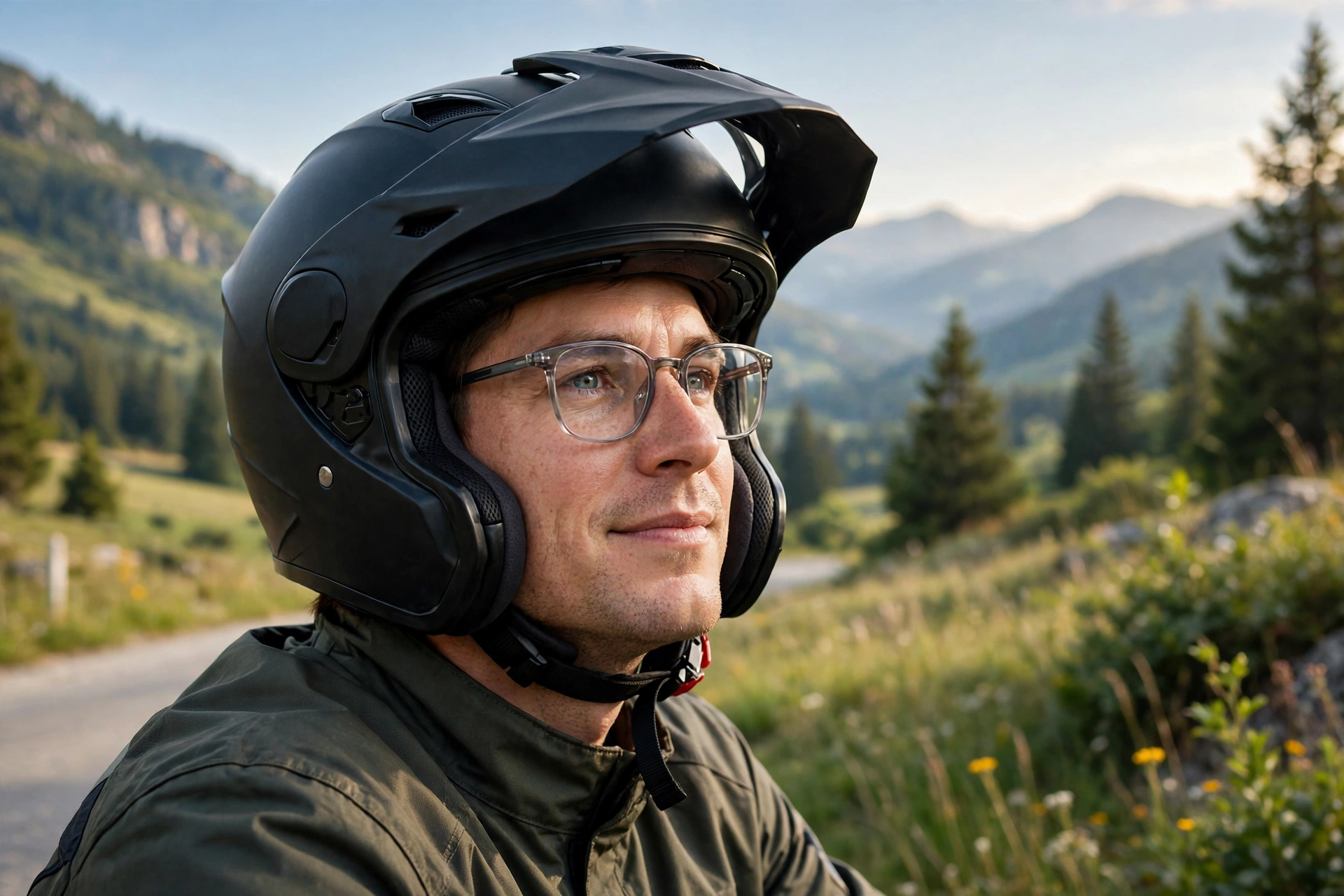
Yes — you can wear glasses with a motorcycle helmet, and riders who need them do it every day. The keys are a helmet with glasses channels in the liner, the right technique (helmet on first, then slide the glasses straight in), and frames with slim, straight arms. Get those three things right and glasses are a non-issue on the bike.
New riders sometimes assume they will have to switch to contact lenses or ride with blurred vision. Neither is necessary. Helmet makers know a large share of riders wear glasses, and many models are designed around them — you just need to know what to look for and how to put everything on in the right order.
How Do You Put Glasses On With a Helmet?
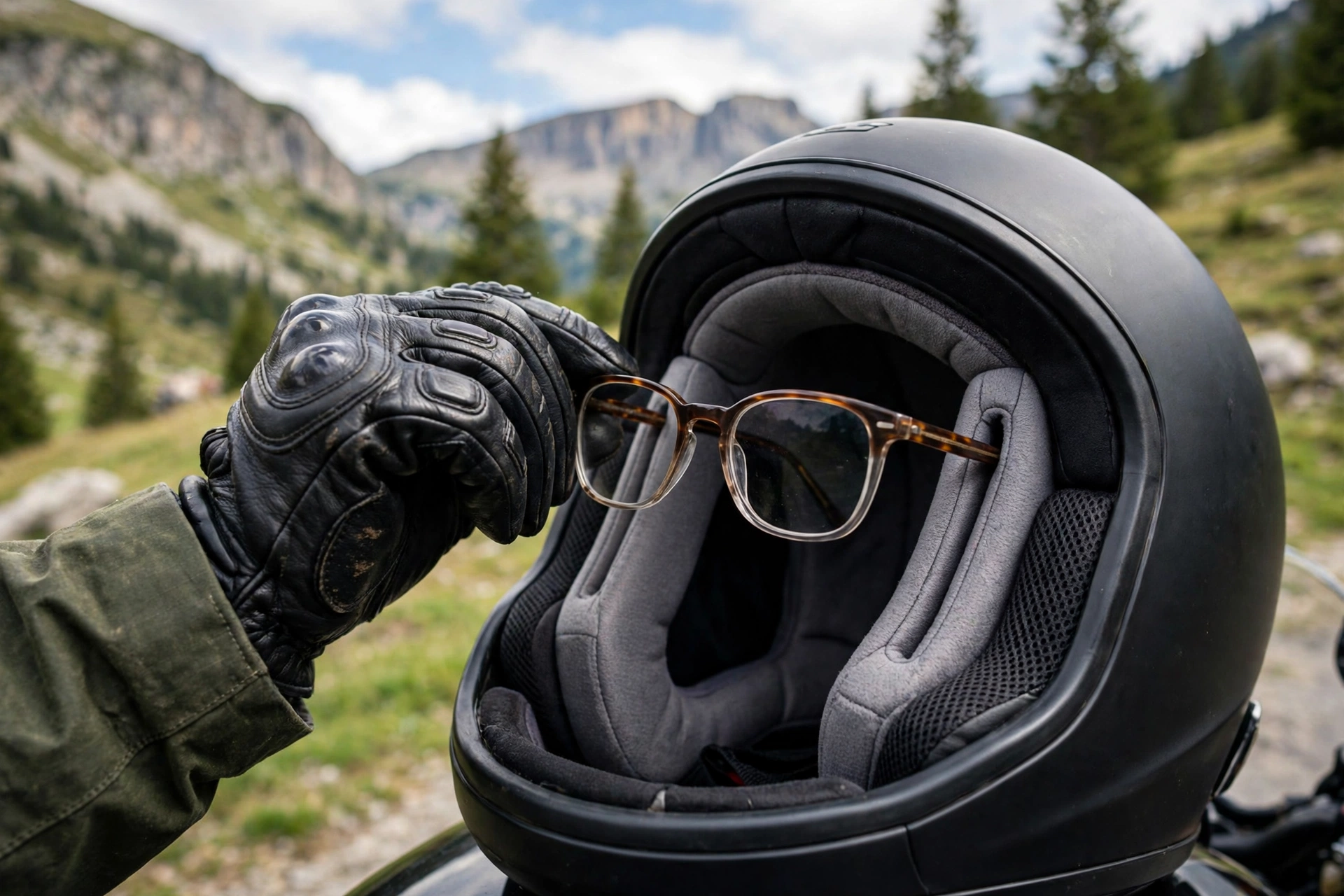
Order matters. Put the helmet on first and fasten the chin strap, then take the glasses in both hands and slide the arms straight back along your temples into the helmet. Pushing them straight, rather than hooking them over your ears like you normally would, lets the arms follow the channels in the padding and land in the right place. A gentle wiggle settles them onto your nose and ears.
Taking the helmet off is the reverse: glasses out first, then helmet. Pulling a helmet off with glasses still on usually drags them off your face or bends the arms. Flip-front (modular) helmets make the whole process easier, because with the chin bar raised there is more room to work — one reason glasses wearers often favour them.
When you are shopping, treat the glasses test as seriously as the fit test itself. Bring the exact frames you ride in, put the helmet on fully — strap fastened, not just perched — and slide the glasses in and out a few times. They should settle into place without you forcing the arms or feeling them dig into the sides of your head, and they should stay level when you shake your head gently. Also remember that cheek pads soften and bed in slightly over the first weeks of use, so a combination that is merely snug in the shop usually becomes comfortable; one that is painful in the shop rarely improves enough. If a helmet you otherwise love has no channels, it is the wrong helmet for a glasses wearer, full stop.
What Helmet Features Should Glasses Wearers Look For?
The single most useful feature is a pair of glasses channels — grooves moulded into the EPS and liner around the temples, sometimes labelled as an eyewear-friendly or glasses-ready fit. The arms sit in these channels instead of being pressed into your head by the padding, which removes the pressure pain that builds up after half an hour in a helmet without them.
Beyond channels, a drop-down internal sun visor is a genuine convenience if your glasses are clear — no need for prescription sunglasses or clip-ons. Removable cheek pads with routing space, and a liner that does not bulge at the temples, also help. When trying helmets on, always bring your glasses and wear the combination for at least several minutes in the shop; temple pressure that is mild at minute one can be a headache at minute forty.
Which Frames Fit Best Under a Helmet?
Straight, slim arms are the big win. Frames whose temples run straight back hug the head and slide into channels cleanly, while arms that curve sharply down behind the ear fight the padding and create pressure points. Thin metal or slim acetate arms, flexible hinges, and smaller lens shapes all help. Avoid wide fashion frames with thick decorative temples.
Many regular riders keep a dedicated riding pair: sturdy, straight-armed, and fitted with polycarbonate lenses. Polycarbonate matters for safety — it is impact-resistant and far less likely to shatter than standard lens materials if the worst happens, which is why it is the sensible default for anything worn under a helmet with the visor up.
How Do You Stop Glasses Fogging Inside a Helmet?
Glasses fog for the same reason visors do: warm, moist breath meeting a cooler lens. A breath guard or chin curtain that directs your breath downward helps a lot, as does cracking the visor one notch at low speed to keep air moving. Most of the fogging happens at stops — opening the visor as you roll to a halt and closing it once moving again becomes second nature quickly.
Anti-fog treatments made for eyeglasses can help, and a Pinlock insert keeps the visor itself clear so at least one layer stays transparent. If fogging is severe in cold weather, check the fit of the helmet’s breath box and consider a balaclava with a breath deflector. What you should not do is ride with the visor fully up at speed to compensate — your eyes then lose the helmet’s impact and debris protection.
What If Glasses Simply Don’t Work for You?
Some riders do prefer alternatives. Contact lenses remove every fit issue, though eyes can dry out in the windstream if the visor seal is poor, and a lens problem mid-ride is its own hazard. Prescription inserts and goggles exist for some helmet types, and a drop-down sun visor paired with contacts covers bright days. Any of these is a legitimate choice — the important thing is that the helmet itself stays a proper motorcycle helmet. As the differences in our bike helmet vs motorcycle helmet comparison show, swapping to a bicycle helmet because glasses fit more easily would trade away protection you cannot afford to lose.
For most riders, though, the straightforward answer remains the best one: a glasses-friendly helmet, straight-armed frames, and the slide-in technique. Practice it a few times at home and it becomes as automatic as fastening the strap.
Frequently Asked Questions
Should glasses go on before or after the helmet?
After. Put the helmet on and fasten the strap first, then slide the glasses straight in along your temples. When removing gear, take the glasses out before taking the helmet off.
Can I wear sunglasses under a motorcycle helmet?
Yes — the same technique applies. Many riders prefer a helmet with a drop-down sun visor or a tinted shield for convenience instead, but never ride with a tinted visor or dark glasses at night.
Will wearing glasses damage my helmet’s liner?
Not if the helmet has glasses channels and you slide the arms in straight rather than forcing them. Forcing stiff arms through padding that has no channel can tear or compress the liner over time — that is a sign the helmet is the wrong model for you.

Olivia
Writer at Helmet Today, covering helmet reviews, fit and riding safety.