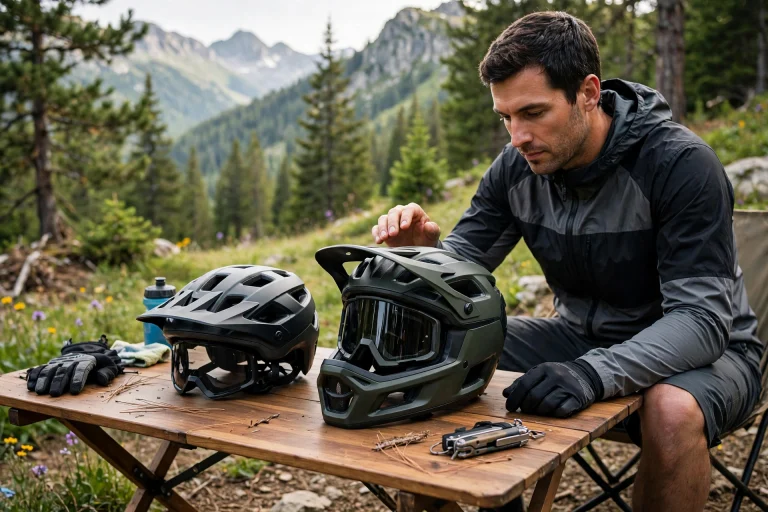
Replace a bike helmet after any crash in which it took an impact, whenever you find damage such as a cracked shell, dented or compressed foam, or worn straps and hardware, and when it no longer fits snugly or passes its service life printed by the manufacturer. A helmet that has done its job once cannot be trusted to do it again.
Some replacement triggers are obvious, others are quiet. This checklist covers both, so you can judge your current helmet honestly.
Does a Bike Helmet Need Replacing After Every Crash?
If the helmet struck the ground or another object with your head in it, yes — replace it. Bike helmets are single-impact devices: the EPS foam liner is engineered to crush and absorb energy once. That crushing is often invisible under an intact shell, which is why “it looks fine” is not evidence after a real impact.
Drops are different. Knocking a helmet off a table onto a floor, with no head inside, rarely damages the foam, because there is no weight driving the impact. Inspect it, and if there is no dent, crack, or shell damage, it is generally fine to keep using.
When in doubt after a crash, replace. Some manufacturers offer crash-replacement discounts or inspection programs — check the maker’s policy before you buy a full-price replacement.
What Damage Should You Look For in an Inspection?
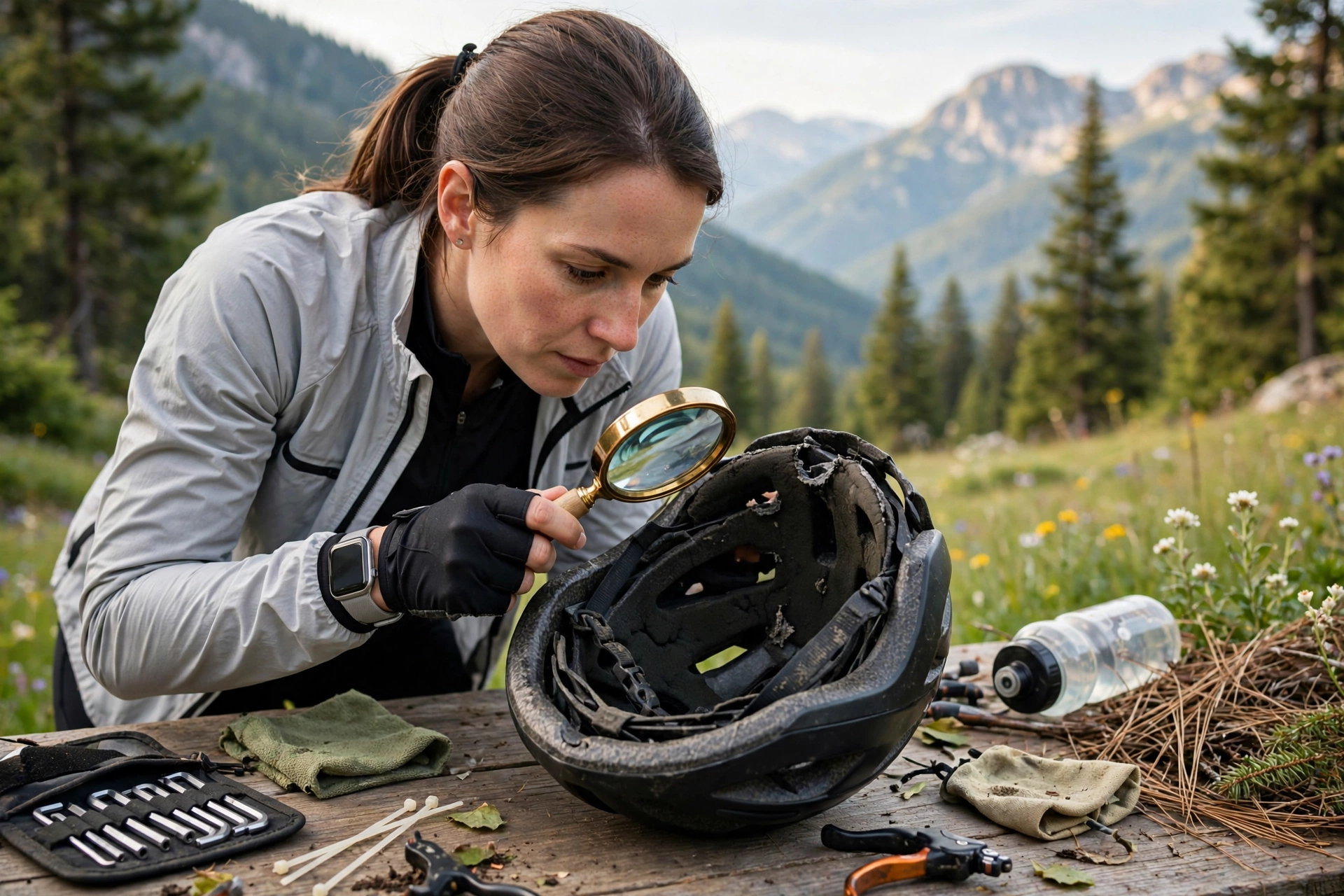
Shell. Cracks, deep gouges, or a shell separating from the foam mean replacement. Hairline cracks around vents and edges count — they signal the structure has been stressed.
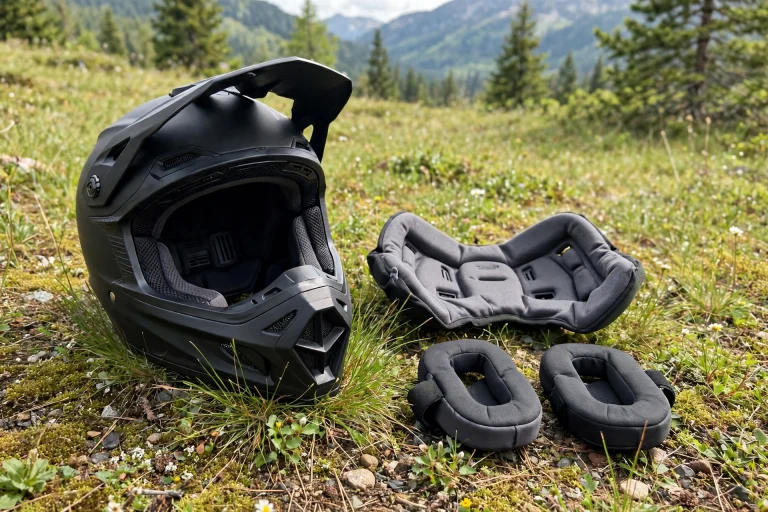
EPS foam. Remove the pads and look at the black or grey foam. Dents, soft spots, crumbling edges, or areas that feel compressed compared with the rest mean the liner has absorbed an impact or deteriorated. Flexible rotational liners, such as the system explained in what MIPS is for helmets, should also sit flat and move freely; a torn or detached liner is a replacement sign.
Straps and hardware. Frayed webbing, a buckle that no longer clicks positively, strap dividers that slip, or a fit dial that will not hold its setting all compromise retention. Hardware that cannot keep the helmet positioned is a safety failure even if the shell is perfect.
Can a Helmet Wear Out Without a Crash?
Yes. Sweat, sunscreen, heat in a car trunk, UV exposure, and hundreds of on-off cycles slowly degrade pads, straps, adhesives, and eventually the fit. The most common symptom is fit drift: a helmet that used to pass the shake test now moves, because the comfort pads have compressed permanently and the dial is at its limit.
Fit drift matters because protection depends on position. If thicker replacement pads (where the maker offers them) do not restore a stable fit, the helmet has reached the end of its useful life even without a single crash.
Check the label inside for the manufacture date, and follow the maker’s replacement guidance — many brands suggest a service life of roughly three to five years of regular use, varying by model and care. Heavy daily use in sun and heat sits at the short end of that range; occasional fair-weather use at the long end.
How you store the helmet decides a lot of that lifespan. Helmets age fastest in hot cars, sunny windowsills, and garages near solvents or fuel — heat and chemical fumes attack foam and adhesives. Stored indoors at room temperature, hung or shelved rather than crushed under gear, the same helmet stays sound noticeably longer. If your helmet lives in a car trunk through summer, treat its service life as shortened even if it looks clean.
Odor that survives a proper wash is another soft signal: it usually means the pads are saturated and breaking down, and while pads alone can be replaced on many models, pads that disintegrate in your hands usually mean the rest of the helmet is the same age and condition.
Why Can’t a Crashed Helmet Protect You Twice?
EPS foam protects by crushing. The tiny beads and air cells collapse permanently as they convert impact energy into deformation instead of passing it to your skull. Once crushed, that section has no travel left: a second impact in the same spot transmits far more force.
Because the shell can hide the damage, the only reliable diagnostic after a head impact is replacement. Cutting the straps off the old helmet before discarding it is a good habit — it stops anyone else from using a spent helmet.
This is also why rental and second-hand helmets are a gamble: you cannot know the impact history from looking at the shell.
Should You Ever Buy a Used Bike Helmet?
No. A used helmet carries an unknown history — possible hidden foam damage, age you cannot verify, degraded straps, and a fit that was shaped by someone else’s head and sweat. There is no inspection that can certify a stranger’s helmet as safe.
The same caution applies to hand-me-downs between siblings unless the helmet is genuinely unworn, within its service life, and fits the new rider properly — a rare combination.
A simple habit keeps all of this easy: once or twice a year, take five minutes to run the full inspection — shell, foam, straps, buckle, dial, and fit — and check the date label while you are there. Put a reminder on the calendar each spring. Helmets rarely fail all at once; they drift, and a scheduled look is how you catch the drift before it matters.
New certified helmets are available at modest prices, and every one of them carries a verifiable manufacture date and a clean history. For the one piece of gear whose whole job is a single worst moment, that certainty is the point.
Frequently Asked Questions
How long does a bike helmet last if never crashed?
Many manufacturers suggest about three to five years of regular use, depending on the model, exposure to heat and sun, and care. Check the manufacture date on the inside label and your maker’s guidance, and replace sooner if the fit loosens.
I dropped my helmet on the floor — is it ruined?
Usually not. An empty helmet dropped from about waist height onto a hard floor seldom damages the foam. Inspect for dents or shell cracks; a head-impact crash is the case that always means replacement.
Can I replace just the pads instead of the helmet?
Yes, if the maker sells replacement pads and the shell, foam, straps, and buckle are all sound. Fresh pads can restore fit on a healthy helmet — they cannot repair impact damage or deterioration.

Olivia
Writer at Helmet Today, covering helmet reviews, fit and riding safety.