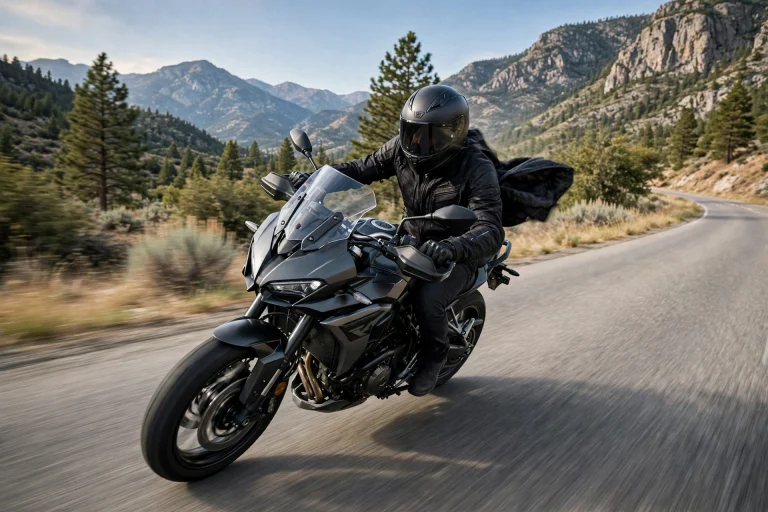
You physically can wear earbuds under a motorcycle helmet, but whether you should is a different question — and in some states, riding with audio in both ears is restricted or illegal. Even where it is legal, earbuds bring real fit and hearing problems. For most riders, helmet speakers or proper motorcycle earplugs are the better answer.
Earbuds are tempting: they are already in your pocket, they carry your music and navigation prompts, and they seem like an easy substitute for a helmet intercom. The reality on the bike is less convenient. Here is what to weigh up before you ride with them.
Is It Legal to Wear Earbuds While Riding a Motorcycle?
It depends entirely on where you ride. US states take different approaches: some prohibit headphones or earbuds in both ears while operating a vehicle, some allow a single earbud, some specifically allow helmet-mounted speakers while restricting in-ear devices, and others have no specific rule at all. The same ride can cross from legal to illegal at a state line.
Because of that patchwork, the only safe advice is to check the current law in your own state — and any state you tour through — before relying on earbuds. Do not assume that because earbuds are common among riders, they are permitted where you are. And legality aside, an officer or an insurer may still take a dim view of anything that masked the sound of traffic around you.
Will Earbuds Actually Fit and Stay Comfortable Under a Helmet?
This is where most riders give up on the idea. Pulling a snug helmet on tends to drag earbuds half out of your ears or push them painfully deep, and the helmet’s ear pockets leave very little room — a bud that sits even slightly proud becomes a pressure point pressed against your ear for the whole ride. What feels fine for ten minutes can be genuinely painful by an hour.
Low-profile, flush-fitting buds work best if you try it at all, and putting the buds in after the helmet — reaching up and seating them by feel — helps some riders. Cables add their own problems, snagging on the chin strap and jacket collar, while wireless buds risk one dropping out at a stop and vanishing under the bike. A bud that shifts mid-ride is also a distraction you will be tempted to fix with one hand off the bars.
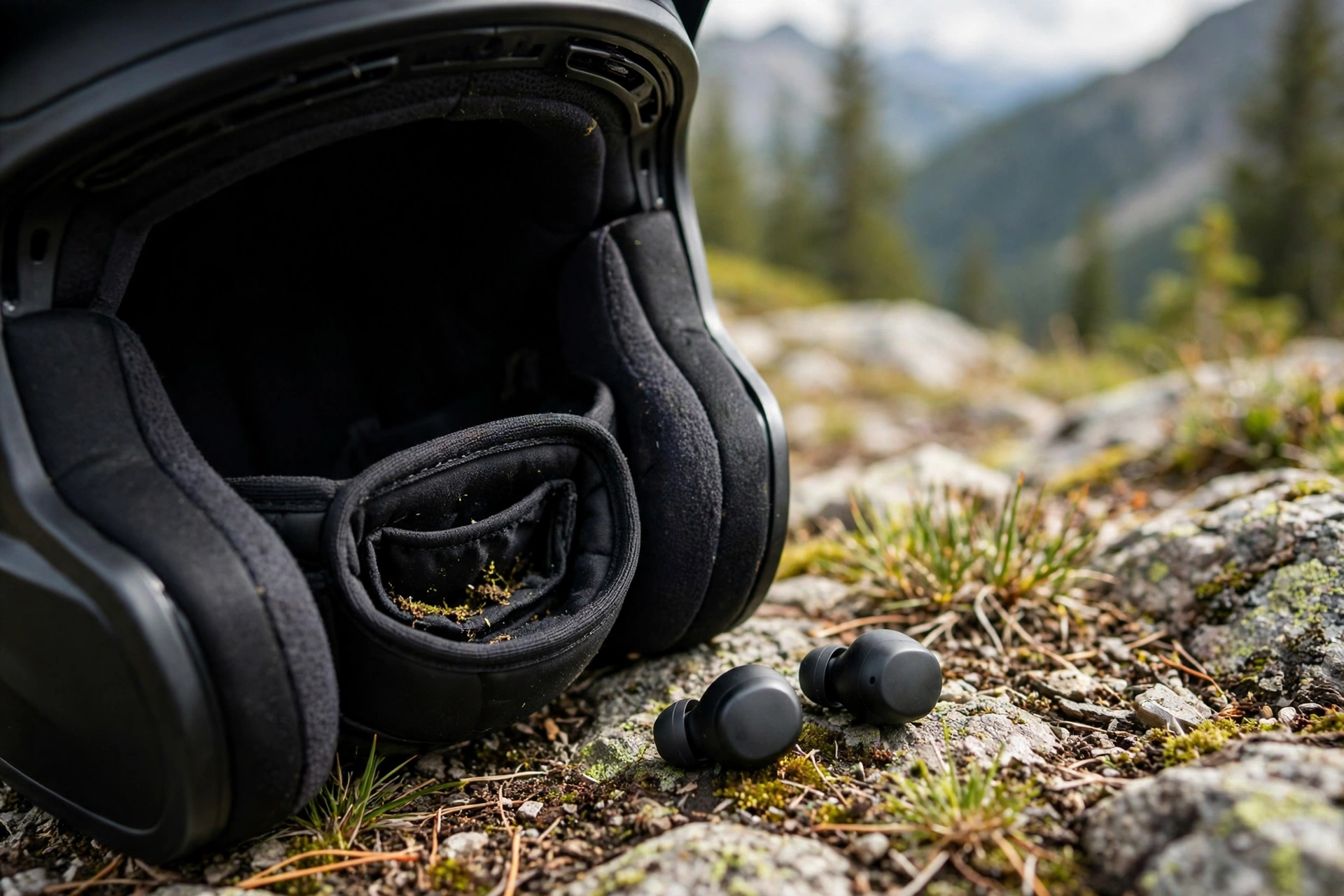
What Do Earbuds Do to Your Hearing on a Motorcycle?
Wind noise inside a helmet at highway speed is loud enough to damage hearing over time — this is true with or without music. To hear music over that noise floor, earbuds have to play louder still, so riders end up with two problems at once: sustained high volume, and audio masking the sirens, horns, and engine notes of surrounding traffic that they need to hear.
There is a common misconception that earbuds double as earplugs. Ordinary buds do not seal consistently and are not rated hearing protection; some block a little noise, many block almost none, and none reduce it evenly. Your helmet’s crash protection — the EPS liner and rotational systems like the one explained in our guide to what MIPS is for helmets — protects your head in an impact, but it does nothing at all for your hearing. Protecting your ears is a separate job, and earbuds usually make it worse, not better.
Hearing damage from riding is gradual and painless, which is exactly why riders ignore it until it is permanent. The warning signs are ringing ears after a ride, needing the TV louder than you used to, and the drained, headachy feeling after a long highway day — much of that fatigue is noise exposure, not just concentration. Riders who tour regularly are the most exposed, because damage depends on volume multiplied by time. Anything that adds more volume on top of the wind roar, as music through earbuds does, moves that damage closer. Proper earplugs, by contrast, measurably reduce it — one of the cheapest forms of protection in all of motorcycling.
What Are Safer Alternatives to Earbuds on a Motorcycle?
Helmet Bluetooth speakers are the closest substitute and are designed for the job: they sit in the helmet’s ear pockets rather than in your ears, stay put when the helmet goes on, are controlled with glove-friendly buttons, and in several states are treated differently in law from in-ear devices. Volume still needs restraint, but the fit and distraction problems disappear.
If your main goal is protecting your hearing or reducing fatigue, filtered motorcycle earplugs are the smarter purchase. They cut wind noise down while letting speech and traffic sounds through at a safer level, using a tuned filter rather than a foam block. Many riders combine both: earplugs for noise, helmet speakers turned down sensibly for navigation prompts.
If you ride with a passenger or in a group, a proper helmet intercom solves another problem earbuds never will: communication. Intercom units pair rider to passenger or bike to bike, so directions, warnings, and conversation happen at normal volume without shouting over wind noise — and because the speakers are helmet-mounted, they inherit the same legal and comfort advantages over in-ear devices.
If You Still Use Earbuds, How Do You Reduce the Risks?
Check your state’s law first, and if only one ear is permitted, use one ear. Choose the lowest-profile buds you own, set your volume before you set off — a reasonable test is that you can still hear a person speaking to you at a stop — and never touch the controls or your phone while moving; if something needs adjusting, pull over. Keep navigation prompts on and music modest, and treat audio as background, never the focus.
Be honest about the result, too. If the buds hurt, shift, or drown out traffic, that experiment has told you its answer. The speaker-and-earplug combination costs some money, but it solves every problem on this page at once, which is why it is what most high-mileage riders settle on.
Frequently Asked Questions
Are helmet speakers legal where earbuds are not?
In many places, yes — several laws that restrict headphones or earbuds specifically permit speakers mounted in the helmet. But the rules vary by state, so check your local law rather than assuming.
Can earbuds damage your hearing on a motorcycle?
Yes, if you regularly turn them up over highway wind noise for long periods. The combined exposure is what causes harm, which is why filtered earplugs plus modest speaker volume is the safer setup.
Do noise-cancelling earbuds work as hearing protection?
No. Noise cancelling is not rated hearing protection, it performs unpredictably against wind roar, and it can remove traffic sounds you need. Use proper motorcycle earplugs for protection.

Olivia
Writer at Helmet Today, covering helmet reviews, fit and riding safety.