Store a bike helmet in a cool, dry place indoors, out of direct sunlight and away from heat, solvents, and heavy objects. A shelf, closet, or helmet bag at normal room temperature is ideal. The enemies of a stored helmet are heat, UV light, chemical fumes, and compression — all of which quietly age the EPS foam and weaken straps while the helmet just sits there.
Good storage is not a minor detail. A helmet’s 3-to-5-year service life assumes reasonable storage; a helmet baked in a car trunk or hung in a chemical-filled garage can age far faster than the calendar suggests. Treat storage as part of helmet care, and your helmet will still be at full strength on the day you actually need it. The foam inside cannot tell you it has weakened — there is no creak or warning sign — so the only protection against storage damage is preventing it in the first place with a sensible spot and a few simple habits.
Where Is the Best Place to Store a Bike Helmet at Home?
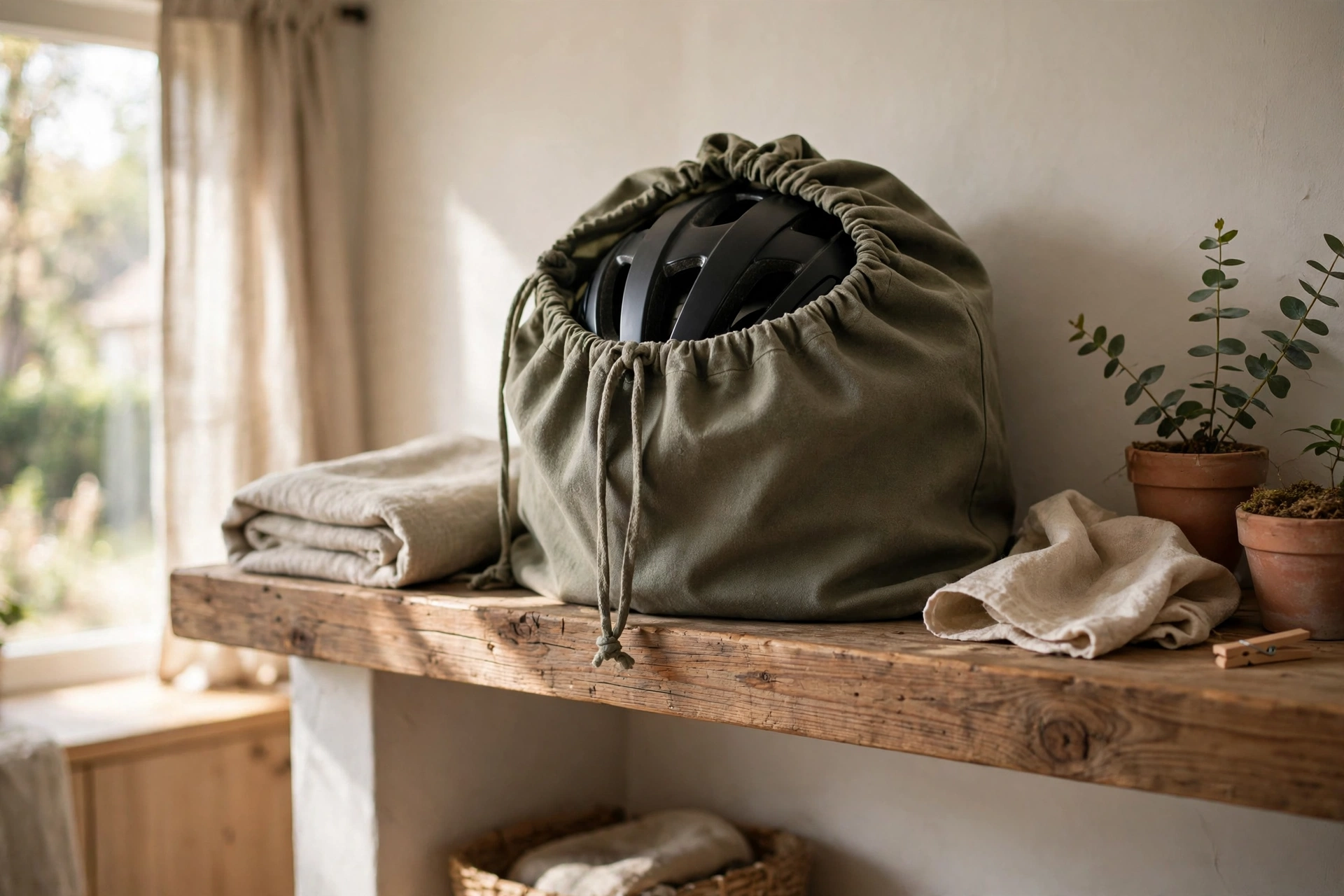
Choose a spot that stays near room temperature, dry, and dark or shaded: a closet shelf, a drawer, a gear cabinet, or a hook in a hallway. Rest the helmet on its crown or set it bottom-down on a flat surface so its weight is supported evenly. A soft helmet bag or the cloth bag many helmets ship with adds protection against dust, scuffs, and accidental knocks.
Avoid the places that seem convenient but do real harm. Car trunks and interiors can exceed temperatures that accelerate foam aging, and dashboards add direct UV on top of the heat. Sunny windowsills and spots near radiators, water heaters, or furnaces are poor choices for the same reason. The rule of thumb: if the spot would be uncomfortable for you to sit in all day, it is aging your helmet.
Should You Hang a Bike Helmet by Its Straps?
Not for long-term storage. Hanging a helmet by its straps for weeks or months keeps constant tension on the webbing and buckle, lets the helmet swing and bang against walls, and concentrates all its weight on the strap anchor points. A quick hang on a hook after a ride to air out is harmless; a season hanging by the straps is not.
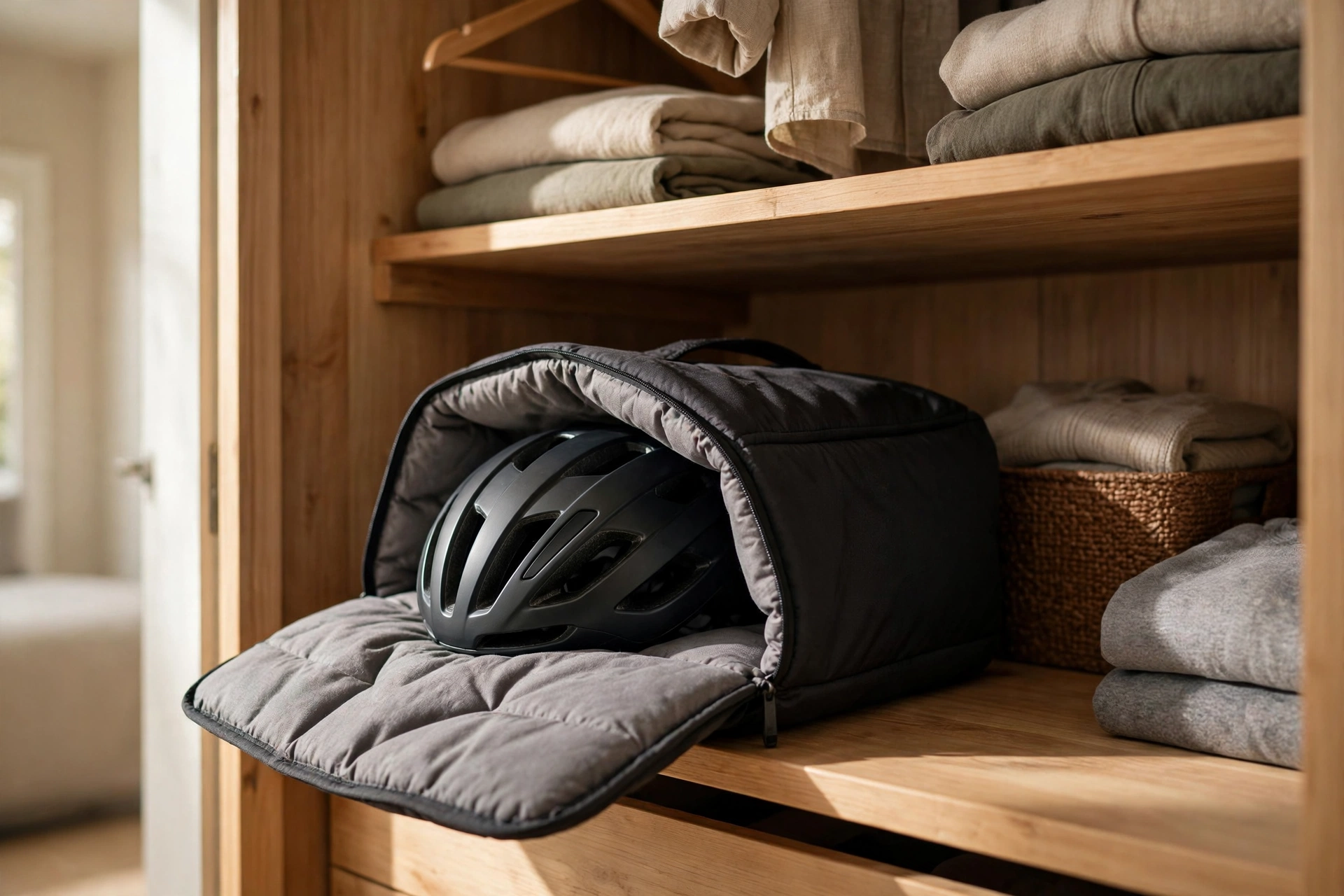
If wall storage suits your space, use a wide hook or small shelf that supports the helmet under its shell, or a dedicated helmet rack that cradles it. Resting the helmet crown-up on a shelf remains the safest default. Whatever you choose, make sure nothing heavy gets stacked on top — EPS foam that spends months under a pile of gear can take a permanent set, and that compression is exactly what the foam is supposed to save for a crash. It is also smart to keep stored helmets somewhere you will actually see them now and then, so a quick visual check for cracks, chewed straps, or mildew becomes part of your normal routine rather than a surprise on the first day of the season.
Should You Clean a Bike Helmet Before Storing It?
Yes — always store it clean and fully dry. Sweat left in the pads and straps is salty and acidic, and it keeps working on the materials the whole time the helmet sits. A quick routine before any long storage: wash removable pads in mild soap and water, wipe the straps and shell, rinse away residue, and let everything air dry completely at room temperature before putting it away.
Dryness matters as much as cleanliness. A helmet sealed into a bag or box while still damp can grow mildew in the pads and develop a stubborn odor that no wash fully removes. Leave the helmet out overnight after washing, confirm the pads are bone dry, then store it. The same advice applies to the low-friction liner if your helmet has one — understanding what MIPS is for helmets explains why keeping that inner layer clean and undamaged in storage matters for how it performs later.
Why Are Garages and Sheds Risky for Helmet Storage?
Garages concentrate almost everything foam dislikes: gasoline, paint, solvents, and cleaning chemicals whose fumes can attack EPS and shell plastics; big temperature swings between hot afternoons and cold nights; and sunlight through windows. Sheds add dampness and pests. A helmet can survive a garage if it must live there, but seal it in a bag or closed box, keep it away from fuel and chemical shelves, and elevate it off the floor.
If you have any indoor alternative — a hall closet, a bedroom shelf — use it instead. Riders with several helmets often keep the current daily helmet by the door and rotate stored helmets indoors. It is also worth keeping helmets away from curious pets: chewed straps and clawed foam are storage damage just as real as heat damage.
How Should You Store a Bike Helmet for Travel and the Off-Season?
For travel, pack the helmet in its bag in the center of your luggage, surrounded by clothing that cushions it, and never in an outside pocket where bags get crushed. Carry it on when flying if you can — cargo holds combine rough handling with temperature extremes. At your destination, unpack it and check for dents before riding.
For off-season storage, do the full clean, dry it thoroughly, loosen nothing and force nothing, and place it in its bag on a shelf with a note of its manufacture date if you track replacements. Before the first spring ride, run a quick check: foam firm and uncracked, straps unfrayed, buckle clicking, fit system holding, pads fresh. That five-minute inspection confirms your storage did its job — and if anything has degraded, you find out in the closet, not on the road.
Frequently Asked Questions
Can I store my bike helmet in the car?
Briefly, while running errands, yes. Long-term, no. Parked cars get extremely hot and sunny, and that heat and UV steadily age the foam and straps. Bring the helmet inside with you whenever you can.
Is it okay to stack things on top of a stored helmet?
No. Weight pressing on the shell for weeks can compress the EPS foam underneath, using up some of its impact absorption. Give the helmet its own space on the shelf.
Should I store my helmet with the straps buckled?
Either way is fine for the helmet itself. Buckling keeps straps tidy and untangled; just avoid storing it hanging from those straps or with anything pulling on them.

Olivia
Writer at Helmet Today, covering helmet reviews, fit and riding safety.