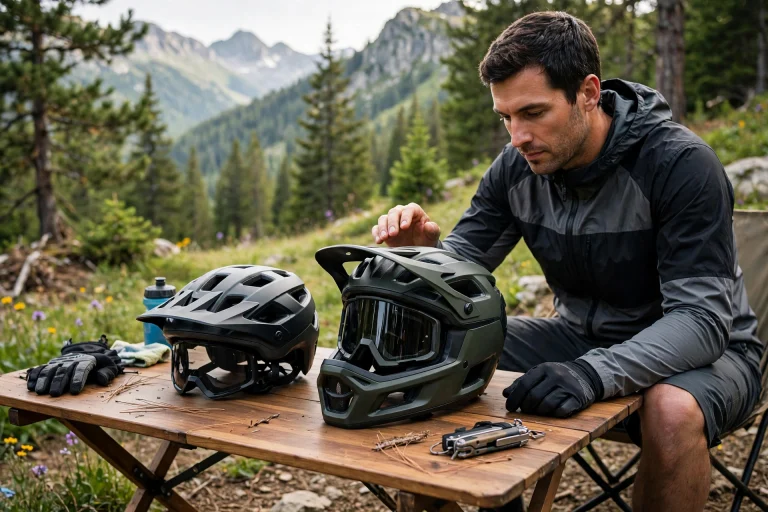
To clean mountain bike helmet pads, pull them out, hand wash them in lukewarm water with a little mild soap, rinse until the water runs clear, and let them air dry completely before your next ride. Never machine wash, never use hot water or harsh detergents, and never wring the pads out like a towel.
MTB pads work harder than almost any other helmet padding — they soak up sweat, salt, sunscreen, and trail dust on every ride. A regular gentle wash keeps them fresh, keeps the fit snug, and stops that permanent helmet funk from setting in.
How Do You Remove Mountain Bike Helmet Pads Safely?
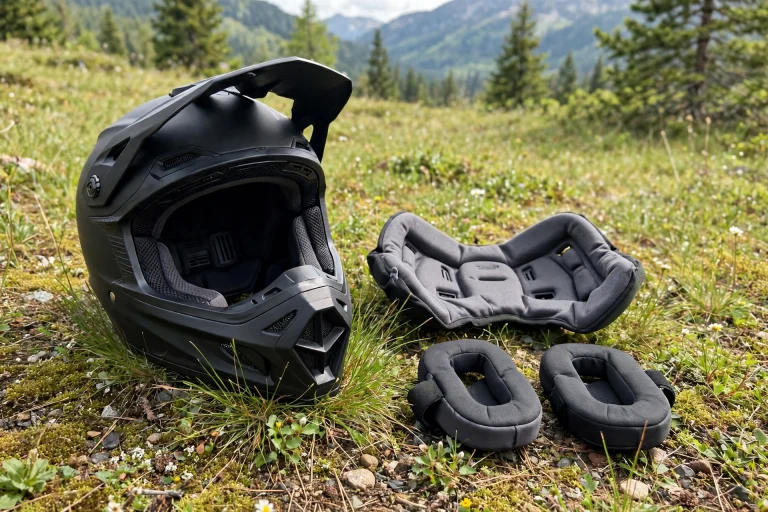
Most mountain bike helmet pads attach with hook-and-loop tabs or small snaps, and they are designed to come out for washing. Work slowly: peel each pad away from its fastener rather than yanking, so you do not tear the backing or pull the mounting tabs off the EPS liner inside the shell.
Before you remove anything, take a quick phone photo of the pad layout. Pads come in different shapes for the crown, cheeks, and brow, and the photo saves real frustration when you reassemble a dry helmet the next morning. If your helmet has a fit system dial or a removable brow pad over the front vents, note how those sit too.
While the pads are out, look at them honestly. Padding that is permanently flattened, cracked, or peeling is near the end of its life — washing will not restore it, and we will cover replacement below.
What Is the Best Way to Wash the Pads by Hand?
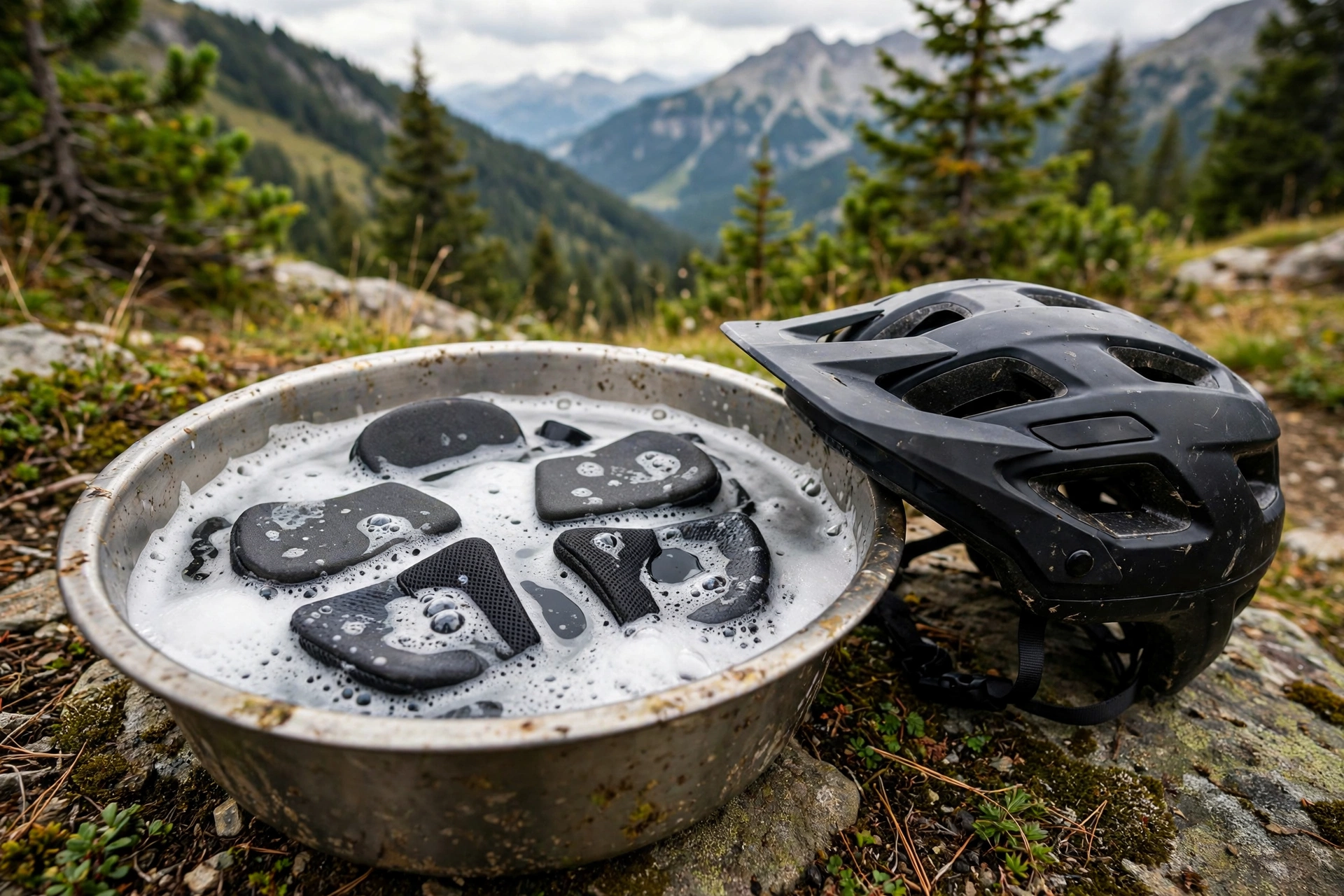
Fill a basin or sink with lukewarm water and a small amount of mild soap — a gentle laundry liquid, castile soap, or even baby shampoo all work. Submerge the pads and let them soak for 10 to 15 minutes so the soap can loosen the sweat and salt built up in the foam.
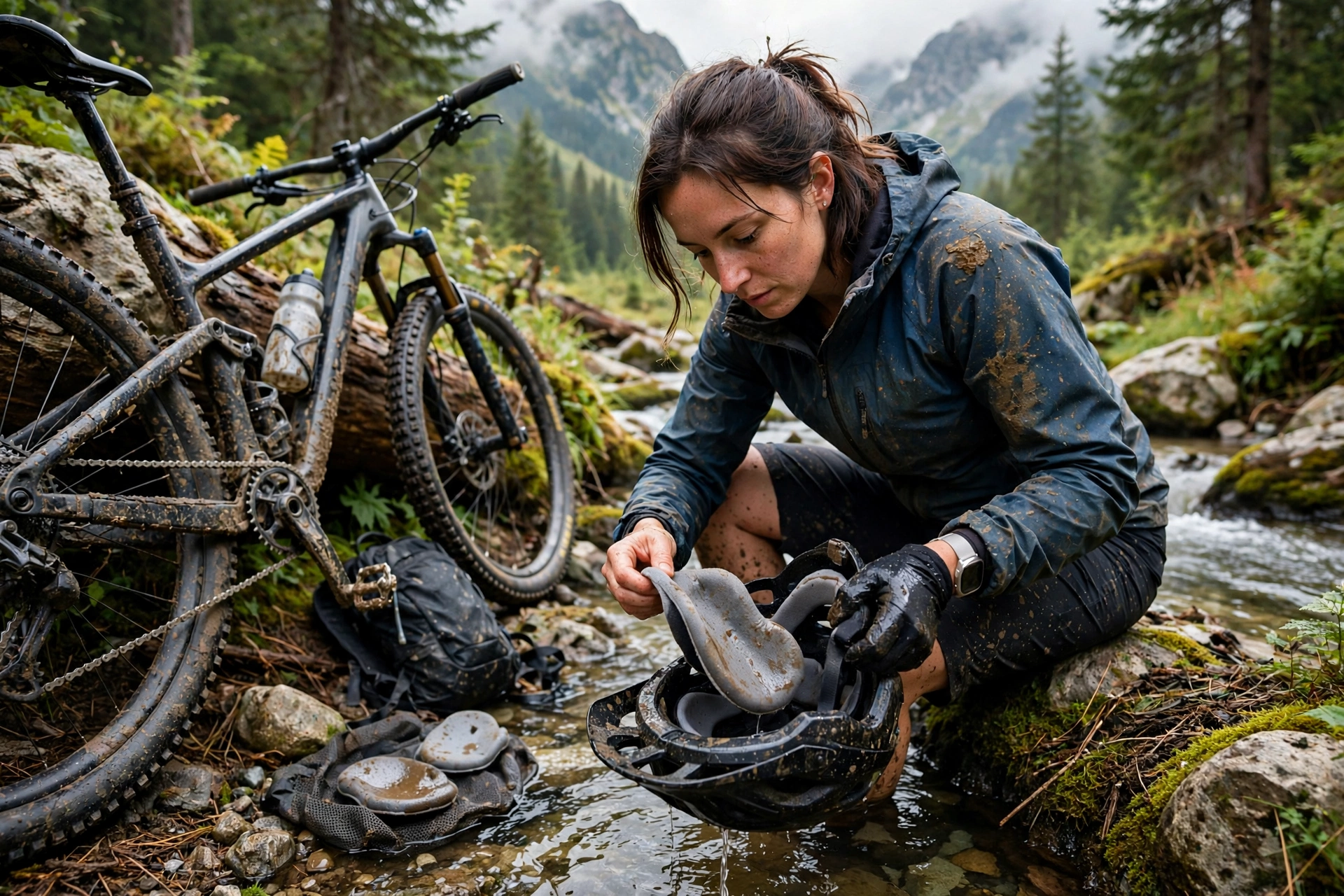
Then work the pads with your hands: press and squeeze them repeatedly under the water, letting the foam compress and release so dirty water is pushed out and clean water drawn in. Repeat with fresh water until what you squeeze out runs clear. Rinse thoroughly the same way, because soap left in the foam attracts dirt and can irritate skin.
If the pads smell strongly before you even start, give them a longer soak — up to 30 minutes — so the soap has time to work, and change the water once if it turns cloudy. Pads that have survived a summer of riding hold a surprising amount of grime.
Do not wring, twist, or scrub the pads with a brush — the foam tears and the fabric delaminates. Press the water out gently between your palms or inside a folded towel.
How Do You Clean Sweat and Salt Out of the Straps?
Straps stay attached to the helmet, so clean them in place. Hold the helmet over a sink and sponge the straps with the same lukewarm soapy water, working along the webbing with a soft cloth or an old soft toothbrush to shift the white salt crust that builds up around the sliders and buckle.
Salt is more than a cosmetic problem: it stiffens the webbing, corrodes buckle hardware over time, and chafes your jaw on long rides. Rinse the straps by sponging with plain water until no soap remains, then blot dry. Avoid soaking the whole helmet shell to get at the straps — a targeted sponge clean is enough, and it keeps water out of the shell’s vents and glue lines.
How Should You Clean the MIPS Liner and the Shell?
If your helmet has a low-friction rotational liner, wipe it with a damp cloth only — no soaking, no solvents, and no pulling it away from the shell. That thin layer has to stay free-moving to do its job, so treat it gently; if you are unsure what you are looking at, our guide to what MIPS is for helmets explains how the liner works and why it needs careful handling.
For the shell itself, a soft cloth with mild soapy water removes mud and trail grime. Skip alcohol-based cleaners, bug sprays, sunscreen overspray, and petroleum products, all of which can damage EPS foam and shell finishes. Rinse with a damp cloth and let everything air dry with the pads still out.
How Do You Dry Pads in Time for the Next Ride?
Air dry pads flat or draped over a rack in a ventilated spot, out of direct sun and away from radiators, hair dryers, and tumble dryers. Heat distorts foam and melts adhesives. In normal room conditions, pads washed in the evening are dry by morning; a small fan pointed at them speeds things up safely.
If you ride daily, consider a second set of pads. Rotating two sets means one can dry fully — genuinely fully, not just surface dry — while you ride the other, which slows odor buildup and foam breakdown. Most manufacturers sell replacement pad sets for current models, and a spare set is far cheaper than a new helmet.
When Should You Replace Pads Instead of Washing Them?
Replace the pads when they stay compressed and flat after washing, when the foam crumbles or the fabric separates, or when the smell returns within a ride or two despite a thorough wash — that odor lives deep in broken-down foam and will not leave. Loose fit is the other signal: if your helmet has started to wobble because the pads no longer fill it out, fresh pads restore the fit.
Wash frequency depends on use: every few rides in summer heat, every couple of weeks for moderate riding, and always after a muddy or exceptionally sweaty day. And remember the limit of pad care — if the helmet itself has taken a crash impact, no amount of cleaning matters. Replace the helmet.
Frequently Asked Questions
Can I put helmet pads in the washing machine?
Hand washing is the safe default. Some manufacturers allow a gentle machine cycle in a laundry bag, but many do not — check your helmet’s manual first. Never tumble dry pads; heat damages the foam and adhesive.
How often should I wash mountain bike helmet pads?
Every three to five rides in hot weather, or whenever they smell or feel stiff with salt. Frequent riders benefit from a spare pad set so a washed set can dry completely between rides.
Can I use antibacterial spray instead of washing?
Sprays mask odor but do not remove the sweat, salt, and skin oils feeding it, and some formulas can damage foam. Use spray as a stopgap if you like, but real hand washing is what actually cleans the pads.

Olivia
Writer at Helmet Today, covering helmet reviews, fit and riding safety.