For downhill, bike park, enduro racing, and fast e-MTB riding, yes — a full face mountain bike helmet is worth it, because a large share of mountain bike crashes land riders on their face, jaw, and teeth. For gentle cross-country and trail riding, a good half-shell is usually enough, and the extra heat and weight of a full face may not be worth the trade-off.
It really comes down to where and how you ride. A full face helmet adds a chin bar that protects your jaw, teeth, and face in the kind of over-the-bars and face-first falls that mountain biking produces regularly. Modern versions are far lighter and better ventilated than the hot downhill helmets of the past. This guide weighs the protection case against the real downsides so you can decide by rider type.
Why Do So Many Mountain Bike Crashes Injure the Face?
Mountain bike crashes are different from road crashes. Riders get thrown forward over the bars on steep descents, wash out on loose corners, and clip trees at close range. Facial injuries — broken teeth, split lips, fractured jaws, and broken cheekbones — are among the most common serious injuries in downhill and enduro riding, and dental work is painful and expensive even when nothing else is broken.
A half-shell helmet does nothing for your face. It protects the top, back, and sides of your skull, and that is all. The chin bar on a full face helmet is specifically designed to absorb and deflect impacts to the lower face, and in a face-first landing it can be the difference between dusting yourself off and a trip to the emergency dentist.
Downhill-specific full face helmets are certified to ASTM F1952, a standard written for downhill mountain biking that includes a chin bar impact test — something regular bicycle helmet certification does not test at all. If facial protection is your reason for buying, that standard is worth looking for, because it means the chin bar has actually been tested rather than just styled to look protective.
Which Riding Styles Justify a Full Face Helmet?
Downhill and bike park riding is the clearest case. You are riding chairlift-served terrain, jump lines, and rock gardens at speed, often on a rental or unfamiliar trail, and falls are a normal part of progression. Almost every bike park rider wears a full face for good reason, and many parks recommend or require one on their most advanced trails.
Enduro racing is the next clear case. The timed stages are effectively downhill races, speeds are high, and you are riding at race pace on stages you may have only seen once. Most enduro racers now wear a full face for stages, and many events require one. E-MTB riding is a newer but growing case: the added weight and assistance mean higher average speeds on climbs and descents alike, and more momentum in a crash, which pushes many e-MTB riders toward full face protection on technical terrain.
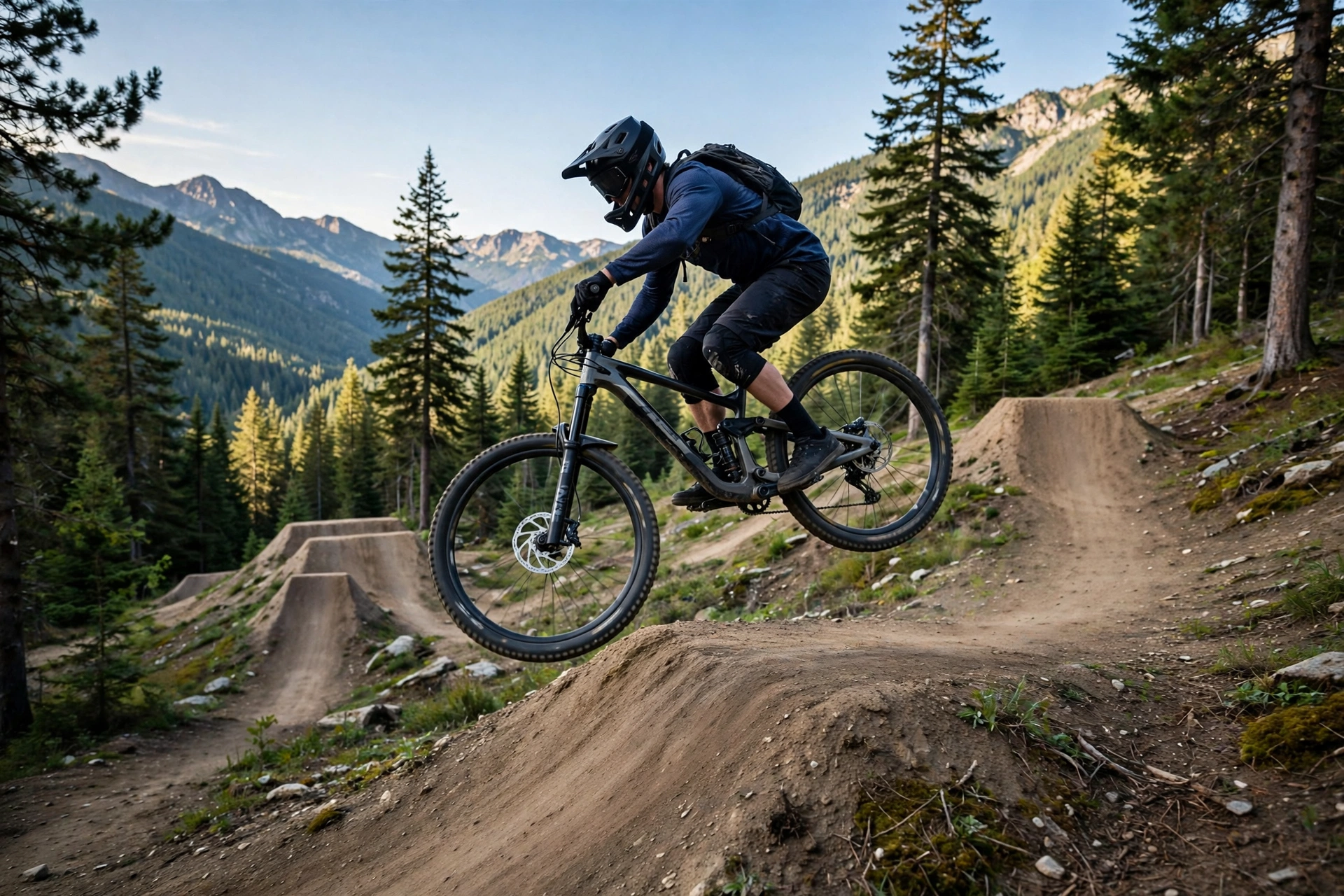
Aggressive trail riders are the borderline group. If your local trails involve steep chutes, drops, and jumps, and you ride them hard, a lightweight full face makes genuine sense. If your trail riding is mostly flow and climbing with the occasional rough descent, it is a judgment call — and the convertible option below may suit you best.
Are Modern Full Face Helmets Still Hot and Heavy?
Not like they used to be. Modern trail and enduro full face helmets use large vent ports, channeled airflow, and lightweight shells, and many weigh only a little more than a sturdy half-shell. For descending, ventilation is genuinely good, because air is forced through the vents at speed. The heat problem mainly shows up on slow climbs, where there is little airflow and you are working hard.
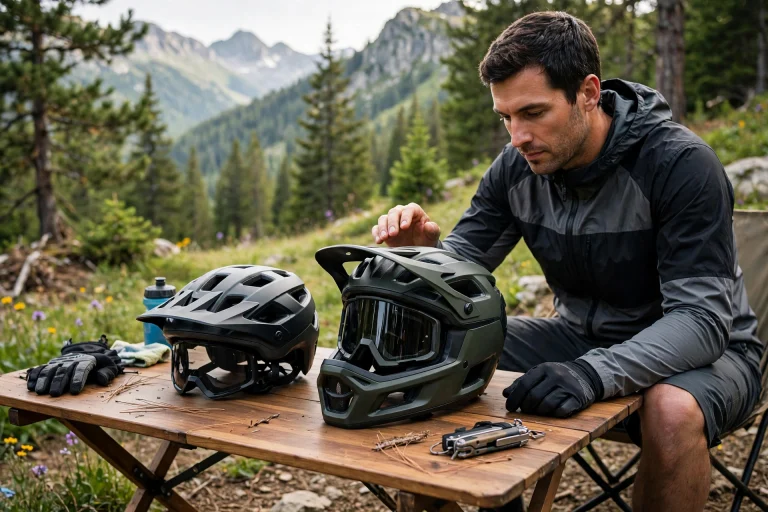
Convertible helmets are the popular answer to that problem. These have a removable chin bar: ride the climb as a well-ventilated half-shell, then click the chin bar on in seconds for the descent. The better convertibles are certified for downhill use with the chin bar fitted, which makes them a true two-in-one rather than a compromise. They cost more than a basic half-shell in general terms, but far less than buying two separate helmets.
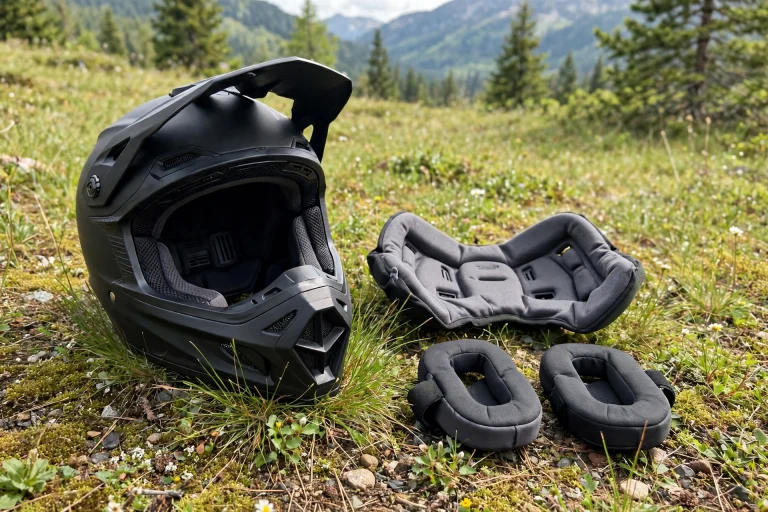
Fit technology has improved as well. Many full face helmets now include a low-friction liner for angled impacts — if you are comparing models, understanding what MIPS is for helmets helps you judge which rotational protection systems are offered and why they matter in the twisting falls common off-road.
What Are the Real Trade-Offs of a Full Face?
Heat is the biggest one. Even the best-ventilated full face is warmer than a half-shell on a slow, steep climb in summer, and that is a genuine reason cross-country riders skip them. Weight is the second: a full face is heavier, and on long pedaling days that extra weight on your neck adds up, even with today’s light designs.
There are practical annoyances too. Drinking and eating on the move is harder, talking at the trailhead is muffled, hearing is slightly reduced, and you cannot easily wipe sweat or scratch your nose. Cost is the final trade-off — a quality certified full face generally costs more than a comparable half-shell, and a convertible costs more again. None of these are deal-breakers for the right rider, but they explain why full faces are not the default for every mountain biker.
So, Is a Full Face Helmet Worth It for You?
If you ride downhill, bike parks, enduro races, or aggressive e-MTB terrain, yes — the facial injury risk at those speeds and on that terrain makes the chin bar worthwhile, and the modern weight and ventilation penalty is small. Choose a helmet certified to the downhill standard if your riding is lift-served or race-paced.
If you are a trail rider who occasionally rides bigger terrain, a convertible with a removable chin bar is the sweet spot: one helmet that covers both your mellow evening loops and your bike park weekends. And if your riding is cross-country, gravel-adjacent, or mellow trail with lots of climbing, a quality half-shell with good rear coverage remains the sensible, comfortable choice — spend the difference on fit and condition, and replace it after any crash.
Frequently Asked Questions
Can you wear a full face helmet for trail riding?
Yes, plenty of riders do, especially on steep or technical trails. A lightweight trail-focused full face or a convertible with the chin bar fitted works well. The main downside is heat on long, slow climbs.
Are convertible helmets as safe as fixed full face helmets?
The good ones are very close. Look for a convertible that is certified to the downhill standard (ASTM F1952) with the chin bar attached. Cheaper convertibles without that certification offer less certain chin bar protection.
Do full face helmets protect your teeth?
They greatly reduce the risk. The chin bar absorbs and deflects impacts that would otherwise hit your jaw and teeth directly. No helmet guarantees you will never injure your face, but a certified chin bar is the best protection available on a bike.

Olivia
Writer at Helmet Today, covering helmet reviews, fit and riding safety.