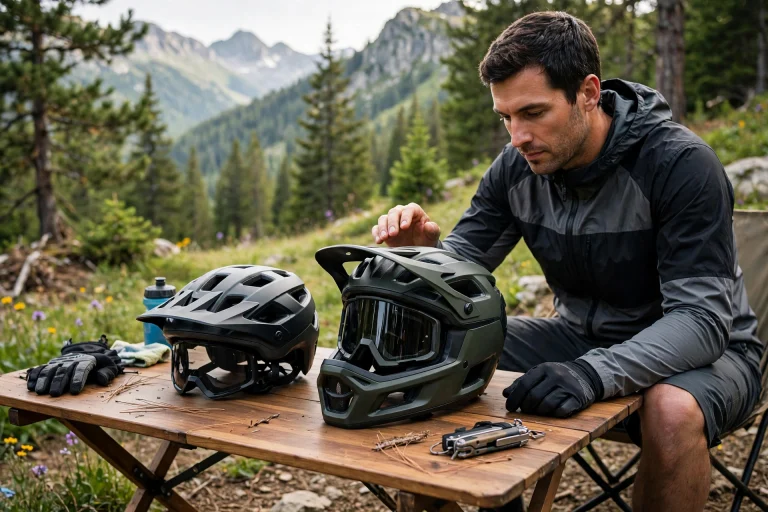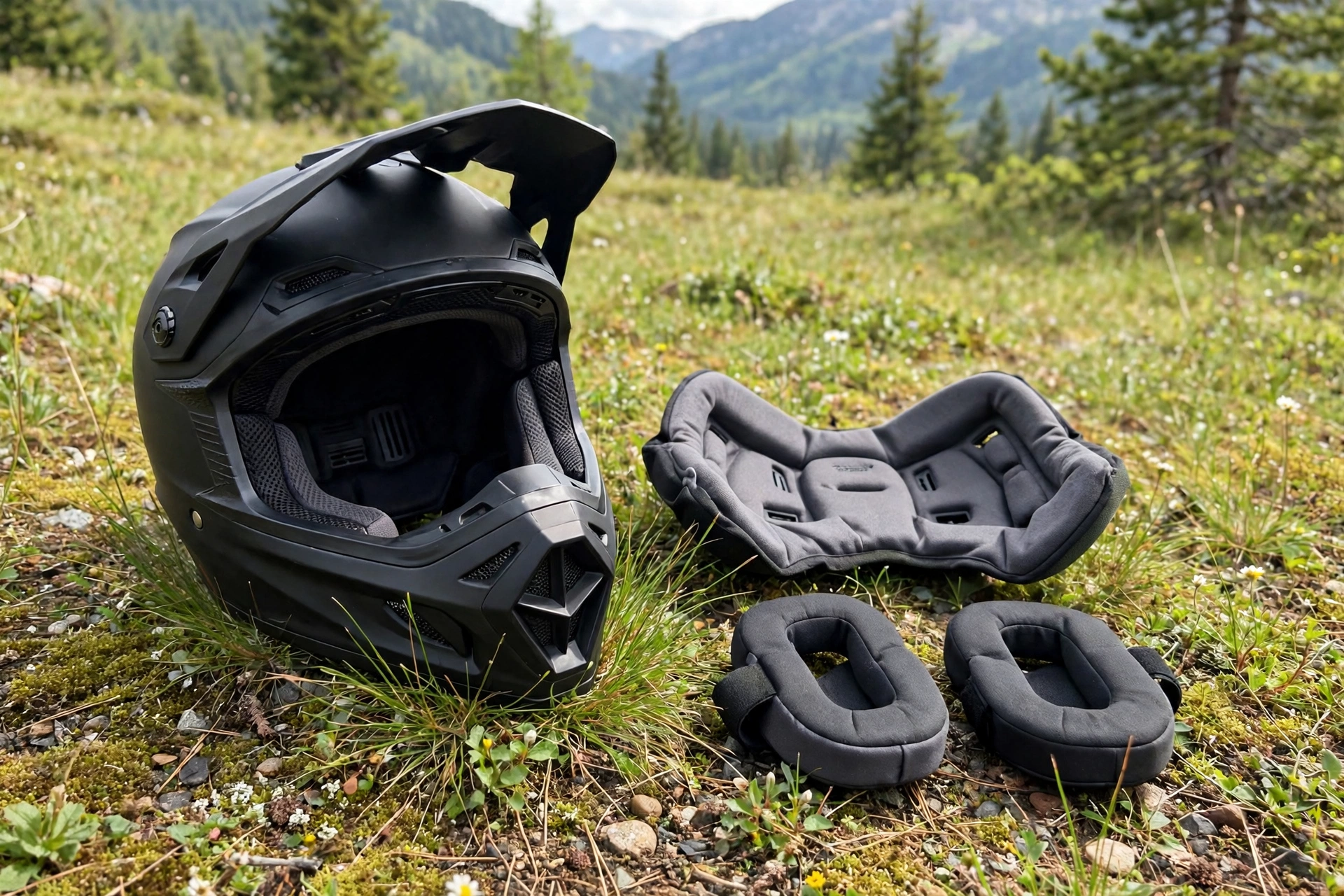
To clean a full face helmet liner, remove the cheek pads and crown liner, hand wash them in lukewarm water with a small amount of mild soap or baby shampoo, rinse thoroughly, and let everything air dry completely before refitting. Never machine wash or tumble dry the pads, and never use bleach, solvents, or harsh detergents, which can damage the foam and fabrics.
Full face helmets — whether you ride downhill, enduro, or a motorcycle — trap far more sweat and grime than an open trail helmet. The enclosed shell holds moisture in, the cheek pads soak up sweat on every ride, and a liner that never gets washed quickly starts to smell and can even grow mildew. The good news is that almost every modern full face helmet is designed for the liner to come out. Here is the full routine.
How Do You Remove the Cheek Pads and Crown Liner?
Start by checking how your liner attaches. On most full face helmets, the cheek pads are held by snaps, press studs, or a plastic tab that slides into the shell, and the crown liner is held by snaps or hook-and-loop tabs. Work slowly: support the pad with one hand and pull each snap straight out with the other rather than yanking at an angle, which can tear the backing.
Take a phone photo of the liner layout before you start, especially the route the chin strap takes through the cheek pads. It makes reassembly much easier. If your helmet has an emergency release system on the cheek pads — common on motorcycle helmets — use the pull tabs as designed and note how they sit before removing them fully.
While the liner is out, inspect it. Compressed, cracked, or crumbling comfort foam means the pads are worn out rather than dirty, and washing will not restore them. Many manufacturers sell replacement cheek pads and liners, which is a much cheaper refresh than a new helmet. Also inspect the EPS impact foam inside the shell: it should never be scrubbed or soaked, just wiped as described below.
What Is the Best Way to Hand Wash Helmet Pads?
Fill a sink or basin with lukewarm water and a small amount of mild soap — baby shampoo and dedicated helmet liner cleaners work well because they rinse clean and are gentle on foam. Submerge the cheek pads and crown liner and gently squeeze them repeatedly. You will likely see the water turn brown on the first wash of a well-used liner; that is normal.
Keep squeezing and refreshing the water until it runs mostly clear. For stubborn sweat odor, let the pads soak for 15 to 20 minutes before washing. Rinse under clean lukewarm water until no soap remains, because leftover detergent makes pads feel stiff and can irritate skin. Press the water out gently with a towel — do not wring the pads, which distorts the foam.
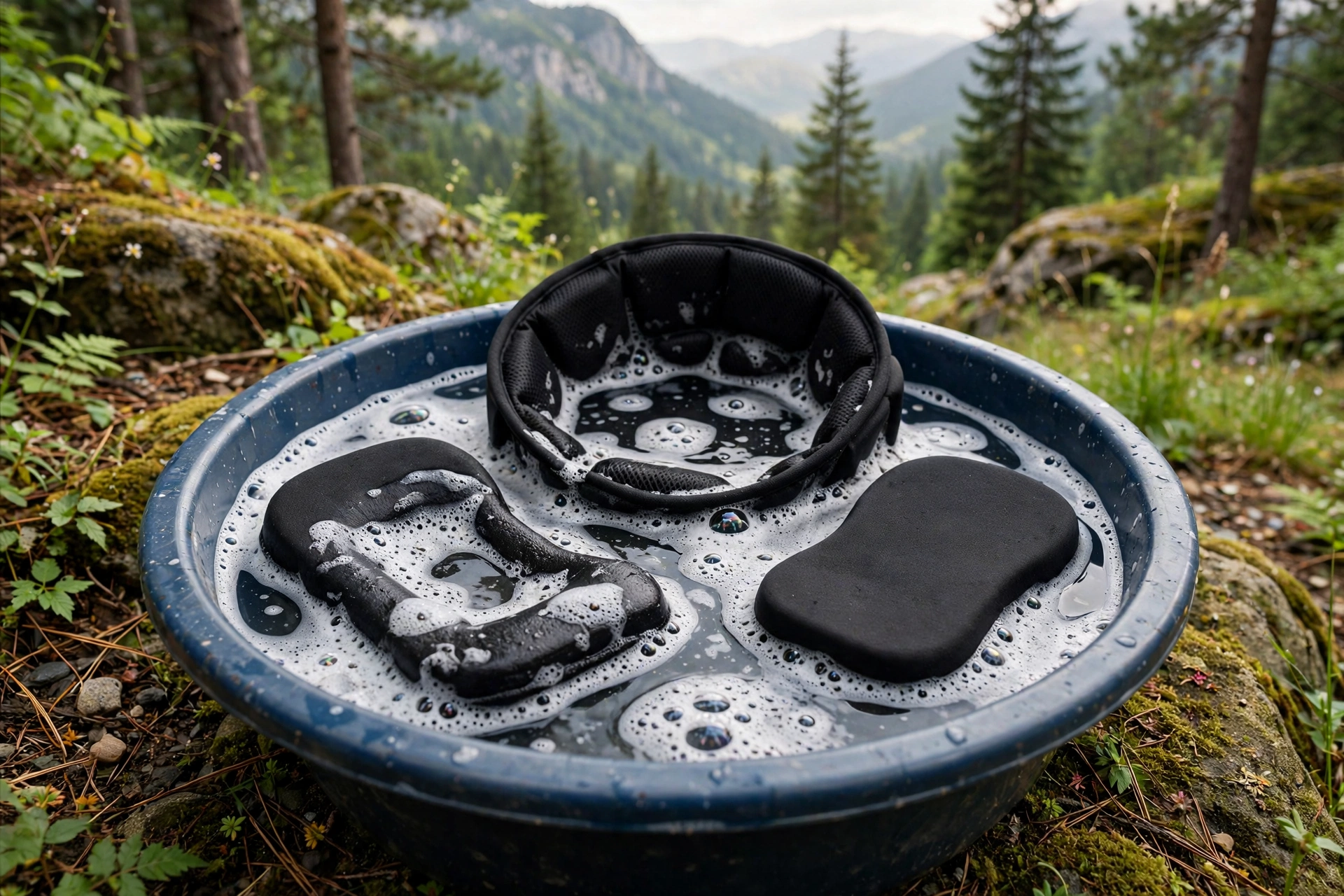
Never put helmet pads in a washing machine or dryer, even on gentle cycles. Agitation breaks down the foam backing, and dryer heat can warp pads and melt adhesives. Hand washing takes ten minutes and is all they ever need.
How Should You Clean the Chin Bar, Vents and Shell Interior?
The chin bar area collects mud spray, drink splashes, and breath moisture. Wipe it with a soft cloth dampened with water and a drop of mild soap, including around the mouth vent and its mesh, where grit builds up. Use a soft brush — an old toothbrush is ideal — to clear dried mud from vent sliders and the breath guard, working gently so you do not push dirt deeper in.
For the EPS liner inside the shell, use only a cloth lightly dampened with plain water. EPS is the part that protects you in a crash, and solvents, strong cleaners, and even heavy soaking can weaken it. If the interior smells, a wipe-down plus a thorough air-out usually handles it. The outer shell can be washed with the same mild soap solution as the pads; avoid petroleum-based cleaners and anything abrasive, which dull finishes and can attack shell materials.
Some helmets use a low-friction rotational liner inside the crown that must be refitted in the correct orientation, so note its position when removing the comfort liner — what MIPS is for helmets explains how that layer works and why it should sit flat and unobstructed to do its job.
How Do You Dry a Full Face Helmet Liner Properly?
Drying is where mildew is won or lost. An enclosed full face shell traps moisture, so pads put back even slightly damp can smell worse within days. Lay the pads on a clean towel in a ventilated room, away from direct heat and strong sunlight. A small fan pointed at them speeds things up safely. Cheek pads typically need 12 to 24 hours to dry fully because the foam is thick.
Prop the helmet shell with the opening facing up or sideways so air circulates inside, and leave the vents open. Never use a hair dryer on hot settings, a radiator, or a heated dryer — heat can warp EPS foam and pad materials. Before reassembling, press each pad firmly: if it feels cool and damp in the middle, give it more time.
Between washes, you can slow odor down by airing the helmet out after every ride instead of sealing it in a gear bag, and by wearing a thin skull cap or balaclava that you wash far more often than the liner. A light sprinkle of baking soda on dry pads, left for a few hours and shaken out, helps with stubborn smells between full washes.
How Often Should Park and Downhill Riders Clean the Liner?
Gravity riders sweat heavily and ride in mud, so a full liner wash every few weeks of regular riding is reasonable, with a quick shell and chin bar wipe after muddy days. If you ride daily or in hot weather, washing the pads every one to two weeks keeps odor from becoming permanent — once smell sets deep into foam, even thorough washing may not fully remove it.
Motorcycle riders using a full face helmet daily should treat the cheek pads the same way, since they absorb the most sweat. Whenever you reassemble, do a final check: every snap seated, straps routed exactly as photographed, emergency tabs in place, and the helmet fitting snugly again. A liner that suddenly feels loose after washing usually has a pad seated incorrectly — or pads that are worn out and ready for replacement.
Frequently Asked Questions
Can you put a helmet liner in the washing machine?
No. Machine washing and tumble drying break down pad foam, warp shapes, and can melt adhesives. Hand washing in lukewarm water with mild soap is gentle, quick, and all a liner needs.
What soap is safe for cleaning helmet pads?
Mild soap, baby shampoo, or a dedicated helmet liner cleaner are all safe choices. Avoid bleach, strong detergents, and solvent-based cleaners, which can damage foam, fabrics, and even the EPS liner inside the shell.
How long does a full face helmet liner take to dry?
Usually 12 to 24 hours of air drying in a ventilated room. Thick cheek pads take the longest. Never reassemble while pads feel damp in the middle, or mildew and odor will develop inside the enclosed shell.

Olivia
Writer at Helmet Today, covering helmet reviews, fit and riding safety.