To choose a mountain bike helmet, start with your riding style — cross-country, trail, enduro, or downhill — then match the coverage to that riding, make sure it carries proper bicycle helmet certification, and pick the size and shape that fits your head snugly and evenly. After that, compare ventilation, visor and goggle compatibility, and rotational protection within your budget.
Riders often shop backwards, picking the helmet that looks best or is on sale and then discovering it is wrong for their trails. A cross-country helmet on a downhill track lacks coverage, and a downhill helmet on a cross-country ride is miserable. Work through the steps below in order and you will end up with a helmet that genuinely suits how you ride.
Which Helmet Type Matches Your Riding Style?
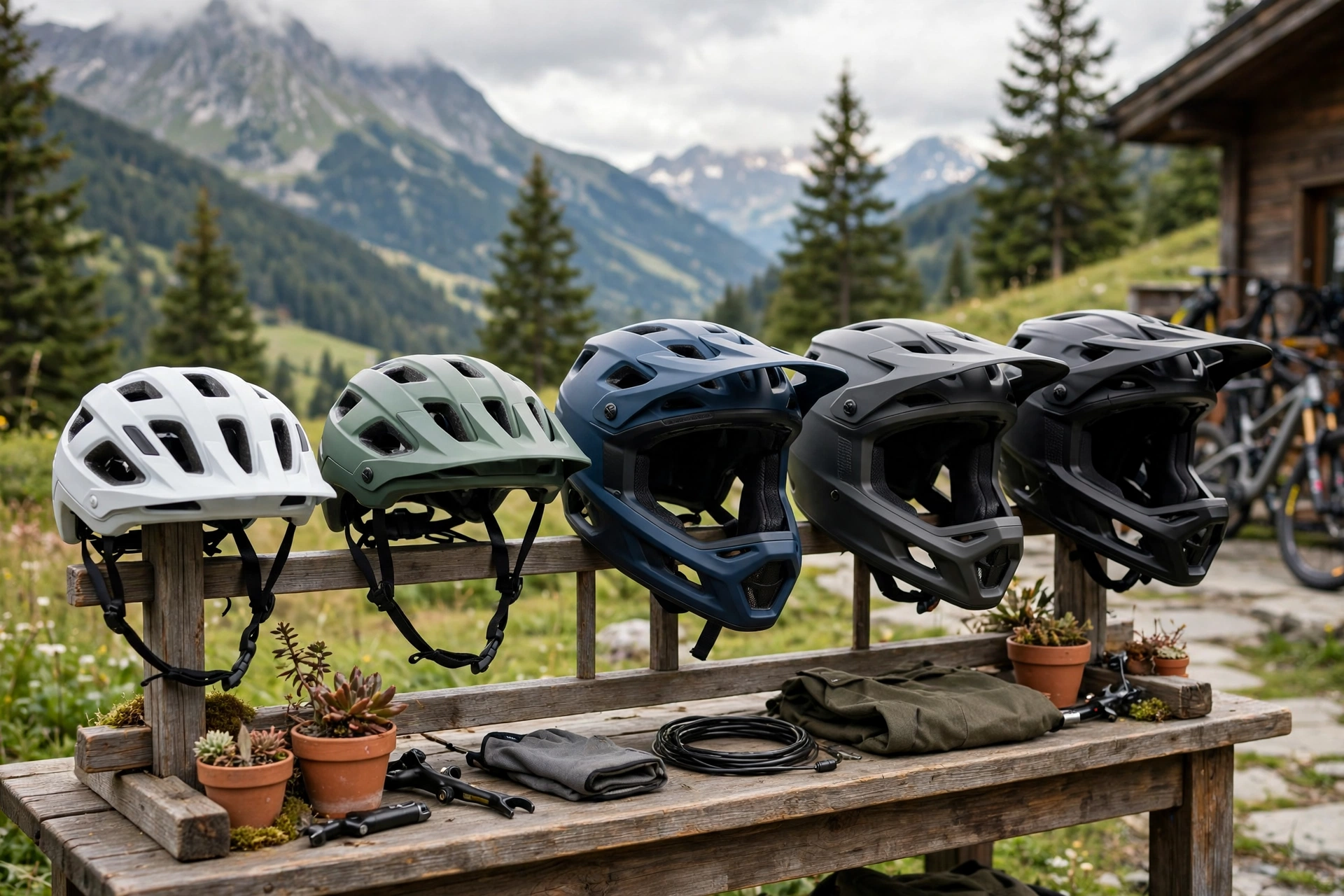
Cross-country helmets are light, heavily vented, and have the least coverage. They suit riders who climb as much as they descend and ride smoother trails at moderate speeds. If most of your riding is fitness-focused XC, this is the right category, and comfort on long climbs matters more than maximum coverage.
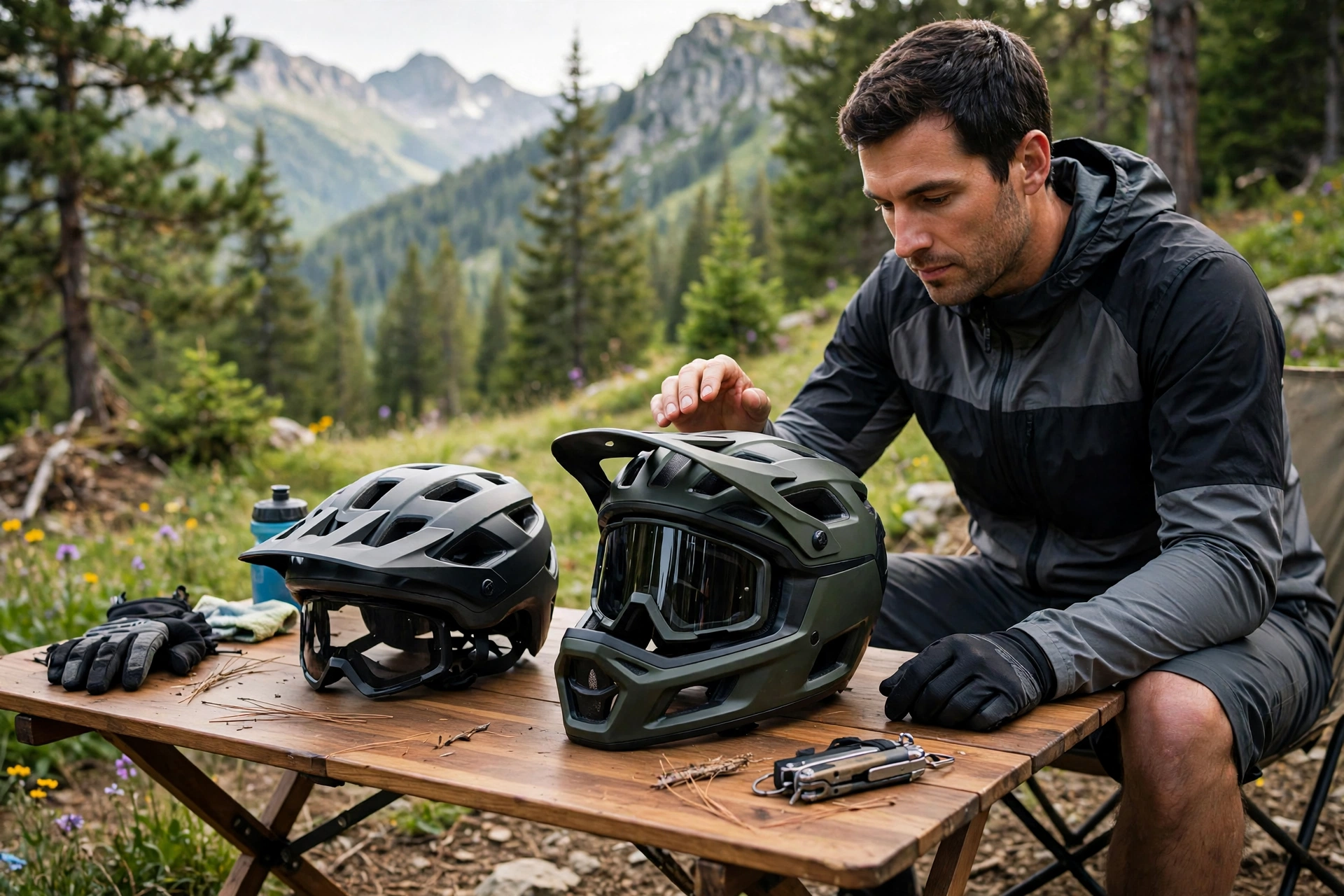
Trail helmets are the all-rounders and the right choice for most mountain bikers. They add deeper coverage at the back and sides, a proper visor, and a retention dial, while staying light and ventilated enough for all-day rides. Enduro helmets push coverage further still and are often certified to handle bigger impacts, sometimes with a removable chin bar for full face protection on stages. Downhill helmets are true full face designs built and certified for lift-served, race-pace riding, with minimal concern for pedaling comfort.
Be honest about where you actually ride, not where you hope to ride. If 90 percent of your miles are trail miles, buy the trail helmet and rent a full face for the one bike park weekend a year. Your day-to-day comfort and willingness to wear the helmet matter more than edge-case coverage.
What Certification and Safety Features Should You Look For?
Every mountain bike helmet sold in the US must meet the CPSC bicycle helmet standard — that is the baseline, and you should never ride in a helmet without proper certification. Beyond the baseline, look at coverage and impact management. Extended coverage at the back and temples protects areas commonly struck in off-road falls.
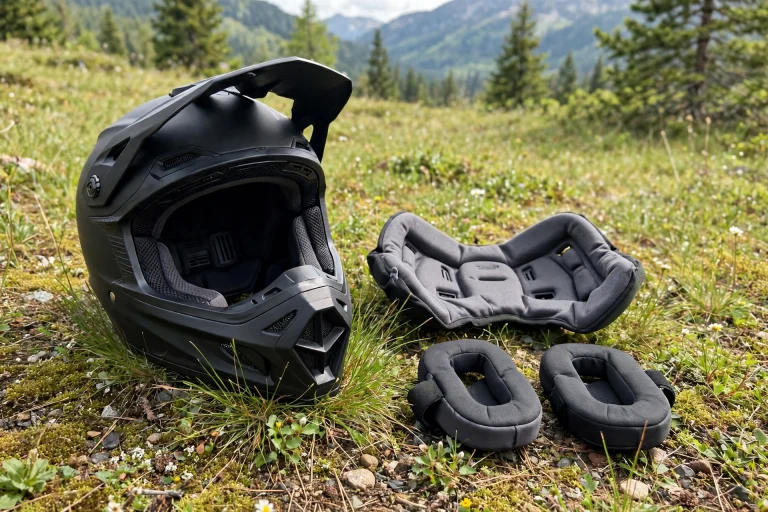
Rotational protection is the other key feature. In most real crashes the head hits the ground at an angle, which twists the head and strains the brain. Many modern helmets add a low-friction liner or similar system designed to reduce that rotational motion, and it is worth prioritizing if your budget allows. Downhill riders should additionally look for the ASTM F1952 downhill standard, which includes chin bar testing for full face models.
One clarification that confuses new riders: a mountain bike helmet is not a motorcycle helmet and is never a substitute for one. The designs, standards, and impact types are completely different, as explained in our comparison of a bike helmet vs motorcycle helmet. Buy the helmet certified for the vehicle you are actually riding.
How Should a Mountain Bike Helmet Fit?
Fit comes before features. Measure your head circumference about an inch above your eyebrows and match it to the manufacturer’s size chart, then try the helmet on. It should feel snug and even all the way around with no painful pressure points, sit level and low on your forehead, and stay in place when you shake your head with the retention dial tightened.
Head shape matters as much as size. Some brands run rounder, others more oval, and a helmet that fits the listed size can still be wrong for your head. If a helmet pinches front and back but feels loose at the sides, try a different brand rather than a different size. The rear retention dial should fine-tune the fit, not rescue a shell that is fundamentally the wrong size — if you have to crank the dial to its limit, go down a size.
Check the straps too: the side sliders should sit just below your ears in a V shape, and the chin strap should be snug with about two fingers of room. If you wear glasses or goggles, try the helmet with them before buying, as described next.
Ventilation or Coverage: Which Trade-Off Is Right for You?
More coverage generally means fewer and smaller vents, so there is a real trade-off between protection and cooling. Hot-climate riders and big climbers should weight ventilation heavily within their category — a helmet you overheat in is a helmet you will be tempted to unclip on climbs, which is when plenty of crashes happen. Look for internal channeling that pulls air over the head, not just a high vent count on paper.
Riders in cooler climates, or those whose riding is mostly descending, can happily trade some airflow for deeper coverage. E-MTB riders should lean toward coverage: the extra assistance means higher speeds both up and down, longer descents, and more energy in a crash, and many manufacturers now offer e-bike-rated helmets with reinforced construction for exactly this reason.
What About Visors, Goggles and Budget?
Most trail and enduro helmets include a visor, and an adjustable one is worth having — you can angle it against low sun and lift it to park goggles on the front of the helmet during climbs. If you ride with goggles, check that the helmet’s rear shape holds a goggle strap securely and that the goggle frame meets the helmet without a large gap. Sunglasses riders should check that the arms slide in comfortably and that the helmet offers somewhere to stash them in vents during climbs.
On budget, think in tiers rather than fixed amounts: entry-level certified helmets protect to the same legal standard as expensive ones, and what extra money buys is lower weight, better ventilation, finer fit adjustment, and features like rotational liners and convertible chin bars. The smart order of priorities is fit first, then certification and coverage for your riding, then rotational protection, then comfort features. A mid-priced helmet that fits perfectly protects you better in the real world than a premium helmet that shifts on your head — and whatever you buy, replace it after any significant crash, even if the shell looks undamaged.
Frequently Asked Questions
What is the best mountain bike helmet for beginners?
A trail helmet is the best starting point for most beginners: it offers good rear and side coverage, a visor, and enough ventilation for climbing. Prioritize correct fit and CPSC certification over advanced features.
Do more expensive helmets protect better?
All certified helmets meet the same minimum impact standard. Extra cost mainly buys lower weight, better airflow, finer fit systems, and added technologies like rotational protection liners, which can offer real additional benefit in angled crashes.
Can you use a mountain bike helmet on an e-MTB?
Yes, a regular certified mountain bike helmet is legal and commonly used on e-MTBs. Because e-bikes travel faster and weigh more, many riders choose a helmet with extra coverage or an e-bike-specific rating for additional peace of mind.

Olivia
Writer at Helmet Today, covering helmet reviews, fit and riding safety.