There is no single US federal helmet law for children riding in bicycle child seats — it is a state-by-state patchwork. Many states require helmets for all young bicycle passengers under a set age, which covers child-seat passengers, while a smaller number of states add rules written specifically for child seats. Either way, the practical answer for parents is the same: put a certified helmet on every child-seat passenger, every ride.
This guide unpacks how the patchwork actually works — what the federal government does and does not regulate, how typical state laws are worded, which extra rules some states add for child seats, and what to do regardless of where you live.
Is There a Federal Law Covering Child Seat Passengers?
No. No federal law requires a child in a bicycle child seat to wear a helmet, and the federal government does not set bicycle helmet use laws for any age. Helmet use laws in the US are made by states, and sometimes by cities and counties.
What the federal level does handle is product safety. Every bicycle helmet sold in the US must meet the federal Consumer Product Safety Commission standard, including the smallest toddler helmets. Child bike seats are likewise covered by product safety standards and makers’ requirements. So the gear is federally regulated — whether your child must wear it is a state question.
That split confuses many parents, because a seat or helmet box may mention standards and certifications without saying anything about the law where you live. The certification tells you the product passed its tests; your state law tells you when it must be used.
How Do Most State Child Helmet Laws Work?
The common pattern is an age-based rule: any child under a certain age must wear a helmet when riding a bicycle or riding on one as a passenger. Because the wording includes passengers, a child sitting in a child seat behind you is covered without the law needing to mention child seats at all.
The ages vary widely. Depending on the state, the cutoff may fall anywhere from around age 12 to age 18, with the mid-teens being common. Some states also let cities and counties pass their own ordinances, and a handful of localities go further than their state — occasionally requiring helmets for riders and passengers of all ages.
You can see how your state compares in our guide to helmet laws by state. If your state has a child helmet law with passenger language, assume your child-seat passenger is covered — that is how these laws are written to work.
Why does the age range swing so widely between states? Because these laws were passed state by state, in different decades, with different ideas about where parental judgment ends and state rules begin. One state legislated around young children only, another extended protection through the teen years, and a few have revisited and raised their age limits over time. The practical effect for families who travel — a weekend trip across a state line with bikes on the rack — is that the rule can change mid-journey, and the strictest state on your route is the one your gear needs to satisfy.
Enforcement also follows the age-based pattern. Where a child passenger rides without a helmet, responsibility typically lands on the parent or guardian, or on the adult operating the bicycle, rather than on the child. Some states emphasize education and warnings for a first offense, while others go straight to fines, which vary by court and locality. Either way, the person who chose to skip the helmet is the adult, and the laws are written that way.
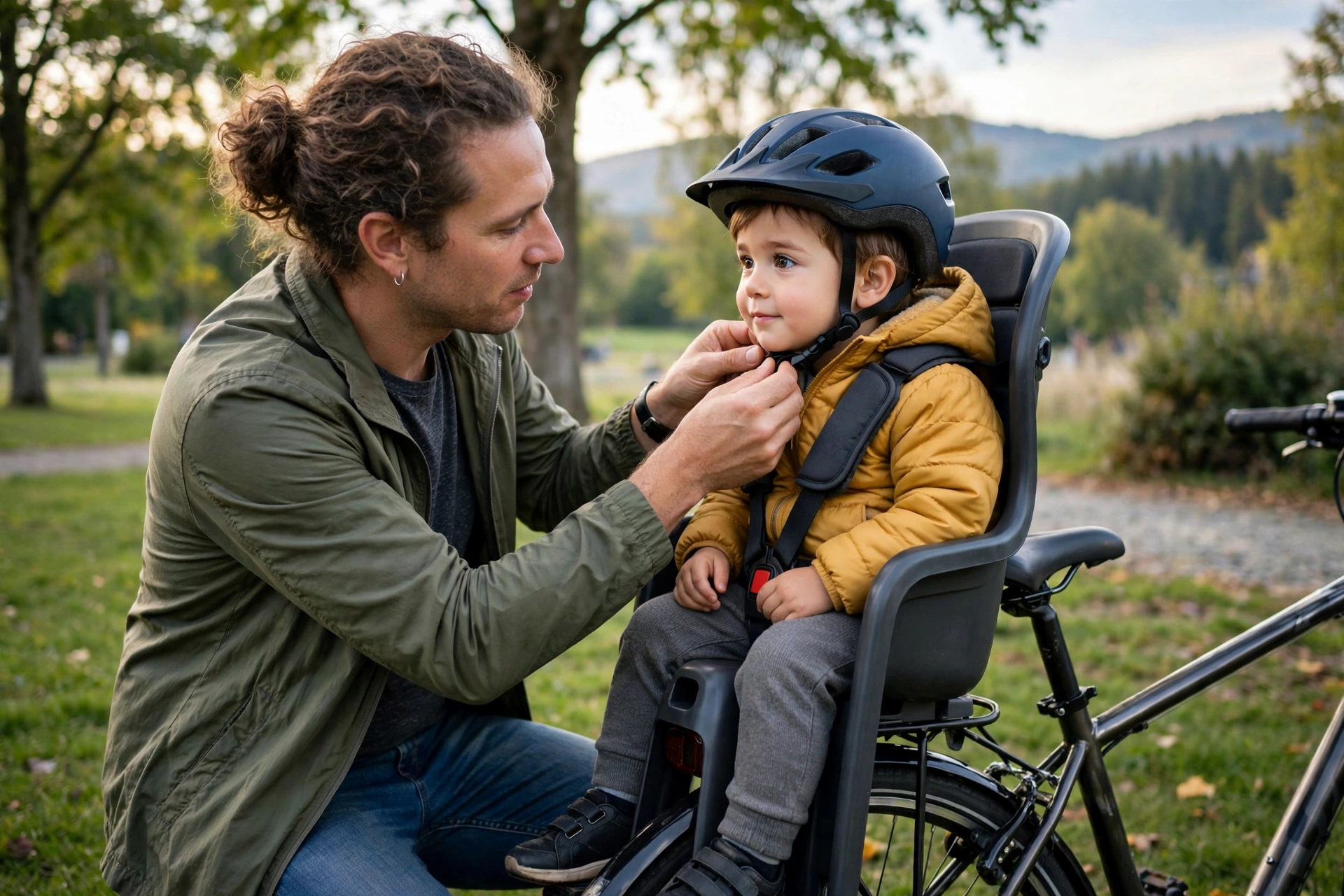
What Extra Child-Seat-Specific Rules Do Some States Add?
A smaller number of states go beyond the general passenger rule and regulate the child seat arrangement itself. The most common addition is a minimum age: some states say a child must be at least one year old to be carried in a bicycle child seat at all, which lines up with pediatric guidance about neck strength and helmet fit.
Other child-seat-specific provisions you will find in some states include requiring the seat to be properly secured to the bicycle, requiring the child to be strapped into the seat with its harness, and stating the helmet requirement directly in terms of child seat passengers rather than passengers generally. A few places restrict carrying children in makeshift ways — in arms, or in a backpack carrier — rather than in a proper seat.
Because these rules differ and are amended from time to time, treat any summary (including this one) as a starting point. Your state legislature or state highway safety office publishes the current text, and it takes only a few minutes to confirm before you start riding with your child.
What Should Parents Do, Whatever Their State’s Law Says?
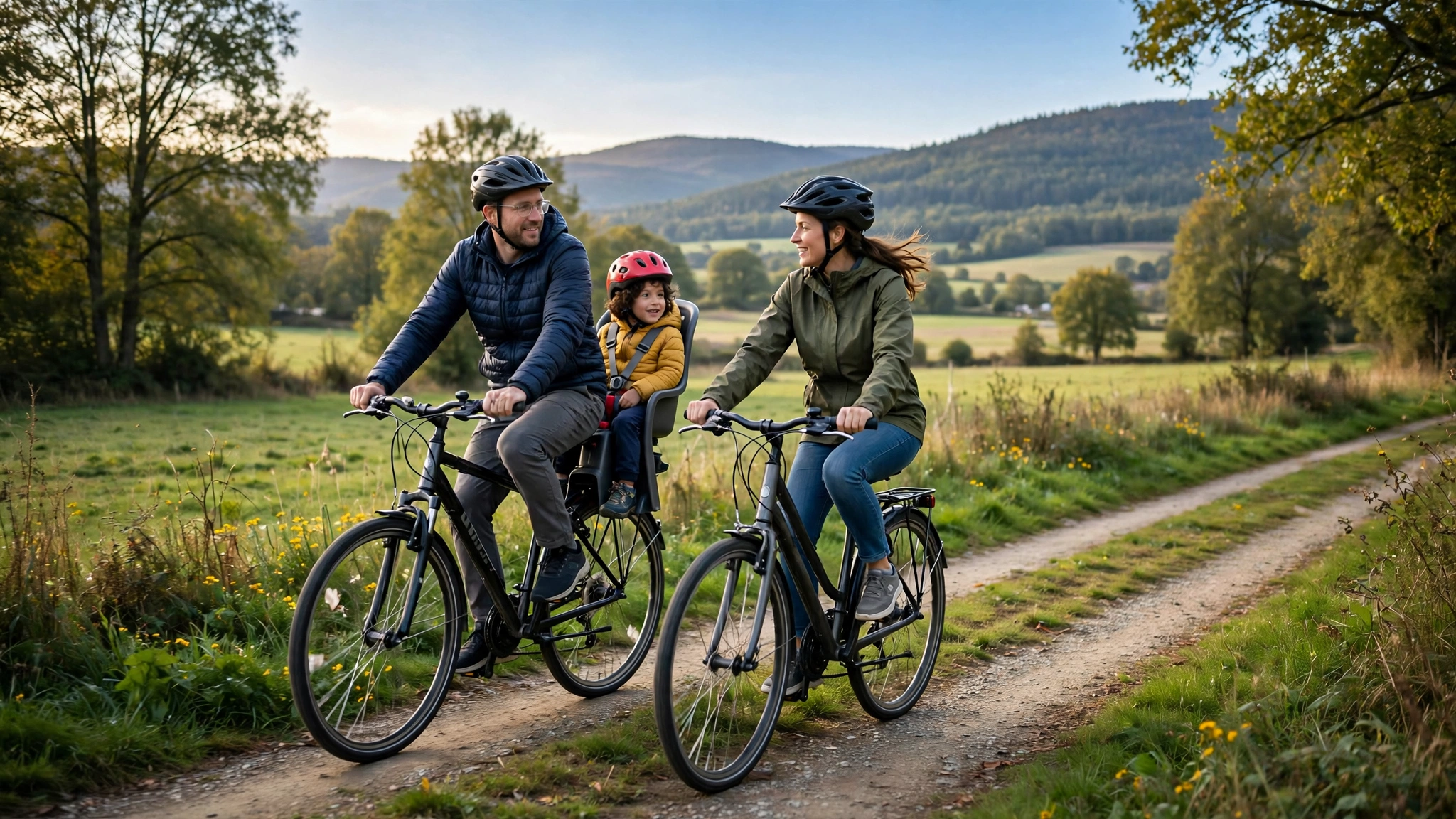
Keep it simple: helmet on every child-seat passenger, on every ride, from their first birthday. Wait until your child is at least 12 months old and can wear a properly fitted toddler helmet before using a child seat at all — no state law overrides that developmental reality, and some states write it into law.
Use a seat that meets current safety standards, is rated for your child’s weight, and is mounted exactly as its maker instructs. Check the harness and mounting hardware regularly, because seats work loose over time.
Finally, check two layers of law: your state’s child helmet law and any city or county ordinance where you ride. Then set the family rule at the strictest level you will ever meet, and the legal question disappears — because a helmeted child is legal everywhere.
One last habit makes all of this stick: wear your own helmet. Children copy the adults in front of them, and a parent who buckles a toddler’s helmet and then rides bareheaded is teaching two lessons at once. When the whole family gears up the same way, the helmet stops being a rule to argue about and becomes simply part of the bike — which is exactly where every one of these laws is trying to get you.
Frequently Asked Questions
What age do most state child passenger helmet laws use?
It varies widely — cutoffs fall anywhere from about age 12 to age 18 depending on the state, with the mid-teens common. Toddlers are covered under every version.
Do these laws apply on trails and in parks?
Generally yes on public roads and paths, though wording differs by state and private property is treated differently. The safe habit is helmet on everywhere.
Who gets fined if a child in a seat has no helmet?
Responsibility usually falls on the parent, guardian, or the adult riding the bicycle, depending on the state. Fines vary by court and locality.

Olivia
Writer at Helmet Today, covering helmet reviews, fit and riding safety.