

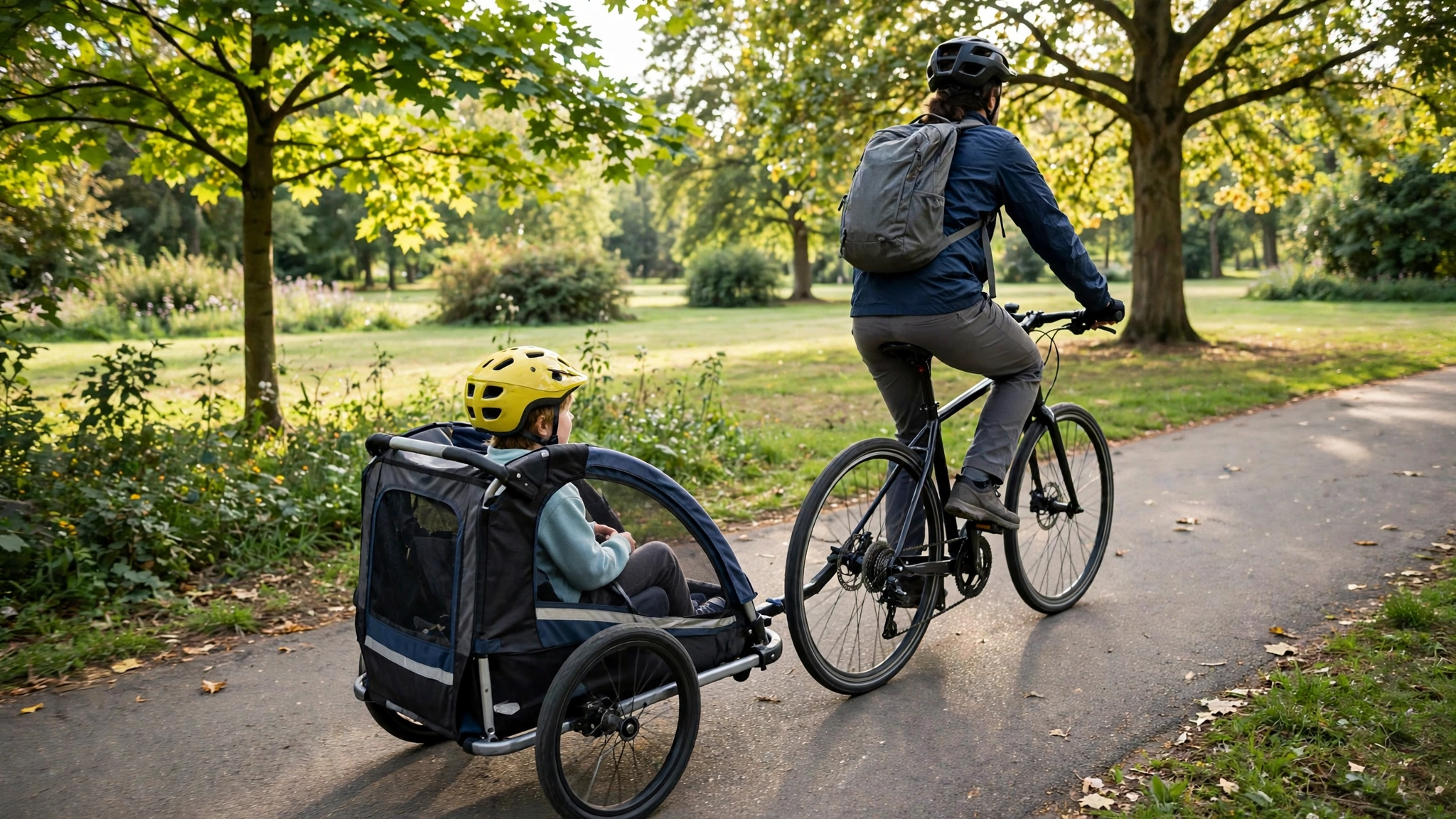
Yes — children riding in a bicycle trailer should wear a helmet, and in most states with child helmet laws, they legally must. State child bicycle helmet laws are generally written to cover passengers, not just the child doing the pedaling, and a child sitting in a trailer is a bicycle passenger. The trailer’s frame helps in a crash, but it is not a substitute for a helmet.
Parents often assume the trailer’s cage, harness, and low position make a helmet unnecessary. That assumption is understandable — and wrong. Here is what the law says, why the frame is not enough, the minimum age for trailer rides, and how to fit a helmet inside a trailer properly.
Do State Helmet Laws Actually Cover Kids in Bike Trailers?
In most states that have child bicycle helmet laws, yes. These laws typically require a helmet for any child under a set age who rides a bicycle or rides as a passenger on one, and many states’ definitions of a passenger expressly include children carried in trailers, sidecars, and child seats. The trailer is an accessory of the bicycle, and the child inside it is its passenger.
The details vary: the age cutoff differs from state to state, and a few states word their laws more narrowly than others. You can compare state approaches in our guide to helmet laws by state, and checking your own state’s exact wording is worthwhile because trailer passengers are one of the areas where wording matters.
Either way, the practical answer rarely changes. Even in a state whose law is ambiguous about trailers, every trailer maker’s instructions and every pediatric safety source point the same way: helmet on, harness fastened, every ride.
Do not overlook the local layer, either. Some cities and counties set their own bicycle helmet rules, and park districts can require helmets on their trail systems. A family that rides in several towns can easily cross between different rules on a single weekend outing. The easiest way to stay legal everywhere is to treat the strictest rule you will meet as your household rule — which, for a trailer passenger, simply means the helmet always goes on.
Doesn’t the Trailer’s Frame and Harness Protect Your Child’s Head?
Only partly. A trailer’s frame offers real protection in some rollovers, and a good harness keeps a child in place. But trailers have failure modes the frame does not solve. A trailer can tip onto its side in a sharp turn or on a curb, and a child’s head can strike the frame tubes themselves. A trailer rides low, where it is less visible to drivers, and a rear impact from a vehicle can throw the trailer regardless of its cage.
Children can also be hurt in mundane ways: an unhelmeted head meeting a frame rail during a sudden stop, or debris flicked up through the mesh on gravel paths. The harness prevents ejection in most incidents, but it does not cushion the head.
In short, the frame manages the trailer’s structure, the harness manages the child’s position, and the helmet manages the child’s head. You need all three doing their jobs.
Visibility is the other half of the safety picture, and it explains why calm, low-speed rides still go wrong. A trailer sits below most drivers’ sight lines and can be hidden behind the bike itself on slopes and corners. A safety flag, reflective panels, and a rear light make the trailer visible — and a brightly colored helmet on the child inside makes the passenger visible too, including to you when you glance back. None of that replaces the helmet’s impact protection; it reduces the chance the protection is ever needed.
How Old Should a Child Be Before Riding in a Trailer?
At least 12 months old — the same minimum that applies to child bike seats. Before their first birthday, babies lack the neck strength to support their head plus a helmet through the bumps and sway of a ride, and bicycle helmets are designed and certified for children aged one and up.
Trailer manufacturers set their own minimums and weight limits too, and they align with that one-year guidance. A child should be able to sit up steadily on their own and wear a properly fitted toddler helmet before their first trailer ride. Being able to hold their head up in the helmet, for the length of your planned ride, is the real test.
One practice to avoid: strapping an infant car seat inside a trailer to carry a younger baby. It is sometimes suggested online, but trailer makers warn against modifying their products this way, and it sidesteps exactly the neck-strength concern the age rule exists for.
How Do You Fit a Helmet Inside a Bike Trailer?
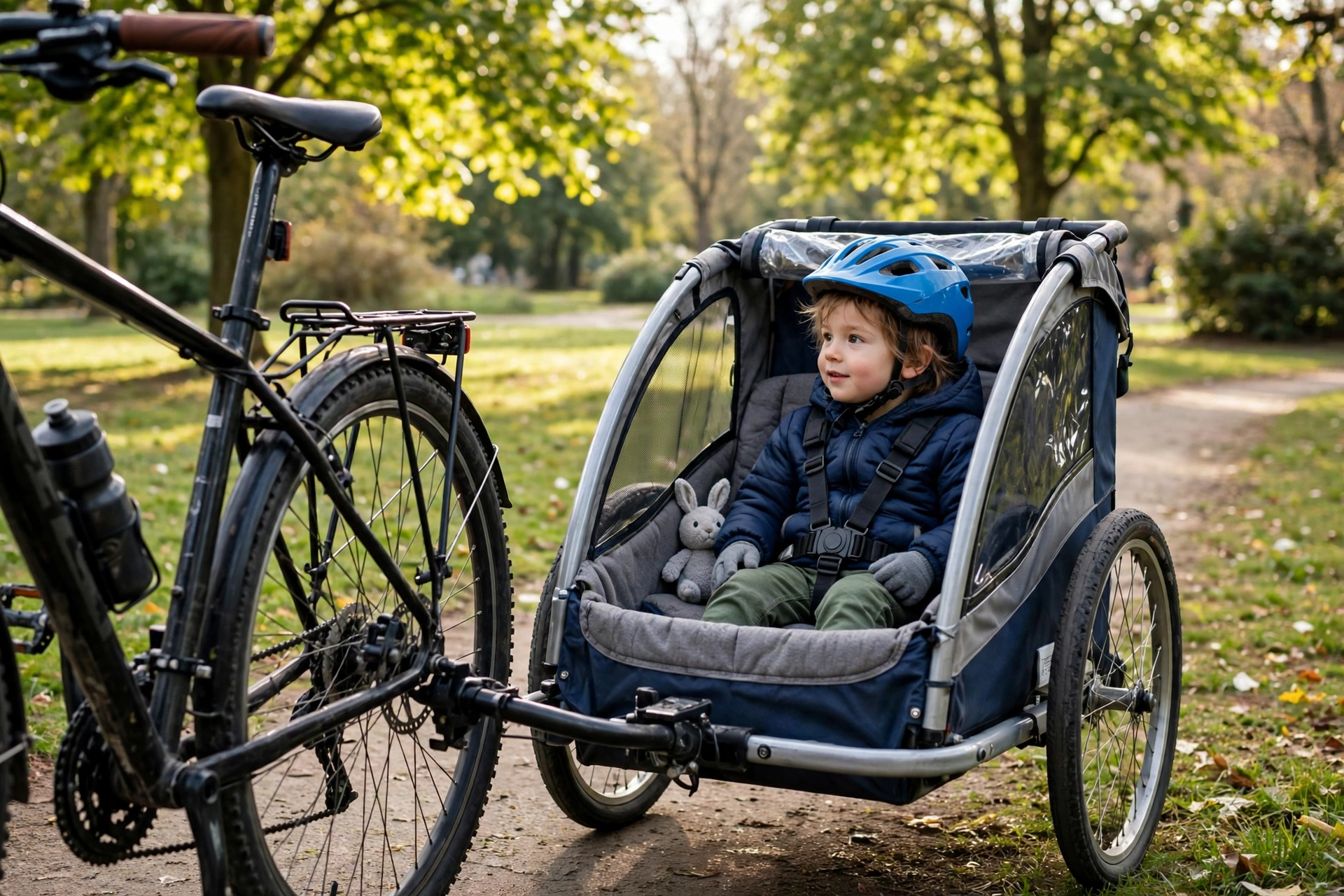
Fitting is a little different from a child seat because the child sits lower and further back. Put the helmet on first, then settle the child into the trailer and fasten the harness. Check that the harness shoulder straps sit flat and snug over the shoulders and that the helmet does not interfere with any strap or buckle.
Watch the back of the helmet against the trailer’s seat back. Just like a child seat headrest, a padded seat back can push a bulky helmet forward and tilt the child’s chin down. A lightweight toddler helmet with a flatter back profile usually solves this, and most trailers’ slightly reclined seating position helps too.
Finally, check headroom with the canopy closed and look at your child from the side: head resting naturally, chin level, helmet level. Recheck the helmet fit every few weeks during growth spurts — trailer passengers are passengers for years, and a helmet that fit in spring may be small by fall.
Two comfort checks round out the routine. On warm days, trailers heat up inside, and a helmet adds warmth, so plan shade stops and drinks on longer rides and never leave a child sitting in a parked trailer in the sun. And before every ride, glance at the helmet itself: straps untwisted, buckle clicking home, no cracks or crushed foam from being stored under heavy gear. A helmet that has taken a real impact — in a tip-over or a crash — should be replaced, even if it looks fine, because the foam that absorbs impact does its job only once.
Frequently Asked Questions
Can a baby under 1 ride in a trailer without a helmet?
No. Pediatric guidance says children should be at least 12 months old before riding in a trailer at all, and then only with a properly fitted helmet.
Do trailer passengers need a special kind of helmet?
No — the same certified toddler bicycle helmet used for child seats. A lightweight model with a flatter back tends to fit best against the trailer’s seat back.
Is a helmet needed for short rides on park paths?
Yes. State laws generally apply on public paths as well as roads, and most trailer incidents happen at low speeds close to home. Helmet on, every ride.

Olivia
Writer at Helmet Today, covering helmet reviews, fit and riding safety.


