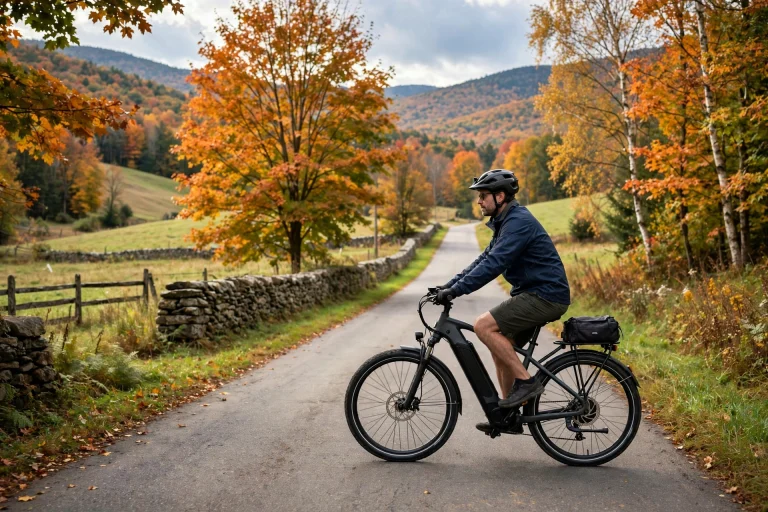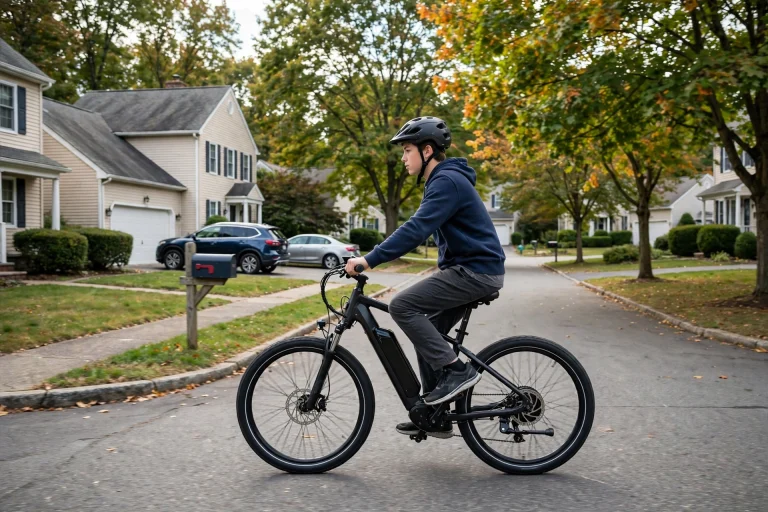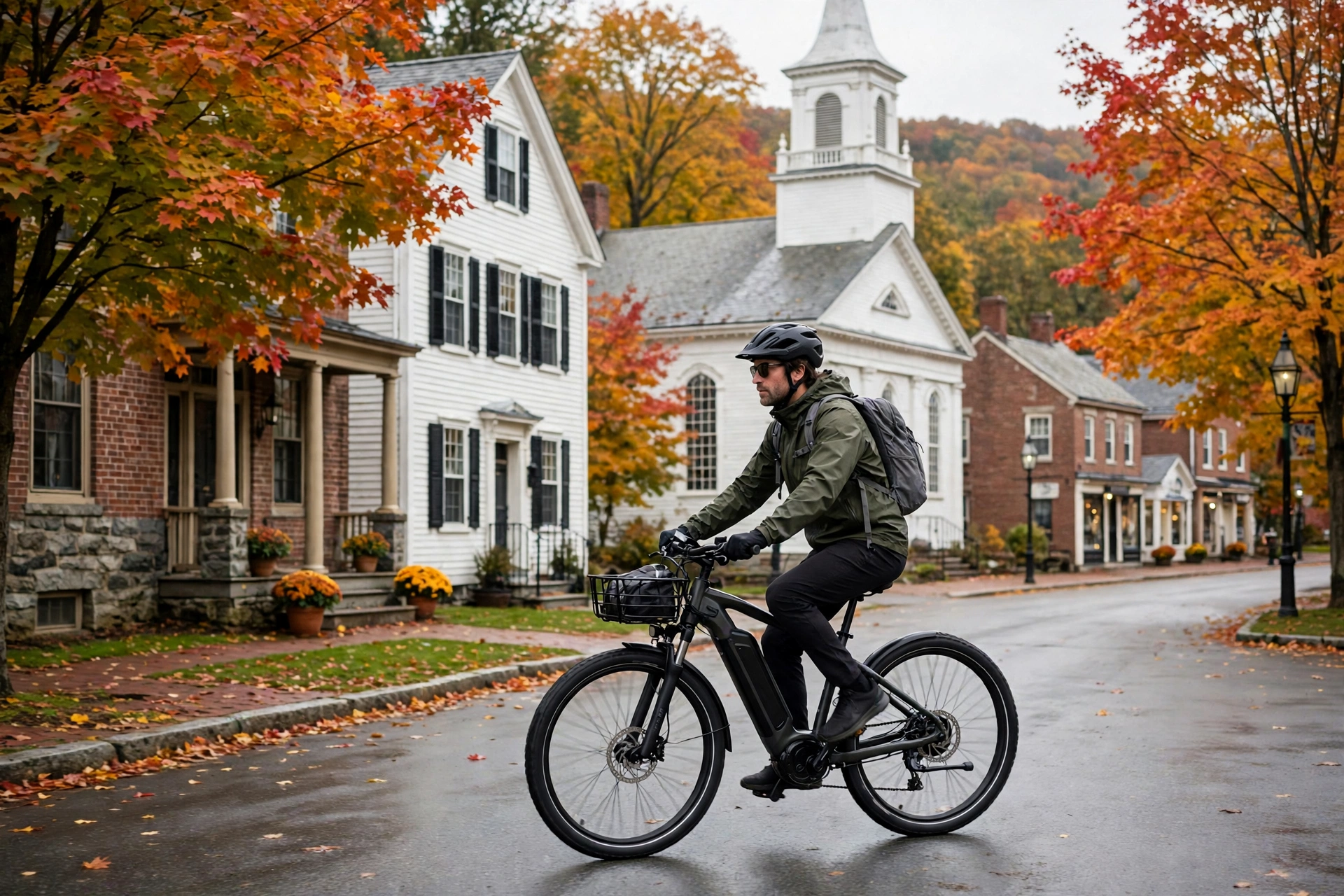
Yes — Massachusetts requires helmets for e-bike riders aged 16 and under, no matter which class of e-bike they ride. On top of that, anyone operating or riding as a passenger on a Class 3 e-bike must wear a helmet at any age. Adults on Class 1 and Class 2 e-bikes are not required by state law to wear a helmet, although safety experts strongly recommend one.
Massachusetts folded e-bikes into its existing bicycle framework, so its e-bike helmet rules grow out of its familiar bicycle helmet law for young riders, with an added all-ages rule for the fastest class. Here is how the classes work, who is covered, and how e-bikes differ from mopeds under Massachusetts law.
Who Must Wear a Helmet on an E-Bike in Massachusetts?
Two groups are covered by the state helmet requirement:
- Riders aged 16 and under: Anyone 16 or younger who operates an e-bike or rides on one as a passenger must wear a helmet, on any class of e-bike. This mirrors Massachusetts’ bicycle helmet law, which has long required helmets for young riders and passengers.
- Class 3 riders of all ages: Every operator and passenger on a Class 3 e-bike must wear a helmet, regardless of age — the same approach used in a number of other states for the fastest e-bike category.
As in many states, the passenger detail matters: the rule is about everyone on the bike, not just the person pedaling. A younger teen riding on the back of a cargo e-bike needs a helmet, and on a Class 3 bike, so does the adult doing the pedaling.
How Does Massachusetts Define E-Bike Classes?
Massachusetts uses the widely adopted three-class system:
- Class 1: Pedal-assist only — the motor assists while you pedal and cuts off at 20 mph.
- Class 2: Throttle-assisted — the motor can propel the bike without pedaling, up to 20 mph.
- Class 3: Pedal-assist up to 28 mph, generally equipped with a speedometer — and the class with the all-ages helmet rule.
Your bike’s class is set by the manufacturer and shown on its label. It matters beyond helmets, too: where each class may be ridden — certain paths, trails, and shared-use routes — can differ, and local rules apply in many places.
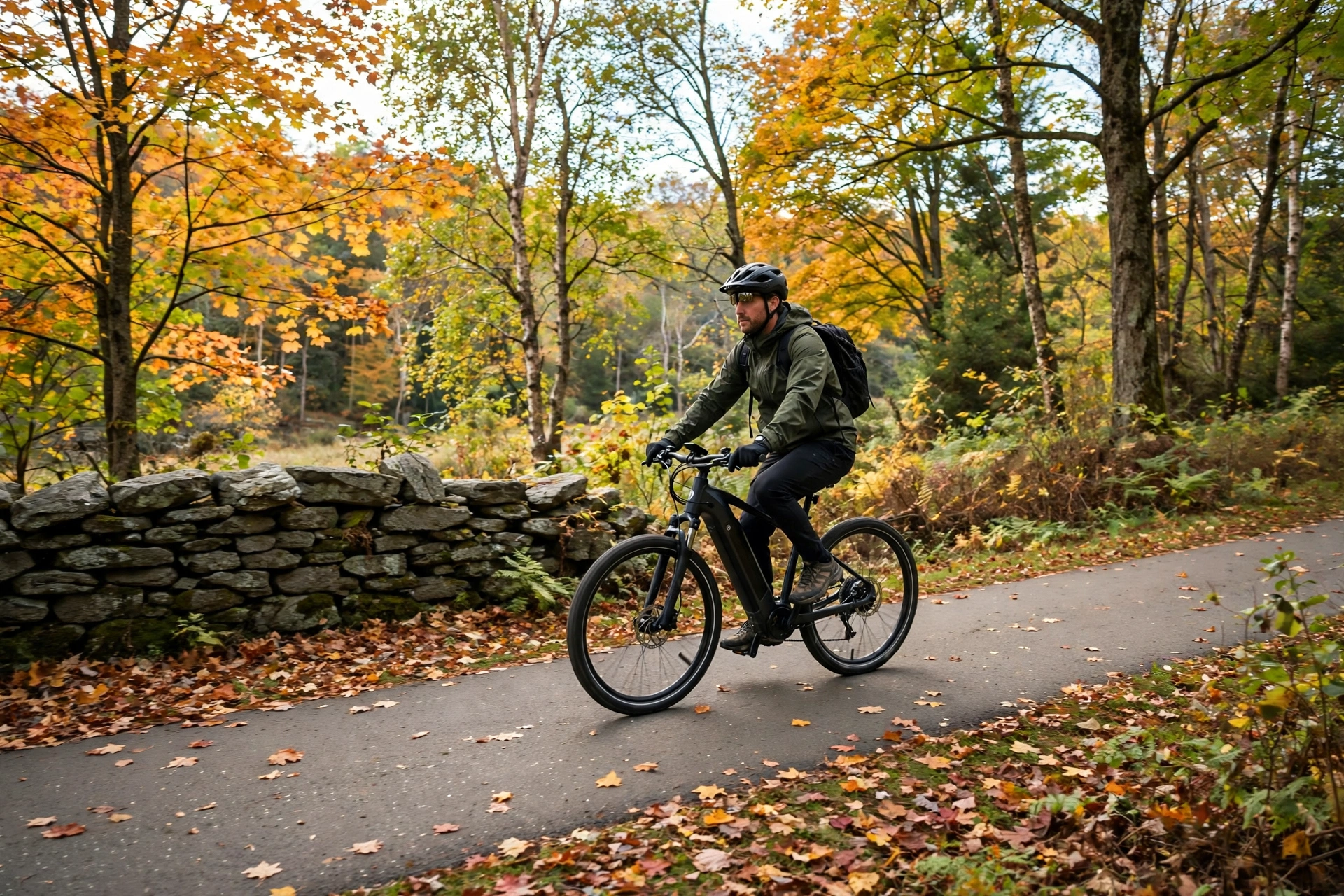
Are E-Bikes Treated the Same as Mopeds in Massachusetts?
No — and the distinction matters. Massachusetts law treats electric bicycles as their own category, separate from motorized bicycles and mopeds. Mopeds and motorized bicycles fall under stricter rules in general: they involve registration and licensing requirements, and helmet requirements apply to their riders across the board rather than only to the young.
The practical takeaway: a machine that qualifies as a Class 1, 2, or 3 e-bike follows the e-bike rules described here. One more category worth knowing about is the ordinary bicycle: Massachusetts’ bicycle helmet law for riders 16 and under is the foundation the e-bike rule was built on, so a young rider moving between a regular bike and an e-bike is covered by a helmet requirement on both. Families do not need two different rulebooks for the two machines in the garage. A faster or more powerful machine that falls into moped or motor vehicle territory follows different — and stricter — rules. If you are modifying an e-bike or buying something unusually powerful, check which category it lands in before assuming the e-bike rules apply. You can compare how states handle these categories in our overview of what states have helmet laws.
Do Adults on Class 1 and Class 2 E-Bikes Need Helmets?
Not under state law. An adult on a Class 1 or Class 2 e-bike in Massachusetts may legally ride without a helmet. That is a legal answer, not a safety recommendation. E-bikes travel at sustained speeds that take many returning riders by surprise, and they mix with traffic in ways a neighborhood bicycle often does not. Most serious cycling injuries involve the head, and a helmet is the single easiest way to cut that risk.
Also keep in mind that state law is only one layer. Individual trails, parks, rental fleets, and organized events can require helmets for everyone, and many do. Carrying a helmet keeps you compliant everywhere without having to research each route.
There is also a family dynamic worth planning for. If you ride with a teenager who is legally required to wear a helmet while you are not, expect the rule to feel unfair to them — it usually does. Riding helmeted yourself removes the argument and models the habit you want them to keep when they age out of the requirement. Most riders who start wearing a helmet for their kids end up keeping the habit for themselves.
What Helmet Should You Wear, and What Happens If You Don’t?
Wear a bicycle helmet certified to the CPSC standard, sized to your head, worn level with the straps fastened and snug. Youth riders should never be put in an oversized helmet “to grow into” — a loose helmet can shift or come off in a fall. Replace any helmet after a crash, even if it looks undamaged, because the foam that absorbs impact crushes permanently.
For riders who are required to wear a helmet and don’t, enforcement can mean a citation, and parents or guardians can be responsible for younger riders. A helmet also has to be worn properly to count — carried on the handlebars or worn with the strap dangling undone is not compliance, and it offers no protection either way the moment something goes wrong. Penalties are handled case by case and fines vary by court. The simpler calculation is this: the helmet rule for young riders and Class 3 riders is clear, the cost of following it is low, and the protection is real.
Frequently Asked Questions
Q: Do you need a helmet on an e-bike in Massachusetts?
A: Yes if you are 16 or under on any e-bike, and yes for everyone — at any age — on a Class 3 e-bike. Adults on Class 1 or Class 2 e-bikes are not required by state law, but a helmet is strongly recommended.
Q: Are e-bikes and mopeds the same under Massachusetts law?
A: No. E-bikes are their own category with bicycle-style rules. Mopeds and motorized bicycles follow stricter rules in general, including registration, licensing, and helmet requirements for their riders.
Q: What counts as a Class 3 e-bike in Massachusetts?
A: A Class 3 e-bike provides pedal assistance up to 28 mph and is generally equipped with a speedometer. The manufacturer’s label on the bike identifies its class.

Olivia
Writer at Helmet Today, covering helmet reviews, fit and riding safety.