The most comfortable passenger helmet is, first of all, the right size — most “uncomfortable helmet” complaints are really fit problems, and they can be fixed without weakening the helmet’s protection at all. Swap cheek pads, wash the liner, sort out hair and eyewear, and give a new passenger time to get used to the sensation, and a helmet that felt unbearable on ride one can feel fine by ride three.
Comfort is not a luxury on the back of a motorcycle. A passenger who is distracted by a pounding headache, a strap digging in, or wind roar at highway volume is a passenger who shifts around, tenses up, and enjoys nothing. Work through the checks below and you will fix the great majority of passenger comfort complaints safely.
Why does correct sizing matter more than anything else?
A helmet that is one size too large moves around, lets in wind noise, and can lift at speed; a helmet one size too small creates pressure points that turn into headaches within half an hour. The common mistake is “sizing up for comfort” — buying or borrowing a bigger helmet so it feels loose and easy. That looseness is exactly what you must avoid: a helmet should be snugly fitted, with the padding doing gentle, even work all around the head.
The correct fix for a tight spot is not a bigger shell. It is adjusting the padding inside the right shell. If the helmet is tight in the cheeks but correct everywhere else, thinner cheek pads solve it. If it is tight across the forehead or temples, the shape may simply be wrong for that head — long-oval heads suffer in round helmets and vice versa — and a different model is the answer.
Have your passenger wear the helmet indoors for ten to fifteen minutes before judging it. New padding is firmest on day one and relaxes slightly with use, so a helmet that feels “firm but even” in the shop usually settles into a genuinely good fit. Pain, numbness, or a red pressure mark that lingers is the signal to change something.
How can cheek pads and liners fine-tune the fit?
Many mid-range and premium helmets offer interchangeable cheek pads in several thicknesses, and some offer crown liners in different thicknesses too. This is the passenger-helmet owner’s best friend: one helmet can be tuned looser or snugger in the cheeks for different faces without ever changing shell size. Keep the spare pad set with the helmet so adjustments take a minute, not a shopping trip.
The liner itself matters for comfort over a season. A removable liner can be hand-washed in mild soap, rinsed well, and air-dried, which removes the sweat salts that make padding stiff, scratchy, and smelly. Washing also restores a little of the padding’s loft. Between washes, letting the helmet air out after every ride — never sealed in a hot top case while damp — keeps it pleasant for the next outing.
Breathable, moisture-wicking liner fabrics genuinely help on warm days, and a balaclava or thin liner cap can add comfort in both directions: it wicks sweat in summer, reduces hair friction, and adds a touch of warmth in the cold. If you are comparing liner technologies and safety systems while shopping, our guide to MIPS and rotational protection explains one of the features you will see advertised.
How do eyewear and hair affect passenger comfort?
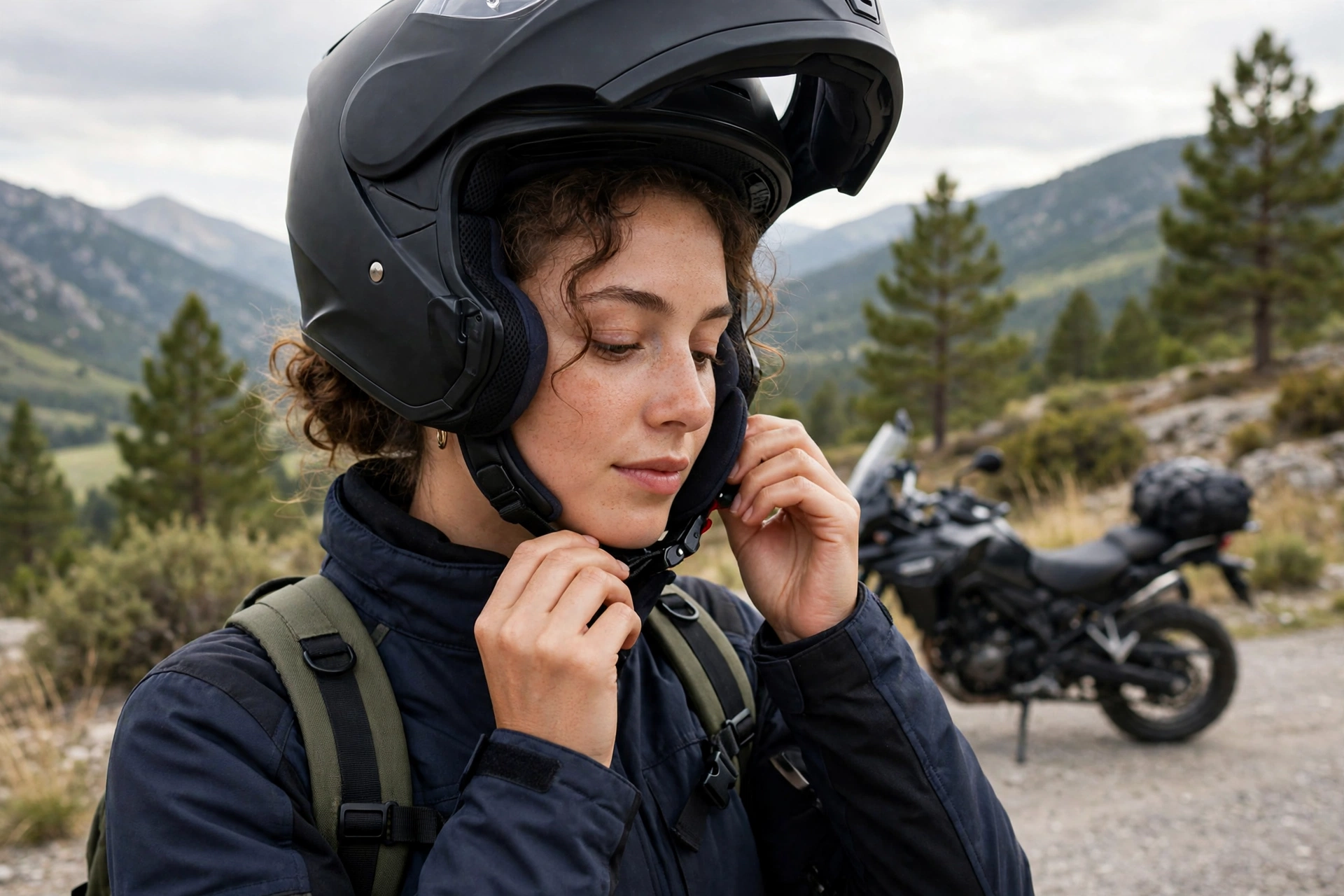
Glasses are a frequent hidden cause of helmet misery. Temple arms get pressed into the sides of the head by tight padding, and the pain builds slowly until it dominates the ride. Helmets with eyewear channels — grooves in the padding designed to accept glasses arms — solve this properly. If the helmet lacks them, put the helmet on first and slide the glasses in afterward, and consider thinner, straighter temple arms. Sunglasses matter too: a bright day without them means squinting behind a clear visor, so plan eyewear before the ride, not at the first gas stop.
Long hair needs a plan as well. A high ponytail bunched inside the helmet creates a hard lump that wrecks the fit and aches within minutes. A low ponytail or braid at the nape, exiting under the helmet’s bottom edge, keeps the fit clean and stops hair whipping around the passenger’s neck and face. Hair should be styled the way it will be worn on the bike before the helmet is fitted and judged.
Can communication and short first rides help?
Yes — an intercom is one of the most underrated comfort upgrades for a passenger. Half of passenger discomfort is not knowing whether a small annoyance is normal or worth mentioning, and beginners often suffer in silence until a niggle becomes misery. With an intercom, the passenger can say “the strap is digging in” at minute five, when a thirty-second stop fixes it, instead of enduring an hour of it.
Acclimatization matters just as much. A first-time passenger is coping with new sounds, wind pressure, and the odd feeling of a snug helmet all at once. Keep the first ride short — twenty or thirty relaxed minutes on familiar roads — and build up gradually. What feels strange on ride one usually feels normal by ride three, as long as no genuine fit problem is hiding underneath.
Noise deserves its own mention. Wind roar at highway speed is genuinely loud, tires passengers quickly, and is not good for anyone’s hearing over long distances. Simple foam earplugs, worn by rider and passenger alike, cut the roar dramatically while still letting engine sound and intercom audio through. Pair them with your helmet’s vents adjusted properly — open for cooling in town, managed at speed.
What should you never do to make a helmet “more comfortable”?
Some common shortcuts trade protection for comfort, and they are never worth it:
- Never stack aftermarket padding, folded cloth, or hats inside a helmet to change its fit — they alter how the helmet sits and can defeat the liner’s design
- Never loosen the chin strap or ride with it unfastened — an unsecured helmet can come off exactly when it is needed
- Never shave, compress, or cut the impact foam to make room — that foam is the protection
- Never keep using a helmet that has been crashed or hard-dropped because it “still feels fine” — damage is often invisible
- Never size up to escape pressure — fix padding or change helmet shape instead
The theme running through all of this: comfort comes from correct fit, clean and correctly chosen padding, and a passenger who is eased into riding — never from defeating the features that make the helmet work.
Frequently Asked Questions
Q: My passenger gets a headache after 20 minutes. What is the likely cause?
A: Usually a pressure point — most often the forehead, temples, or glasses arms being squeezed. Try thinner cheek pads, a different helmet shape, or eyewear-friendly padding. If the pain is severe or one-sided, the helmet simply does not fit that head.
Q: Can I add extra padding to make a loose helmet snug?
A: Only with the manufacturer’s own optional pads made for that model. Never stack towels, beanies, or generic foam inside — they change how the helmet sits and can compromise its protection. A helmet that is too big needs to be replaced with the right size.
Q: Do earplugs really help passenger comfort?
A: Yes. Wind noise is the biggest source of fatigue on longer rides, and inexpensive foam earplugs reduce it a great deal while still letting you hear traffic and an intercom. Many passengers find rides far more relaxing with them.

Olivia
Writer at Helmet Today, covering helmet reviews, fit and riding safety.