Yes, you can absolutely wear a helmet with a ponytail — the secret is placement. Tie the ponytail low, at the nape of your neck, so it exits underneath the helmet’s bottom edge instead of bunching up inside it. A low ponytail keeps the helmet sitting level and snug, while a high ponytail acts like a wedge that lifts the helmet, breaks the seal of the padding, and leaves you with a pressure ache within a few miles.
This applies to motorcycle helmets, bicycle helmets, ski helmets, and riding helmets alike: the rule is always the same. Hair styled for the helmet goes low and flat; the helmet is then fitted over the hairstyle you will actually wear. Here is how to get it right, every time.
Why does a high ponytail ruin a helmet’s fit?
A helmet is designed to sit directly against your head, with its padding spread evenly around your skull. A high ponytail inserts a thick, uneven lump of hair between the padding and your head at the back. Three things go wrong at once.
First, the lump pushes the helmet forward and up, so it no longer sits level — the front edge rides high on the forehead, exposing more of it than the helmet was designed to allow. Second, the fit becomes loose where it should be snug, because the helmet is perched on the ponytail rather than settled around the head; it can rock, shift, and in the worst case rotate during a fall. Third, the knot of the ponytail concentrates pressure on one small area, which produces the classic “ponytail headache” — a localized ache that grows until you have to stop.
Even if you force the helmet down over a high ponytail and fasten the strap, you have not solved any of this. The helmet is higher on the head than intended and the coverage is wrong. It is a two-minute fix at the hairstyle stage, so never compromise at the helmet stage.
How do you tie a low ponytail for a helmet?
The technique is simple:
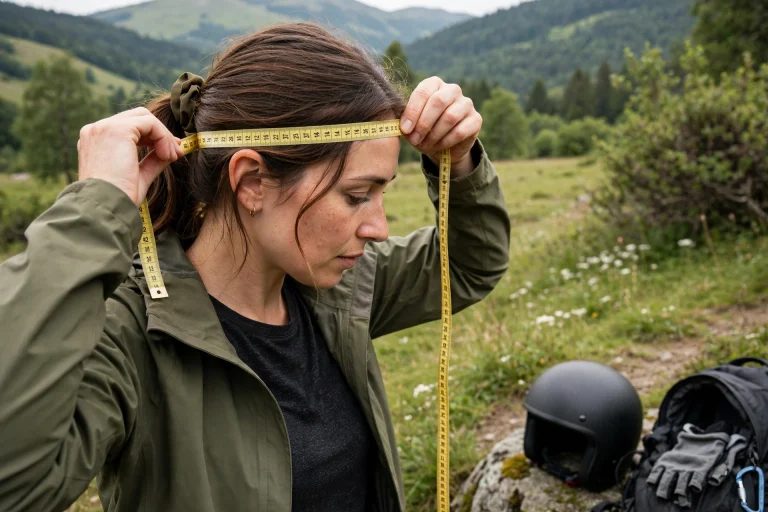
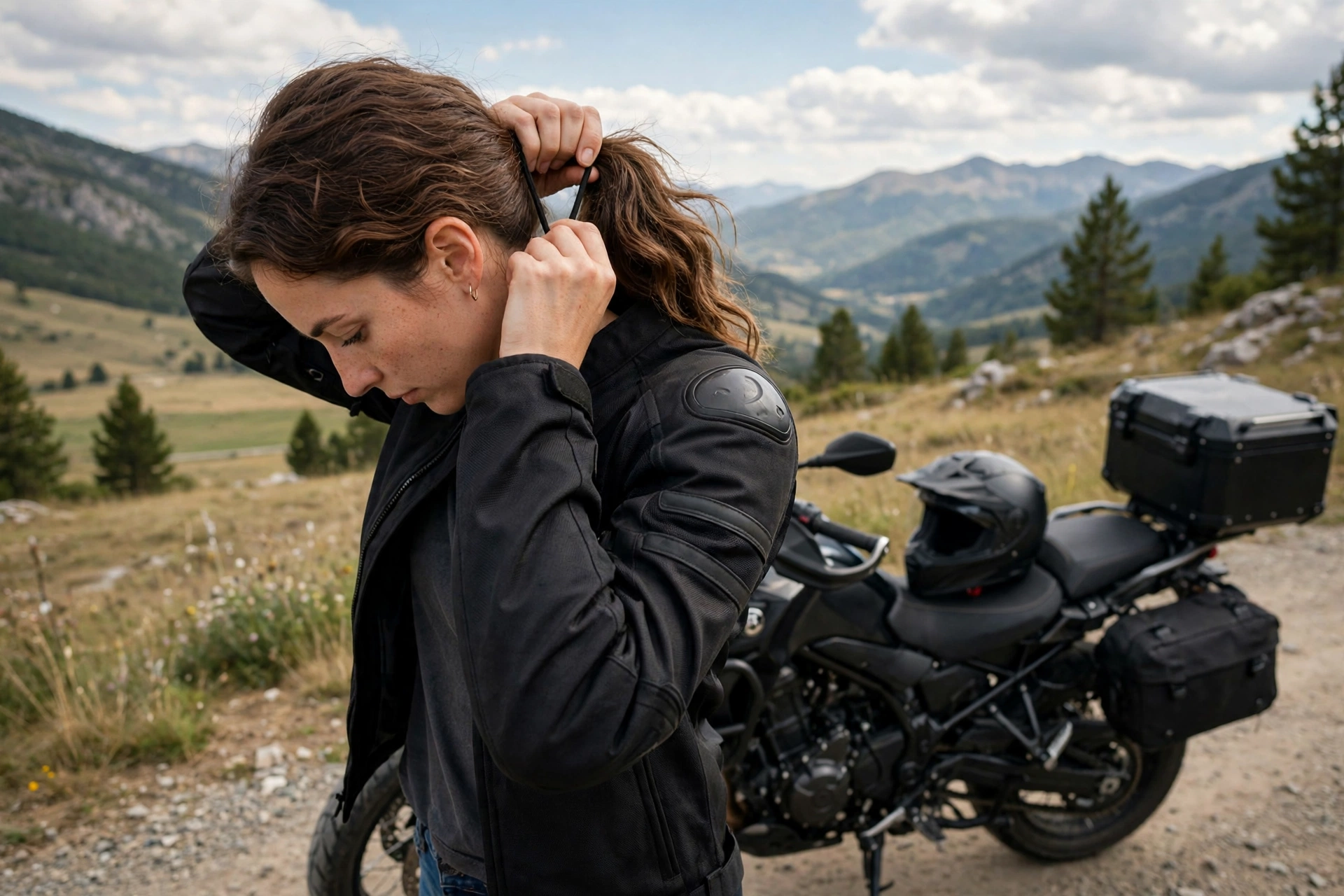
- Brush your hair back and gather it at the nape of your neck, right at the hairline where your head meets your neck
- Secure it with a soft elastic — the ponytail should sit at or below the bottom edge of where the helmet will rest
- Check that the top and back of your head feel flat and smooth, with no bumps under your palms
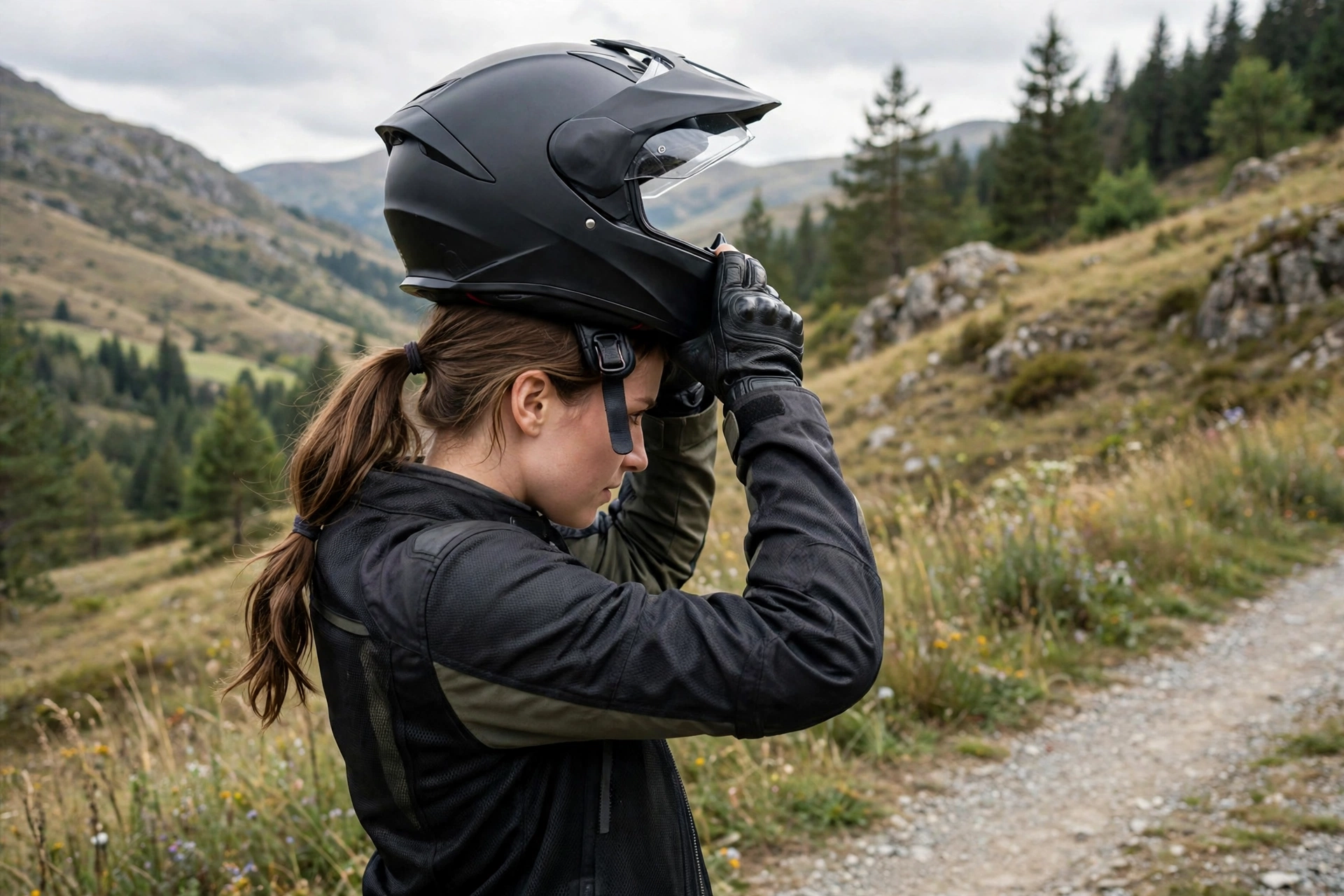
- Put the helmet on front-to-back, ease it down level, and let the ponytail slip out under the rear edge
- Fasten the strap and do a shake test — the helmet should not rock, and there should be no single pressure point at the back
If your hair is very thick, split the difference: gather it as low as it will go and flatten it against the neck rather than letting it form a ball. The aim is a smooth, low profile where the helmet’s rear padding sits.
What other hairstyles work well under a helmet?
A low ponytail is the classic, but braids are arguably even better. A single low braid keeps every strand controlled, lies flat against the back, and prevents the tangled “helmet hair plus wind” mess at the other end of the ride. A French braid — or two braids — distributes hair smoothly over the whole head, so there is no lump anywhere, and many long-haired riders find this the most comfortable option for long days.
A low bun works if it sits at the nape like a low ponytail; a high bun never works under a helmet. For riders with very long hair, braid it and then tuck the braid inside your jacket or secure it so it does not whip in the wind — loose hair at highway speed tangles brutally and can sting exposed skin.
Whatever style you choose, consistency is the key: always fit and judge a helmet wearing the hairstyle you will ride in. A helmet fitted over loose, flat hair will feel different — and sit differently — once a braid is added, so test with your real riding hair in place.
Can a liner cap or do-rag help?
Yes. A thin skull cap, do-rag, or helmet liner is a small piece of gear that solves several problems at once. It smooths flyaway hair so the helmet slides on cleanly instead of snagging and bunching strands under the padding. It keeps long hair gathered and contained even before the helmet goes on, which makes the low-ponytail routine faster. It also wicks sweat, which keeps the helmet’s own liner fresher for longer and makes hot days more comfortable.
Choose thin, smooth fabrics — the cap should add almost no bulk. A thick beanie or a heavy bandana knot recreates exactly the lump problem you are trying to avoid, particularly if a knot lands under the padding. Tie or fasten any cap so its closure sits low at the nape, in the same safe zone as the ponytail itself.
How do you keep long hair comfortable at speed?
Once the helmet fits, the remaining battle is wind. Hair left streaming behind a helmet tangles into knots that can take serious work — and some breakage — to undo. A braid is the strongest defense. If you prefer a ponytail, adding a couple of extra elastics down its length (“segmenting” it) keeps it together and dramatically reduces tangling.
Tucking hair into your jacket works too, as long as it does not bunch at the neck and push on the helmet’s rear edge. And after the ride, a leave-in conditioner or detangling spray plus a wide-tooth comb, worked from the ends upward, will save both your hair and your patience.
One last fit note: some riders are tempted to size up a helmet to “make room for hair.” Do not. The helmet must fit your head with your hair styled flat and low — as covered above — because hair compresses and shifts, and a helmet fitted to a pile of hair is a loose helmet in a crash. It is also worth checking that your chosen helmet protects as designed in other ways; our overview of MIPS helmet technology explains one widely offered safety feature. Get the hairstyle right and the standard size fits exactly as it should.
Frequently Asked Questions
Q: Where exactly should the ponytail sit?
A: At the nape of the neck, at the hairline where the head meets the neck — low enough that it passes out under the helmet’s bottom edge. If you can feel a bump when you run your hand over the back of the helmeted head, it is too high.
Q: Does this apply to bicycle and ski helmets too, or just motorcycle helmets?
A: All of them. Any helmet depends on sitting level and snug against the head, and a high ponytail lifts every type of helmet out of position. Low ponytails and braids work across cycling, skiing, equestrian, and motorcycle helmets.
Q: Should I buy a bigger helmet to fit my hair?
A: No. Style your hair low and flat — a low ponytail or braid adds almost no bulk — and fit the helmet to your head in that state. Sizing up creates a loose helmet, which is a safety problem, not a comfort solution.

Olivia
Writer at Helmet Today, covering helmet reviews, fit and riding safety.