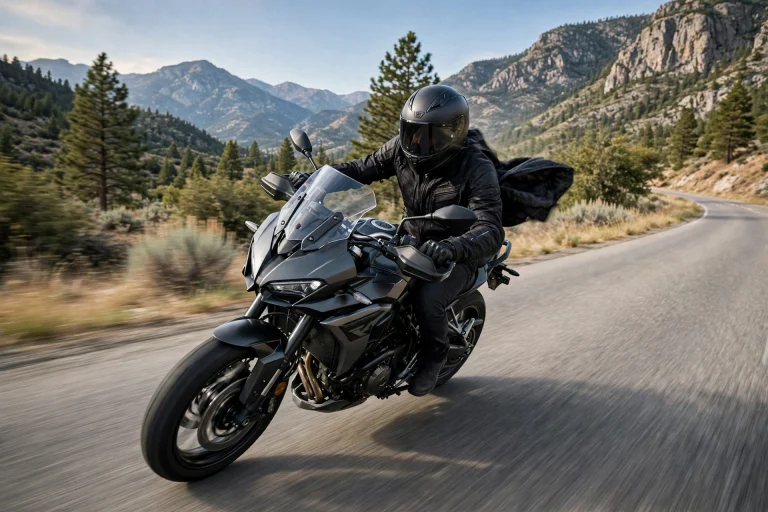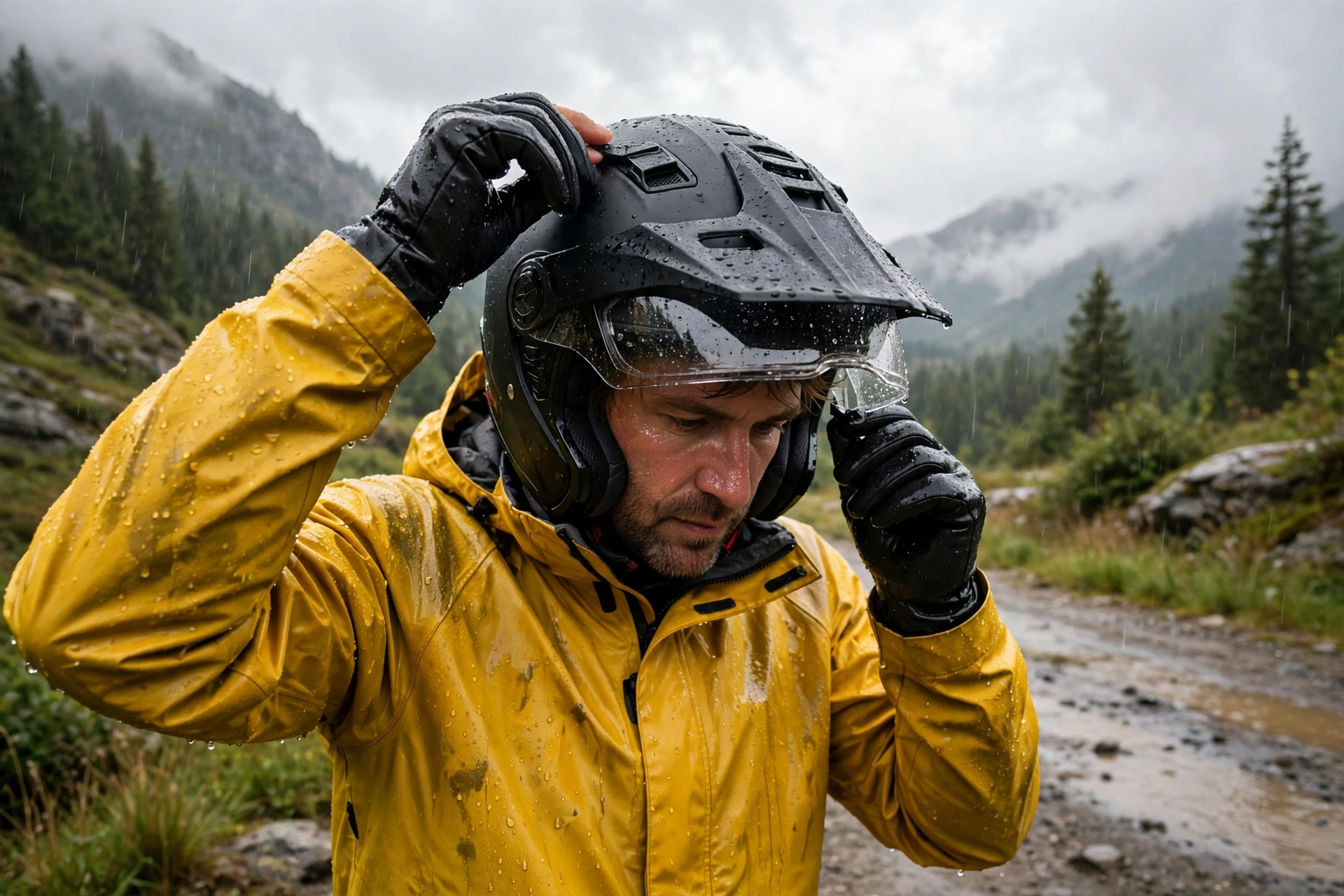
To stop rain getting inside your helmet, work through its entry points one by one: keep the visor fully latched on a healthy seal, close the top vents before the rain starts, and block the open bottom with a chin curtain, neck roll, and a snood or balaclava bridging the gap between helmet and jacket. Get those three zones sealed and most rain stays outside.
No helmet is completely waterproof, but the difference between a dripping-wet interior and a mostly dry one is usually setup, not luck. This checklist goes opening by opening, then finishes with the drying routine that protects the helmet afterward.
Is the Visor Seal Doing Its Job?
The visor gasket is your single biggest rain defense, and it is the one riders check least. With the visor fully closed, the edge of the shield should press evenly into the rubber seal all the way around the eye port. Run a finger along it: gaps, waves, or a corner sitting proud all mean water has a path in.
- Close it completely. Many visors have a final firm click past the “almost shut” position riders leave them in. That last click is the weather seal.
- Clean the seal. Grit and road film on the rubber prevent a tight mate. Wipe it with a damp cloth.
- Replace worn seals. Rubber hardens, cracks, and shrinks with age and sun. If yours is perished, a new gasket or visor mechanism kit restores the seal cheaply.
- Check visor adjustment. Many helmets let you adjust how firmly the shield pulls into the seal. A quarter-turn of the base-plate screws can fix a leak that has annoyed you for months.
A trickle down the inside of the visor is almost never a “bad helmet” — it is a tired seal or a visor left one click open.
Are Your Vents Set Up for Rain?
Vent shutters are the second entry point, and timing matters: close the crown and top vents before the rain reaches you. Water that enters a wet vent channel keeps dripping long after the shower passes; a dry channel closed early stays dry.
Know your helmet’s layout before you need it. Fumbling for a forehead vent slider with winter gloves at 60 mph is nobody’s plan. Practice finding the crown vent, chin vent, and exhaust controls by feel, in the garage, with gloves on.
One nuance: the chin vent is a trade-off. Closing it helps keep driving rain off your chin and reduces misting on the inside of the shield from road spray, but your breath then has fewer places to go, which can increase fogging. If your visor has an anti-fog insert, close the chin vent in heavy rain. If it doesn’t, a small crack of chin vent may be the lesser evil on shorter rides.
How Do You Seal the Bottom of the Helmet?
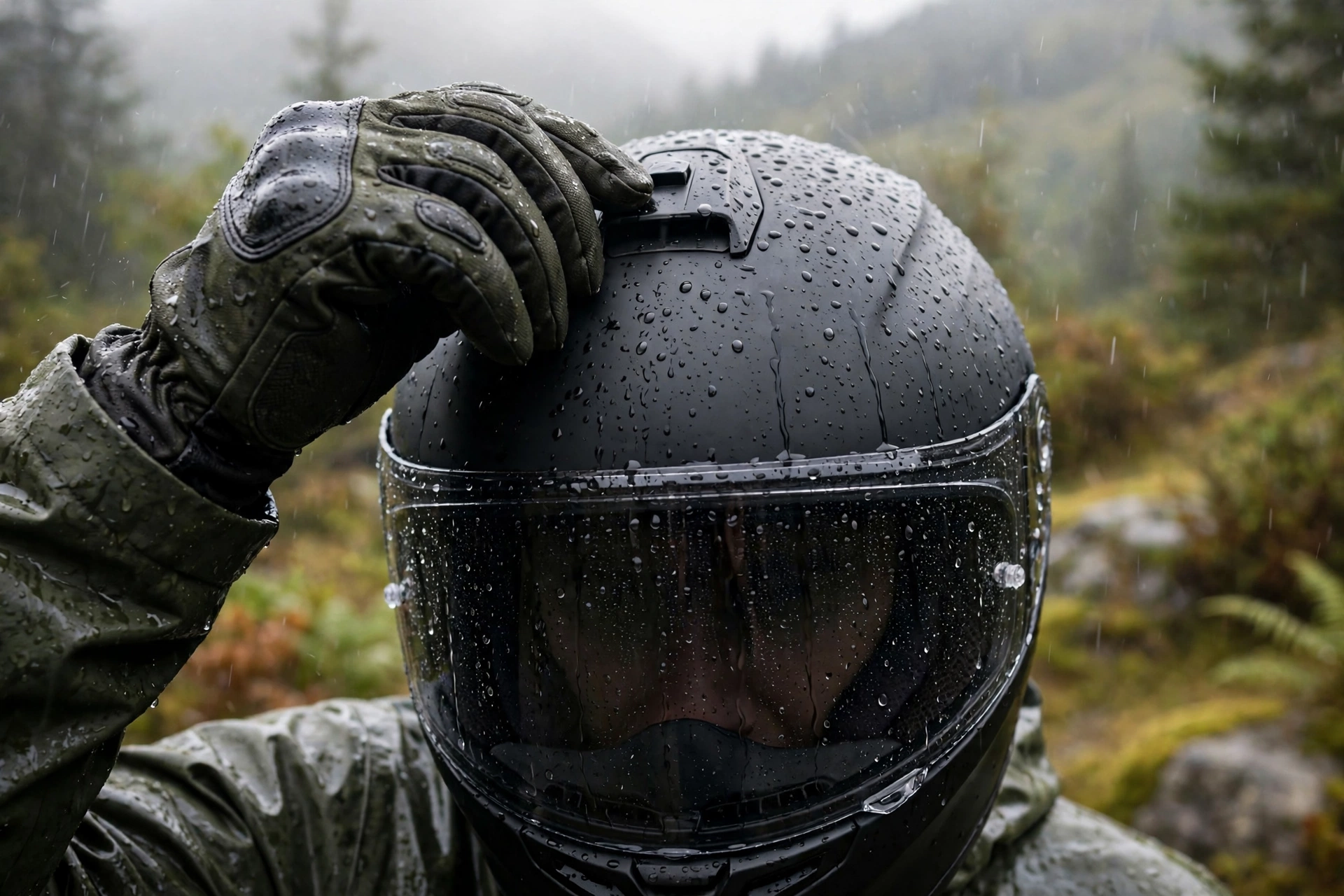
The neck opening is the leak riders feel most and fix least. Rain runs down the outside of the shell, and wind plus road spray push water up and in from below. Three accessories handle it:
- Chin curtain. This fabric or mesh piece under the chin bar blocks the updraft that carries spray straight up the inside of the helmet. If your helmet came with one in the box, fit it for winter and wet-season riding.
- Neck roll fit. The padded roll around the bottom should sit snug against your neck and jaw. A helmet that is too big leaves a finger-wide moat here that no accessory fully fixes — correct sizing is a weather feature, not just a safety one. A loose helmet also physically pumps as it shifts in the wind, drawing air and water in with every movement.
- Breath guard. Properly adjusted, it deflects your breath down and away from the visor and seals the nose area against spray coming through the chin vent.
Should Your Jacket Collar Go Over or Under the Helmet?
It depends on where the water is coming from — think about runoff direction:
- Collar OVER the helmet’s bottom edge (or a waterproof jacket hood/collar drawn up outside) stops rain that is running down the shell and neck from dripping inside, like a flashing on a roof.
- Collar UNDER, with a snood bridging up works better against spray coming up from the road and wind pushing in from below.
In practice, most riders do best with a balaclava or fleece snood worn under the helmet and tucked into the jacket, creating a continuous fabric bridge across the neck gap, plus the jacket’s storm collar closed snugly outside it. It also makes a cold wet ride far more comfortable.
Your bike plays a part too. A touring screen that lifts airflow over your helmet removes much of the wind pressure that forces water past seals in the first place. On a naked bike you take the full blast, and every seal works harder — one more reason screen height and angle are worth adjusting before a wet trip.
What Should You Do After a Wet Ride?
Even a well-sealed helmet ends a storm ride damp inside. Ten minutes of care protects it:
- Shake off loose water and wipe the shell and visor.
- Remove the liner and cheek pads if they are wet through, and air dry everything at room temperature with airflow — never on a radiator or with a hairdryer, since heat can damage the EPS liner and glues.
- Leave the visor cracked open while stored so the interior can breathe.
- Once dry, check the visor seal and vent sliders; grit from wet roads loves to lodge in both.
Handled this way, rain costs you nothing but a laundry cycle for the pads. Our guide to how long a motorcycle helmet lasts explains the other habits that shorten or extend a helmet’s life.
Frequently Asked Questions
Q: Why does rain still get in with the visor shut and vents closed?
A: Almost always the bottom opening. Spray and runoff enter around the neck roll, especially on upright bikes. A chin curtain, a snug neck roll on a correctly sized helmet, and a snood bridging to your jacket close most of that gap.
Q: Can I waterproof my helmet with spray or tape?
A: No — sprays don’t seal vents or the neck opening, and tape interferes with vent and visor function. The fixes that work are mechanical: healthy seals, closed vents, chin curtain, and collar setup.
Q: Is it bad for the helmet if some rain gets in?
A: Occasional dampness does not harm the shell or EPS liner. What causes damage is staying wet: mildew, odors, and degraded liner fabric. Air dry it fully after wet rides and it will last as it should.

Olivia
Writer at Helmet Today, covering helmet reviews, fit and riding safety.