A kids bike helmet and a kids skate helmet are built for different kinds of falls: a bike helmet is light, well-vented, and designed to absorb one big impact, while a skate helmet has a rounder, tougher shell with more coverage at the back and sides, and some models are designed to handle repeated smaller knocks. Which one your child should wear depends on the activity — and on the certification labels inside the helmet, not on how it looks.
Because skate-style helmets have become fashionable for cycling too, many parents assume the two are interchangeable. In general terms they are not. This guide explains how the shape, coverage, and impact design differ, what the certifications mean, and how to choose when your child both rides a bike and skates.
What Is the Main Difference Between the Two Helmets?
The core difference is how each helmet deals with impact energy. A bicycle helmet uses a thick layer of crushable foam, usually EPS, under a thin shell. In a serious crash that foam crushes permanently, spreading the force of one big impact over more time and area. It does that job extremely well — once. After a significant crash, a bike helmet is done and must be replaced, even if it looks fine.
A skate helmet is built around the pattern of skating falls: more frequent, usually lower-energy tumbles onto hard surfaces, often backwards or sideways. Skate-style helmets typically use a tougher, thicker outer shell and a foam designed to take repeated smaller hits without being destroyed by the first one.
How Does the Coverage and Shape Differ?
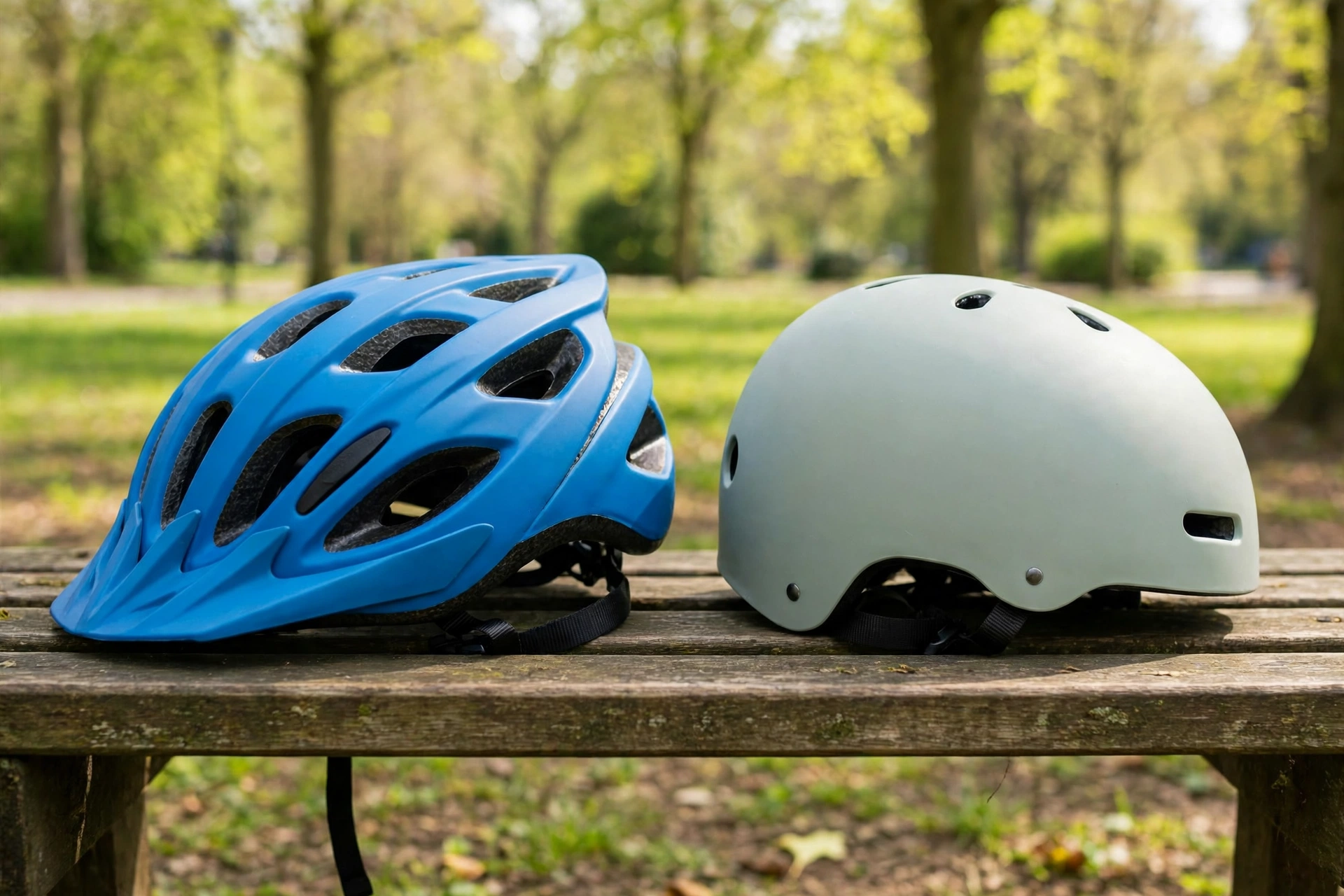
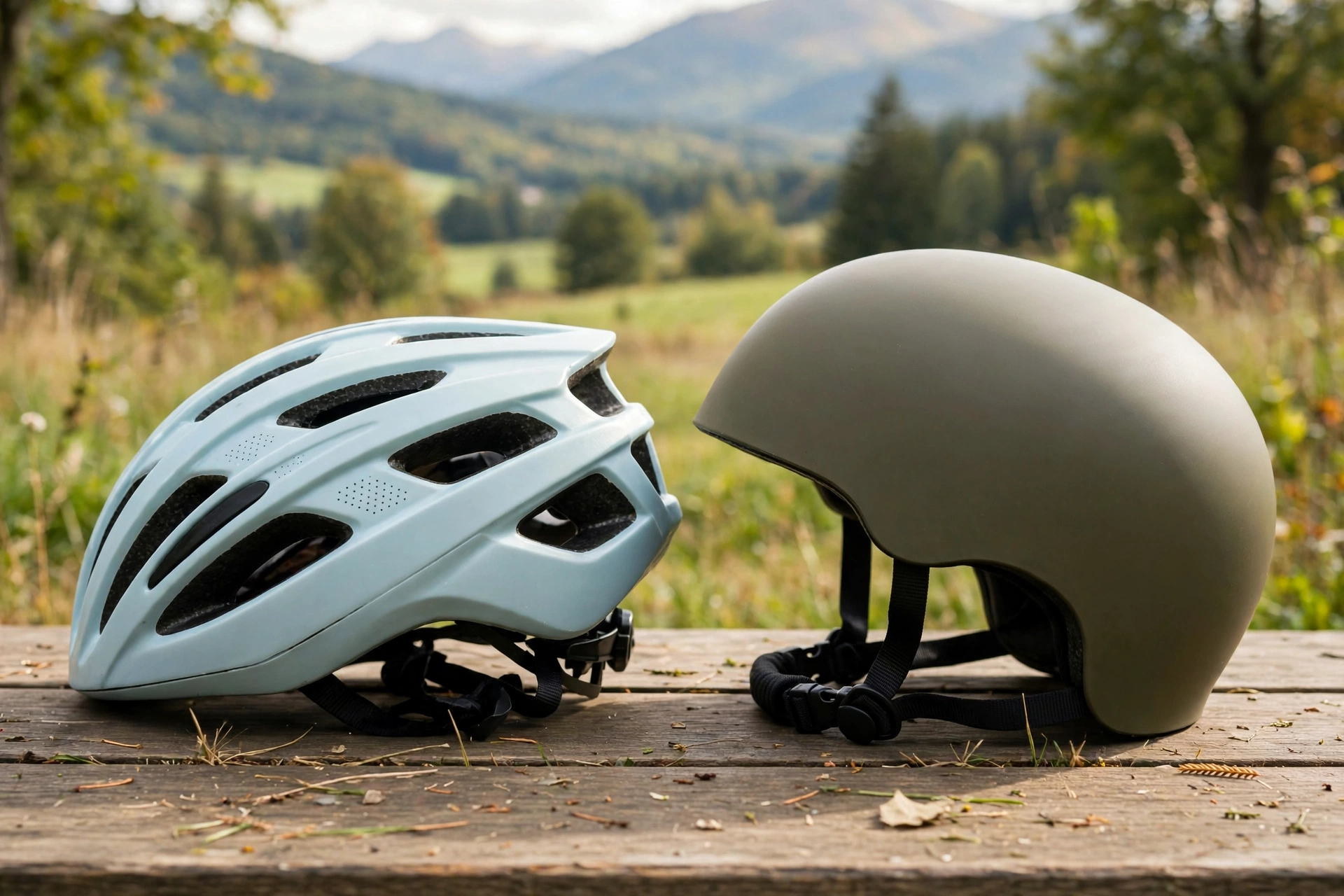
Look at the two side by side and the coverage difference is obvious. A bike helmet is shaped for forward motion: vents cut through the shell for airflow, a slightly elongated profile, and coverage that focuses on the top, front, and sides of the head. The back of the head gets less coverage, because cycling crashes less often involve a direct backward strike.
A skate helmet is rounder and drops lower, especially at the back and above the ears. That extra coverage reflects how skaters fall — backwards onto the occiput is a classic beginner skating injury pattern. The shell is smoother with far fewer vents, which is why skate helmets feel hot on a summer bike ride: there is simply much less airflow.
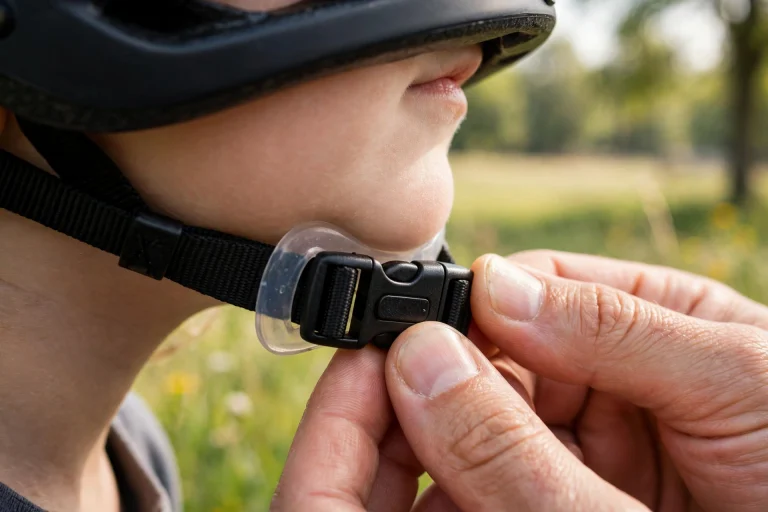
Straps and fit systems differ slightly too. Bike helmets for kids usually include a rear fit dial to fine-tune snugness as heads grow, while many skate helmets rely on sets of foam pads in different thicknesses to adjust the fit.
What Do the Certifications Actually Mean?
In the US, every helmet sold as a bicycle helmet must meet the CPSC bicycle helmet standard. That is a legal requirement, not a marketing claim, and it applies whether the helmet looks like a racing helmet or a skate helmet. If a helmet is sold for cycling, look for the CPSC label inside.
Skate helmets may additionally be certified to ASTM F1492, the standard for helmets used in skateboarding and similar activities, which tests for multiple lower-energy impacts. A helmet that carries both CPSC and ASTM F1492 certification is genuinely dual-certified: it has passed the single big-impact bicycle test and the repeated-impact skate test. That dual label is the key thing to look for if your child does both activities in one helmet.
Be careful with helmets that are only certified for skating and are not CPSC bicycle helmets — in general terms, a skate-only helmet should not be treated as a substitute for a certified bike helmet on the road. And whichever helmet you choose, modern options exist with rotational-impact liners; our explainer on MIPS and how helmet liners manage rotational forces is a useful read before you buy. Always check the labels inside the helmet itself rather than trusting the box art or a “skate style” description.
Which Helmet Should Your Child Wear for Each Activity?
For cycling — road riding, bike paths, riding to school — a certified bike helmet is the right default, or a dual-certified skate-style helmet if your child prefers that look. The bike helmet’s ventilation and low weight matter more than parents expect: a child who is hot and uncomfortable is a child who fiddles with straps and looks for excuses to take the helmet off.
For skateboarding, scooters at the skate park, and roller skating, a helmet certified to ASTM F1492 is the better match, because the repeated-fall pattern is exactly what it is tested for. A bike-only helmet can still protect in a single skating crash, but it may be damaged by knocks that a skate helmet would shrug off, and it offers less of the back-of-head coverage skaters need.
For a child who does both regularly, the practical answer used by many families is a dual-certified helmet for skating days and a lighter bike helmet for long summer rides — or one dual-certified helmet as a compromise if carrying two is unrealistic. What you should avoid is the reverse substitution: a light bike-only helmet worn daily at the skate park, taking repeated hits it was never designed for.
When Should Either Helmet Be Replaced?
A bike helmet must be replaced after any crash where it struck the ground or another surface, even if there is no visible damage — the crushable foam may be spent in a way you cannot see. It should also be replaced when your child outgrows it, when straps or buckles are damaged, or when it reaches the age limit the manufacturer suggests, in general terms after several years of use.
A multi-impact skate helmet tolerates minor bumps better, but it is not indestructible. Replace it after a hard impact, if the shell cracks or separates from the foam, if the foam feels compressed or crumbly, or if it no longer fits snugly. The pads inside can disguise a poor fit, so do a shake test with the pads your child actually uses.
Whichever style your child wears, the routine is the same: check the certification labels when you buy, check the fit every season, and replace on damage or outgrowth rather than on appearance. A helmet that looks cool but is the wrong certification or the wrong size is not doing its job.
Frequently Asked Questions
Q: Can my child wear a skate helmet for bike riding?
A: Only if it is certified as a bicycle helmet. Look for the CPSC label inside; many skate-style helmets are dual-certified to CPSC and ASTM F1492 and are fine for both. A skate-only helmet without the CPSC label is not a legal or tested substitute for a bike helmet.
Q: Why are skate helmets so much hotter than bike helmets?
A: Skate helmets have a smoother, tougher shell with very few vents, because vents would weaken the shell against repeated knocks and skating speeds are lower. Bike helmets are built for airflow at riding speed. On long summer rides, that difference is the main reason many kids prefer a bike helmet for cycling.
Q: Does a dual-certified helmet protect as well as two separate helmets?
A: A genuinely dual-certified helmet has passed both the CPSC bicycle test and the ASTM F1492 skate test, so it is a legitimate option for both activities. It is a compromise in comfort — heavier and warmer than a pure bike helmet — but not a compromise in certification. Check both labels inside the helmet before buying.

Olivia
Writer at Helmet Today, covering helmet reviews, fit and riding safety.